|
|
Welcome to The Water Wire, a snapshot of all water power funding opportunities, upcoming events, and recent news. This month’s newsletter takes approximately 5 minutes to read.
Reach out to the U.S. Department of Energy’s (DOE’s) Hydropower and Hydrokinetic Office (H2O) at with any inquiries or suggestions. Follow the Office of Critical Minerals and Energy Innovation’s (CMEI) X, Facebook, and LinkedIn channels for news, announcements, and water power content.
|
|
Did You Know?
In spring of 2026, Nichole Fitzgerald joined H2O as its new director. Nichole has spent nearly 15 years with the Department of Energy, working to make energy more affordable and reliable for Americans, serving in leadership roles in the former Bioenergy Technologies Office and the Hydrogen and Fuel Cell Technologies Office.
|
|
H2O Announcements and Features |
|
|
DOE’s HyTN is accepting requests from hydropower technology developers looking to test and validate innovative technologies. HyTN aims to raise the technology readiness of hydropower innovations by connecting technology developers to testing facilities to accelerate research, development, and deployment. Explore the testing facilities in the network and apply to be matched with a provider by July 23, 2026.
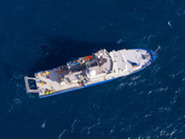
The Power At Sea Prize, administered by the National Laboratory of the Rockies (NLR) in partnership with Pacific Northwest National Laboratory (PNNL), has awarded $825,000 total to winners of the competition’s final DEVELOP Phase. During the initial CONCEPT Phase of the prize, teams were challenged to design reliable, cost-effective methods of generating ocean energy to power systems for ocean observation, marine aquaculture, underwater vehicle charging, and more. The 20 winners of this first phase were awarded $10,000 each for their plans to leverage marine energy to power a wide range of ocean-based activities. After further advancing their technologies and preparing for future development, 11 winners of the DEVELOP Phase received $75,000 each for their marine energy innovation efforts.
|
DOE’s H2O announced the winners of the 2026 Marine Energy Collegiate Competition. The University of Southern California was named the overall Megawatt League winner, with the University of Washington finishing second and California Polytechnic State University, San Luis Obispo taking third. Teams competed for awards across categories such as best poster, pitch, technical design, build and test, and community connections. MECC teams selected for 2027 will begin the competition this fall.

Oak Ridge National Laboratory (ORNL) used artificial intelligence and a physics-based understanding of streamflow to create a model that provides accurate predictions of river temperatures, even in waterways without sensors. Hydropower stakeholders can use the model to help avoid non-compliance risks and mitigate potential damage to aquatic ecosystems. The model also could strengthen U.S. energy security by supporting nuclear and other power plant operations in addition to hydropower.
|
During this year’s Introduce a Generation to Engineering Day (IGED), Argonne National Laboratory (Argonne) showcased its Hydropower Market Game. Lab researchers designed and developed the game to educate students about the engineering intricacies of operating a hydropower facility. Argonne created a video highlighting features of the game and initial player feedback from IGED as the team continues to beta test its product.
NSF is seeking feedback from several sectors, including the ocean technology sector, to inform its new NSF Tech Accelerators program. The program aims to transform research outputs into scalable, market-ready technologies that strengthen the U.S. economy and national security.
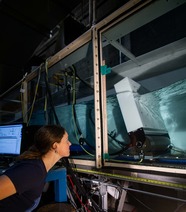
PNNL, NLR, and Sandia National Laboratories hosted a Marine Energy Career Panel featuring staff from various research disciplines. Members of the panel discussed their career paths, gave advice to students preparing to graduate and enter the workforce, and took questions from the audience.
|
The TEAMER program approved more than $4.7 million to be awarded to 33 projects through RFTS 17. The TEAMER network, designed to accelerate innovation and commercialization within the U.S. marine energy sector, reported a record number of applications received, projects approved, and support awarded during RFTS 17. Applications for RFTS 19 are due by October 2, 2026.
|
|
H2O and National Lab Events
June 25, 2026 at 3 p.m. ET and July 15, 2026 at 2 p.m. ET
H2O Staff will join two EnergyWerx webinars focused on the HyTN Round 2 voucher opportunity for HyTN recipients. The webinars will provide potential applicants with an overview of the opportunity and a chance to ask questions. The application window opened on June 16, 2026.
|
|
|
The National Academies of Sciences, Engineering, and Medicine has published a report funded by H2O outlining how U.S. energy and water systems are interconnected. The report outlines how disruptions to either system can cascade rapidly across both, impacting public health, economic activity, national security, and environmental quality. The report found that a federal agency dedicated to water management issues could centralize, coordinate, and evaluate data to help create regional specific approaches, mitigating the risk to Americans.
A PNNL report highlights potential impacts from increasing the installation of marine energy devices in areas that contain other ocean-based industries and activities. The paper proposes applying a holistic environmental management method, considering all ecosystem components, when evaluating the potential impact of marine energy devices. This method has proven useful in other ocean-based industries and can be relevant for marine energy devices due to shared environmental effects.
ORNL and Argonne have developed a cost model that will enable pumped storage hydropower (PSH) developers to gather a preliminary estimate of the cost of geomembrane lining systems. Geomembrane lining systems have been used around the world for over 60 years across the hydropower sector but have not been used in U.S. PSH development since 1981. The cost model will allow developers to make more informed decisions related to preferred reservoir lining systems for PSH projects.
|
|
|
|
|