|
|
Welcome to The Water Wire, a snapshot of all water power funding opportunities, upcoming events, and recent news. This month’s newsletter takes approximately 5 minutes to read.
Reach out to the U.S. Department of Energy’s (DOE’s) Hydropower and Hydrokinetic Office (H2O) at H2O@doe.gov with any inquiries or suggestions. Follow the Office of Critical Minerals and Energy Innovation’s (CMEI) X, Facebook, and LinkedIn channels for news, announcements, and water power content.
|
|
H2O Announcements and Features |
|
|
H2O will soon issue nearly $430 million in payments to 212 American hydropower facilities across 33 states that were selected as part of the Maintaining and Enhancing Hydroelectricity Incentives program. The program invests in capital improvements directly related to improving grid resiliency, dam safety, and ensuring facilities are aligned with current state and federal regulatory requirements.

On Monday, March 16, Nichole Fitzgerald joined H2O as its new director. Nichole has spent nearly 15 years with the Department of Energy, working to make energy more affordable and reliable for Americans. She has served in leadership roles in the former Bioenergy Technologies Office and the Hydrogen and Fuel Cell Technologies Office.
|
Natel Energy has published a new peer-reviewed study that compared fish passage through Natel FishSafe™ turbine runners to conventional runners. The study found survival rates of fish passing through FishSafe turbines were nearly 100%, exceeding industry averages. Natel FishSafe runners offer pathways for hydropower facilities to modernize equipment, meet regulatory requirements, and remain online to provide reliable and affordable power to Americans.
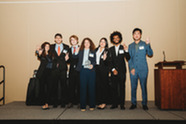
H2O announced that California Polytechnic State University, San Luis Obispo was the overall winner of the fourth annual Hydropower Collegiate Competition (HCC). Southern Utah University finished in second place while Purdue University and Northern Arizona University tied for third place. Participants competed in several hydropower-themed contests including the siting, design, and community connections challenges. The 2026 HCC final event occurred during the Midwest Regional Meeting, organized by the National Hydropower Association and the Midwest Hydropower Users Group. Congratulations to all the students for their great work!
|
In a recent episode of the For Shore podcast, Maha Haji discussed recent work funded by DOE and the National Oceanic & Atmospheric Administration and conducted by Cornell University. Haji spoke about ways to ensure that ocean users working in the same space, from energy producers to recreational fishers, can all have access to the resources they need.
H2O announced that 45 student teams will participate in the 2027 Hydropower and Marine Energy Collegiate Competition (MECC). These annual competitions engage and educate students about real-world challenges and the many career opportunities in hydropower and marine energy. HCC and MECC activities will begin in fall 2026 as teams work through their challenges during the academic year, concluding with an in-person final at industry events in spring 2027.
NLR is seeking feedback from hydropower stakeholders to help shape the next iteration of pumped storage hydropower (PSH) tools. The feedback will be used to inform improvements to the PSH Resource Supply Curves map and the PSH Cost Model and Life Cycle Assessment tool. Using this feedback, NLR will better curate its PSH tools to match the interests and needs of stakeholders who use them, shaping updates to NLR’s tools in 2026 and beyond.
|
|
|
|
PNNL Publishes Reports to Inform and Expedite Marine Energy Permitting
ORNL Study Highlights American Hydropower Potential
Earlier this year, Oak Ridge National Laboratory conducted a study of 2,600 non-powered dams in the United States to characterize their technical potential. The research team identified nearly 4 GW in potential new power capacity. ORNL’s work is based on previous work and results, but the project team used more detailed and updated hydrologic data to produce estimates of technical potential to improve the accuracy of the assessment.
|
|
|
|