|
|
Welcome to The Water Wire, a snapshot of all water power funding opportunities, upcoming events, and recent news. This month’s newsletter takes approximately 5 minutes to read.
Reach out to the U.S. Department of Energy’s (DOE’s) Hydropower and Hydrokinetic Office (H2O) at WaterPowerTechnologiesOffice@ee.doe.gov with any inquiries or suggestions. Follow the Office of Critical Minerals and Energy Innovation’s (CMEI) X, Facebook, and LinkedIn channels for news, announcements, and water power content.
|
|
Did You Know?
You can re-live the nostalgia of Oregon Trail while learning more about hydropower. Fish Trails, developed by the Pacific Northwest National Laboratory (PNNL), is based on the classic game and is filled with information about how fish migrate through rivers, find food, and seek shelter in the real world.
|
|
H2O Announcements and Features |
|
 |
|
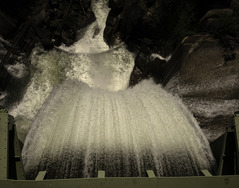
H2O is encouraging U.S.-based technology developers with hydropower testing capabilities to apply to be a HyTN voucher provider before the deadline of April 23, 2026. HyTN was developed by H2O to raise the technology readiness of hydropower innovations by connecting developers to testing facilities. |
H2O and the National Laboratory of the Rockies (NLR) are encouraging college students from a variety of disciplines to form teams and register for the 2027 HCC and MECC by May 1, 2026. Aimed at preparing students to solve real-world energy challenges, these collegiate competitions provide an opportunity for students to connect with industry stakeholders, gain insight into potential career pathways, and win cash prizes from combined pools totaling up to $715,000. Teams need not be complete to apply.
The TEAMER program now offers commercialization support to help American marine energy developers bring their technologies to market, unleashing new avenues for American energy innovation. The demand is evident—nearly 22% of the record-setting 73 applications received for RFTS 17 were for commercialization support. TEAMER is now collecting applications for RFTS 18 through June 6, 2026.
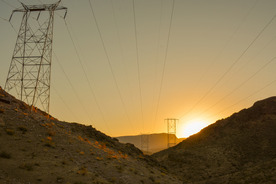
DOE’s Office of Indian Energy (IE) has announced a $50 million NOFO aimed at fostering affordable, reliable, and secure energy solutions for Tribes across the United States. This investment will support Tribal-led community-scale energy project planning and development as well as large-scale energy project planning. IE is currently soliciting applications from Indian Tribes with full applications due by July 24, 2026.
|
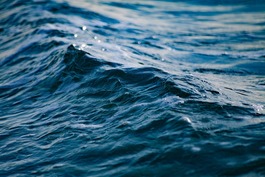
In October 2025, H2O, the Ocean Observatories Initiative, Woods Hole Oceanographic Institute, Sandia National Laboratories, and several other partners deployed a wave energy converter (WEC) off the coast of North Carolina. Since open water testing began, the device has run with 99% uptime, allowing researchers to better understand how wave energy can provide reliable power for ocean observation devices and observations.
 |
|
The Pacific Northwest National Laboratory (PNNL) is developing a new microgrid testbed that can be used for in-water testing of new marine energy and ocean technologies. The test system enables real-world performance evaluations of new energy technologies and helps stakeholders better understand how they would interact on a controlled microgrid. |
Researchers from Oak Ridge National Laboratory (ORNL) have performed advanced hydrodynamic and chemical models to assess the feasibility of converting abandoned coal mines into underground pumped storage hydropower (PSH) facilities. PSH already provides almost 90% of domestic utility-scale energy storage and could further increase grid reliability and security by expanding its geographical reach through leveraging existing infrastructure.
In September 2025, Ocean Motion Technologies (OMT) deployed its surface wave energy converter (S-WEC) system, designed to power oceanographic sensors. The goal of the deployment was to confirm the S-WEC’s capability to deliver persistent, off-grid power at sea. OMT continues to work with commercial and research organizations to advance ocean monitoring and marine energy technologies.
|
|
DOE, H2O, and National Lab Events
TODAY April 15, 2026 at 3 p.m. ET
Join members of the HyTN team today for an opportunity to have questions answered before applying to Phase 1 of Round 2. During this phase, test facilities can apply to join the network. In subsequent phases, technology developers can apply to work with test facilities. In this hour-long webinar, DOE will present the details of the HyTN voucher opportunity. Potential voucher providers will gain a better understanding of the program’s scope, scale, and intent.
Tuesday, April 2021, 2026 at 12 p.m. ET
Join H2O staff to discuss domestic hydropower testing needs, provide feedback on current recommendations, and inform the future of hydropower testing in the United States.
See H2O at These Events
April 28-29, 2026, Green Bay, Wis.
The National Hydropower Association and Midwest Hydropower Users Group will host their annual conference in Green Bay, Wisconsin this spring. Along with a chance to network with hydropower professionals, the conference will also host the finale of H2O’s 2026 Hydropower Collegiate Competition, featuring students and faculty from various U.S. colleges and universities.
|
|
|
As the marine energy industry progresses around the world, so does the importance of understanding potential environmental impacts of deployed technology. To learn how regulators across the world perceive and manage environmental risks during permitting processes, PNNL conducted a survey on how to best expedite permitting for marine energy devices and published the results for Ocean Energy Systems.
Through the Water Power Technical Collaboration Program, ORNL published a report detailing the development of a self-preserving environmental DNA (eDNA) filter. The new filter can be used in sectors such as aquaculture, marine energy, and more. The filter has better performance than those currently used in the field because it captures and preserves eDNA more quickly while keeping sample integrity.
PNNL researchers have published a study that overviews a new machine learning application called M-Count. The application is designed for the user-friendly quantification of bio-fouling mussel larvae, which can appear individually or in tightly packed clumps. M-Count addressed the limitations surrounding current counting methods such as manual counting, which is time consuming and prone to human error, and existing automatic methods that can be complex to operate for non-experts.
|
|
|
|
|