|
|
Welcome to The Water Wire, a snapshot of all water power funding opportunities, upcoming events, and recent news. This month’s newsletter takes approximately 5 minutes to read.
Reach out to the U.S. Department of Energy’s (DOE’s) Hydropower and Hydrokinetic Office (H2O) at WaterPowerTechnologiesOffice@ee.doe.gov with any inquiries or suggestions. Follow the Office of Critical Minerals and Energy Innovation’s (CMEI) X, Facebook, and LinkedIn channels for news, announcements, and water power content.
|
|
Did You Know?
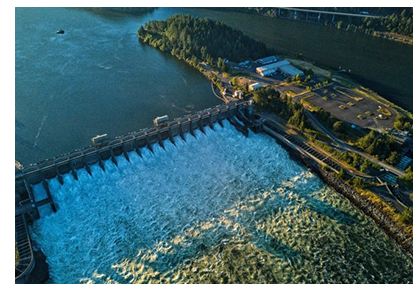
Less than 3% of the nation’s dams are used to generate electricity. Modernizing these structures offers a way to produce reliable power while keeping energy costs down for Americans. Idaho National Laboratory (INL), Pacific Northwest National Laboratory (PNNL), and Oak Ridge National laboratory (ORNL) have developed the non-powered dam (NPD) Hydro tool to provide low-cost, transparent ways to assess the feasibility of electrifying NPD sites.
|
|
Hello and Welcome Back
Hello, water power stakeholders! Welcome to the first edition of the 2026 Water Wire. We have been busy working to increase American energy dominance, reduce energy costs for everyday Americans, and bring innovative technologies from the lab to the real world.
Our office may have a new name—the Hydropower and Hydrokinetic Office (H2O)—but we are still committed to enabling the research, development, testing, and commercialization of technologies to advance next-generation hydropower and pumped storage systems, as well as marine energy, to deliver flexible, reliable energy. Continue reading to learn about our most recent announcements and some of our work over the past year, focusing on resources from DOE national labs. Future editions will continue to feature highlights from DOE national labs, as well as other partners across industry and academia.
|
|
Highlights from the Past Year |
|
|
DOE has announced it will open several programs to strengthen water power technologies, providing access to workforce development opportunities and testing support. Through the 2026-2027 Hydropower and Marine Energy Collegiate Competitions and a second round of HyTN, H2O is taking meaningful steps to deliver flexible, reliable energy to the American people with a robust domestic workforce and a modern national hydropower fleet.
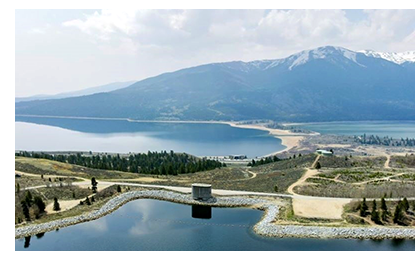
As part of DOE’s promise to unleash American energy dominance, H2O works to ensure hydropower and marine energy technologies are set up to provide Americans with reliable, affordable, and secure electricity. By collaborating with public- and private-sector partners across the country, H2O has spent the last year working to harness the nation’s water resources and ingenuity for the benefit of Americans.
|
On National Hydropower Day in 2025, Argonne National Laboratory (Argonne) took some time to reflect on the work it has done to ensure hydropower remains a reliable, affordable energy option for Americans. Whether through designing computer models that add watts to the grid or mentoring students to inspire the next generation of the hydropower workforce, Argonne is working with H2O to unleash American energy innovation.
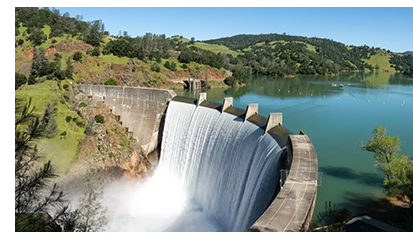
A team at PNNL found that pairing batteries with hydropower facilities can support the grid and help existing hydropower operators maximize the performance of their plants by extending the lifespan of hydropower equipment and creating new avenues to earn revenue. The team used real-life operational data from the Bagnell dam in Missouri during its modeling simulation.
|
INL partnered with Idaho Falls Power to create a new exhibit at the town of Idaho Falls’ Heritage Park. The park sits across from Idaho Falls Power’s Lower Power Plant, a hydropower facility built in the 1930s, which now features a mini-hydropower dam to provide a hands-on model of how hydropower generation works.
Sandia National Laboratories (Sandia) announced it has begun to construct a new Line Inspection and Guided Hardware Testing (LIGHT) lab. The facility is designed to test and validate the performance of marine energy umbilical, mooring lines, and belts before they hit the open water. The LIGHT lab will help ensure that deployed devices stay in place, maximizing the amount of energy captured from our nation’s wave and tidal resources to create reliable and secure power for the grid.
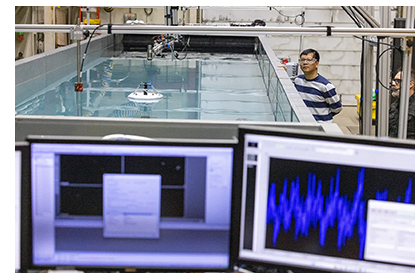
Researchers from the National Laboratory of the Rockies (NLR), PNNL, and Sandia released version 1.0 of the Marine Hydrokinetic Toolkit (MHKiT) on GitHub—a free, publicly available software tool used to process, analyze, visualize, and standardize marine energy data. Marine energy developers depend on data to hone their early-stage technology designs and prepare them for commercial use.
|
ORNL and H2O have expanded the Hydropower Technical Collaboration Program (TCP) to also support marine energy applications. The newly titled Water Power TCP now supports collaborative projects focused on hydropower, pumped storage hydropower (PSH), and marine energy. Selected participants will have access to DOE’s Manufacturing Demonstration Facility at ORNL.
Hydropower can be more than just a power source, it can also be the premise of a game. Argonne is developing the Hydropower Market game to teach Americans about the vital role hydropower plays in securing our energy future. Argonne is actively seeking beta testers to explore the game and share feedback.
|
|
|
Hydropower Office and National Lab Events
March 31, 2026, 12 p.m. ET
Join PNNL’s Hydropower Vision Roadmap team for an upcoming webinar sharing results from the Priorities and Pathways survey launched alongside the new Hydropower Vision newsletter. The session will highlight priorities, progress, and key themes identified across the hydropower community, and discuss how this research input is informing Roadmap activities and engagement. Participation is welcome regardless of prior familiarity with the Roadmap.
See H2O at These Events
March 9–13, 2026, Westin DC Downtown, Washington, D.C.
Water Power Week convenes senior executives, hydropower producers, water power developers, government agencies, and regulators to explore issues affecting water power. Principle Deputy Assistant Secretary Michael Helmer will be featured as a plenary speaker and discuss the recent actions taken by DOE, CMEI, and H2O to advance American energy dominance. H2O staff will also lead a panel covering information stakeholders may need to know to navigate DOE after a recent re-organization, host office hours, and participate in several other sessions.
Find H2O at our table in the main concourse.
|
|
|
NPDs represent a significant opportunity to create affordable and reliable power for Americans. To further explore this opportunity, ORNL conducted a study that estimates the technical potential for hydropower capacity and generation at 2,616 existing NPDs across the contiguous United States. The study presents recommendations for how to capitalize on nearly 4 GW of potential capacity.
A report from NLR examines how electric utility modeling and asset valuation frameworks can better capture the full value of PSH in a changing grid. Using a detailed case study from the Tennessee Valley Authority, the publication highlights gaps in current approaches and opportunities to improve planning for grid reliability and flexibility.
A joint study by Argonne and NLR investigated the commercialization challenges faced by PSH developers, by going beyond a literature review and working with key industry stakeholders as well as the public to determine the most pressing and impactful roadblocks. The study also identified and documented best practices from across the industry related to developing and deploying new PSH projects, facilities, and technology innovations.
|
|
|
|
|