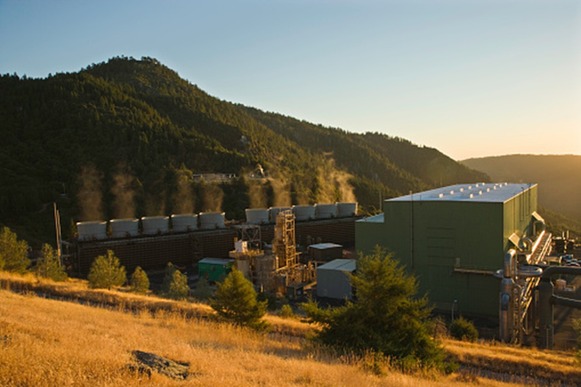
 The Geysers Geothermal Power Plant. Credit: Kim Steele via Getty Images (from the 2025 U.S. Geothermal Market Report)
The U.S. Department of Energy’s (DOE) Office of Geothermal and its National Laboratory of the Rockies have released the 2025 U.S. Geothermal Market Report, which details steady growth in both geothermal power and geothermal heating and cooling technologies in the United States. The report highlights increases in geothermal power capacity, especially in the western United States, and new utility and corporate power purchase agreements that signal strong momentum for future geothermal power projects. It also discusses how advances in next-generation technologies like enhanced geothermal systems are realizing cost reductions and attracting significant private investment, highlights the nation’s abundant domestic resource potential, and catalogues growing state-level incentives available for geothermal.
The 2025 Market Report also confirms increased geothermal heating and cooling across the country, with geothermal heat pumps being used nationwide and large-scale thermal energy networks offering new opportunities for community-scale heating and cooling, and discusses additional growth areas for geothermal, including data center energy needs and hybrid systems that combine geothermal with other energy technologies.
Overall, the report findings point to a strong and growing role for geothermal in supporting a reliable, affordable, and secure U.S. energy future.
Key findings include:
Geothermal Power Generation
- Enhanced geothermal systems (EGS) and other next-generation geothermal technologies are progressing rapidly.
- DOE’s Frontier Observatory for Research in Geothermal Energy (FORGE) project and industry pilots show successful drilling and reservoir development.
- EGS costs are declining; conventional hydrothermal costs are stable.
- Next-generation geothermal innovations have raised more than $1.5 billion in private investment since 2021.
- Thirty states offer incentives for geothermal power projects.
Geothermal Heating and Cooling
- About 1.3 million homes and 27,300 commercial buildings use geothermal heat pumps (GHPs), which are proving reliable across all U.S. regions and climates.
- Numerous states have incentives supporting GHP adoption, and leasing by third parties is now allowed, increasing accessibility.
- Thermal Energy Networks (district-scale loops) are emerging, including the first U.S. utility-owned pilot in Framingham, MA.
- Direct-use geothermal is widely used for versatile applications like space heating, aquaculture, and greenhouses.
The report also discusses emerging opportunities for geothermal energy, including its use to support power and cooling needs for data centers and mineral extraction from geothermal brines.
Learn more about geothermal research, market trends, and opportunities on the Office of Geothermal’s website.
|





