|
Recharge Jolt: Plastic Free July
As we approach the end of Plastic Free July, the Office of Energy Efficiency and Renewable Energy (EERE) has plenty of reasons to celebrate!
From finding new ways to conveniently recycle our plastic waste to creating plastic products made from biodegradable material, EERE celebrates Plastic Free July with research, recognition, and plans for the future of clean energy.
So, let’s bend our straight line into a circle and work together to create a Plastic Free August, and September, and October...
|
|
First Things First, What Is a Circular Economy?
|
|
|
Typically, you can trace the life cycle of most manufactured products with a straight line: we use materials and then discard them—some can take up to a thousand years to decay. But we can transform this unsustainable model by recovering the materials from discarded products and using them in new ways. Read this blog by PDAS Jeff Marootian to learn more about this circular process.
Products that use electricity for power, like your phone or computer, are the fastest-growing sources of waste. In the coming years, this issue will only become more pressing, with a projected 100% growth rate for electronic waste by 2030. But thanks to funding from EERE and DOE-led projects, like the Electronics Scrap Recycling Advancement Prize, we’re discovering new ways to recover reusable materials from waste and even manufacture biodegradable materials to replace wasteful plastic.
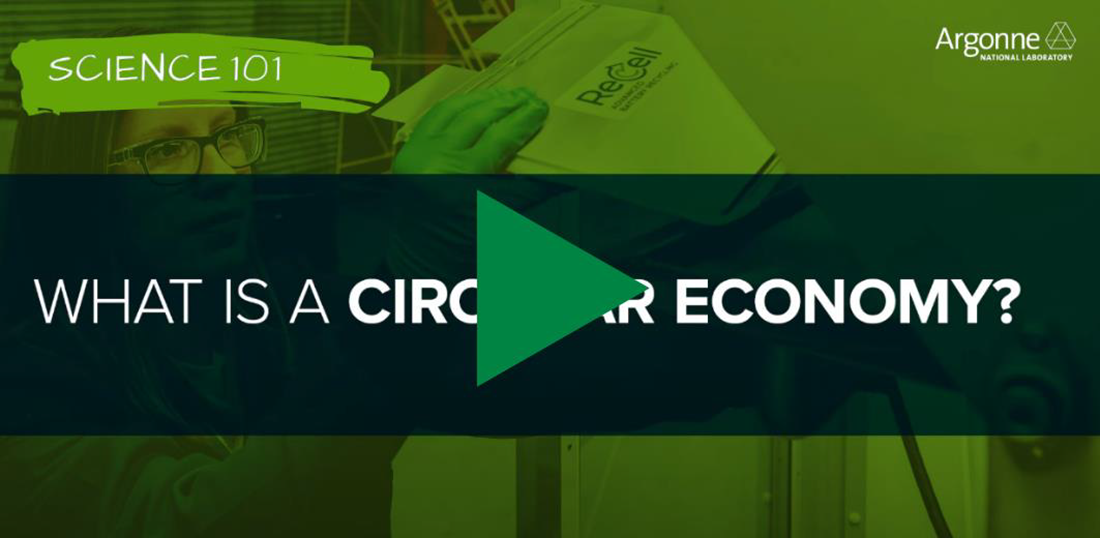
Argonne National Laboratory proposes using low-cost methods to recycle materials from waste and analyze the broader life cycle of plastics and their potential for reuse. This installment of Argonne’s Science 101 video series, featuring principal materials scientist Jessica Macholz and postdoctoral scholar Sam Hunt, explores the concept of a circular economy and how we can build one. Learn more about our efforts to develop new, low-cost methods for reducing, reusing, recycling, and repurposing.
|
|

As more and more plastics are discarded every day, a team of dedicated organizations works to reduce plastic waste! The Bio-Optimized Technologies to keep Thermoplastics out of Landfills and the Environment (BOTTLE) consortium is a DOE-led, multi-organizational group committed to developing new upcycling strategies for today’s plastics—and designing recyclable plastics for tomorrow!
We’ve discarded over 5 billion metric tons of never-been-recycled plastic, so BOTTLE’s work is more important than ever. Learn more about BOTTLE’s mission to close the loop on plastics recycling.
|
|
|
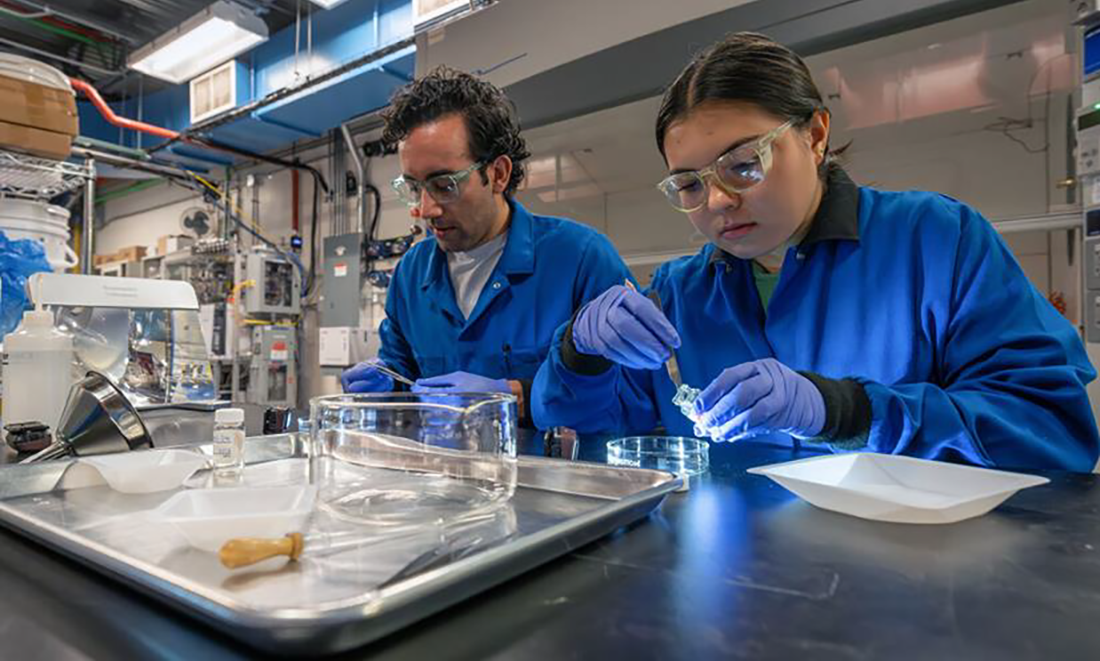 NREL researchers Ali Chamas (left) and Clarissa Lincoln (right) use tweezers to remove plastic debris from samples from the Delaware River for analysis. The WaterPACT project is investigating plastic pollution in U.S. rivers. Photo courtesy of Josh Bayer, NREL
|
|
RING Container Technologies uses high-density polyethylene (HDPE) and polyethylene terephthalate (PET) plastic resin to make their bottles and containers. To lower energy usage and reduce waste, RING began an efficiency project at their facility in Decatur, Illinois, addressing chiller energy use and compressed air leaks.
The project was successful in using a chiller upgrade, compressed air leak reductions, and waste diversion through plastic waste recycling—so successful that RING is scaling this approach to additional sites! Read this article from DOE’s Better Buildings to learn more about RING’s process of manufacturing HDPE and PET products to improve quality and reduce prices.
|
|
|
Recycling and Research Wins |
|
|
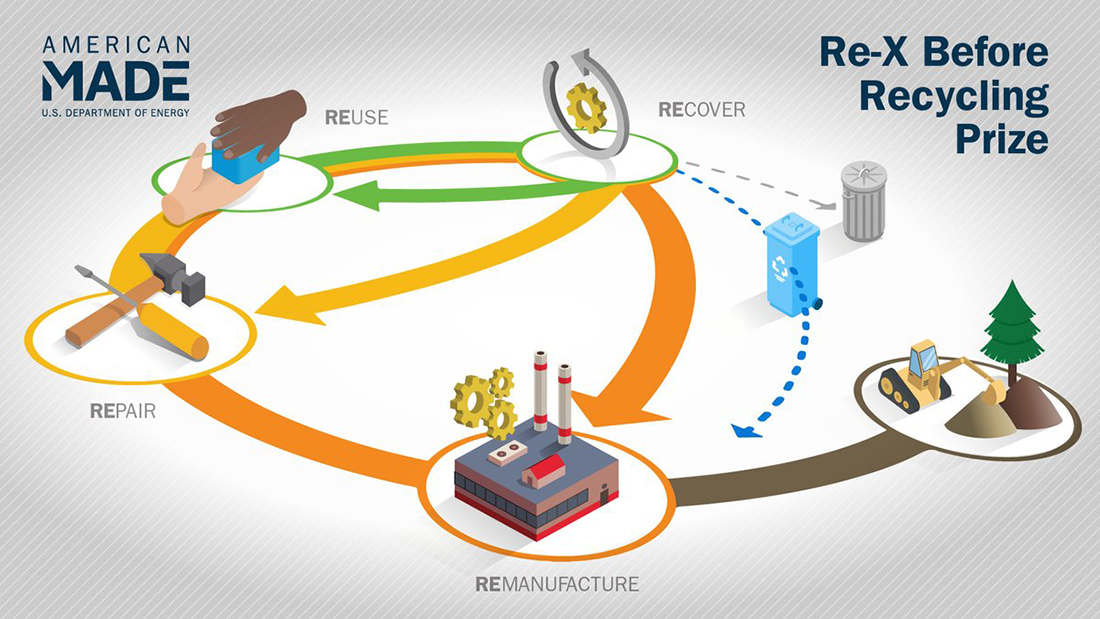
Back in June, EERE congratulated the phase one winners of the $5.6 million Re-X Before Recycling Prize, a three-phase competition that stimulates innovation and private investment in circular economy approaches for waste streams. Read more to learn about the winners and how they’re helping to create a robust, environmentally sustainable economy—and submit your application before October 22 to enter phase two!
|
|
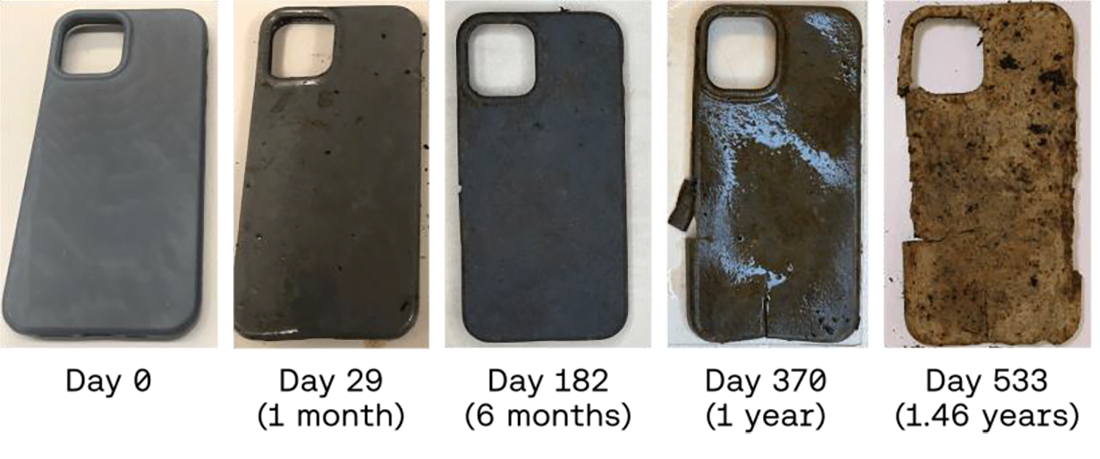 You can see the time course of biodegradation in the home compost of a cell phone case made with Soleic® thermoplastics. Photo courtesy of Jaysen Reindel. Permission is granted to reproduce as per creative commons license 4.0.
Did you know that polyurethane is used in everyday items like foam cushions but is non-biodegradable? A recent study by Algenesis Corporation and the University of California San Diego, funded by BETO, shows that we can develop biodegradable polyurethane using algae!
Using polyurethane plastics, we can design products that biodegrade naturally in the environment. Learn more about this innovation and the eco-friendly alternatives for items like waterproof fabrics and phone cases that help combat microplastic pollution in this article by BETO technology manager Daniel B. Fishman.
|
|
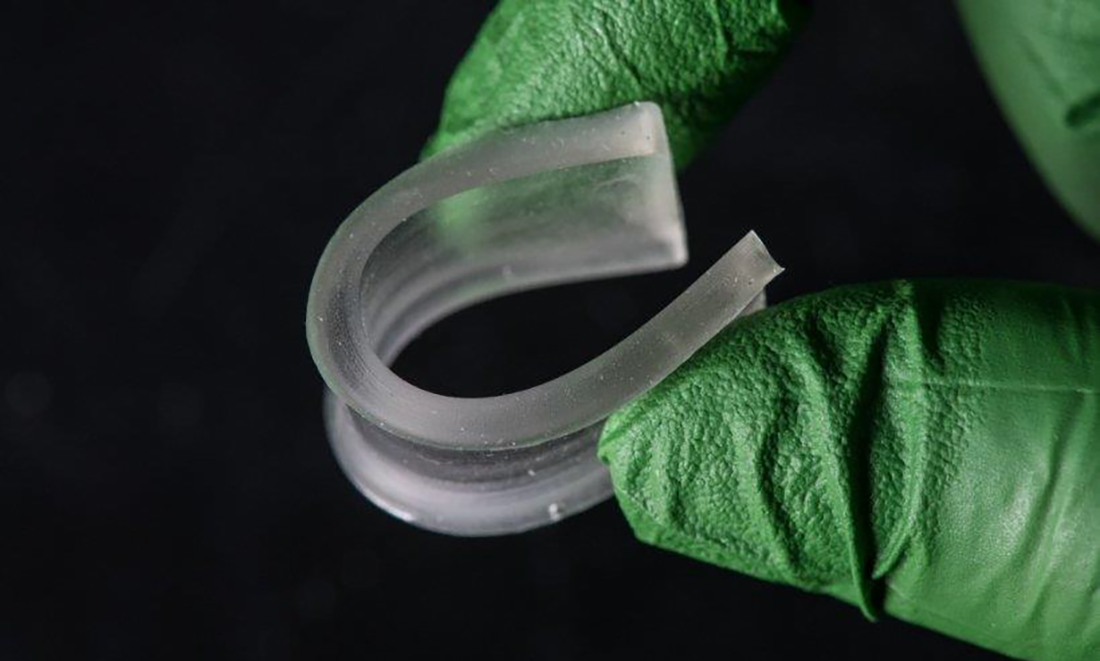 NREL scientists are using a machine learning tool to discover innovative polymer designs, such as this novel rubbery polymer made from biomass. Photo courtesy of Dennis Schroeder
|
|
|
NREL is working on the perfect recipe for polymers that are more sustainable and high performing—that’s why they created their machine learning tool, Polymer Inverse Design™ (PolyID).
With support from BETO, PolyID uses artificial intelligence to predict material properties based on molecular structure, meaning it can screen millions of possible polymer designs and create a list of promising candidates! Learn more about the PolyID tool and NREL’s ongoing bioenergy research.
|
|
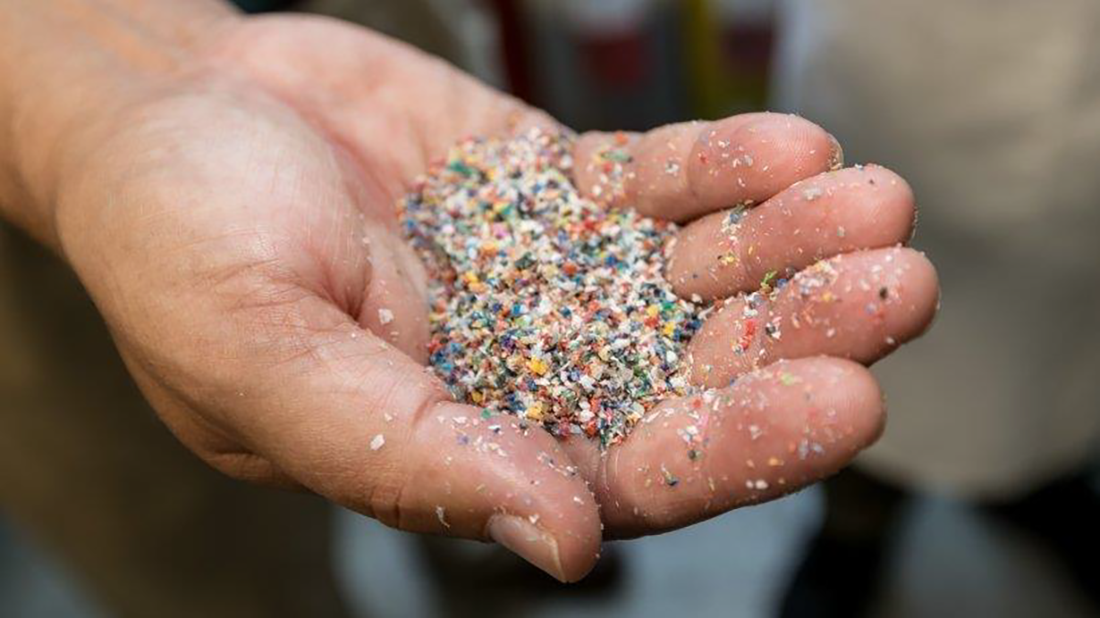 Low-value waste plastic can be converted into high-value chemicals in a new process developed by UW-Madison researchers. Photo courtesy of Joel Hallberg
|
|
|
Even when we’re careful to put plastic waste into recycling bins, a lot of that waste can’t be recycled cost-effectively; only 9% of plastics in the United States are reused. Most of our plastics are low value, meaning the high costs of recycling don’t necessarily yield good returns. Well, the University of Wisconsin (UW) Madison has an answer!
UW-Madison created a new process that chemical engineers can use to transform plastic waste from low- to high-value chemicals. This process creates pathways to recycle new types of plastics and paves the way for sustainable plastics in a circular plastics economy.
Learn more about this exciting recycling research.
|
|
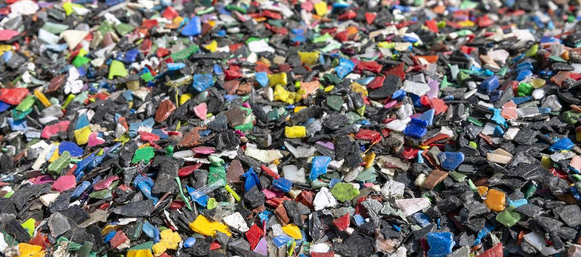 The REMADE Institute’s plastics recycling initiative includes several projects to reduce the harmful effects of plastics on the environment. Photo courtesy of the REMADE Institute
|
|
|
The REMADE Institute and its members are dedicated to developing advanced technologies to improve plastic recycling by increasing collection, sorting, separation, reprocessing, chemical recycling, solvent extraction, and purification of domestic plastic waste.
Their goal is threefold: 1) demonstrate 30% primary feedstock reduction and 30% secondary feedstock increase; 2) show 25% improvement in embodied energy efficiency; and 3) demonstrate approaches to cost-effective cross-industry use of secondary feedstocks. Explore the REMADE Institute’s many plastics recycling projects that further one of their major initiatives.
|
|
|
|
|