|
The National Offshore Wind Research and Development Consortium (NOWRDC) intends to fund $10.6 million for groundbreaking projects to advance floating offshore wind through port and vessel innovations, transmission technology, and uncrewed underwater vehicles for environmental monitoring to accelerate the deployment of the technology across the United States.
Supported by the U.S. Department of Energy's (DOE) Wind Energy Technologies Office (WETO), the California Energy Commission, New York State Energy Research and Development Authority, Massachusetts Clean Energy Center, and the Bureau of Ocean Energy Management, NOWRDC Solicitation 4.0 aims to revolutionize floating offshore wind technology. Learn more about this opportunity and keep an eye out for NOWRDC’s full solicitation later this summer.
WETO selected Sandia National Laboratories for funding of the SpinnerLidar project, an innovative tool that measures wind speed and direction with high accuracy. The SpinnerLidar provides detailed data both in space (where the wind is coming from) and time (how the wind changes). By using this precise information, better models of how wind turbines work are developed. The funding was announced under the Fiscal Year 2024 Technology Commercialization Fund base annual appropriations Core Laboratory Infrastructure for Market Readiness lab call.
DOE's Solar Energy Technologies Office and WETO announced the Solar Technologies’ Rapid Integration and Validation for Energy Systems (STRIVES) funding opportunity, which will provide up to $31 million for research, development, and demonstration projects to improve power systems simulation software tools and demonstrate new business models for distribution systems operations to integrate and optimize the value of inverter-based resources and distributed energy resources including solar generation, wind generation, energy storage, and other technologies such as buildings and electric vehicles. Submit concept papers by July 25.
State and/or local government involvement in renewable energy development varies widely across the United States. A new report funded by DOE, in collaboration with Lawrence Berkeley National Laboratory, the Regulatory Assistance Project, Clean Air Task Force, and others, inventories and simplifies the complex state-level policies of all 50 states, plus Puerto Rico. It looks at which entities have the authority to make siting and permitting decisions in each state or territory, guiding timelines, and more. Read the report and join a webinar on June 20th, 2024 at 1 p.m. ET to learn more.
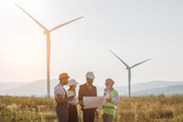
WETO hopes you had a particularly breezy weekend, as June 15 was Global Wind Day! This time of year is always a good reminder to acknowledge and celebrate the progress that has been made in the wind industry, and there’s no better way to do this than to check out our 2024 Spring Wind R&D Newsletter. Dive in to learn about the whirlwind of research and development WETO has been supporting, including gathering data to learn about the interaction between wildlife and offshore wind technology, bigger and quieter wind farms of the future, protecting wind energy from cyberattacks, and plenty more.
|
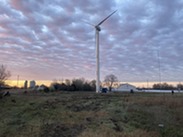
Each year, the Pacific Northwest National Laboratory (PNNL) launches a search for the best distributed wind energy photos across the United States and its territories for PNNL's Distributed Wind Photo Gallery. The annual photo search aids PNNL’s efforts to highlight distributed wind technologies and the customers they serve. Check out 2024’s photo selections—including runners up—in various categories!
|
 |
|
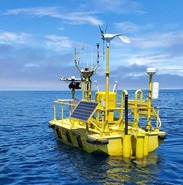
ThermalTracker-3D—a thermal stereo vision technology developed by PNNL with funding from WETO—is making strides toward commercialization. The innovative system collects behavioral data for birds and bats in the vicinity of wind turbines to help the industry meet monitoring requirements for development of proposed wind farm sites.
|
In the 1900s, standards were adopted internationally for the wind industry, allowing for significant advancements. The impact can be seen through improvements in product reliability, industry maturity, and financial risk reduction. The shift to following established international standards was a key contributor in making wind power an economically viable source of electricity. Today, in its national laboratories, the U.S. Department of Energy sponsors numerous staff members who contribute actively to international standards committees.
Webinar: June 17, 2024, at 1–2:30 p.m. ET, Virtual
Applying for loan and grant awards to invest in distributed wind energy just got easier. Join staff from the U.S. Department of Agriculture and NREL for a virtual 90-minute webinar designed to help rural small businesses prepare successful applications.
Conference: June 17–18, 2024, Boston, MA
Learn, connect, and collaborate in a setting designed for networking and business development opportunities for offshore wind. Speakers will include Walt Musial and Aubryn Cooperman from NREL.
Webinar: June 20, 2024, at 2–3 p.m. ET, Virtual
Experts from the U.S. Department of Treasury and DOE will host a webinar on the recently issued guidance on the domestic content bonus provision. It will give stakeholders from the solar, wind, hydropower, storage, and other industries a chance to learn how these new developments will make it easier for developers to purchase domestic products and have certainty in qualifying for the domestic content bonus.
Webinar: June 25, 3–4 p.m. ET, Virtual
Join distinguished leaders from DOE for a deep dive into the Offshore Wind Pathways to Commercial Liftoff report.
|