|
Buildings and Industry News |
|
|
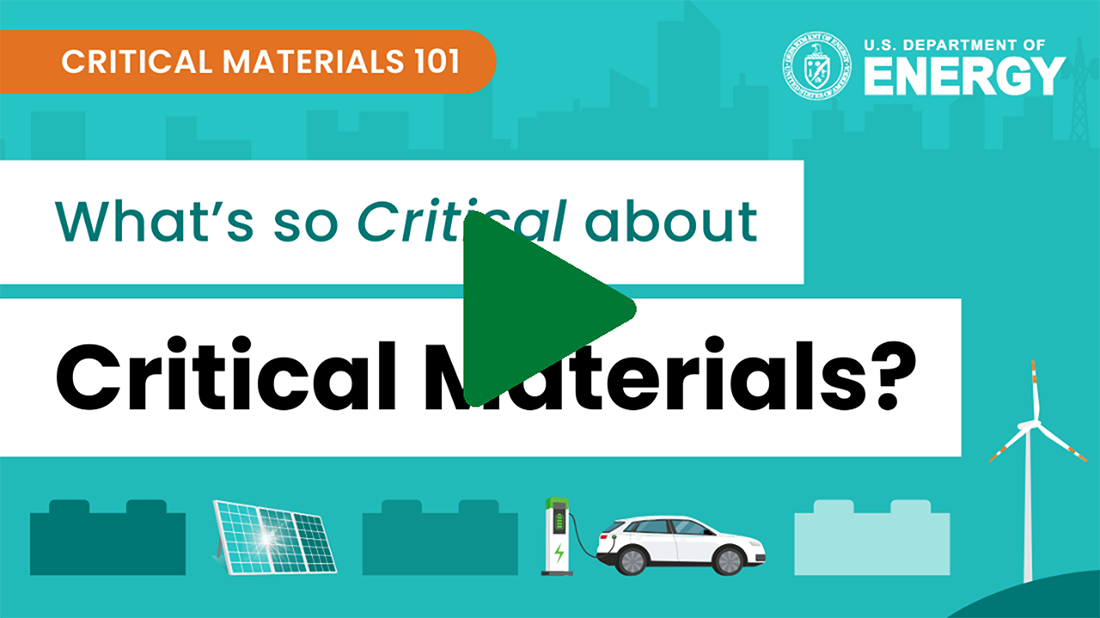
We’re heading back to school for the first of five Critical Materials 101 videos! Sharpen your pencils and take note of what makes critical materials so important for our clean energy future. Check out this video!
DOE selected 13 projects to tap into the world-class high-performance computing (HPC) resources from our national laboratories. These short-term, collaborative projects will address key manufacturing and materials challenges to move us closer to the Biden-Harris Administration’s goal of net-zero carbon emissions by 2050.
|
|
Integrated Strategies News |
|
|
Because Alaska’s Railbelt power system is facing a natural gas shortage, Alaska state legislature and utilities enlisted the help of DOE to examine the cost and reliability impacts of adopting an 80% renewable portfolio standard. Our researchers discovered that creating a modern energy system in Alaska—one that includes new jobs and uses local renewable energy resources—is more cost-effective than importing natural gas and relying on existing infrastructure.
Are you looking for technical assistance to plan your local energy transition? Explore our technical assistance opportunities.
|
|
|
Water power technologies, including marine energy and hydropower, are key to achieving a clean electricity sector by 2035 and a net-zero-emissions economy by 2050. As they rely on the movement and flow of water, these resources are predictable, reliable, and well-suited to balance electricity grids that use more variable forms of renewable energy. EERE’s Water Power Technologies Office (WPTO) selected five projects with the Minority-Serving Institutions STEM Research and Development Consortium for high-impact water power research projects at minority-serving colleges and universities. Read more to see how these universities will advance marine energy and research system modeling for climate resilience.
Geothermal energy is a reliable source of domestic, renewable energy that can be used to heat and cool homes and businesses, either with geothermal heat pumps or through direct use. As the largest initiative out of EERE’s Geothermal Technologies Office, the Frontier Observatory for Research in Geothermal Energy (FORGE) is working to help local communities and future generations learn about the benefits of geothermal energy. Find out how FORGE is engaging with schools, museums, and the general public in Beaver County, Utah, to spread knowledge about the “heat beneath our feet.”
Even though we know how to recycle the materials—like aluminum and glass—that make up more than 85% of a solar panel, solar panel recycling is not currently cost-effective or widely adopted. Find out how EERE’s SETO is reducing waste from solar panels by making them longer-lasting and easier to separate, eliminating harmful or expensive materials from their construction, and improving the recycling process.
|
|
Sustainable Transportation and Fuels News |
|
|
The Joint Office of Energy and Transportation just released the National Zero-Emission Freight Corridor Strategy, a landmark strategy that will guide the development of a fueling infrastructure for medium- and heavy-duty vehicles that provides cleaner air for residents along the freight corridors where these vehicles travel while saving millions of dollars on fuel. See how this multi-agency collaboration will prioritize, sequence, and accelerate freight corridor infrastructure in four phases.
|
|
Distributed Wind Network Webinar
March 14 | 1 p.m. ET
|
|
The Solar – Energy Efficiency Nexus Update
March 14 | 1 p.m. ET
|
|
DOE’s Pathways to Commercial Liftoff: Virtual Power Plants Deep Dive
March 14 | 3 p.m. ET
|
|
Energy Code Enforcement Challenges and Opportunities in Rural Communities
March 21 | 1 p.m. ET
|
|
Selling Renewable Energy to the Federal Government: Renewable Energy Certificates
March 21 | 2 p.m. ET
|
|
Clean Fuels & Products Shot™ Summit
April 8–9 | Two-Day Virtual
|
|
|
|