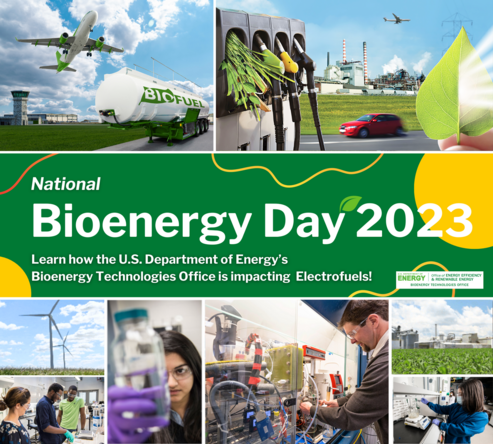
Could Midwestern Electrofuels Become the New Energy Superheroes?
Every hour, a typical 90-million-gallon ethanol plant produces around 27 tonnes of CO2, a natural byproduct of fermentation. These CO2 waste streams are highly concentrated, which makes them a choice feedstock for making electrofuels or “e-fuels” by outfitting refineries with electrolyzers. When given an electrical charge, these electrolyzers can turn CO2 that would have been released into the atmosphere into valuable chemicals instead. Doing so could not only greatly lower the carbon intensity of ethanol—which already has a carbon footprint 44%–52% smaller than gasoline—but also boost the fuel output of existing facilities.
Research from the National Renewable Energy Laboratory (NREL) and the CO2 Reduction and Upgrading for e-Fuels Consortium (CO2RUe), funded by the U.S. Department of Energy (DOE) Bioenergy Technologies Office (BETO), is demonstrating how specialized microbes can metabolize the products made from CO2 electrolysis into ethanol. That means an average biorefinery outfitted with electrolyzers and bioreactors could produce as much as 41 million more gallons of ethanol every year.
E-fuels are exactly the kind of innovation—call it superpower—we need to meet robust goals to decarbonize transportation, the single largest source of carbon emissions in the United States. Through the Sustainable Aviation Fuel (SAF) Grand Challenge, the federal government aims to boost the production of low-carbon SAF to 35 billion every year by 2050—enough to cover all anticipated future demand. Through CO2RUe and other BETO-funded research, NREL and partner institutions are working tirelessly to identify and overcome key barriers to these promising new technologies.
Read more about this CO2RUe and NREL research on BETO’s Bioprose: Bioenergy R&D blog.
CO2RUe, a collaboration of five DOE national laboratories, Argonne National Laboratory, Lawrence Berkeley National Laboratory, Lawrence Livermore National Laboratory, Oak Ridge National Laboratory, and NREL, develops and derisks advanced technologies that use renewable electricity to convert carbon dioxide (CO2) into valuable e-fuels and commodity chemicals. The consortium is funded by DOE’s Bioenergy Technologies Office under its Conversion Technologies subprogram.
BETO supports technology research, development, and demonstration to accelerate greenhouse gas emissions reductions through the cost-effective and sustainable use of biomass and waste feedstocks across the U.S. economy. BETO is part of DOE's Office of Energy Efficiency and Renewable Energy.
Stay up-to-date with the latest BETO news!
Sign up to receive regular communications about BETO vacancy announcements, webinars, workshops, Bioprose: Bioenergy R&D Blogs, funding opportunities, and technical reports.
|