The Drill Down – Drilling Deeper into Geothermal
Estimated read time: 7 minutes
 Director’s Note: Hi all – let’s dig into the progress, projects, and events happening at the Geothermal Technologies Office (GTO) this month!
We have some exciting project progress detailed in GTO’s Latest, including my recent visit to our Utah enhanced geothermal systems research site to see their near-completed drilling. We’re also celebrating the launch of a project to analyze the feasibility of geothermal direct use and thermal energy storage on the campus of West Virginia University and a project kick-off for the first of two selectees in our Geothermal Drilling Technology Demonstrations Initiative. We’re excited to see these projects start turning plans on paper into geothermal energy. Read on for more details!
And, as you may know, last month our office hosted an Enhanced Geothermal Shot™ Summit that concluded with a technical discussion of the roadmap GTO is outlining to reach the Enhanced Geothermal Shot™ target. We still welcome your feedback on this roadmap – take a look at the presentation, and email EGShotRoadmap@ee.doe.gov with your ideas, questions, and feedback.
Lastly, I hope you have an amazing (and safe) 4th of July!
 |
|
Sincerely,
Lauren Boyd
GTO Acting Office Director
|
Trivia Question: What is the temperature at Earth’s core?
GTO's Latest
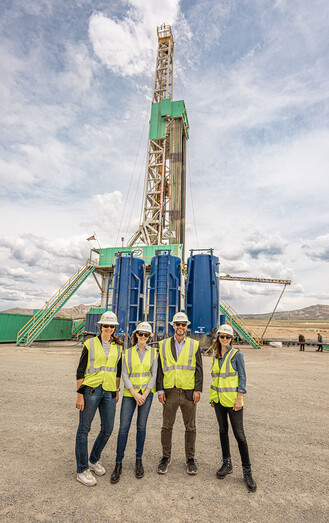
Photo Credit: Eric Larson, Flash Point SLC
GTO’s Flagship EGS Site Hosts GTO, EERE to Witness Drilling Operations
In late May, GTO’s Frontier Observatory for Research in Geothermal Energy (FORGE) site in Utah hosted GTO’s Acting Director Lauren Boyd, Enhanced Geothermal Systems Program Manager Kevin Jones, the Acting Assistant Secretary for DOE’s Office of Energy Efficiency and Renewable energy (EERE) and other EERE guests to tour FORGE and view drilling for its producer well, called 16B (pictured above). The nearly completed 16B well will intersect the fractures from the previous stimulation of the site’s 16A well. The completion of the 16B well will create an EGS injector-producer well pair at FORGE and allow the team to evaluate the subsurface connections between these two wells. Researchers will also conduct additional stimulations of both wells, which allow the team to improve subsurface flow pathways and do flow testing between the two wells to measure heat extraction and power production potentials.
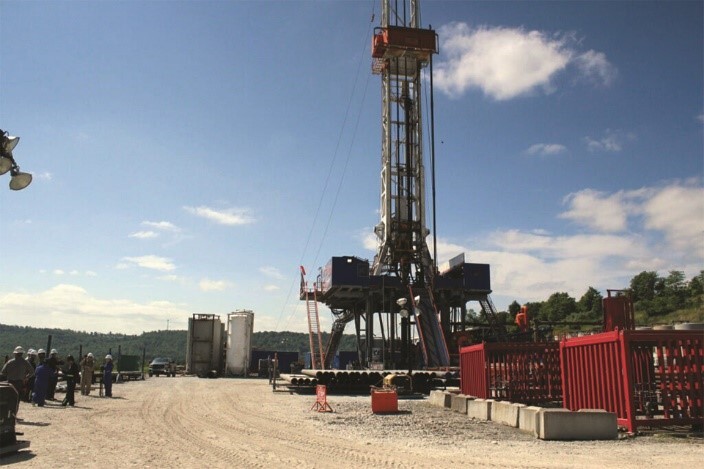
WVU geothermal/CCS project, drilling rig. Photo credit: Chris Schultz, WV Public Broadcasting
University (WVU) Project Commences Drilling
WVU has started drilling an exploratory well in a GTO-funded project to evaluate developing the low-temperature geothermal resource under the university campus and shallow reservoirs for energy storage. The project will provide valuable information about the use of low-temperature geothermal resources, including the potential to demonstrate how such resources in the Appalachian Basin may be accessed to generate renewable energy. The project includes support from DOE’s National Energy Technology Laboratory to conduct core testing, analysis, and experimentation to evaluate how fluid circulation may impact reservoir properties.
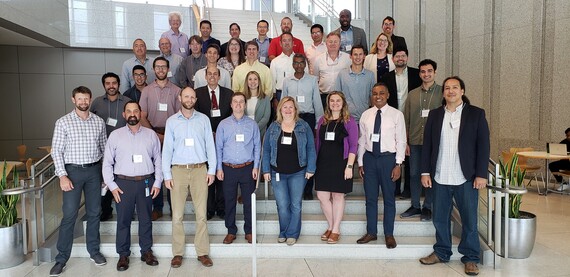
Photo credit: Ryan Rhodes, Oxy
Workshop to Kick Off First of Two Drilling Demonstrations Projects
The Geothermal Limitless Approach to Drilling Efficiencies (GLADE) Project team, selected by GTO to drive down drilling costs, held a workshop recently to identify action items and synergies Oxy (formerly Occidental Petroleum) and its partners from industry, national laboratories, and academia will leverage to drill twin high-temperature geothermal wells using current and novel drilling technologies. The team plans to drill to deeper and hotter depths than most existing geothermal technology, and at a faster rate, while also optimizing lab simulations, testing tools under high pressure and temperature, using machine learning and model development to create tools to be implemented when drilling, and more.
Applications are Open for the Renew America’s Nonprofits Grant
The U.S. Department of Energy (DOE), through the Office of State and Community Energy Programs, announced that applications are open for the Renew America’s Nonprofits grant. This $45 million funding opportunity demonstrates a first-of-its-kind engagement between DOE and the nonprofit sector and recognizes the central role that nonprofits play in Americans’ lives as well as their potential significance in the nation’s clean energy transition. Awards will support projects to reduce energy use in buildings owned and operated by 501(c)(3)s, reducing emissions and utility costs.
New 48C Tax Credit Will Spur Historic Investments in Manufacturing and Critical Materials
As part of President Biden's Investing in America agenda, DOE, the U.S. Department of the Treasury, and the Internal Revenue Service announced $4 billion in tax credits for projects that expand clean energy or critical materials manufacturing or recycling, with $1.6 billion set aside for projects in designated energy and coal communities. Concept papers are due July 31.
DOE Issues Notice of Intent (NOI) for Energy Future Grants (EFG)
DOE's EFGs provide $27 million in financial assistance and technical assistance to support local, state, and tribal government-led partnership efforts that will advance clean energy program innovation. EFG seeks to enhance energy affordability and access for communities, ensuring the broad benefits of a clean energy economy—including heath, economic development and jobs and emissions reductions—flow to disadvantaged communities. DOE has released a Notice of Intent to provide support for at least 50 multijurisdictional teams with ideally three or more state, local, and tribal government partners. Teams will further partner with community benefit organizations to turn innovative ideas into solutions that address barriers to clean energy deployment.
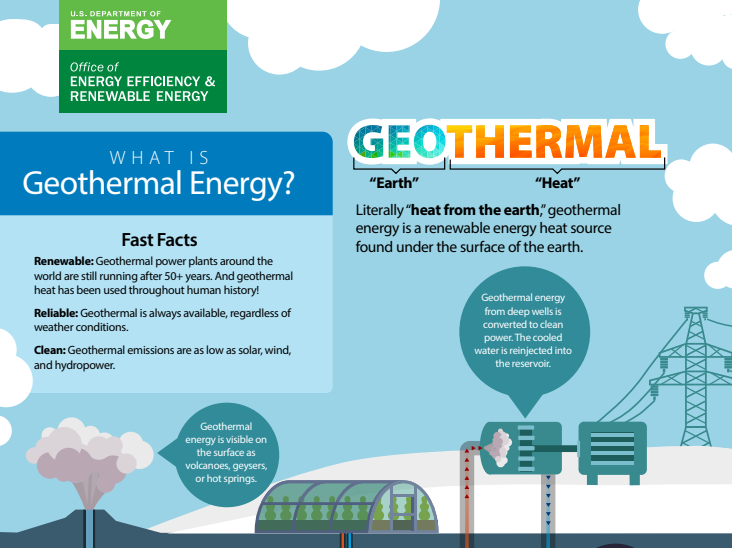
New and Updated Resources on GTO’s Website
Watch the Enhanced Geothermal Shot™ Summit Recording
Addressing Non-Technical Barriers to Geothermal Energy Deployment
Nontechnical barriers can significantly hamper geothermal deployment. To help address such barriers, GTO supported three national laboratory projects related to permitting, land access, and valuation of geothermal. Researchers from the National Renewable Energy Laboratory, Pacific Northwest National Laboratory, and Idaho National Laboratory discussed these projects and findings on a recent webinar. Watch the webinar and access the nontechnical barrier reports on GTO’s Publications page.
|