New Plastic Material Shows Favorable Recycling Economics in Berkley Lab Study
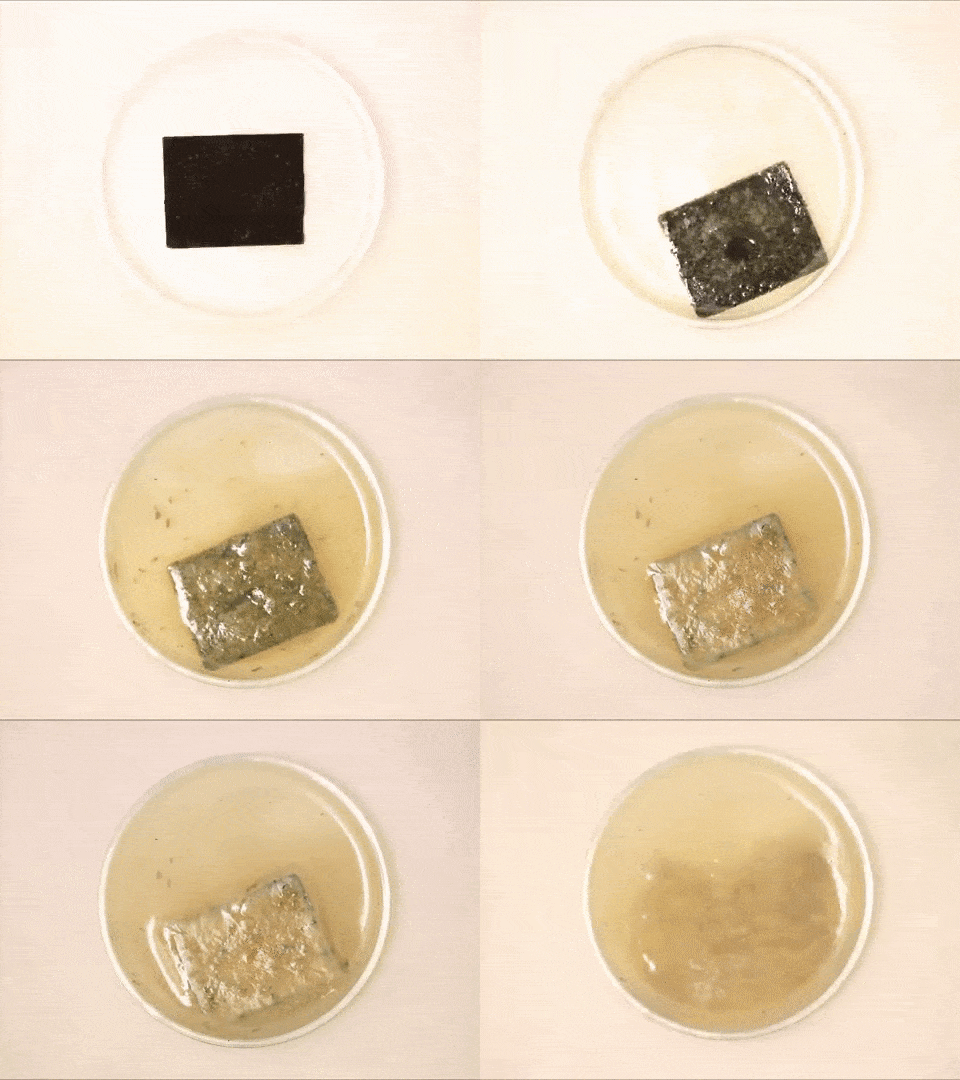
A GIF showing how PDK plastic readily breaks down when put in an acidic solution. The acid helps to break the bonds between the monomers and separate them from the chemical additives that give plastic its look and feel. Credit: Peter Christensen/LBNL
Researchers from Lawrence Berkeley National Laboratory (LBNL) have released a new study on a plastic material that demonstrates commercial competitiveness in the plastics market. This material, polydiketoenamine or PDK, was invented less than two years ago by LBNL with funding support from the U.S. Department of Energy Bioenergy Technologies Office. PDK was created with the capability to be recycled indefinitely, addressing a major waste issue with the plastics that currently make up the vast majority of the market.
The study details a simulation conducted for a waste recycling facility that would begin receiving and processing PDK waste. Results showed that the cost to produce and continue recycling this material will cumulatively decrease over time, which could make PDK competitive with traditionally produced plastics.
Read more about this study.
|