|
What’s Inside: This edition of the Water Wire shares recent announcements and opportunities, upcoming virtual events, WPTO success stories, products and publications, STEM spotlight, and other hot topics.
Continue to follow the Water Wire and emails from WPTO for the latest news and updates from the office. Reach out to WaterPowerTechnologiesOffice@ee.doe.gov with any inquiries or suggestions.
Estimated read time: 8.5 minutes
Announcements & Opportunities
WPTO recently announced a Notice of Opportunity for Technical Assistance (NOTA) for Improving Hydropower’s Value through Informed Decision-Making. Part of WPTO’s HydroWIRES (Water Innovation for a Resilient Electricity System) Initiative, this opportunity will provide hydropower decision makers with National Laboratory expertise and capabilities to address current challenges and capture opportunities.
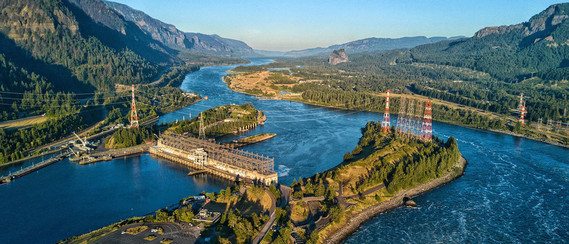 Additionally, the work under this NOTA will help validate National Laboratory-led modeling, analysis, and tools developed under the HydroWIRES Initiative for the benefit of the broader community while furthering the collective understanding of the evolving role of hydropower.
The goal of the HydroWIRES Initiative is to understand, enable, and improve the contributions of hydropower and pumped storage hydropower to reliability, resilience, and integration in the rapidly evolving U.S. electricity system.
Learn more about HydroWIRES and read the draft HydroWIRES Roadmap.
Today, DOE announced selections for the Energy Transitions Initiative Partnership Program (ETIPP), which will provide resources and on-the-ground support for remote and islanded U.S. communities seeking to transform their energy systems and lower their vulnerability to energy disruptions.
This cross-sector initiative will build on tools developed by DOE, pool the technical assets of community-based organizations, and engage DOE’s national labs to work alongside communities pursuing energy transitions. Together, this broad coalition will empower competitively selected communities to plan for, withstand, and recover from energy disruptions.
The ETIPP network will provide technology-neutral technical assistance that prioritizes local challenges, values, and goals. The program will support at least three cohorts of communities, with an anticipated 12- to 18-month project per community. Learn more on the NREL website.
Upcoming Virtual Events
On October 28, 2020, at 8 a.m. PDT (11 a.m. EDT), Sandia National Laboratories (Sandia), NREL, and PNNL will present the second webinar in their Portal and Repository for Information on Marine Renewable Energy (PRIMRE) webinar series. Register today for this webinar, which will highlight new features of existing PRIMRE Knowledge Hubs: Signature Projects, the Tethys Engineering Photo Library, and the PRIMRE aggregate search. PRIMRE is a centralized portal of U.S. marine renewable energy (MRE) development and operations information.
The first webinar, held on October 7, 2020, highlighted new sites and tools that have been developed within PRIMRE: the MRE Technology Database, MRE Software, and Telesto.
On October 27, WPTO will join experts from Ocean Power Technologies (OPT) and Vineyard Wind in launching an expanded Renewable Ocean Energy exhibit at the Mystic Aquarium in Mystic, Connecticut. Sign up for the event, which will include a virtual tour of the exhibit, a presentation, and a live Q&A with marine energy experts. Part of the aquarium’s educational lecture series, the event brings together exhibit partners to demonstrate the ocean’s potential to generate clean, renewable energy.
Developed in collaboration with WPTO, OPT, Vineyard Wind, and NREL, the enhanced exhibit aims to inspire the next-generation workforce to join the emerging fields of marine energy and offshore wind.
WPTO Success Story
The Sacramento Municipal Utility District’s (SMUD’s) new 2.7-megawatt hydroelectric powerhouse, which received $1.5 million in DOE funding, is now operational. Electricity from the South Fork Powerhouse will supplement generation from an existing powerhouse at Slab Creek Dam. As the new powerhouse is considered a “small hydro” project (less than 30 MW), the electricity it produces will count toward California’s Renewable Portfolio Standard.
Products & Publications
The International Energy Agency’s Technology Collaboration programme on Ocean Energy Systems (OES) released it's final 2020 State of the Science report. The report represents the most up-to-date knowledge on the environmental effects of marine energy, based on studies and monitoring from publicly available, peer-reviewed scientific literature and reports. The 300-page report, authored by 30 scientists, is the most comprehensive international analysis to date.
Sandia’s Summary of Marine and Hydrokinetic (MHK) Composites Testing at Montana State University (MSU) report details four areas of investigation within the 5-year DOE, Sandia, and MSU MHK energy materials effort. Fiber-reinforced plastics are often considered for the primary structures of MHK energy devices, which present challenging environments. For cost benefits, glass fiber reinforced plastics (GFRP) are the most prevalent system under consideration. This report presents a summary of the research MSU and Sandia have performed to determine how moisture affects the stiffness, strength, and integrity of GFRPs.
STEM Spotlight
The Hydropower Foundation announced that Ka’Liyah Burnett, a sophomore at the University of Maryland who is pursuing a Mechanical Engineering degree, has received the 2020 Julie Keil Women in Hydro Scholarship. Burnett is the third recipient of the scholarship, which was established in 2015 to honor the late Julie Keil, a passionate leader known for balancing the interests of the hydropower community with innovative environmental protection and enhancements. The Hydropower Foundation has partnered with WPTO and NREL to support DOE’s development and dissemination of education materials and workforce development opportunities related to hydropower and marine energy.
As part of an effort to recruit the best and brightest to the water power workforce, WPTO and NREL partnered with the Hydropower Foundation to expand WPTO’s Science, Technology, Engineering, and Math (STEM) workforce development and education portals. The STEM Hydropower Portal and the STEM Marine Renewable Energy Portal offer resources to help foster a better understanding of water power technologies and their potential—introducing tomorrow’s workforce to exciting career opportunities.
WPTO is accepting applications for the Marine and Hydrokinetic (MHK) Graduate Student Research Program, which is administered by the Oak Ridge Institute for Science and Education. Program participants will conduct MHK research at both their academic institutions and at an external hosting facility to support the research plans they submitted at the time of application. The application period is open until December 4, 2020. Submit your application today.
Texas A&M University (TAMU) received a 2019 WPTO award to develop a surface riding wave energy converter (SR-WEC) and prepare the device for in-sea testing. This project involves multiple TAMU departments, including three faculty members, six graduate students, and one postdoctoral researcher; offers a unique hands-on learning experience for students; and complements typical coursework. Funding to support graduate studies in marine energy is vital to growing and enhancing a skilled workforce to accelerate the maturity of these devices. TAMU’s first goal is to supply energy to blue economy markets, such as underwater vehicle charging, desalination, and marine aquaculture. The project will lead eventually to scaling the SR-WEC to provide power for grid-connected systems. Learn more about the project on the TAMU website.
In Case You Missed It
PNNL has changed the name of its Marine Sciences Laboratory to the Marine and Coastal Research Laboratory (MCRL) to better reflect work undertaken at the lab. Located in Sequim, Washington, MCRL is DOE’s only dedicated marine research facility and conducts marine-based research designed to reduce the cost of offshore energy, safeguard and enhance the marine environment, and protect our coastal security.
More than 80 staff members with expertise in biotechnology, biogeochemistry, ecosystems science, toxicology, and Earth systems modeling support MCRL’s research. A dive team supports in-water research and testing. Projects at MCRL span marine energy, algal biofuels, biofouling and biocorrosion, climate change and ocean acidification, environmental monitoring, quantification of transport and the effects of chemicals in marine environments, and coastal risk and hazard prediction and analysis. Learn more about the lab in a PNNL video.
WPTO has extended the application period for the I AM Hydro Prize to October 30, 2020. The I AM Hydro Prize aims to strengthen hydropower by applying advanced manufacturing technologies that can reduce the costs of components and system designs, such as by reducing production costs and repair frequency for improving efficiency.
In September, WPTO launched the Groundbreaking Hydro Prize, which offers $300,000 in prizes to motivate innovators to identify novel ways to develop foundations for new, low-head hydropower facilities. Groundbreaking Hydro seeks to identify concepts that will specifically address the key challenges in geotechnical foundations for hydropower, including site assessment, foundation design, and construction. Submit your idea by January 31, 2021.
Following two days of pitches from nine finalists, DOE and the Bureau of Reclamation selected three prize winners, including one grand prize winner, of the Fish Protection Prize. The teams presented novel ideas to protect fish from traveling into potentially unsafe waters, diversions, and intakes.
|