|
 Millions of Americans voted during the 2026 general election thanks to the tireless work of our nation's election officials. Thank you for helping America vote. To all voters, thank you for casting your ballots and participating in our democracy.
|
|
This month, the EAC is highlighting: |
|
 |
|
For Election Officials: EAC Resources on Audits, Canvassing, and Certifying Results |
 |
|
For Voters: What Happens After Election Day |
|
 |
|
EAC Certifies Fifth Poll Book Under Voluntary Electronic Poll Book Certification Program |
 |
|
Clearinghouse Awards Spotlight & More!
|
|
|
|
For Election Officials: EAC Resources on Auditing, Canvassing, and Certifying Results
The EAC has resources to support election officials as they perform everything from auditing to certifying the election results. For more information, check out the EAC’s webpage on Results, Canvassing, & Certification.
New EAC Social Media Toolkit to Educate the Public on Election Audits
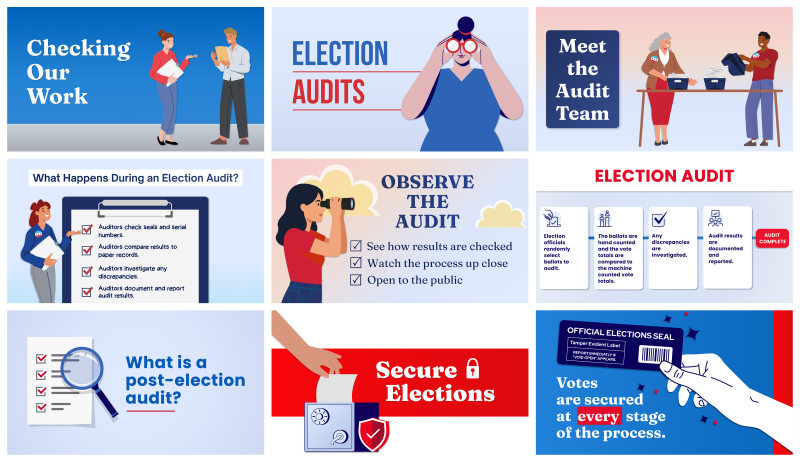 Customizable graphics from the Audit Social Media Toolkit.
The Audit Social Media Toolkit can help election officials communicate with the public about election audits.This toolkit includes 11 ready-to-post graphics on what an audit is, how independent checks keep the process accountable, and how testing and audits confirm ballots were counted correctly. Each graphic comes with:
- Horizontal and vertical versions
- Sample social media copy
- Alt text
- An editable version in Canva and PowerPoint, so you can add your office’s details
|
|
Quick Start Guide: Canvass & Certification
This guide for election officials covers best practices for canvassing vote totals and certifying election results.
|
|
|
What Happens After Election Day: An Overview for Voters
The following covers the basics of what to expect at this point in the election cycle.
Now that Election Day has passed, what comes next? While it varies by state, all election officials are now diligently working to report, canvass, and certify election results following their state's protocols.
Election Results are Unofficial Until Certified
The election results reported on election night are never the final, certified results. This is because all the ballots have not yet been officially counted. States follow different timelines for counting ballots, and results become official only after the count is complete and the results are certified.
|
|
|
States May Report Results at Different Times
Since each state has different procedures, some states will complete their count before others. Depending on local laws, some states may also count ballots received after Election Day, such as those from military and overseas voters.
|
|
Ballot Curing Helps Voters Correct Issues with Mail Ballots
If allowed under state law, those who voted by mail could receive a notification from their election office requesting that they cure their ballot. Ballot curing refers to the process through which a voter can fix minor issues with their mail ballot, such as a missing signature or date.
|
|
|
Election Officials Review Votes through the Canvassing Process
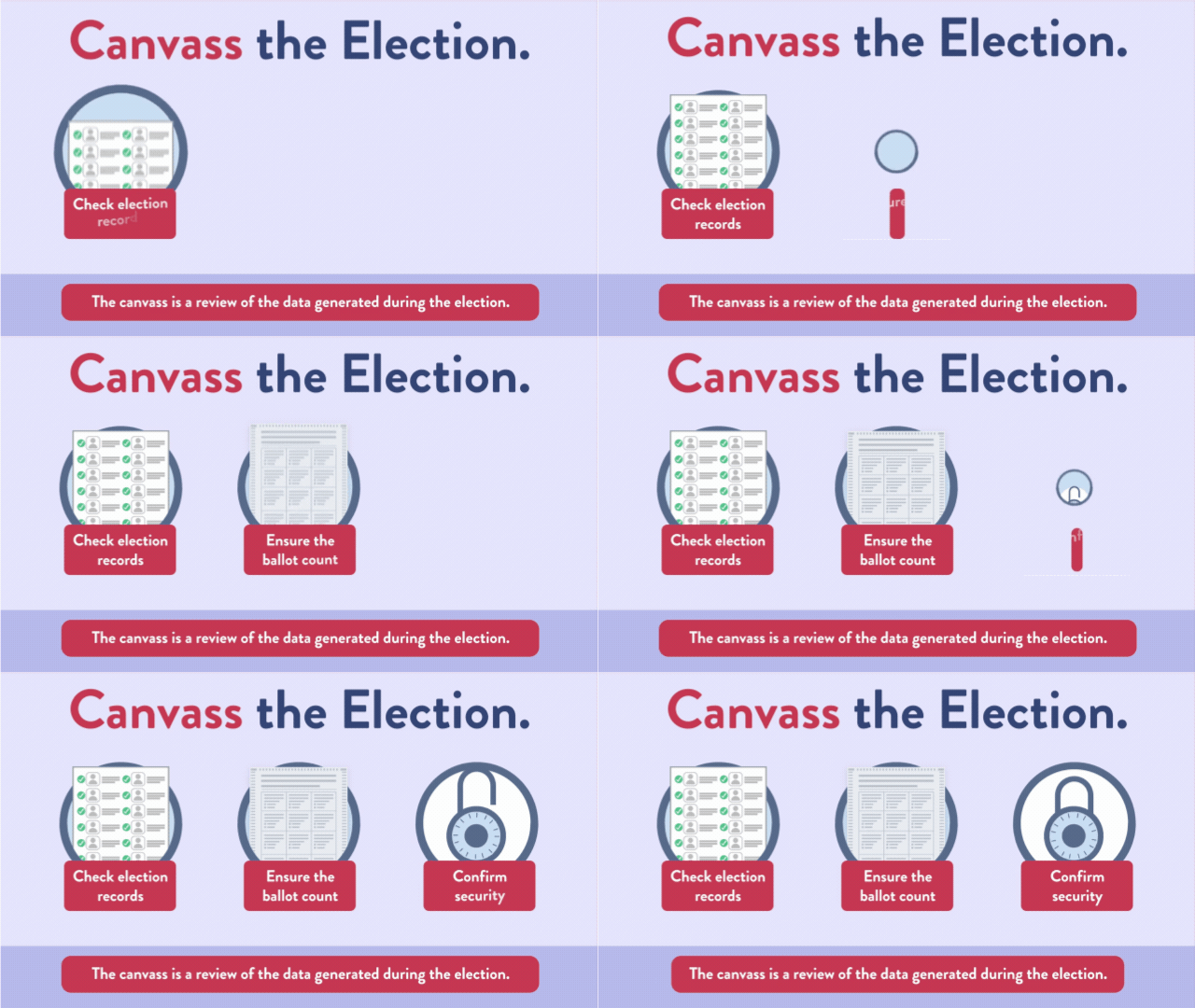
Once all the votes are counted, election officials review, or canvass, the election. During this phase, election officials review provisional ballots to determine if they can be counted, resolve marking errors, and perform other tasks to ensure ballots are properly tabulated.
They may also check election records, verify the chain of custody for equipment and materials, and confirm that security requirements were properly followed.
|
|
Once Election Results are Certified, They are Final. This Takes Time.
Finally, once all records are confirmed, the election results are certified. Finalizing elections in the U.S. takes time. As votes continue to be counted and results are reported, it is important to rely on trusted sources of information, like your state and local election office.
For a quick overview, watch this video series from the EAC on Results, Canvass, and Certification.
|
|
Other Common Security Measures Election Officials Use to Protect the Integrity of Results

While it varies by state and jurisdiction, election officials commonly use the following procedures to further ensure the accuracy of the election results.
|
Chain-of-Custody Procedures
Chain of Custody refers to the processes, or paper trail, that documents the transfer of materials from one person (or place) to the next. State and local jurisdictions have their own controls for ensuring the chain of custody of election materials is properly maintained. These controls may include locks, seals, audit logs, witness signatures, or other security measures.
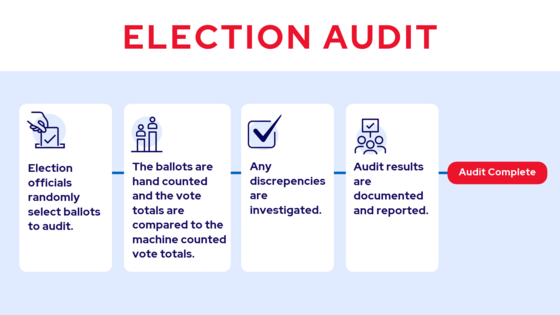
Election Audits
Election audits ensure that voting systems operated accurately, that election officials complied with regulations and internal policies, and that discrepancies are identified and resolved to promote voter confidence in the election administration process. However, election audits often look different from state to state. Some examples of ways that election officials review election processes include:
-
Ballot Reconciliation: After an election, election officials may reconcile ballot counts and election records to check that all eligible voted ballots are accounted for.
-
Post-Election Audit: After the election, election officials may select a sample of ballots and compare a hand count of those physical ballots to the initial electronic count. This audit checks that ballot scanners counted the sampled ballots accurately.
|
|
EAC Certifies Fifth Poll Book Under Voluntary Electronic Poll Book Certification Program

The EAC has certified KNOWiNK Poll Pad v.4.3.2, under the agency’s Voluntary Electronic Poll Book Certification Program. This marks the fifth system certified through the program.
To learn more about certified electronic poll books, those currently undergoing testing at the EAC, and related state standards, please visit eac.gov/epb.
|
|
|
EAC is Seeking Public Comments on the Application for Testing and the Manufacturer Registration Form
The 60-day public comment period ends on November 16, 2026

The EAC’s Election Supporting Technology Evaluation Program (ESTEP) is seeking public comment on two forms used to support the testing and certification of election-supporting technologies: the Application for Testing and the Manufacturer Registration form.
These forms help the EAC collect information from commercial or in-house manufacturers that participate in the ESTEP program and submit election-supporting technologies for testing and certification. The Federal Register notices also include estimates of the time and cost required to complete the forms.
The EAC welcomes feedback on whether those estimates are reasonable, as well as suggestions for making the forms clearer, more useful, and easier to complete. The public is encouraged to review the proposed forms and submit comments before the 60-day public comment period ends on November 16, 2026.
|
|
|
On December 15, Join the EAC for the TGDC 2026 Annual Meeting

The EAC’s Technical Guidelines Development Committee (TGDC) will host an in-person public meeting on December 15, 2026, in the agency’s DC hearing room. The TGDC is composed of 14 members appointed jointly by EAC and the Director of the National Institute of Standards and Technology (NIST).
Please note this meeting will not be livestreamed. Registration is required to attend. Space is limited and will be available on a first-come, first-served basis.
|
|
|
Clearinghouse Awards 10th Anniversary: Blog Series
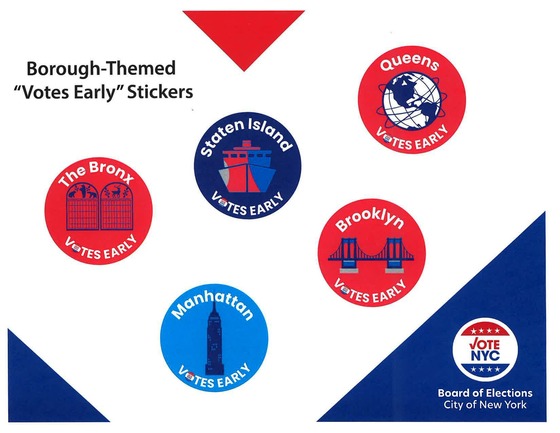
Board of Elections in the City of New York, New York, 2024 Clearie Award Winner for Creative and Original “I Voted” Stickers
In the latest blog post of the series, the EAC interviewed Georgea Kontzamanis, the Board of Elections’ Operations Manager in the City of New York, on the office’s 2024 Clearie award-winning program, “Battle of the Boroughs.” It was recognized in the Creative and Original “I Voted” Stickers category.
The program included five limited-edition “I Voted” stickers, each featuring an iconic landmark from one of the five boroughs. This initiative, aimed at capturing the unique spirit of New York City's five boroughs, led to a record-breaking 149,319 voters on the final day of early voting—the highest turnout for early voting in the city's history. This surge in early voting illustrates how small, creative initiatives can significantly enhance voter participation.
|
|
|
|
|