|
|
Today is the first day of Cybersecurity Awareness Month. With Election Day weeks away, the EAC is highlighting how election offices keep elections secure.
Key ways election offices typically secure election equipment:
- Each piece of voting equipment is put through rigorous pre-election testing to ensure ballots will be counted correctly.
- Over 98% of jurisdictions use voting systems with a paper record of every vote.
- When election materials and equipment change hands, the transfer is documented.
- When not in use, voting equipment is stored in secured facilities.
- All 50 states conduct post-election audits as an additional check to ensure that the equipment and procedures used to count votes worked as intended.

U.S. elections are conducted independently across thousands of local jurisdictions, each following unique laws and statutes, meaning there is no single point of access. This also means the types of security measures may vary based on the voting systems in use in state and local jurisdictions.
The EAC’s Election Security Voter Pamphlet goes over other ways election officials keep elections secure, covering topics such as voter registration, mail ballots, election equipment, and contingency planning.
To learn more about election security, check out the following videos on the EAC’s YouTube Channel.
|
|
|
This month, the EAC is highlighting: |
|
 |
|
How to Get Vote Ready |
 |
|
EAC Learning Lab Surpasses 500 Professional Training Certificates + New Video |
 |
|
New EAC Resources: Dealing with Workplace Stress + Challenging Interactions |
|
 |
|
Voting System Updates |
 |
|
EAC Seeking Public Comment on ESTEP’s Application for Testing and Manufacturer Registration Form |
 |
|
Clearinghouse Awards Spotlight & More!
|
|
|
Make a Plan: Understand How and When to Vote
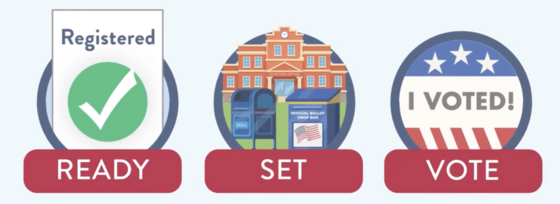 Once you are registered and your voter information is up to date, then it’s time to make a plan to vote. Whether you choose to vote by mail, early in person, or on Election Day, make sure you understand which options are available to you.
When making a plan to vote, you should also understand the rules and deadlines specific to your state. Your state and local election offices are the best sources of this information, including where to vote, polling place hours, what is on your ballot, and more. Visit eac.gov/vote for links to your state or territory’s election website and to find your local election office.
|
|
Learning Lab Surpasses 500 Professional Training Certificates
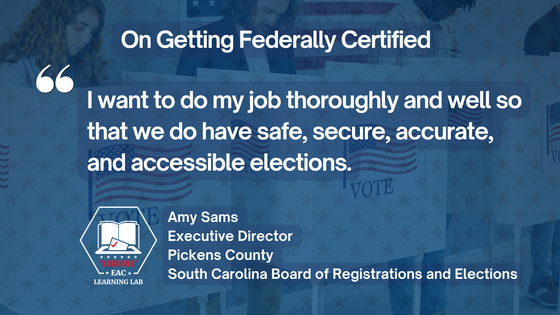 As of September 2026, more than 500 election officials have earned a Certificate of Federal Professional Training through the EAC Learning Lab, a no-cost, on-demand training program.
The national credential provides election professionals with an opportunity to demonstrate their commitment to expanding their knowledge, skills, and expertise in key areas of election administration.
More than 2,600 election officials across all 50 states, the District of Columbia, and five U.S. territories are registered for the EAC Learning Lab. Collectively, users have completed more than 27,000 courses and nearly 5,900 hours of training.
With this program, the EAC aims to help election offices further build knowledge and capacity to administer safe, secure, accurate, and accessible elections. The program supplements training and professional development available to election officials through state election offices, associations, and other organizations.
|
|
New Video: Hear From Election Officials on Why They Value the EAC’s Learning Lab
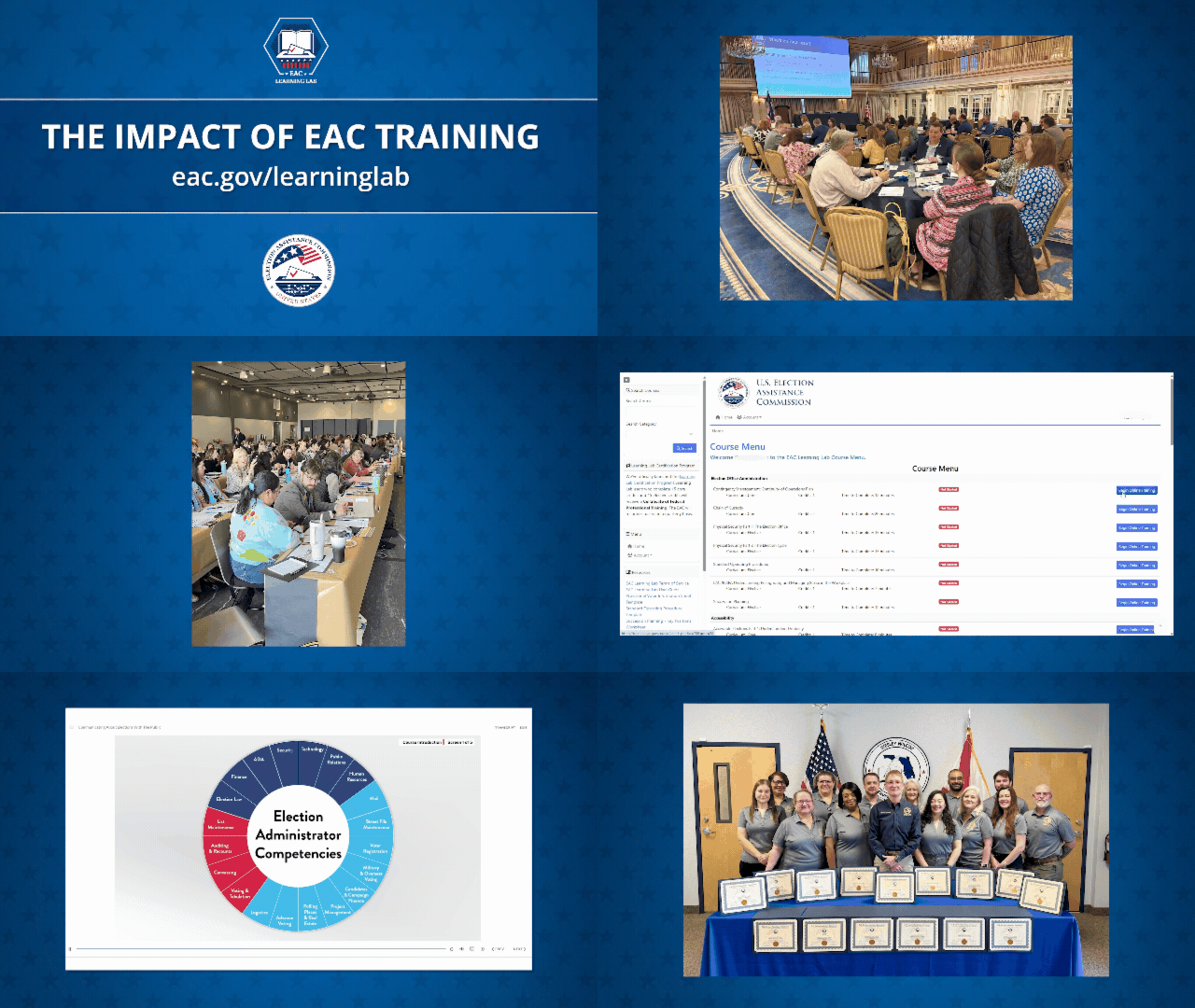 In a new video, state and local election officials discuss how the EAC’s Learning Lab program has helped them and their staff grow professionally and better serve voters.
They share how the Learning Lab supports both large and small jurisdictions by providing clear, well-produced training modules that can strengthen onboarding for new staff. They also explain how election professionals use the Learning Lab not only to meet immediate training needs, but also to continue building their expertise and advancing the profession.
|
|
Election Official Resource: Managing Challenging Interactions and Workplace Stress
|
|
|
|

The EAC released new resources to help election officials and election workers better manage challenging interactions and workplace stress. These include:
They highlight key information and strategies in easy-to-use formats. These can be used for staff training, shared with colleagues, or kept handy as quick references during election work.
The new resources are based on two previously released short videos, developed in partnership with the American Psychological Association (APA), on the same topics: Managing Challenging Interactions and Understanding, Recognizing, and Managing Stress in the Workplace. Explore the full collection, including the videos and new companion resources on the EAC’s website.
|
|
|
New Election Official Resource: Best Practices for Serving Native American Voters

This resource highlights best practices for election officials to support voter access, outreach, and election administration in Tribal and Native American communities.
Native American voters live in Tribal communities, rural areas, and urban communities, and their voting experiences may vary depending on local circumstances and community needs. Understanding local needs and community-specific challenges can help election officials improve communication, plan more effectively, and provide election services that are accessible to Native voters. This resource was based on the EAC’s report, “Voting Access for Native Americans: Case Studies & Best Practices.”
|
|
|
EAC Certifies VotingWorks' VxSuite 4.0 to VVSG 2.0
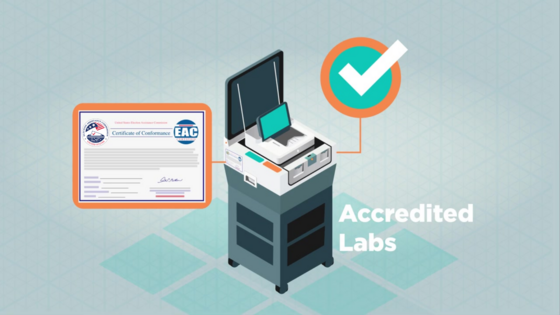
On September 15, the EAC certified VotingWorks' VxSuite 4.0 to the Voluntary Voting System Guidelines (VVSG) 2.0, following testing by SLI Compliance, an EAC-accredited voting system test laboratory. VxSuite 4.0 is the first open-source voting system the EAC has certified.
"Open source" means the software's code is publicly available rather than proprietary, so anyone can review it. The certificate, test report, and other documentation are available on the EAC's Certified Voting Systems page.
|
|
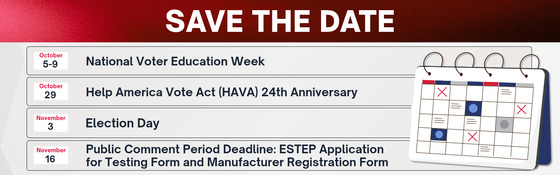
EAC is Seeking Public Comment on the Application for Testing and Manufacturer Registration Form
The 60-day public comment period ends on November 16, 2026

The EAC’s Election Supporting Technology Evaluation Program (ESTEP) is seeking public comment on two forms used to support the testing and certification of election-supporting technologies: the Application for Testing and Manufacturer Registration form.
These forms help the EAC collect information from commercial or in-house manufacturers that participate in the ESTEP program and submit election-supporting technologies for testing and certification. The Federal Register notices also include estimates of the time and cost required to complete the forms.
The EAC welcomes feedback on whether those estimates are reasonable, as well as suggestions for making the forms clearer, more useful, and easier to complete. The public is encouraged to review the proposed forms and submit comments through the before the 60-day public comment period ends on November 16, 2026.
|
|
|
Clearinghouse Awards 10th Anniversary: Blog Series
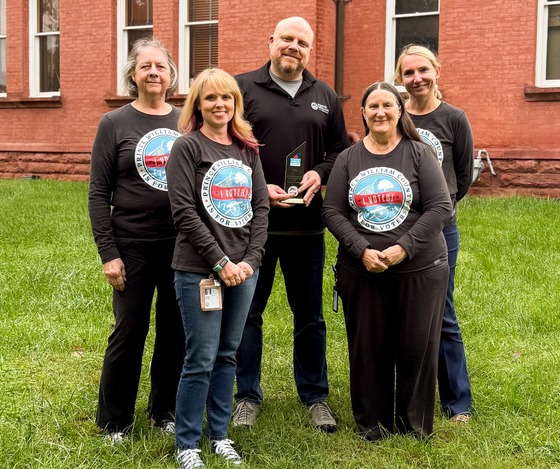
Prince William County Office of Elections, VA, 2025 Clearie Award Winner for Exemplary Services to Assist Military and Overseas Voters
Staff from the Prince William County Office of Elections in Virginia.
In the latest blog post of the series, the EAC interviewed Natalia Taylor, Deputy Director of the Prince William County Office of Elections, on the office’s UOCAVA Connect Program. This 2025 Clearie award-winning program was recognized in the “Exemplary Services to Assist Military and Overseas Voters” category.
Prince William County’s UOCAVA program uses a dedicated database to track Federal Post Card Application (FPCA) expirations and proactively communicate with military and overseas voters. By providing timely reminders and faster confirmation through email, the program improves ballot access, strengthens reliability, and delivers clear, consistent customer service to a dedicated UOCAVA population. The office has received numerous emails from military or overseas voters, specifically thanking them for this extremely helpful service.
|
|
|
|
|