|
|
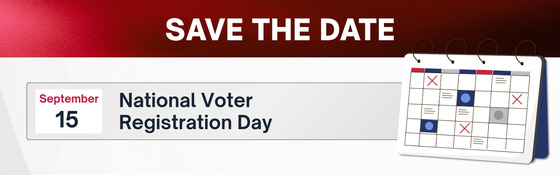
Join the EAC in celebrating National Voter Registration Day on September 15. This day brings attention to upcoming voter registration deadlines and the efforts of state and local election officials to register voters across the country.
If you are registered to vote but have moved or changed your name since the last time you cast a ballot, make sure your registration information is up to date.
Visit vote.gov/register to learn how to:
- Register to vote
- Update your name, address, or political party if you’re already registered
- Check your registration status
Voter registration requirements and deadlines vary by U.S. state and territory. The best sources of practical registration and voting information are your state and local elections offices. You can also find links to your state election office at vote.gov.
|
|
This month, the EAC is highlighting: |
|
 |
|
New Mail Ballot Return Social Media Toolkit for Election Officials |
 |
|
Updates to the Federal Post Card Application and the Federal Write-In Absentee Ballot |
 |
|
Voter Registration Resources |
|
 |
|
Evaluating Federal Grant Programs to Improve Voting Accessibility August 2026 – Draft Report |
 |
|
Clearinghouse Awards Spotlight & More!
|
|
|
Election Official Resource: Mail Ballot Return Social Media Toolkit
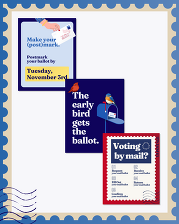
This toolkit provides election officials with graphics and sample social media text to help communicate with voters about returning their mailed ballots. These materials build on the text and images available in the 2026 Election Official Social Media Toolkit.
- 12 downloadable social media graphics in both horizontal and vertical formats.
- Sample social copy and alt text for each graphic.
- Editable Canva and PowerPoint templates that offices can customize.
Download the graphics directly or open the Canva templates to add your office’s specific information. Each graphic is paired with sample social copy. Alt text is provided for the default images, but please be sure to update this for any customized images.
|
|
|
FVAP Updates the Federal Post Card Application and the Federal Write-In Absentee Ballot

The Federal Voting Assistance Program (FVAP) has updated the Federal Post Card Application (FPCA) and the Federal Write-In Absentee Ballot (FWAB). This is for military members, their families, and overseas citizens.
These updates were made to eliminate voter confusion about the information they are required to provide under Federal law and their eligibility to use these forms to register and request an absentee ballot.
If the voter previously submitted an FPCA or FWAB, a new submission may not be required. Requirements for accepting and processing submitted forms vary by state.
|
|
|
Report: Evaluating Federal Grant Programs to Improve Voting Accessibility August 2026
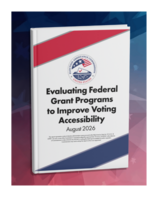
This draft report provides a review of federal funding for voting accessibility needs through HAVA Section 261 and Section 291 grant programs.
It examines how states and protection and advocacy organizations have used HAVA grant funds, and changes in voting accessibility over the two decades since HAVA's passage
|
|
|
More Voter Registration Resources
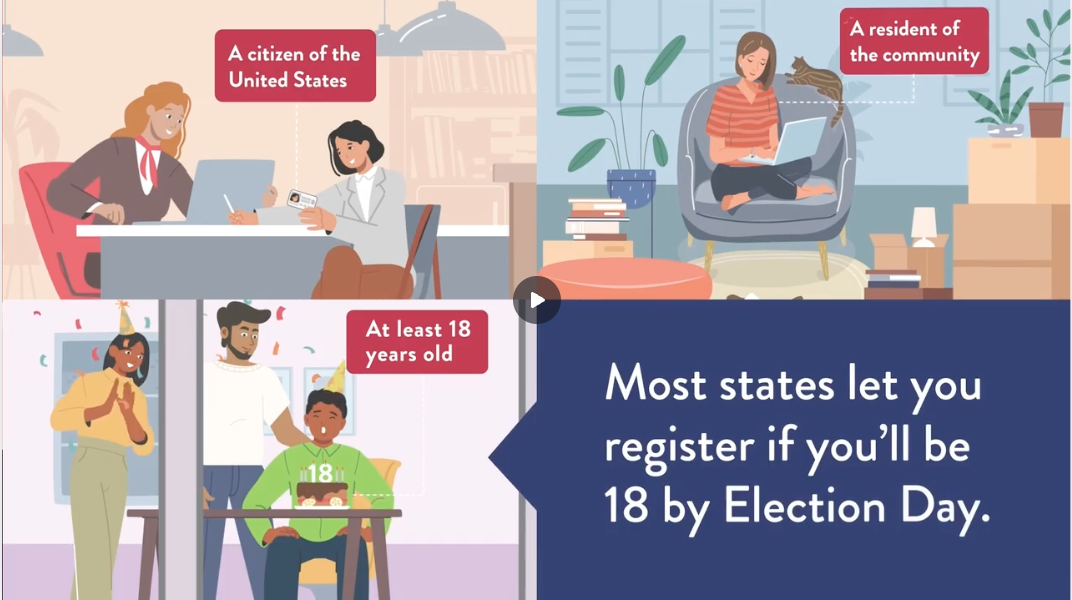 Image from the EAC's video, "Be Election Ready: Registering to Vote."
Voting 101: Registering to Vote

While your state and local election offices are the best sources of information, the EAC’s “Be Election Ready” video series covers the general voting process.
The first video in the series walks viewers through the registration process, highlighting how requirements may vary by state but generally include U.S. citizenship, residency in the community where you are registering, and being at least 18 years old by Election Day. The video also discusses different methods available for registration, whether online, by mail, or in person, and provides specific guidance for military personnel and those living overseas.
Election officials, if you would like to make a version specific to your jurisdiction, the "Be Election Ready: Registering to Vote" editable script is available in PDF and Word.
|
|
|
Election Officials: The EAC's Social Media Toolkit Supports Voter Registration Education
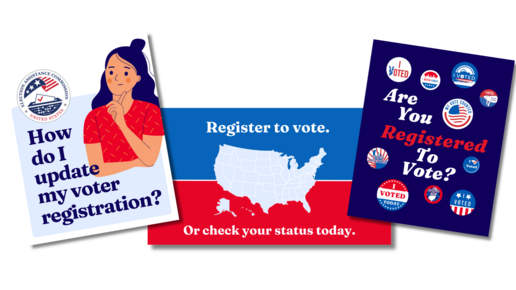
Examples of social media graphics from the EAC's Social Media Toolkit.
The EAC's Social Media Toolkit provides editable social media templates that election officials can customize and share with their communities. With more than 150 templates across 17 different categories, including voter registration, election officials can find content about key dates and deadlines, voting options, and even election results. To make planning easier, the toolkit also includes a sample editorial calendar.
|
|
Voter Registration Data Available Using the EAVS Data Interactive
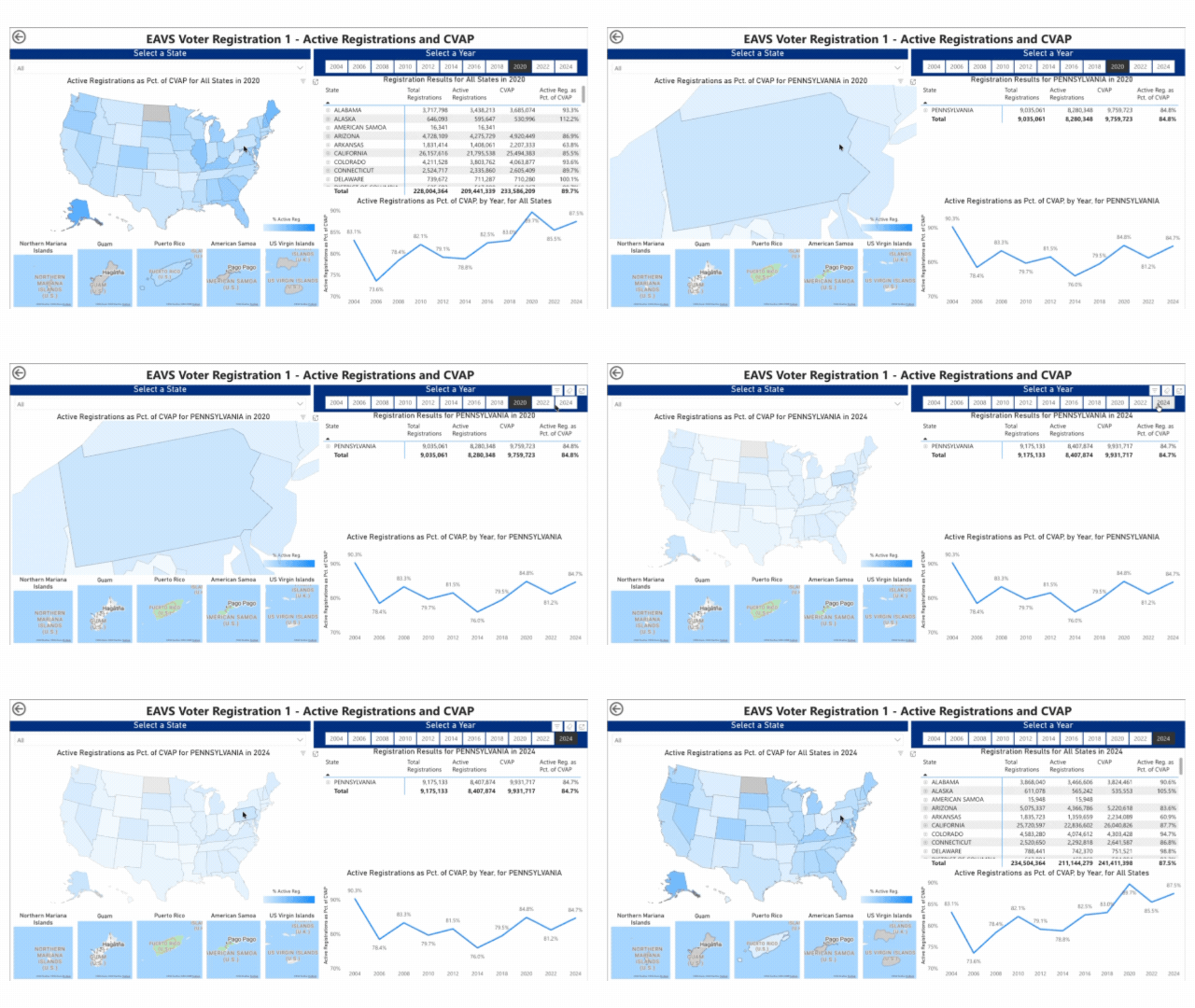 Demonstration of using the EAVS Data Interactive to examine voter registration figures.
The Election Administration and Voting Survey (EAVS) Data Interactive allows users to examine and compare data at both the state and local levels, as well as look at any combination of jurisdictions side by side.
Use the tool to review total registrations, active registrations, citizen voting age population (CVAP), and active registrations as a percent of CVAP at the state and county levels, and compare active registration as a percent of CVAP for the 2004 to the 2024 federal general elections. You can also use this tool to analyze the source of registration transactions, such as through a Motor Vehicle Department, in person, or online. To download the full data set, visit the EAC Studies and Reports page.
|
|
Accessible Voter Registration: Training for Election Officials
|
|
Clearinghouse Awards 10th Anniversary: Blog Series
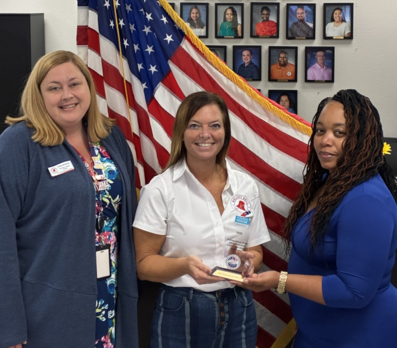
Polk County Supervisor of Elections, Florida, 2025 Clearie Award Winner for Distinguished Voter Education and Communications
Staff from the Polk County Supervisor of Elections Office in Florida.
Ahead of National Voter Registration Day, the EAC interviewed the Polk County Supervisor of Elections on the office’s High School Voter Registration Outreach 2025-2026 program. This 2025 Clearie award-winning was recognized in the “Distinguished Voter Education and Communications Initiatives” category.
Over the past two years, the Supervisor of Elections Office has implemented a communication-first strategy to improve how it educates and engages high school students. This has resulted in increased voter registration and stronger student involvement.
|
|
|
|