|
 Is your election office still in need of election workers? On August 11, join the EAC for National Poll Worker Recruitment Day! This day is designed to help state and local election officials encourage citizens to sign up as poll workers in their communities.
The EAC has a social media toolkit with customizable Canva and PowerPoint graphics. These templates can be edited to suit your jurisdiction's requirements and adapted for printed materials, websites, and more. The toolkit also includes a press release template to send to local media partners.
|
|
EAC Poll Worker Recruitment Lookup Tool
Check That Your Election Worker Info is Current

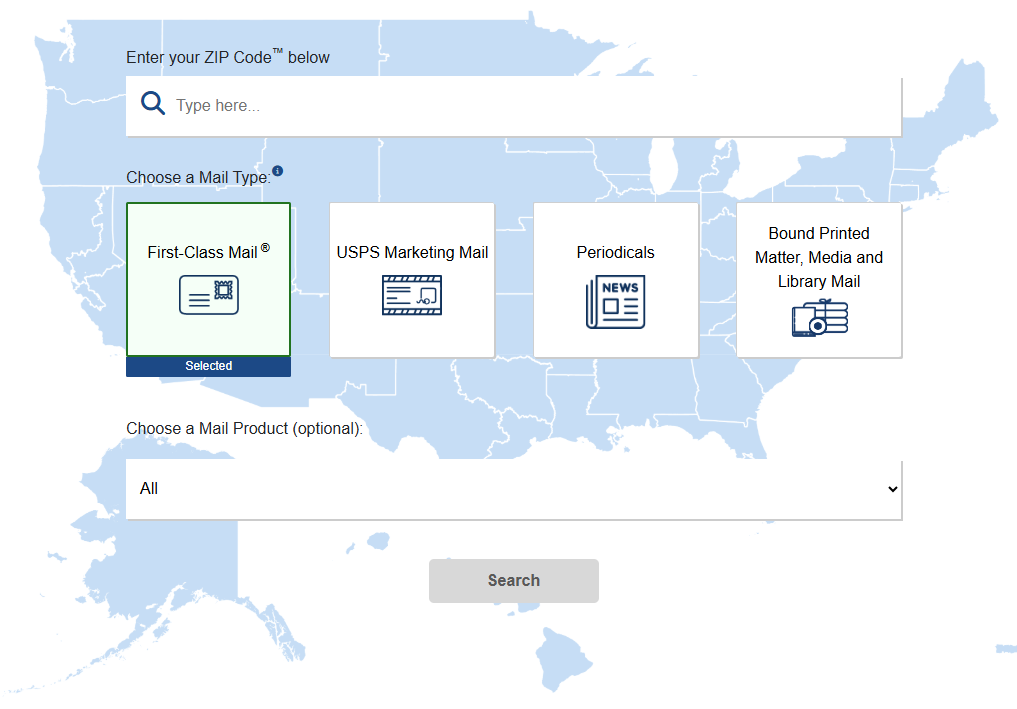
The EAC offers a Poll Worker Recruitment Lookup Tool to help people interested in signing up to be poll workers find information for their local election offices. Does the information for your jurisdiction need to be updated?
|
Email helpamericavote@eac.gov with any changes that need to be made.
|
|
This month, the EAC is highlighting: |
|
 |
|
New EAC Federal Professional Training Certification Program |
 |
|
New EAC Election Security Pamphlet |
|
 |
|
EAC Memo on FY 2026 National Defense Authorization Act |
 |
|
How Election Officials are Using AI |
|
|
Election Officials: Earn Your Federal Professional Training Certification from the EAC
New On-Demand Training Certification Program Is for All Experience Levels and Is Offered at No Cost
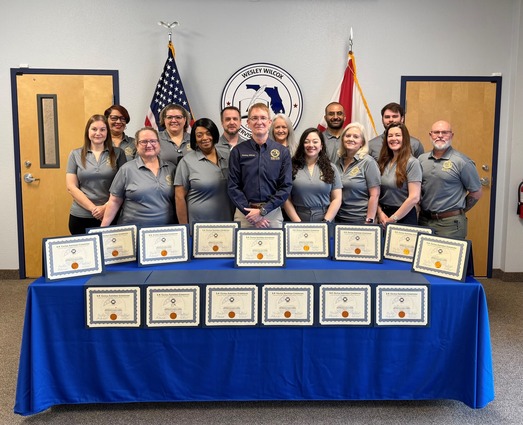
Wesley Wilcox, Supervisor of Elections, Marion County, Florida, recognized his staff members for earning their EAC Certificates of Federal Professional Training.
The EAC launched a new program to recognize state and local election officials for completing Learning Lab on-demand training. Anyone working in an election office can now earn an EAC Certificate of Federal Professional Training, a national credential for election professionals dedicated to expanding their knowledge, skills, and expertise.
Developed by experienced election professionals, the EAC Learning Lab delivers practical, accessible training in formats that work for offices of every size and experience level, all at no cost. You can preview the curriculum, which offers over 40 training courses across seven categories, on the Learning Lab certification page.
The recognition program supplements the training local election administrators receive from their state election offices and associations. Candidates must complete 30 training credits to qualify for certification.
|
|
New EAC Election Security Voter Pamphlet
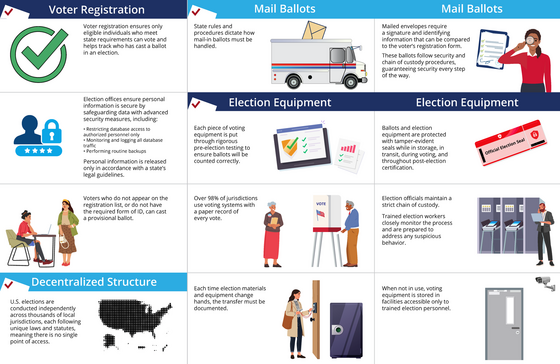 This is a page of the EAC Election Security Voter Pamphlet.
The EAC has a new Election Security Voter Pamphlet to help election officials explain how they secure elections. The pamphlet covers topics such as voter registration, mail ballots, election equipment, and contingency planning.
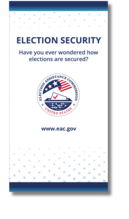
While processes vary amongst jurisdictions, this resource provides a general overview of election security. Feel free to print it out and distribute it, share it on your office’s website or social media, or even use it as a starting point for your own office-specific materials.
This pamphlet complements the EAC's "Ever Wondered About Election Security?" video. Visit the EAC Election Security webpage for these and other security resources.
|
|
|
USPS Service Performance Dashboard
|
|

The FY 2026 National Defense Authorization Act (NDAA) includes mandates related to election security, such as the penetration testing of voting systems. The FY 2026 NDAA instructs the EAC to require penetration testing and accredit the labs that perform it. The EAC already does both and has done so since late 2022.
The EAC has issued a memo to help state and local election officials communicate with voters about NDAA requirements.
|
|
|
EAC Accessibility Resources in Recognition of the 36th Anniversary of the ADA on July 26

The EAC offers training and best practices for election officials to make elections accessible to all eligible voters. The Accessible Voting Machines Calculator can help election officials determine how many accessible voting machines to deploy at voting locations to achieve minimal wait times. While one accessible voting machine per voting location is the minimum required to meet HAVA requirements, it may not be enough to accommodate voters with disabilities served by the location.
Web and Mobile Accessibility Training
In May, the EAC released a memo on the Department of Justice's one-year extension to the compliance dates for the Americans with Disabilities Act (ADA) Title II Web and Mobile Application Accessibility Rule. This requires all state and local office web content and mobile applications be accessible to people with disabilities.
To support election officials, the EAC developed a Learning Lab training on Web and Mobile Accessibility and a one-pager based on the online training. Election officials can sign up to take it at no cost, at eac.gov/learninglab.
State or local governments with a population of 50,000 or more must comply with ADA Title II by April 26, 2027. Local governments with smaller populations now have until April 26, 2028. Additional guidance is available on the ADA website.
|
|
|
New Report Outlines How the EAC is Helping to Strengthen the Election Workforce
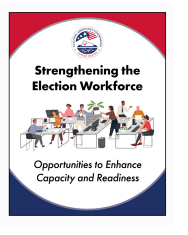
The EAC’s new report, Strengthening the Election Workforce: Opportunities to Enhance Capacity and Readiness, identifies ways the EAC is working to address challenges such as heavy workloads, high turnover, and difficulty recruiting staff with the right skills. This includes developing a Voluntary National Election Workforce Framework and expanding the no-cost EAC Learning Lab professional training.
The report was initiated in response to state and local election officials, who have identified workforce pressures as a growing structural challenge.
Learn more about this report and the EAC’s efforts at eac.gov/workforce.
|
|
|
How Election Officials Are Using AI — Insights from Virtual EAC Event
In May, the EAC hosted an office hours session featuring election officials who have been experimenting with AI tools in their offices. The conversation covered how they got started using AI, what they've learned, and where they're seeing meaningful time savings. A few themes came through during the conversation:
The blank page problem. The panelists described AI as a useful way to tackle a project when they weren’t sure where to start. Whether they were starting a new type of outreach plan, a project with no clear template, or a public presentation, they found AI tools to be a helpful way to get started.
A coaching tool. Several panelists described using AI to walk them through unfamiliar tasks. This was especially true for technical work, like using formulas in Excel and structuring data analysis. The panelists also discussed using AI to help anticipate tough questions before a public meeting.

Staff are responsible for output. AI tools can help generate content, but ultimately, the employee is responsible for anything they produce, regardless of how it was created.
The EAC would like to thank all participants, including these speakers:
- Ricky Hatch, County Clerk-Auditor for Weber County, Utah
- Elena Hilby, City Clerk for Sun Prairie, Wisconsin
- Gretchen Reinemeyer, General Registrar and Director of Elections for Arlington County, Virginia
This session recording is available to state and local election officials through the EAC’s Clearinghouse Community. If you’re not yet a member, sign up today at www.eac.gov/community.
|
|
|
|
|
|