|
 Celebrate our nation’s 250th birthday this month by making sure you are ready for Election Day. Watch the EAC’s series of “Be Election Ready” videos for an overview of the voting process. Then check out your local election office for information specific to your area on registering to vote, finding election dates, checking your registration information, and understanding your options for casting a ballot.
Another great way to celebrate and serve your community is by signing up to be an election worker. Duties and hours vary by jurisdiction, but typically include setting up polling places and assisting voters, and poll workers usually get paid for their time. Those interested can find information and requirements through the EAC’s Poll Worker Recruitment Lookup Tool.
EAC Commissioner Joint Statement on America’s 250th Birthday
"As we reflect on our nation’s founding, the U.S. Election Assistance Commission recognizes the central role elections have played throughout America’s history. As the oldest democracy in the world, the United States has been sustained by the people who participate at every level — from the election officials and poll workers who make sure voting runs smoothly, to the millions of Americans who vote each year, to the countless Americans who contribute to civic life in their communities. They help shape and strengthen our nation into a more perfect union," said EAC Chairman Thomas Hicks, Vice Chair Christy McCormick, and Commissioner Ben Hovland.
|
|
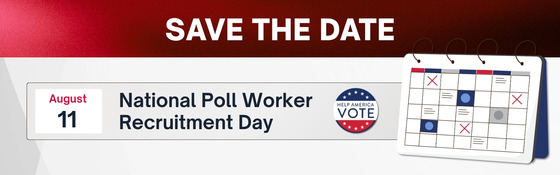 Election Officials: Stay Tuned for the National Poll Worker Recruitment Day Toolkit!
The EAC’s toolkit for National Poll Worker Recruitment Day will be posted at helpamericavote.gov in mid-July. This toolkit will include customizable social media graphics and templates to help with election offices’ poll worker recruitment efforts.
|
|
This month, the EAC is highlighting: |
|
 |
|
New EAC Certification Program for Election Officials |
 |
|
New EAC Report: Strengthening the Election Workforce |
|
 |
|
Virginia Adopts the EAC’s Voluntary Electronic Poll Book Certification Requirements |
 |
|
ADA Anniversary, Clearies Winners Spotlight & More! |
|
|
New EAC Federal Professional Training Certification Program for Election Officials
The Program is Offered at No Cost
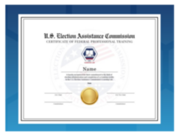
The EAC launched a new program to recognize state and local election officials for completing Learning Lab on-demand training. Anyone working in an election office can now earn an EAC Certificate of Federal Professional Training, a national credential for election professionals dedicated to expanding their knowledge, skills, and expertise.
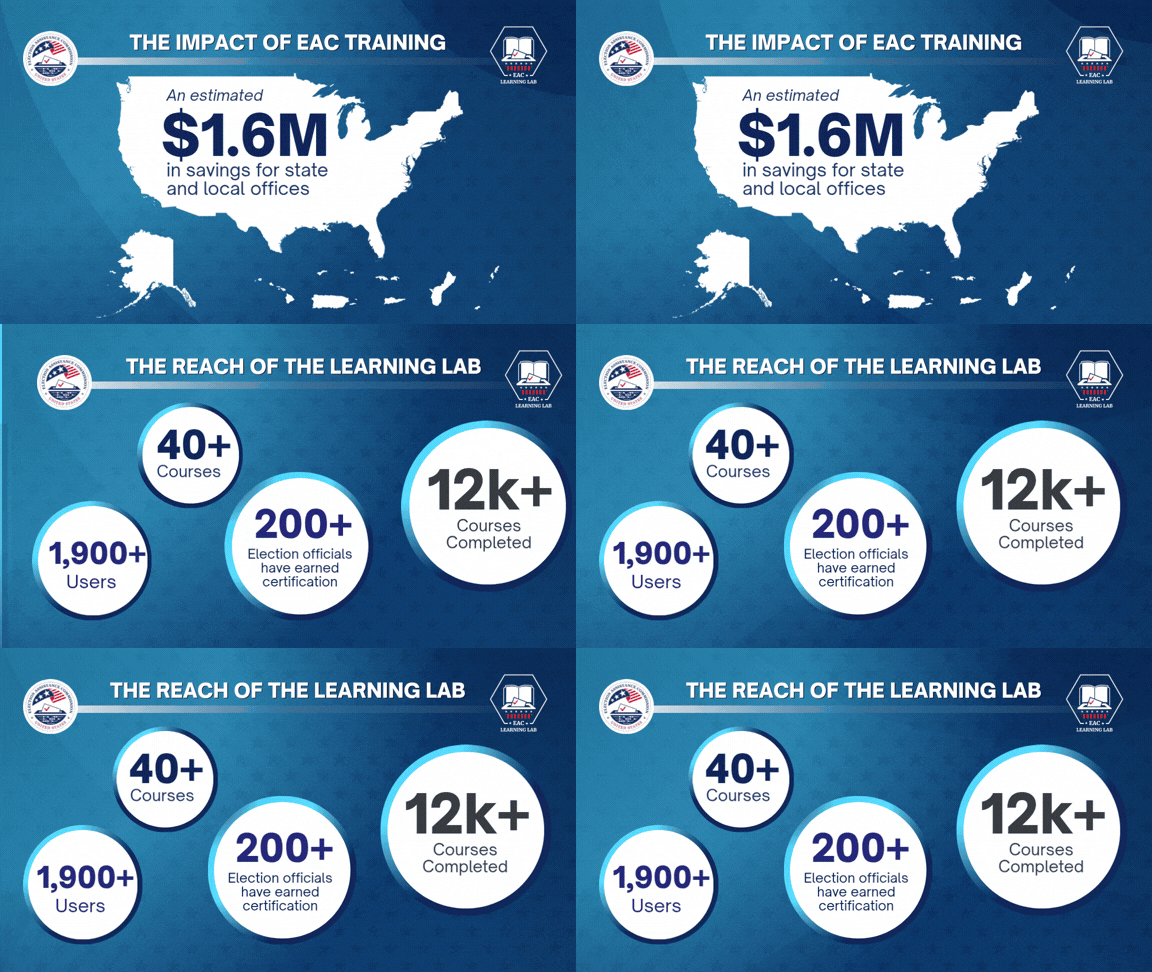
Developed by experienced election professionals, the EAC Learning Lab delivers practical, accessible training in formats that work for offices of every size and experience level, all at no cost. The curriculum offers over 40 trainings in seven categories, including:
- Election Office Administration
- Accessibility
- Communications
- Voting Systems & Election Technology
- Voting
- Post-Election
- Federal Government & Elections
Candidates must complete 30 training credits to qualify for certification.
|
|
|
New Report Outlines How the EAC is Helping to Strengthen the Election Workforce
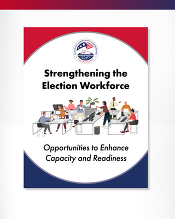
Election officials are facing increasing challenges, including heavy workloads, high turnover, and difficulty recruiting staff with the right skills. National trends underscore these pressures: Turnover among local election officials reached about 40% in 2024, with more than half of chief local election officials having assumed their roles within the past five years.
The EAC’s new report, Strengthening the Election Workforce: Opportunities to Enhance Capacity and Readiness, documents these issues and identifies ways the EAC is working to address them, such as developing a Voluntary National Election Workforce Framework and expanding the no-cost EAC Learning Lab professional training. The report was initiated in response to state and local election officials, who have identified workforce pressures as a growing structural challenge. These challenges require coordination that no single state, professional association, or local jurisdiction is structured to provide independently. The EAC is uniquely positioned to support this work at the federal level.
Learn more about this report and the EAC’s efforts at eac.gov/workforce.
|
Action 1: The EAC is Developing a Voluntary National Election Workforce Framework
Click on the image to view a larger version of the competency wheel.
The EAC is developing a framework to provide a common language for the work that goes into election administration. This framework can help election offices:
- Ask for appropriate classification, compensation, and staffing with human resources partners and budget decision-makers.
- Create or update job descriptions that reflect the real-world work of elections, aiding recruitment efforts.
- Support long-term succession planning by clarifying the skill sets and competencies needed to support elections.
- Identify training needs and align professional development with the skills required to do the job well.
Action 2: The EAC is Expanding No-Cost EAC Learning Lab Professional Training
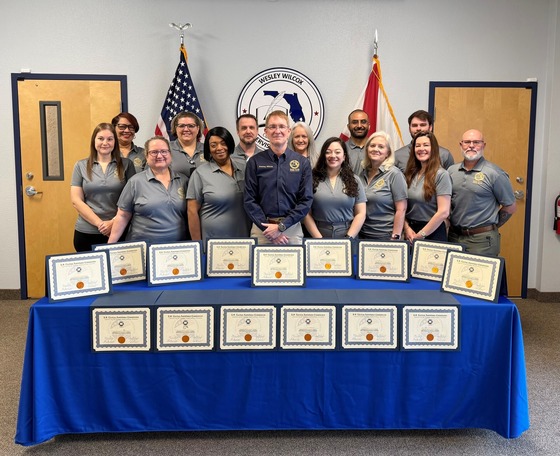 Wesley Wilcox, Supervisor of Elections, Marion County, Florida, recognized his staff members for earning their EAC Certificates of Federal Professional Training.
The EAC's Learning Lab curriculum includes several workforce-focused courses covering succession planning, standard operating procedures, workplace stress management, and more.
Check out the new EAC Learning Lab Certification Program.
|
|
Virginia Adopts the EAC’s Voluntary Electronic Poll Book Certification Requirements
Virginia Joins North Carolina as the Second State to Adopt the Requirements

Virginia has become the second state in the country to adopt the EAC’s Voluntary Electronic Poll Book Certification Requirements (VEPBCR), further advancing the use of federal standards for electronic poll book testing and certification. By aligning its state certification process with the VEPBCR, Virginia is helping to promote greater consistency, security, accessibility, and reliability in election-supporting technology.
Virginia joins North Carolina, which became the first state to adopt the VEPBCR in 2025, demonstrating growing momentum among states to leverage nationally recognized standards developed through the EAC’s Election Supporting Technology Evaluation Program (ESTEP).
To learn more about the VEPBCR, electronic poll books evaluated through the EAC, and related state standards, please visit eac.gov/epb.
|
|
|
|
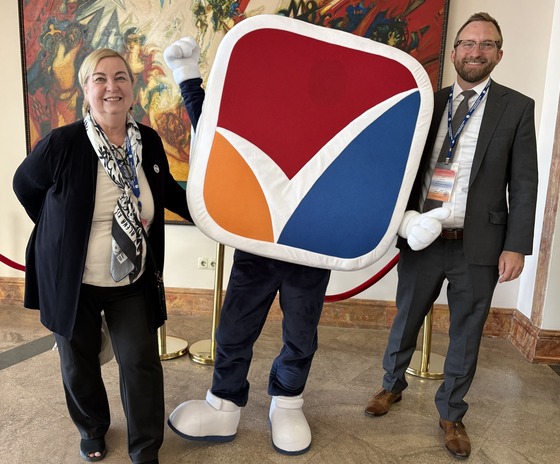
EAC Commissioner Christy McCormick poses with EAC Senior Election Subject Matter Expert Ed Golembiewski while observing elections in Armenia.
As part of its international engagement efforts, the EAC participated in an election observation mission to Armenia during its June 7 parliamentary election at the invitation of the country’s Central Electoral Commission. Commissioner Christy McCormick joined representatives from election management bodies worldwide to observe Armenian election administration firsthand, exchange information and best practices, and strengthen the agency’s understanding of how other democracies address common challenges.

Chairman Thomas Hicks spoke to leaders from Australia, Canada, Ireland, the United Kingdom, and New Zealand about voting practices in the United States and the upcoming elections. As part of the Four Country Conference, held this year in London, attendees heard from the Speaker of the House of Commons about members' observations.
|
|
|
EAC Accessibility Resources in Celebration of the 36th Anniversary of the ADA
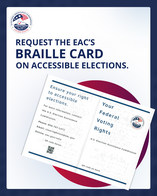
Voters with Disabilities: Understand Your Federal Voting Rights
The EAC offers a pocket-sized voter card and a large print version in braille that serve as guides about voting rights for voters with disabilities. To request the "Your Federal Voting Rights" Braille Card, please email clearinghouse@eac.gov.
|
Accessibility Resources for Election Officials
The EAC offers training and best practices for election officials to make elections accessible to all eligible voters.

The Accessible Voting Machines Calculator can help election officials determine how many accessible voting machines to deploy at voting locations to achieve minimal wait times. While one accessible voting machine per voting location is the minimum required to meet HAVA requirements, it may not be enough to accommodate voters with disabilities served by the location.
Web and Mobile Accessibility Training
In May, the EAC released a memo on the Department of Justice's one-year extension to the compliance dates for the Americans with Disabilities Act (ADA) Title II Web and Mobile Application Accessibility Rule. This requires all state and local office web content and mobile applications be accessible to people with disabilities.
To support election officials, the EAC developed a Learning Lab training on Web and Mobile Accessibility and a one-pager based on the online training. Election officials can sign up to take it at no cost, at eac.gov/learninglab.
State or local governments with a population of 50,000 or more must comply with ADA Title II by April 26, 2027. Local governments with smaller populations now have until April 26, 2028. Additional guidance is available on the ADA website.
|
|
|
Clearinghouse Awards 10th Anniversary: Winners Spotlight
Santa Fe County Clerk’s Office, New Mexico, 2025 Clearie Award Winner for Accessibility
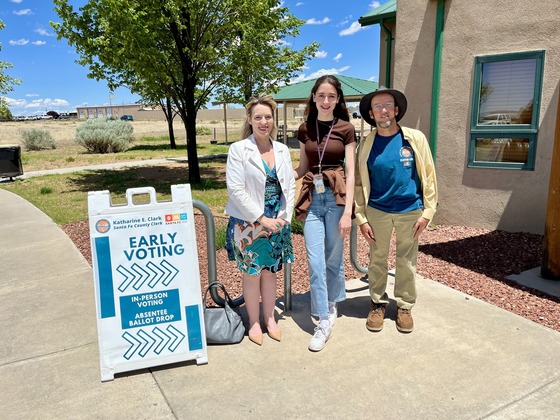 Pictured Left to Right: Katharine Clark, Santa Fe County Clerk; Margaret Gouws, Voter Outreach Coordinator; and Gary Reid, Election Administrative Specialist.
In the latest blog post, the EAC interviewed Santa Fe County Clerk Katharine Clark on the office’s 2025 Clearie award-winning program, Voting Without Barriers: Santa Fe County. It was recognized in the “Best Practices for Improving Accessibility for Voters with Disabilities” category. This program is a three-part accessibility initiative that includes ASL videos, voting site guides, and a Disability Access Advisory Board, all designed to address a different barrier to voting.
|
|
More Clearie-Award Winning Programs for Voting Accessibility
You can view other Clearie award-winning programs from this year and others that have received this award since the category was introduced in 2017 by using the Clearinghouse Awards Index. This may give election offices ideas for programs they may want to adopt in their jurisdictions.
|
|
|
|
|
|