|
 On March 12, the EAC joined Vet the Vote to host the Help America Vote Poll Worker Appreciation Event at the National Museum of the United States Air Force. The event celebrated over 200 poll workers and veterans in attendance on the Wright-Patterson Air Force Base in Dayton, Ohio.
“The military and the veteran’s community are truly amazing, and I want to thank you all for what you've done and what you will continue to do,” said EAC Chairman Thomas Hicks to the crowd. He added, “But I ask you to continue your service to our nation.”
Ohio Secretary of State Frank LaRose delivered remarks via video to encourage more veterans to become poll workers. Speakers also included Scott Wiedmann, Director of the Federal Voting Assistance Program (FVAP); EAC Commissioner Donald Palmer; and Jeff Rezabek, Director of Montgomery County Board of Elections, Ohio, among others.
You can watch the livestream recording of this event on the EAC’s YouTube Channel. As a reminder, the EAC’s National Poll Worker Recruitment Day will be on August 11, 2026! More information will be available at helpamericavote.gov.
|
|
This month, the EAC is highlighting: |
|
 |
|
New Resources: AI Case Studies & Planning Calculators |
 |
|
Election Scenario Test Deck: Poll Worker & Natural Disaster Expansion Packs |
|
 |
|
New Tool to Analyze 2024 General Election Data with the EAVS Data Interactive |
 |
|
Clearies Winners Spotlight & More! |
|
|
AI in Action: Case Studies for Election Officials
Election officials across the country are beginning to explore how artificial intelligence (AI) can help them manage increasing workloads, improve voter services, and maintain the accuracy and security that elections demand. The EAC’s AI in Action guide presents case studies from election offices that have successfully used AI tools, along with practical guidance for getting started. This includes how election offices have used AI for:
- Social Media Calendar Management
- Poll Worker Scheduling and Training Materials
- Turnout Forecasting for Resource Allocation
- Meeting Transcription and Minutes
While AI is a powerful tool, it should augment, not replace, human judgment. This is demonstrated in every case study in this guide. Check out this resource and other best practices for AI and election administration at eac.gov/AI
|
|
|
EAC Planning Calculators to Help Election Officials Improve the Voting Process
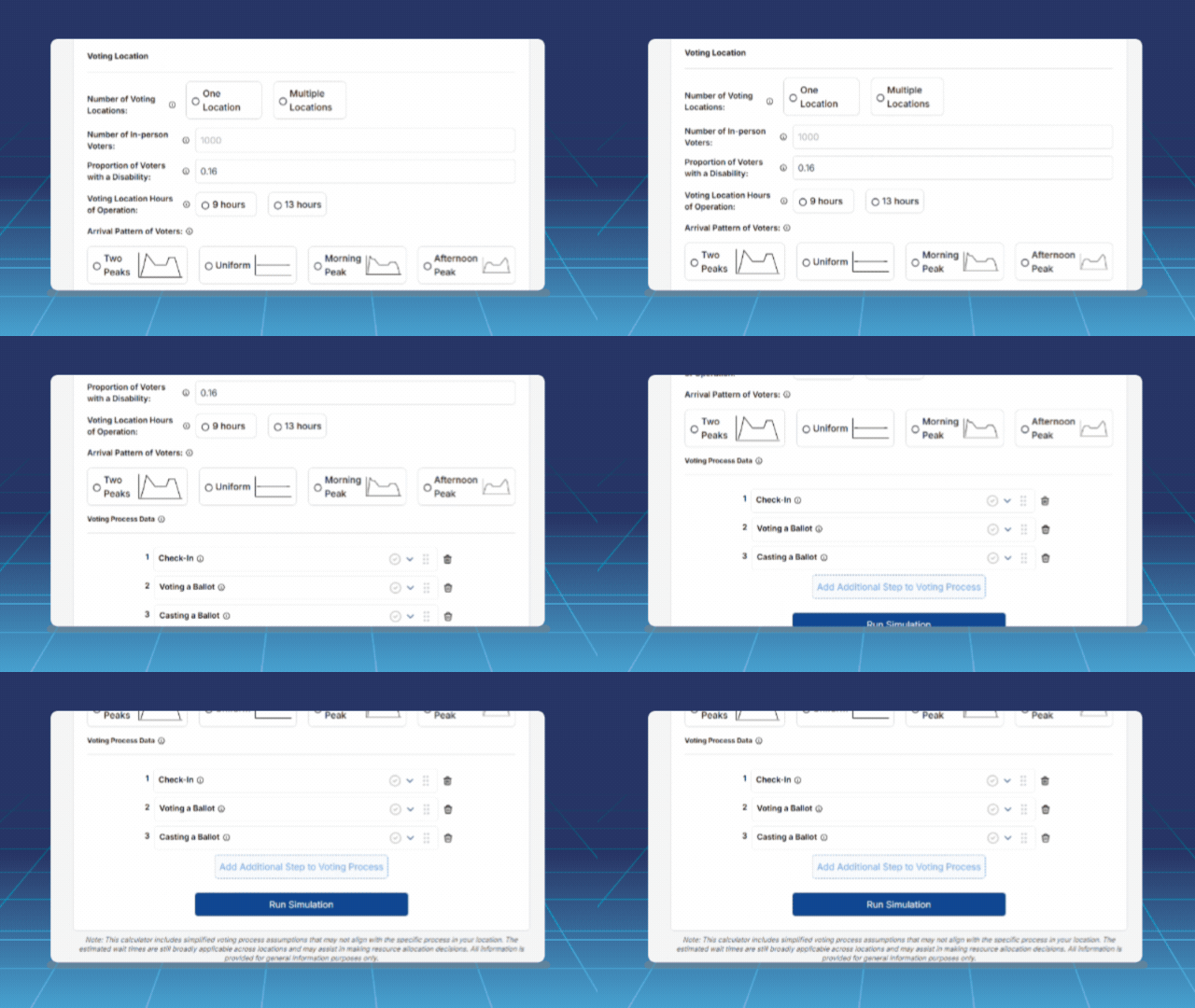
Election officials now have two new calculators to support them in the planning process leading up to Election Day. These innovative tools can help minimize voter wait times and determine the number of accessible voting machines needed to prevent potential bottlenecks.
The Voting Location Resource Calculator automatically simulates voter wait times based on information entered for a specific voting location, including the steps required to vote, the location's setup, and the voting equipment used.
The Accessible Voting Machines Calculator can help election officials and policymakers determine how many accessible voting machines to deploy at voting locations to achieve minimal wait times. While one accessible voting machine per voting location is the minimum required to meet Help America Vote Act (HAVA) requirements, it may not be enough to accommodate the disabled population served by the location.
These and other planning tools are available on the EAC’s website.
|
|
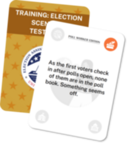
The EAC’s Election Scenario Test Deck provides a wide range of scenarios that election officials can use to exercise their existing continuity of operations plans or other contingency plans.
Now, two expansion packs, the Natural Disaster and Poll Worker Editions, are available to test preparedness for potential disasters and train poll workers. Election officials can use the cards to run a quick exercise at a team meeting or poll worker training, or to comprehensively evaluate their offices' plans.
|
|
|
Analyze 2024 General Election Data with the EAVS Data Interactive
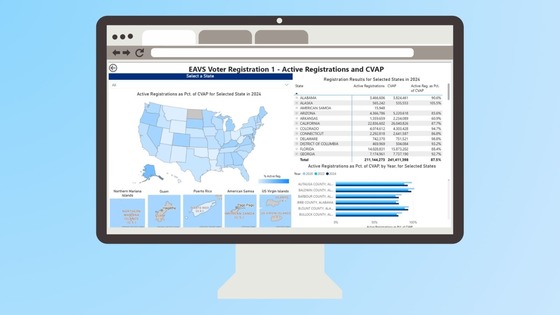 Examining 2024 general election data just got easier with the Election Administration and Voting Survey (EAVS) Data Interactive. It allows election officials, researchers, and the public to compare data at both the state and local levels and any combination of jurisdictions side by side on topics like:

- Voter registration and turnout
- Uniformed Services and Overseas Citizens (UOCAVA)
- Mail and in-person voting
- Poll workers
- Election equipment
Users can also find the EAC’s four previous data interactives, starting with the 2016 EAVS, as well as other EAVS data and reports on the EAC's website.
|

Blog Post: How Election Officials, Researchers, and Others Can Best Utilize the 2024 EAVS Data Interactive
While there are many applications for the EAVS Data Interactive, this post highlights three specific ways to use it. For example, state election officials may use this tool to compare voter registration data across counties, local election officials may use it to find similar jurisdictions across the country, and researchers may use it to interpret voting policy across states.
|
|
|
2026 EAC Annual Board Meetings
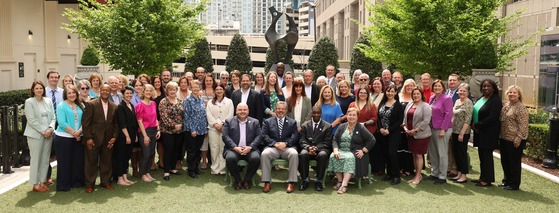 Members of the Local Leadership Council and the EAC Commissioners during the 2025 annual meeting in Charlotte, North Carolina.
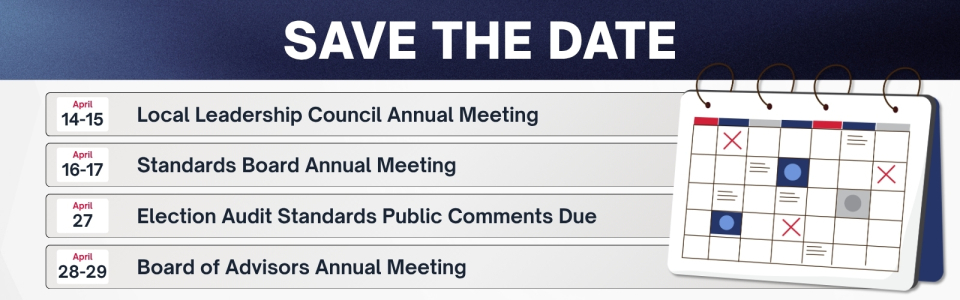
Mark your calendars! The EAC is holding annual meetings for the Local Leadership Council (LLC) on April 14 and 15, and the Standards Board on April 16 and 17 in Chicago, Illinois. The EAC will hold the Board of Advisors Annual Meeting on April 28 and 29 in Washington, DC. These meetings are open to the public and will not be livestreamed. Registration is required. More information will be available on eac.gov/events.
|
|
Clearinghouse Awards 10th Anniversary: Winners Spotlight
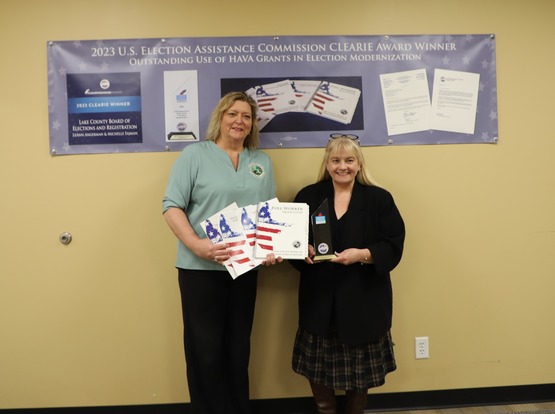
Lake County Board of Elections and Registration, Indiana, 2023 Clearie Award Winner
In the latest blog post, the EAC features the Lake County Board of Elections and Registration in Indiana. The office received a 2023 Clearinghouse Award for Outstanding Use of HAVA Grants in Elections Modernization.
Director Michelle Fajman discusses the office’s winning program, which used HAVA funding to help election staff quickly respond to voter and poll worker questions.
|
|
Request for Comment: Election Audit Standards
The EAC is requesting feedback from the public on the agency’s proposed Voluntary National Election Audit Standards. Comments must be submitted in writing by 11:59 p.m. ET on Monday, April 27, 2026. More information on the public comment process is available on the Federal Register Notice. View the draft standards here. If you have any questions, please contact clearinghouse@eac.gov.
|
|
|
|
|
|