
ROUTES Quarterly Newsletter - Fall 2020
U.S. Department of Transportation sent this bulletin at 10/30/2020 11:45 AM EDT |
|
Having trouble viewing this email? View it as a Web page.
|

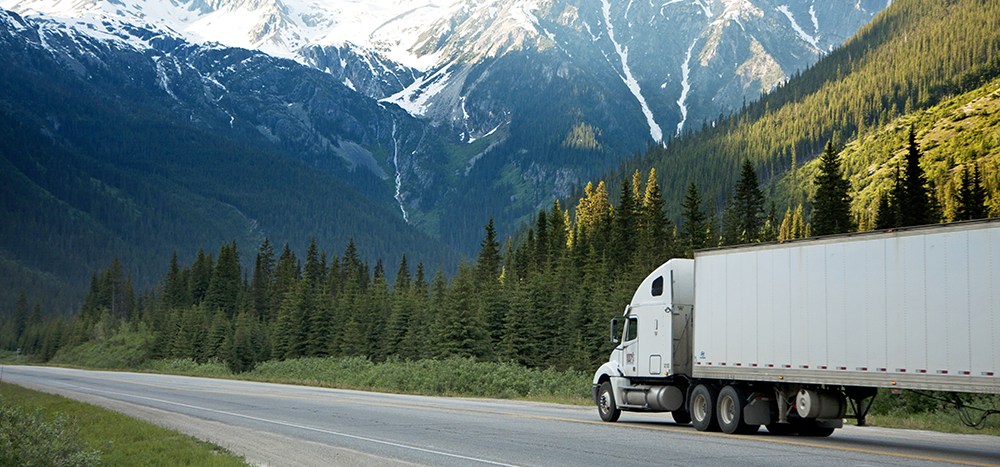
One year ago, the Department announced the creation of the Rural Opportunities to Use Transportation for Economic Success (ROUTES) Initiative. Today we are happy to share the first quarterly ROUTES Newsletter. This newsletter will serve as a bulletin board for the Department’s available resources and recent announcements.
Rural communities and their transportation networks have been instrumental to our Nation’s success as a whole – both in supplying and connecting communities across the country. Rural transportation networks are critical for domestic production and export of agriculture, mining, and energy commodities, and they improve the quality of life for all Americans. Yet significant challenges persist for rural transportation infrastructure. The ROUTES Initiative was created to address these inequities so that rural communities can improve their transportation systems. The ROUTES initiative is conducting numerous stakeholder outreach sessions to hear rural concerns, gather data on rural needs, and make it easier for rural communities to find and access discretionary funding at the Department.
I hope you find this newsletter informative, and continue to engage with the Department by sharing your stories with us.
--Secretary Elaine L. Chao
ROUTES News
Funding & Financing
Build America Bureau Announces First Rural Project Initiative Loan
Grant Announcements
Project Spotlight: Nez Perce Tribe BUILD Grant
Active Notices of Funding Opportunities (NOFOs)
Safety
Reducing Rural Roadway Departures
ROUTES Webinar with National Center for Rural Road Safety
NHTSA Releases New Safety Data
ROUTES Updates
USDOT Launches Discretionary Funding Toolkit
On July 27, Secretary Elaine L. Chao announced the ROUTES Initiative's Applicant Toolkit for Competitive Funding Programs at USDOT. The Toolkit provides user-friendly information and resources to enhance rural applicants’ familiarity with the Department’s discretionary grant programs and the funding process. It is designed for all levels of grant applicant experience, aiming to enhance access to USDOT resources for rural transportation projects. Specifically, this toolkit illustrates key applicant activities when participating in the USDOT discretionary grants process, catalogs USDOT discretionary grant programs by applicant type and eligible project activities in the USDOT Discretionary Grant Funding Matrix, and provides resources for applicants to maximize the potential for award success. The Secretary recorded a video announcing the Toolkit, which can be seen here.
ROUTES Website Updates
In addition to the Applicant Toolkit for Competitive Funding Programs at USDOT mentioned above, there are several new and updated resources available on the ROUTES website.
- Funding Opportunities -- This page shows grants accepting applications within USDOT, and links to more information (including how to apply). There is also historical data on many USDOT grant programs, including dates and PDFs of previous Notices of Funding Opportunities (NOFOs), funding amounts, and previous award winners.
- Financing Opportunities -- This page summarizes the credit programs offered by the Build America Bureau within USDOT. This includes the TIFIA Rural Projects Initiative, and showcases the innovative loan awarded to the San Luis Obispo Regional Transit Authority in September 2020.
- DOT Resources -- This page showcases dozens of resources available across all modes in USDOT for rural transportation providers. This includes resources for grant applicants, information on safety, resources for transportation planning, and links to groups at USDOT focused on rural areas.
Funding & Financing
Build America Bureau Announces First Rural Project Initiative Loan |
 |
On September 9, the Build America Bureau closed its first TIFIA Rural Project Initiative (RPI) loan. The San Luis Obispo Regional Transit Authority (RTA) received a $13.08 Million loan for a new operations and bus maintenance facility. Once complete, the project will provide the RTA with a 28,650 square-foot facility on 6.44-acres of land – a facility three times larger than the current space. Under the RPI an eligible borrower can receive a loan of up to 49% of eligible project costs at half of the prevailing U.S. Treasury rate and, while funding is available, the Department will cover the cost of its advisor for the loan (which is typically a fee charged to applicants). A project outside of a Census designated urbanized area of over 150,000 people may be eligible for an RPI loan, more information can be found here.
Grant Announcements
Three major grant program announcements with significant rural awards were made in August and September:
- On August 11, the Federal Transit Administration (FTA) announced 96 grant awards for its Bus and Bus Facilities grant program, totaling $464 Million. Of the projects that were awarded, 26 will directly benefit rural areas. This investment of over $125 Million will help transit providers update their vehicle fleets, construct new maintenance facilities, and expand their networks, among many other initiatives. The list of projects can be found here.
- On September 15, Secretary Elaine L. Chao announced $1 Billion of awards for fiscal year 2020 (BUILD grants. The Department awarded 70 projects in 44 states, of which 31 are for rural transportation projects. These 31 projects represent nearly a half-billion dollars of investment in rural America, focusing on safety, economic competitiveness, quality of life, state of good repair, environmental sustainability, innovation, and partnerships with a broad range of stakeholders. The list of projects can be found here, see below for more detail on one of this year's recipients.
- On September 23, the Federal Railroad Administration (FRA) announced that 50 projects across 29 states had been selected to receive discretionary funds through the Consolidated Rail Infrastructure and Safety Improvements (CRISI) program. The investment of $320.6 Million will upgrade U.S. rail infrastructure and improve the safety, efficiency, and reliability of freight and intercity passenger service. Thirty-two of the fifty projects are in rural areas, accounting for three-quarters of the total amount awarded. The list of projects can be found here.
Project Spotlight: Nez Perce Tribe BUILD Grant
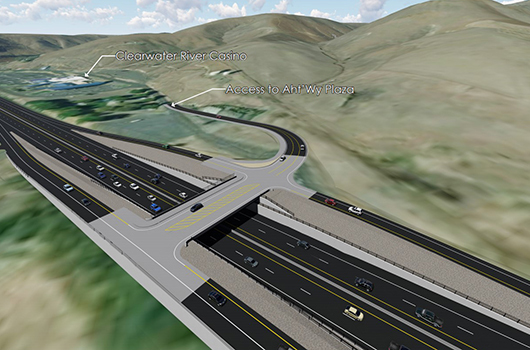 |
Aht’Wy Interchange Project -- Nez Perce Tribe 2020 BUILD Grant: $19,134,710
Total Project Cost: $20,141,800
Lapwai, Idaho
|
| The Nez Perce Tribe was awarded $19,134,710 as part of the 2020 BUILD program. The project will remove the at-grade crossing of left-turning vehicles through two lanes of oncoming traffic along one of the most dangerous road segments in Idaho. Eliminating the difficult left turn will also reduce delays experienced by the local transit system. It will result in improved access to Clearwater River tourist areas and major employment centers. It also improves the efficiency and safety of freight movement, especially for the agricultural and logging industries, to the nearby ports of Lewistown and Wilma. Broadband conduits will be installed as part of a larger initiative between Nez Perce Tribe and the Idaho Department of Transportation. More information on the project can be found here. | |
Active Notices of Funding Opportunities (NOFOs)
Nationally Significant Federal Lands and Tribal Projects (NSFLTP) (FHWA) - NSFLTP provides funding for the construction, reconstruction, and rehabilitation of nationally-significant projects within, adjacent to, or accessing Federal and tribal lands. This Program provides an opportunity to address significant challenges across the nation for transportation facilities that serve Federal and tribal lands. Closing Date - 11/2/2020; NOFO; Apply Here.
Safety
Reducing Rural Roadway Departures |
 |
Every year approximately 12,000 people die when their vehicles leave travel lanes in rural areas. As part of its Every Day Counts round 5 (EDC-5) initiative, FHWA has developed the Focus on Rural Roadway Departures (FoRRRwD) program. This program encourages agencies to use proven countermeasures to address this issue. FoRRRwD is based on four pillars: address all public roads, use systemic deployment, development a safety action plan, and install proven countermeasures. More information can be found here.
ROUTES Webinar with National Center for Rural Road Safety |
 |
The National Center for Rural Road Safety co-hosted a webinar with the ROUTES Initiative to showcase some of the Department’s most recent studies and data on rural safety, and what implications these may have for best use of transportation resources. The National Center for Rural Road Safety works to empower as many state, local, and tribal agencies as possible with the most effective safety tools and strategies that are currently available. The organization is funded by FHWA and focuses solely and specifically on enhancing safety on rural roads while supporting surface transportation in general.
NHTSA Releases New Safety Data
The National Highway Traffic Safety Administration (NHTSA) released several reports and analyses over the last few months pertaining to rural areas.
- 2018 Rural Urban Fact Sheet -- This fact sheet contains information on fatal motor vehicle crashes and fatalities, based on data from the Fatality Analysis Reporting System (FARS), for rural and urban areas.
- Geospatial Summary of Crash Facilities -- The report shows the breakdown geospatial breakdown of rural vehicle crashes, broken down by distance from the nearest urban area and crash type.
- Preview of Motor Vehicle Traffic Fatalities In 2019 -- This research compares motor vehicle traffic fatalities from 2018 to 2019, and show a decline in traffic fatalities for the third consecutive year.
- Examination of the Traffic Safety Environment During the Second Quarter Of 2020 (PDF) -- This report explores changes in countermeasure use including traffic enforcement and public communications and outreach. This report also examines the question of whether some people – who continued driving even when many communities had stay-at-home guidelines – may be inherently higher-risk drivers.
The ROUTES (Rural Opportunities to Use Transportation for Economic Success) Initiative aims to address disparities in rural transportation infrastructure by disseminating resources on its website and providing technical assistance. If you want to learn more about ROUTES, or how it can help your community, you can reach the ROUTES team at rural@dot.gov.
 |
|
You are subscribed to DOT email updates. Subscriber Services: Manage Preferences |
|
||||||||||||


