
BTS 2-Week Outlook: BTS 2-Week Outlook Bureau of Transportation Statistics Upcoming and Previous Releases
U.S. Department of Transportation sent this bulletin at 12/23/2019 10:38 AM EST |
|
Having trouble viewing this email? View it as a Web page.
|

BTS 2-Week Outlook
Bureau of Transportation Statistics Upcoming and Previous Releases
December 23 thru January 3
Upcoming from December 23
No releases scheduled
Previously Released
Dec. 11 - Transportation Services Index, October 2019
Dec. 12 - Airline Traffic Data, November 2019 Estimated, September 2019 Reported
Dec. 13 - Passenger Airline Employment, October 2019
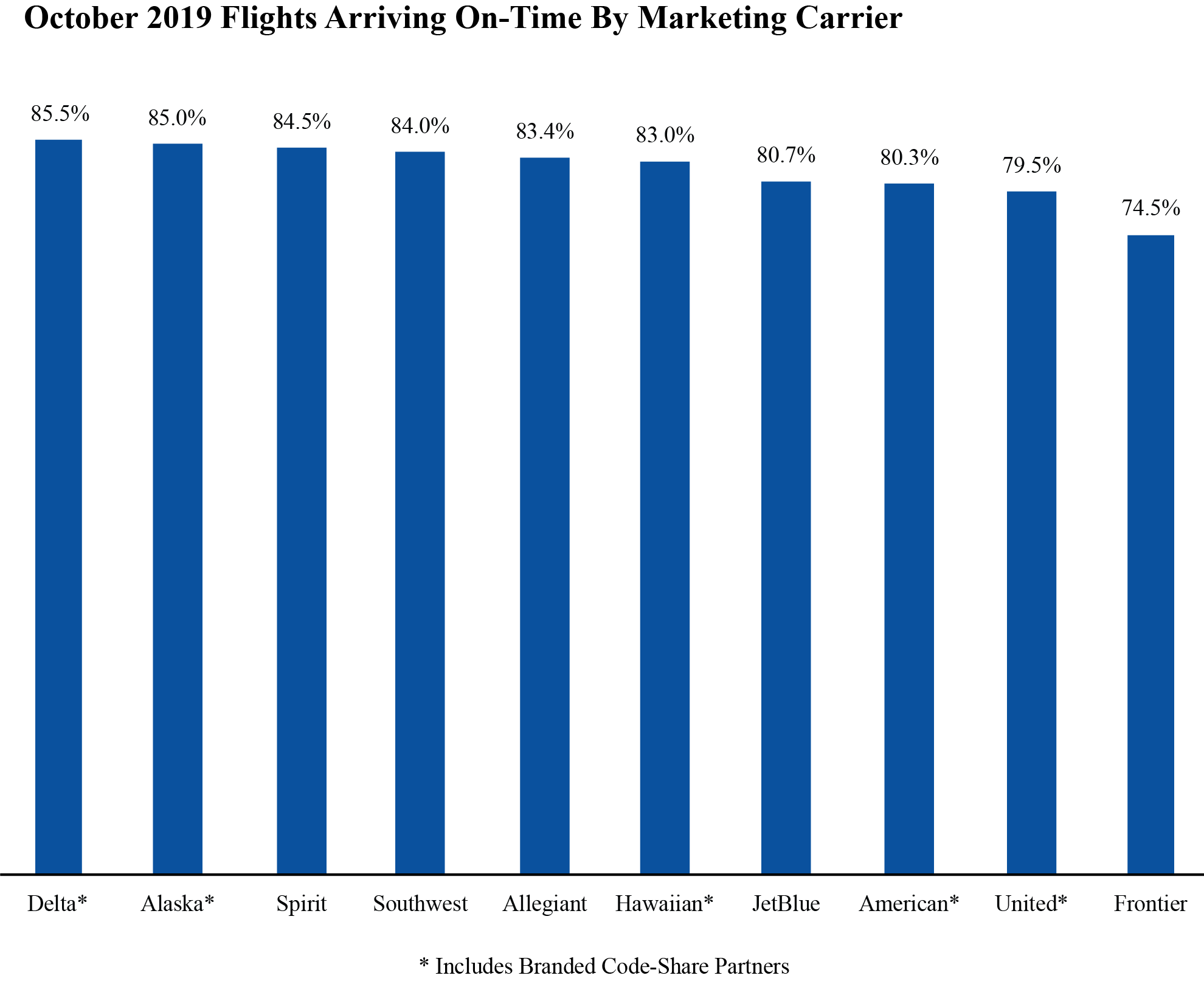
Dec. 17 - Airline On-Time/Tarmac Times, October 2019
Dec. 18 - North American Freight Data, October 2019
Dec. 19 - Freight Flow Estimates 2018
Dec. 19 - Transportation Statistics Annual Report 2019
Upcoming BTS Releases
No releases scheduled in the next two weeks.
See BTS release schedule.
BTS Previously
BTS has released the following:
- Freight Transportation Services Index (TSI), October 2019

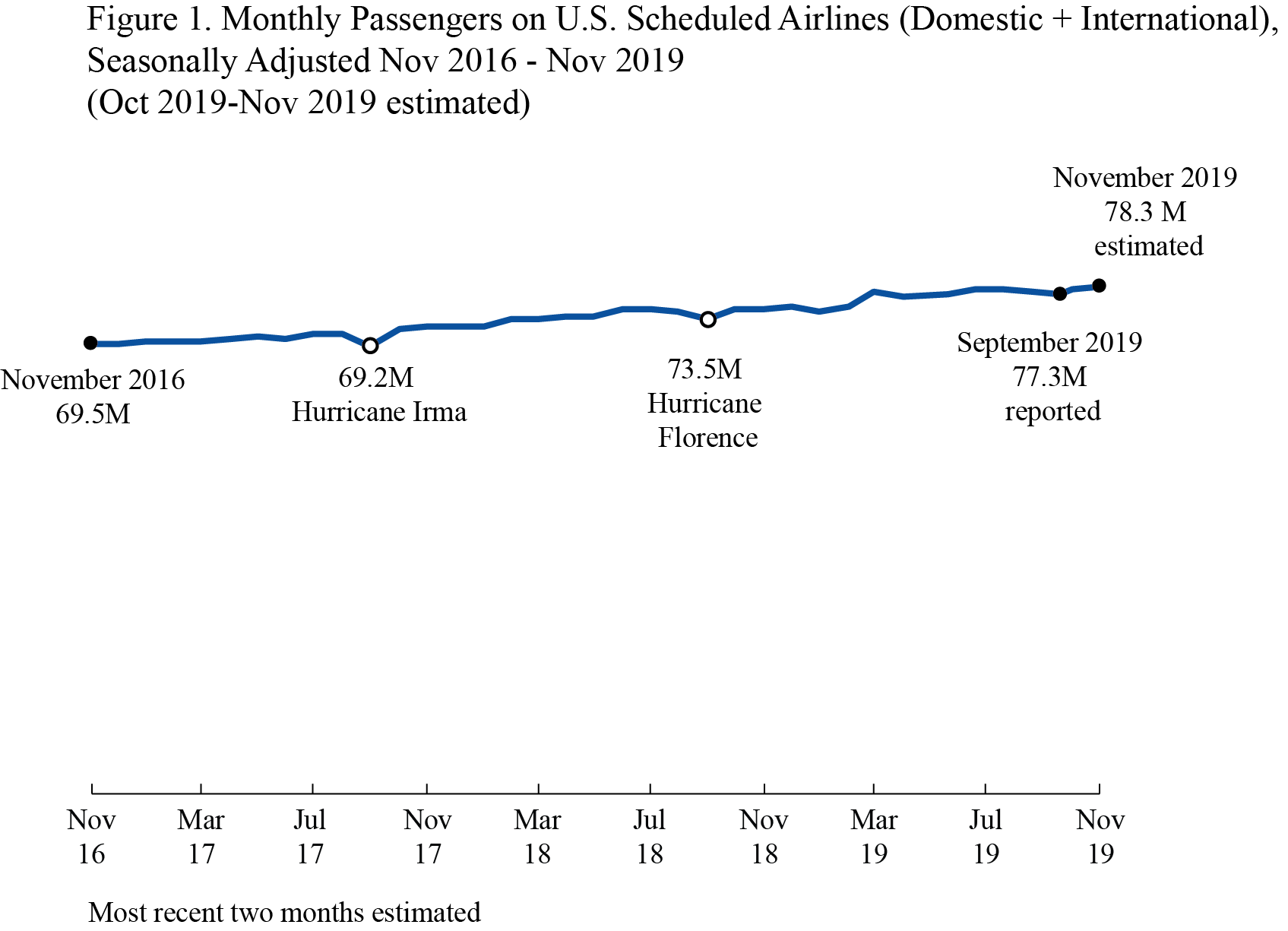
- Airline Traffic Data, November 2019 estimate, September 2019 reported
- Passenger Airline Employment, October 2019
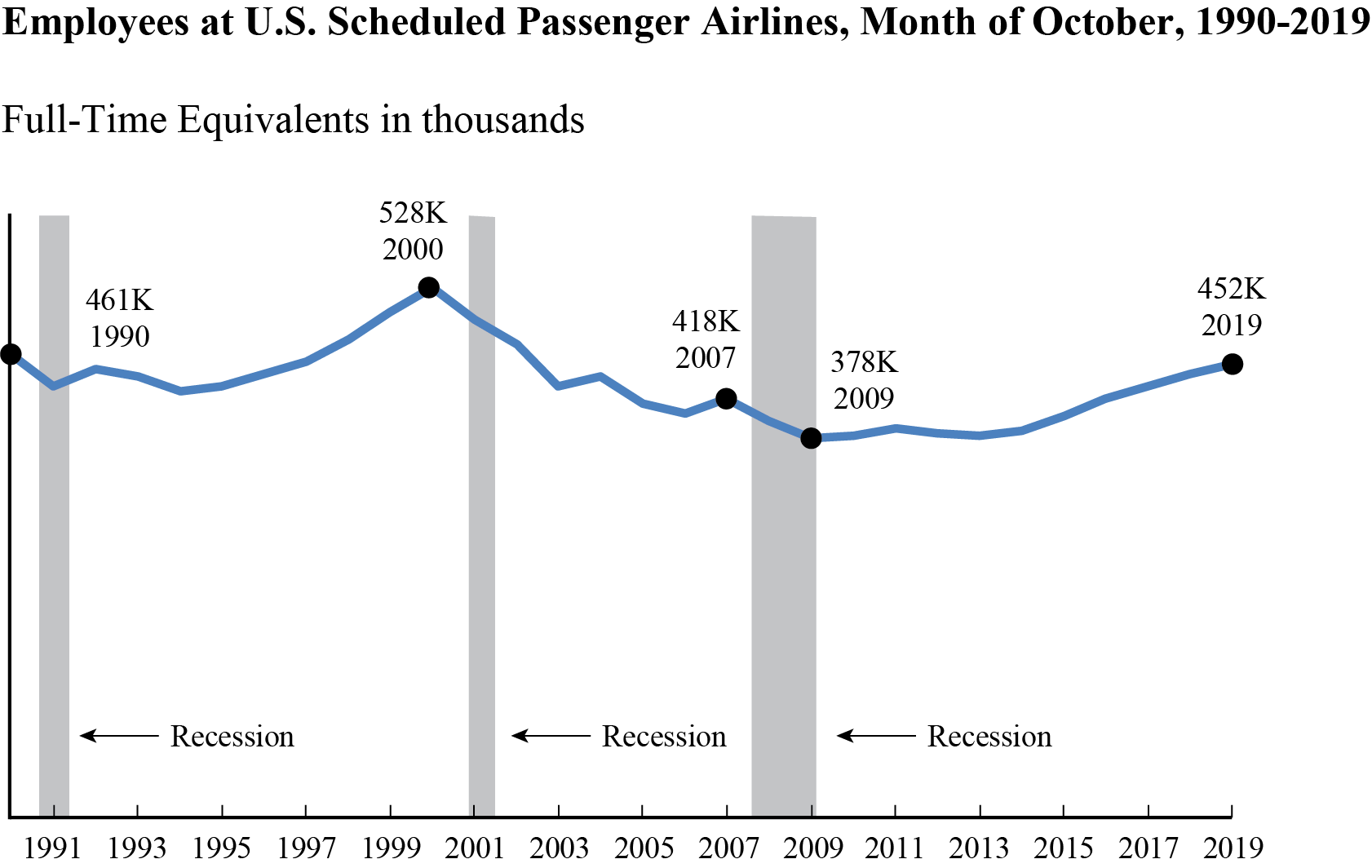
- October’s 452,440 full-time equivalent employees (FTEs) was the highest monthly FTE total since March 2003 (458,598 FTEs).
- October was the 72nd consecutive month that U.S. scheduled passenger airline FTEs exceeded the same month of the previous year.
- Air Travel Consumer Report: October 2019 Numbers
- North American Freight Data, October 2019
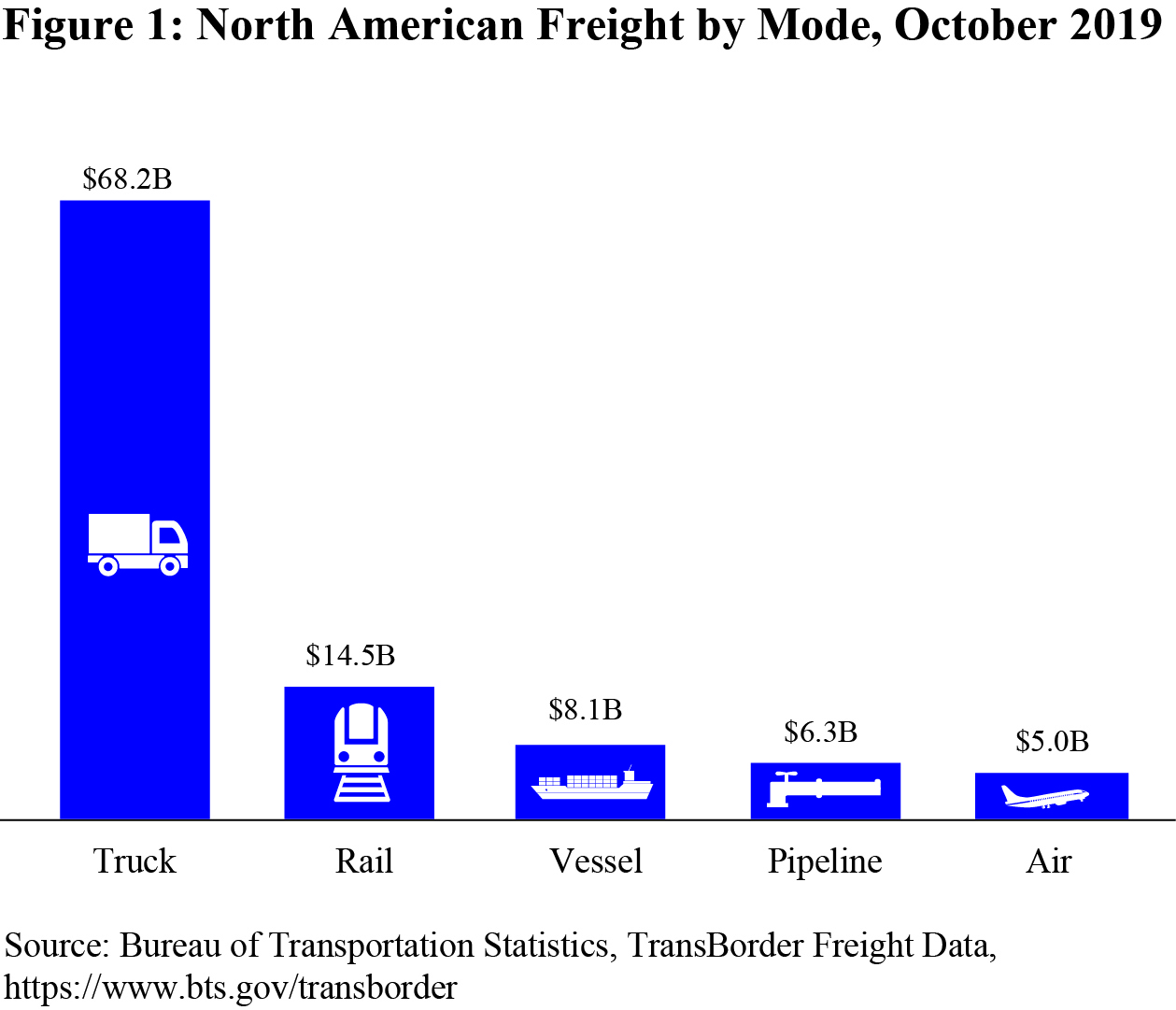
- Total Transborder Freight: $1 billion of transborder freight moved by all modes of transportation, down 3.3% compared to October 2018
- Most-used mode: Truck moved $2 billion of freight, down 2.7% compared to October2018
- Second mode: Rail moved $5 billion of freight, down 7.9% compared to October 2018
- 2018 Freight Flow Estimates
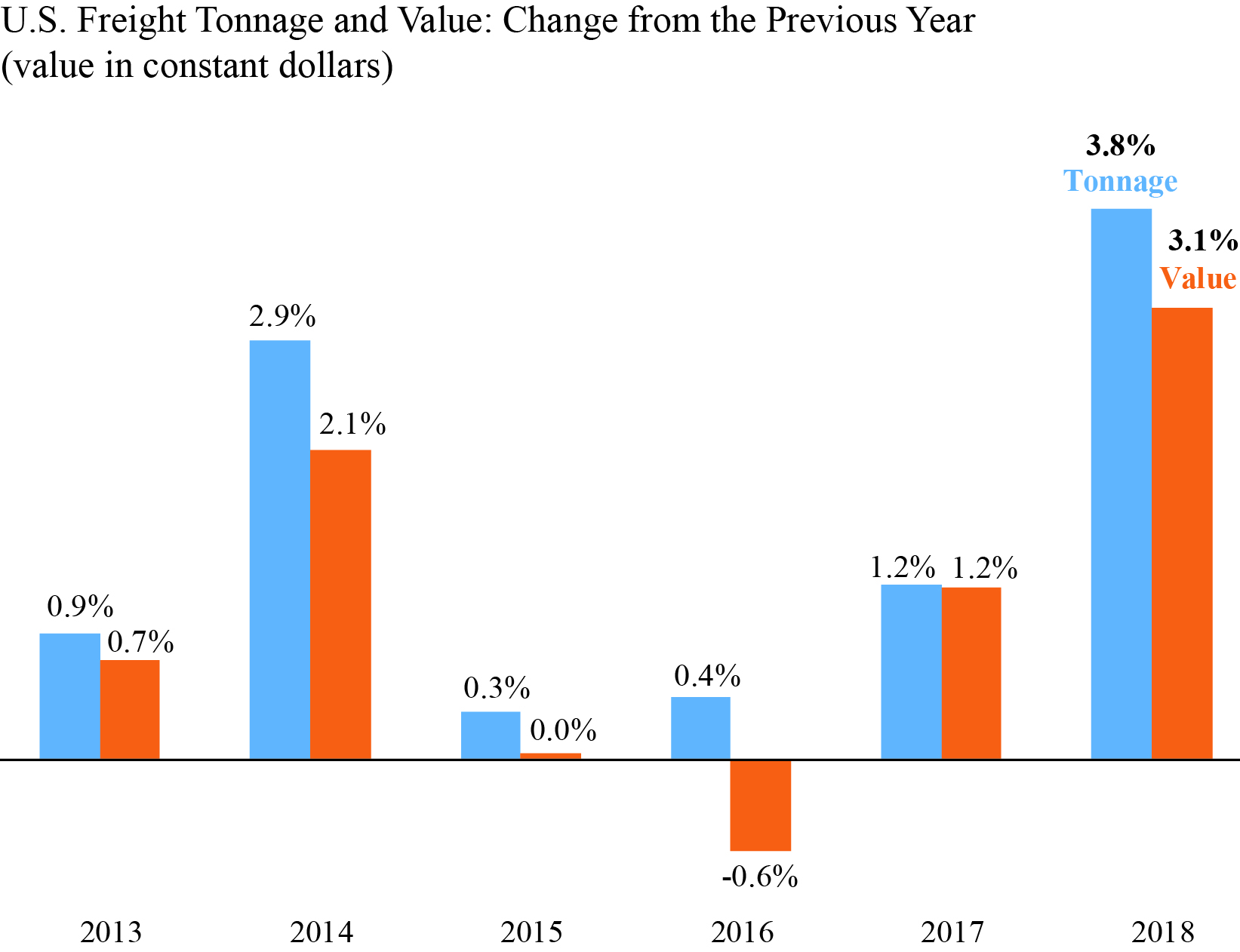
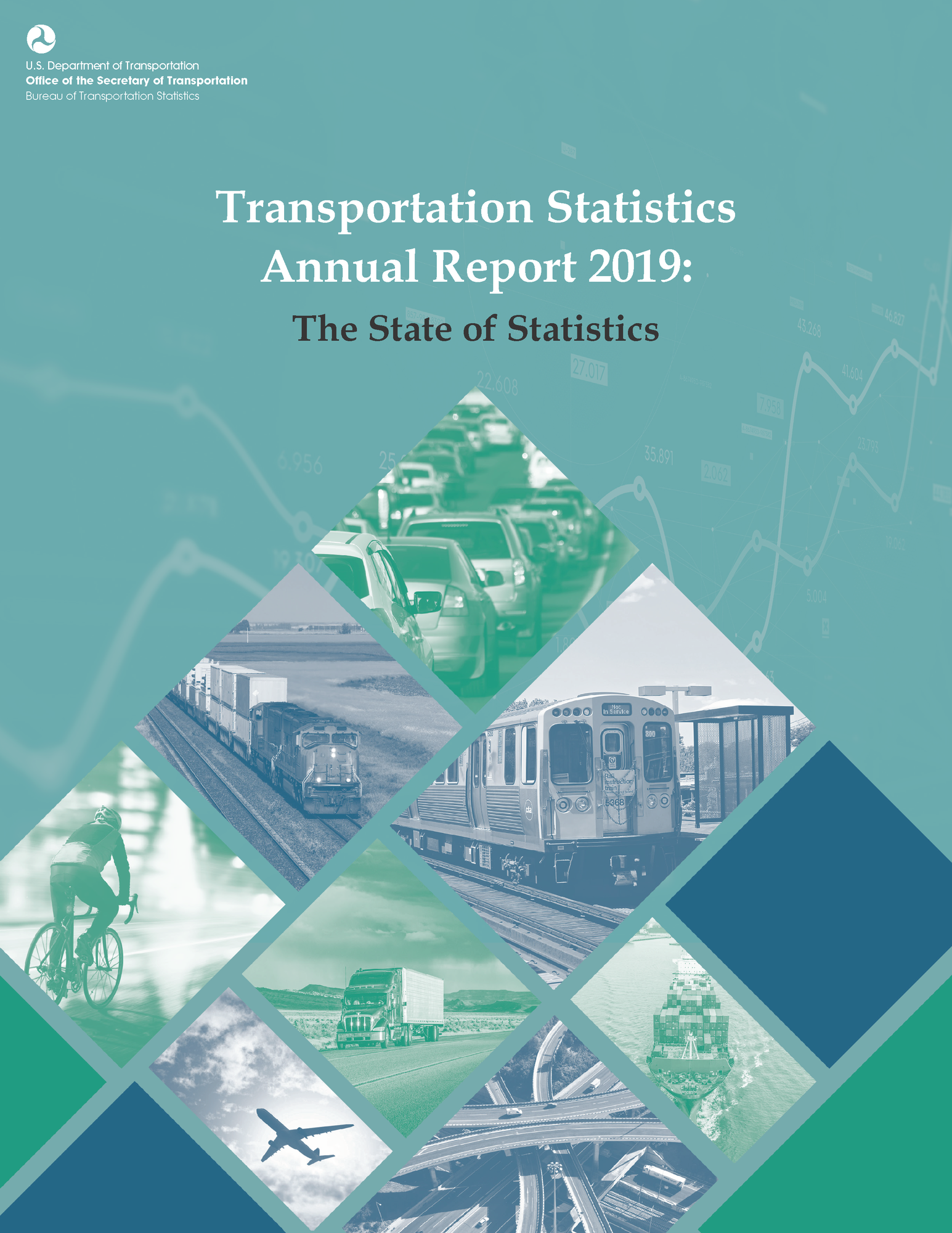
- Transportation Statistics Annual Report 2019
Topics of focus in this year’s report include:
- changes in transportation technology;
- the state of statistics regarding transportation and related topics, and;
- emerging data sources that can work in concert with traditional statistical programs.
|
You are subscribed to DOT email updates. Subscriber Services: Manage Preferences |
|
||||||||||||

