|
New Episode of "Stories from the Collection"
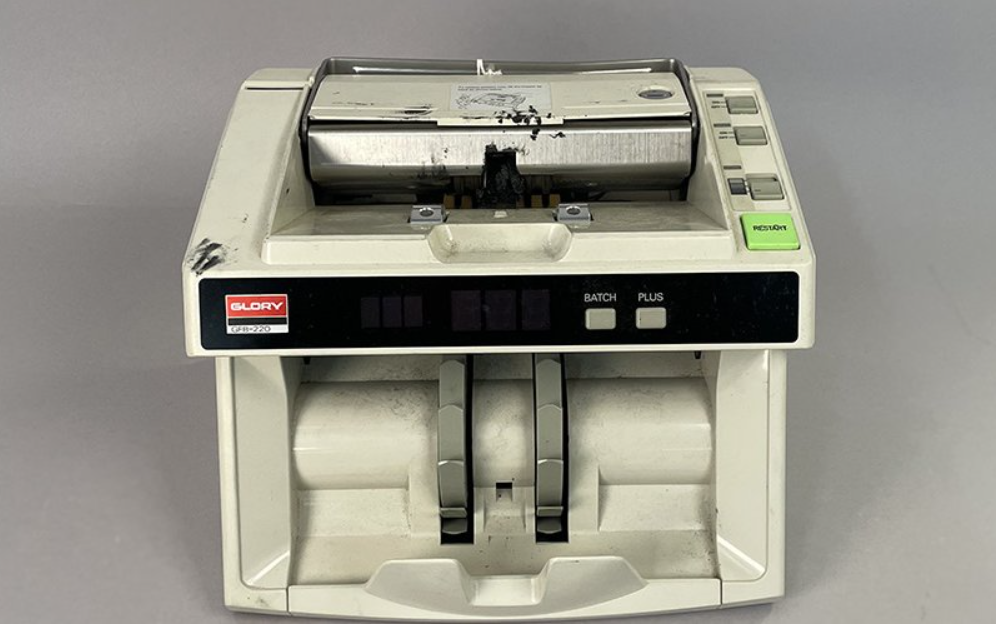
Money Counter: Why Money Laundering Became a Crime
|
|
Criminals in the illegal drug trade often use schemes to make their illicit earnings look legitimate. This process is called money laundering—moving “dirty money” through multiple accounts and transactions to hide its true origin. In 1986, Congress passed the Money Laundering Control Act making money laundering a federal crime. Cash from illegal activities can’t be openly deposited or spent without raising suspicion, so criminals try to “clean” it to avoid detection.
One common tool in this process is the money counter—a machine that quickly and accurately counts banknotes. While these machines are standard in businesses that handle large amounts of cash, they have also been used illegally to manage large sums before funneling them through laundering schemes.
This money counter was obtained from an illegal drug operation and is just one of more than 45,000 artifacts available through Stories from the Collection, a DEA Museum's exhibit with exciting object, each telling a story about the evolution of federal drug law enforcement.
View the video on this interesting artifact to learn more about it.
New episodes of the series are released monthly on YouTube and the DEA Museum website.
|
|
|
|