|
|
Virtual Groundbreaking
Don’t miss the virtual Groundbreaking Ceremony signaling our transition from phase three to our fourth and final phase.
Tuesday, May 25, 2021
11:00 a.m. MT.
More Information
|
|
IBC continues to work with GSA and our Design and Build partners, CannonDesign and Centerre Construction, to modernize and transform Building 48 from its current state to a modern sustainable office. Over the next few weeks, we will share features you can look forward to in our new workplace. Visit the Denver Move portal to find previous messages.
Building 48 – Landscaping | Connecting to Nature
The Building 48 landscape design is driven by reconnecting to nature and natural systems that optimize the outdoor spaces. The landscape design will feature various naturalized design elements such as bioswales, pollinator gardens, drought-tolerant plants, and native grasses. Existing trees will be preserved where possible.
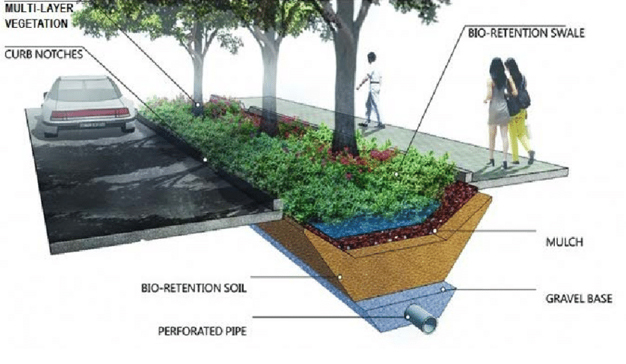
Bioswales:
Bioswales are landscape features that collect polluted stormwater runoff, soak it into the ground, and filter out pollution. Bioswales are like rain gardens but capture more water coming from larger areas like parking lots. Like rain gardens, bioswales use native plants to help absorb more water and prevent erosion.
Image: Sample Bioswale Diagram
|
Pollinator Gardens:
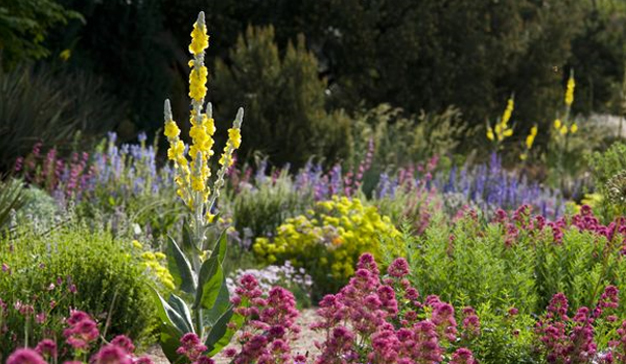
A pollinator garden includes a range of flowers that provide nectar or pollen for a wide range of pollinating insects.
Various species are selected to create cover for insects during cold winds and snowy conditions.
Image: Pollinator Victory Garden - Photo courtesy of the Denver Botanical Gardens.
|
Native Drought Tolerant Plants and Grasses:
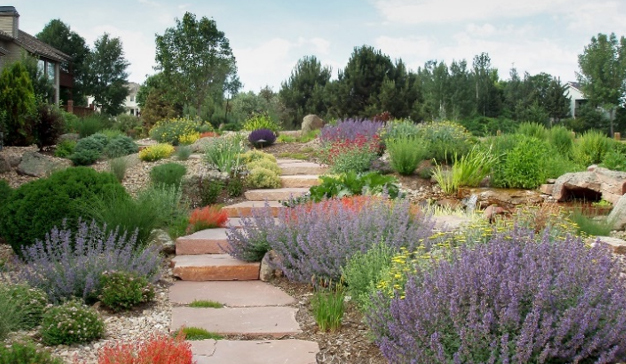
Drought-tolerant native plants, also known as xeriscaping, are naturally adapted to Colorado’s climates, soils, and environmental conditions.
Native species create a sustainable landscape, require less water and fertilizer, and are more resistant to pests and disease.
Image: Xeriscaped Yard - Denver, Colorado.
|
Plants used for the Building 48 landscape will be a mix of adaptable native grasses and shrubs, with pockets of pollinator gardens located in key locations. Special attention will be given to species of plants to ensure that water quality is improved on site at and below the surface.
Pollinator gardens with native, low water use species incorporating a mix of grasses and shrubs for pollinator nesting, and all-season flowering shrubs and perennials for pollinator foraging will also be included in the landscape design. Bees and other native pollinators identified on-site will be targeted when selecting plants and designing the pollinator garden layout.
|
|

Questions
|
|
|
|
|