|
USGS Water News
New products from USGS Water Resources Mission Area
National nutrient study shows progress in reducing effects of nutrient pollution
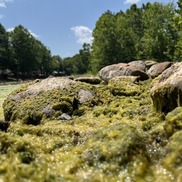
Despite increases in human population and agricultural production, significant progress has been made toward reducing the impacts of nutrient pollution on the landscape. Nutrient pollution is a widespread problem affecting ecosystems and human health. Understanding how nutrient pollution varies in time and space is necessary to find effective solutions. A collaborative group of researchers led by the US Environmental Protection Agency just released the next generation of the National Nutrient Inventory, a comprehensive, up-to-date source of nutrient data available for the lower 48 United States. USGS researchers provided key expertise in USGS water quality datasets, such as phosphorous and nitrogen from fertilizer and manure, and the implications of how these data have changed over time.
Read the paper or contact EPA scientist Robert Sabo, ORISE Fellow Meredith Brehob, or USGS scientist Sarah Stackpoole.
|
Water use for thermoelectric power declines from 2008 to 2020
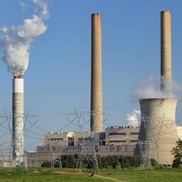
Water withdrawals and consumption for thermoelectric power plants declined significantly between 2008 and 2020. Thermoelectric power plants are one of the top two water-use categories in the United States. USGS scientists analyzing trends in thermoelectric water use found that the recent decrease in water use was largely driven by the switch from coal-fired plants to other fuel sources, like natural gas, as well as improvements in cooling system technologies. Thermoelectric plants using these other fuel sources and recirculating tower cooling systems have increasing water-use consumption trends, though these increases are smaller than the overall decline in water use.
Read the paper or contact USGS scientist Kenneth Skinner.
|
Pesticide concentrations rarely exceed human health benchmarks
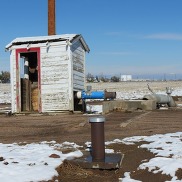
A nationwide analysis of pesticide trends in groundwater between 1993 and 2022 found that pesticides rarely exceeded human health benchmarks, and the detection of pesticides approaching benchmark concentrations decreased over time. Pesticide exposure has been linked to numerous negative human-health effects. Understanding the locations and concentrations of pesticides that pose a potential risk to drinking water supplies is therefore critical for maintaining healthy agricultural, urban, and rural communities. While the results from this study are encouraging, continued monitoring and assessment of pesticides in groundwater are warranted.
Read the paper or contact USGS scientist Sarah Stackpoole.
|
FireALT dataset establishes baseline for permafrost effects of wildfire
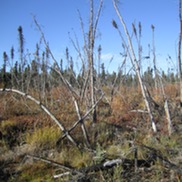
A new publicly available dataset shows deeper thaw of permafrost in the first two decades after fire, followed by signs of recovery in subsequent decades. Wildfire reduces permafrost stability, threatening traditional livelihoods, infrastructure, and community safety in northern climates. To better understand the effect of wildfire on permafrost, researchers collected information on permafrost thaw in paired burned and unburned sites from 18 contributors across North America and Russia. The resulting FireALT dataset establishes a crucial baseline for assessing permafrost response to wildfire, especially as the Arctic continues to warm.
Read the paper or contact USGS scientists Rachel Loehman, Kristen Manies, or Michelle Walvoord.
|
Popular insecticide poses a chronic and increasing threat to aquatic life

One of the most widely used insecticides in the world, imidacloprid, poses a persistent threat to aquatic ecosystems. A nationwide study of U.S. rivers from 2013 to 2022 found that nearly half the monitoring sites had a median imidacloprid concentration exceeding the toxicity threshold for long-term exposure for freshwater invertebrates. The study also found that imidacloprid concentration was increasing at half the sites. This widespread detection of imidacloprid through time suggests that the pesticide is not only persistent but also widely transported beyond intended target locations in agricultural and urban landscapes.
Read the paper or contact USGS scientist Sam Miller.
|
Scientists clarify the trophic state concept for lakes
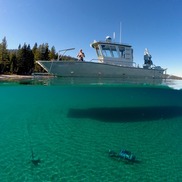
A new perspectives paper concludes that researchers must explicitly document how they classify lakes to prevent conflicting conclusions about water quality and ecosystem change and to increase reproducibility across studies. People who study lakes often categorize them in terms of “trophic state”—a broad classification system based on the amount of algae and aquatic animals typically within a given lake. However, ways of classifying trophic state vary widely, leading to potentially different results across studies. USGS researchers documented these different classification schemes and their potential for skewing our understanding of aquatic ecosystems.
Read the paper or contact USGS scientist Michael Meyer.
|
Groundwater response to wildfire is linked to regional, local, and fire conditions
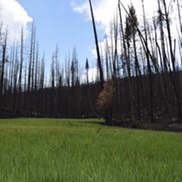
Groundwater recharge, storage, and discharge 2-10 years after a wildfire is consistently linked to regional climate and vegetation, local soil permeability and topography, and fire severity. Understanding how wildfires affect groundwater is important for anticipating water availability in fire-prone areas. However, research on this topic has yielded mixed results—some studies report increases in groundwater components after fire, while others observe declines. To help explain these inconsistencies, USGS researchers synthesized findings from multiple studies to identify patterns in groundwater response to wildfire.
Read the paper or contact USGS scientist Michelle Walvoord.
|
PFAS are widespread, not ubiquitous, in the environment
|
PFAS (per- and polyfluoroalkyl substances, AKA “forever chemicals”) are frequently referred to as “ubiquitous” in the environment. However, about half of groundwater used for drinking water supply in the U.S. does not contain PFAS, which means the chemicals are not as universally present as is often suggested. A recent opinion article by USGS researchers clarifies that to more accurately capture the prevalence of PFAS in the environment, we should say that PFAS are “widespread,” not “ubiquitous.”
Read the paper or contact USGS scientist Andrea Tokranov.
|
|
 |
|
|
About the USGS Water Resources Mission Area
Water information is fundamental to national and local economic well-being, protection of life and property, and effective management of the Nation’s water resources. The USGS works with partners to monitor, assess, conduct targeted research, and deliver information on a wide range of water resources and conditions including streamflow, groundwater, water quality, and water use and availability.
|
|
|
|
|