|

September 9, 2016
What's Wild
 RARE FERRETS RELEASED AT ROCKY
MOUNTAIN ARSENAL
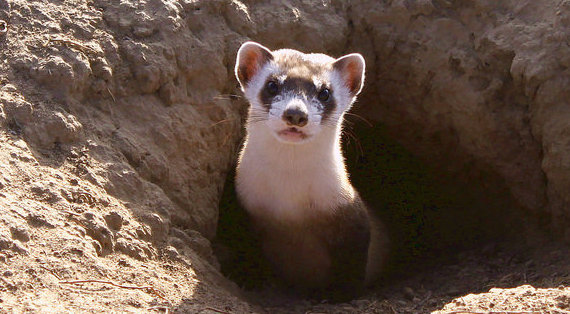
Last week, the U.S. Fish and Wildlife Service (Service) had the distinct privilege of returning one of North America's most endangered mammals, the black-footed ferret, back to its home on the prairie at the Rocky Mountain Arsenal National Wildlife Refuge, just outside of downtown Denver. The 20 black-footed ferrets that were released will be tracked and monitored this month to make sure they are adjusting to their new home. There are now 28 reintroduction sites for this amazing species, all across the Great Plains and into Canada and Mexico.
A Bug's Life
 BEETLES BATTLE INVASIVE WEEDS
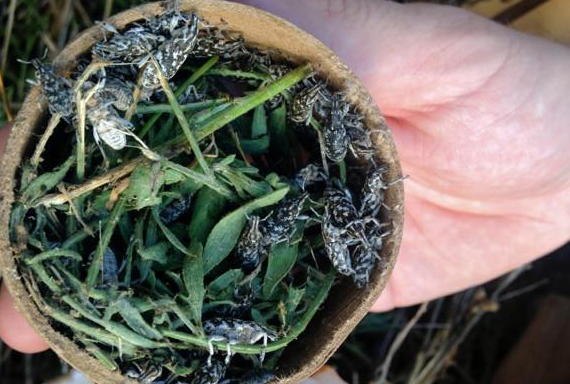
Last month, more than 1,100 adult knapweed root-boring weevils were introduced on Malmstrom Air Force Base (MAFB) in Montana as a bio-control agent to reduce the amount of invasive weeds on the base. Weevil larvae burrow into knapweed roots where they feed and develop. The developing larvae damages the roots, weakening or killing the plant. Adult weevils emerge in mid- to late-summer to feed on foliage, mate and restart the cycle. In addition to knapweed weevils, the Service also released stem-mining thistle weevils to target 650 acres of thistle weeds on the base. There are plans for more releases of both weevils next year. This environmentally friendly project is a collaboration between the Service and MAFB that reduces the long-term need for use of chemicals to control invasive weeds.
Did You Know?
 |
|
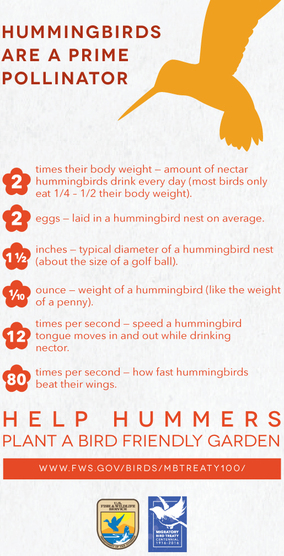
Hummingbirds weigh 1/10 of an ounce - the weight of one penny!
Hummingbirds, bats, bees, beetles, butterflies, and flies are important pollinators and help pollinate more than 75% of our flowering plants, and nearly 75% of our crops. Hummingbirds are also migratory birds that travel thousands of miles every spring and fall. Throughout 2016, we are celebrating the Centennial of the Migratory Bird Treaty and 100 years of bird conservation and encouraging people to take action for birds. Find out how you can get involved!
|
|