|
Arizona, New Mexico, Rhode Island and Maine Launch their Home Energy Rebates Programs
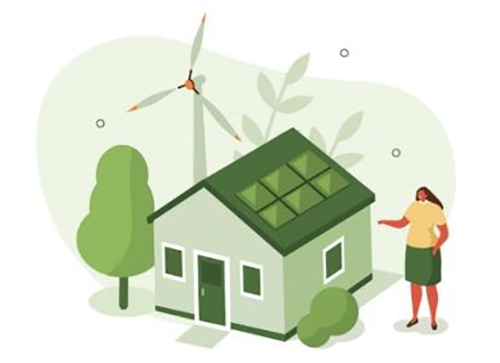 Arizona, New Mexico, Rhode Island, and Maine have launched the Home Electrification and Appliance Rebates (HEAR) portion of the rebate program – enabling low-income and middle-income households to save on energy efficiency improvements such as insulation, air sealing, and heat pumps that reduce whole-home energy consumption. To date, 51 states and territories have applied to the U.S. Department of Energy (DOE) for early administrative or full program funding. In the coming weeks, Home Energy Rebates are expected to become available in several more states, helping more American families save energy and money with energy-efficient home upgrades. You can check the status of your state’s program here.
|
|
Your Gateway to Clean Energy: Navigating DOE Resources with the Office of Community Engagement
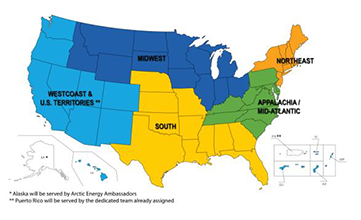
Unsure of where to go at DOE? Heard about all this clean energy money but not sure where your organization, town or company fits in? Reach out to the Office of Community Engagement (OCE). We are the front door to DOE and can help you navigate it. OCE was established at the request of Secretary Jennifer Granholm and aims to serve as the primary gateway to DOE and our many funding opportunities. Located in the Office of State and Community Energy Programs (SCEP), OCE’s mission is to catalyze a rapid transition to a clean energy economy while centering justice, equity, and inclusion. We provide off-the-shelf resources and serve as a front door resource hub for all of DOE’s programs and resources.
Contact us at getengaged@hq.doe.gov and join our Virtual Office Hours every other Wednesday from 2-3 p.m. ET, where we highlight DOE programs, resources, open funding opportunities, and allow participants to speak to a community engagement specialist in their region.
Register for upcoming sessions via Meeting Registration.
We look forward to seeing you there!
|
|
|
DOE Proudly Celebrates Hispanic Heritage Month
Hispanic Heritage Month honors and celebrates the histories, cultures and contributions of Americans with ancestors from Spain, Mexico, the Caribbean, and Central and South America. During National Hispanic Heritage Month, we celebrate the countless contributions of more than 60 million Hispanic Americans to our culture and society. Hispanic Americans are the largest minority group in the United States today, and generations of Hispanic Americans have consistently helped make our country strong and prosperous.
|
|
|
|
October 4 – K-12 School Districts Apply for the 2024-2025 Energy CLASS
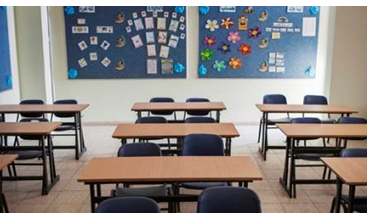
School district staff can now apply to join the 2024-2025 Energy Champions Leading the Advancement of Sustainable Schools (Energy CLASS) and receive coaching and 1:1 expert advice on strategic energy management, project development, funding pathways, and related topics to advance their district’s sustainability goals. The 2024-2025 Energy CLASS program will accept up to 50 school districts. Submissions are due on Oct. 4, 2024, at midnight ET.
|
|
|
October 11 – Date Extended for the Weatherization Enhancement & Innovation Grant

Don’t forget to apply to the Enhancement & Innovation (E&I) competitive grant program from SCEP’s Weatherization Assistance Program (WAP). Grant projects will not only support low-income homes by making them safer and more comfortable, but they are also an opportunity to explore new weatherization techniques and technologies and showcase best practices that could be adopted across the country. Eligible entities include existing WAP grantees, subgrantees, and other nonprofit organizations. Apply by Oct. 11, 2024 for this opportunity to enhance weatherization for low-income households.
|
|
|
October 15 – State Energy Program Direct Technical Assistance Now Open
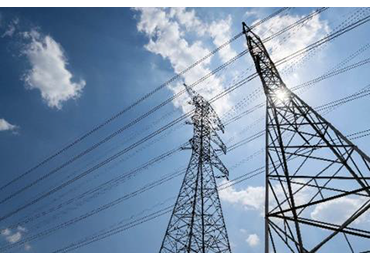
The State Energy Program (SEP) will open their final round of direct technical assistance (TA) for the year between Oct. 1– 15, 2024. Potential topics that the direct TA could support include strategic energy planning, transmission and distribution planning, project and program financing, and modeling and analytics. Any state that has not applied this year is eligible to receive up to 40 hours of technical assistance. All states will be eligible for additional technical assistance beginning in 2025. Visit SEP’s Direct TA webpage for more information.
|
|
|
October 31 – Apply to IRA’s Formula Funds for Assistance for Latest and Zero Building Energy Code Adoption
DOE through the Assistance for Latest and Zero Building Energy Code Adoption has made $400 million available in formula funding to improve traditional building energy codes that reduce utility bills, increase the efficiency and resilience of buildings, and reduce carbon emissions. The funding is available through a formula allocation to states and territories to adopt, implement, enforce, and measure compliance for the latest building energy codes and zero energy codes. Full Applications will be accepted on a rolling basis until Oct. 31, 2024, by 11:59 p.m. ET.
|
|
|
October 31 – Local Governments Don’t Forget to Apply for EECBG and Learn More About the Work Awardees are Doing
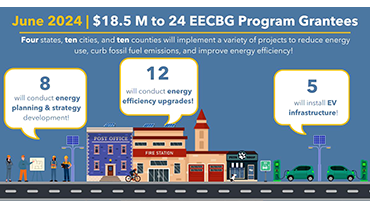
Don’t forget the Energy Efficiency Conservation Block Grant’s (EECBG) Program application deadline for eligible local governments is Oct. 31, 2024, and May 31, 2025, for Tribes.
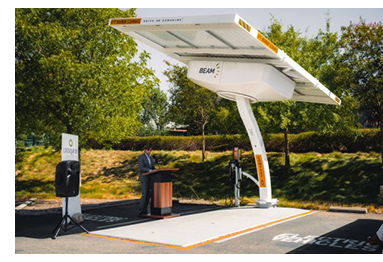
On August 30, the City of Livermore, California and DOE celebrated a major achievement in community resilience: the installation of two dual-plug solar-powered electric vehicle chargers, funded by a $144,230 voucher award from the EECBG Program.
|
In addition to this exciting announcement, EECBG will distribute $16.9 million to one state and 22 local governments through this ninth round of formula grants. Since the first awards were announced in October 2023, the EECBG Program has distributed more than $178 million to 233 communities. Learn more about grantee projects on the EECBG Program awards website.
|
|
|
Unlock Your ESPC Expertise: Earn Your Certificate with the PCNRC Final Exam

The Performance Contracting National Resource Center (PCNRC) has launched a final exam, allowing users to earn a Training Series Certificate in Energy Savings Performance Contracts (ESPCs). Supported by SCEP and the Federal Energy Management Program (FEMP), the PCNRC serves as a hub for ESPC best practices. The training series includes eight modules covering all stages of an ESPC, helping professionals deepen their understanding of key responsibilities, risk mitigation, and best practices. Trainees who complete the modules and pass the exam earn a Certificate of Completion and up to 2.4 continuing education units (CEUs). Interested participants can download a Quick Start Guide to enroll and start the training at their own pace.
|
|
|
SCEP Announces Selectees for Clean Energy Projects Led by Tribal and Local Governments
|
|
Selectees Announced for The Energy Future Grants Program Technical Assistance Cohorts
|
|
Communities LEAP Lays Groundwork for Communities to Advance Clean Energy Opportunities

SCEP’s Communities LEAP (Local Energy Action Program)—a technical assistance pilot program designed to support communities experiencing environmental justice challenges or economic impacts from the transition away from historical reliance on fossil fuels — has helped the Village of Questa, New Mexico and Louisville, Kentucky take the next steps on their clean energy journey. The program helped Questa, NM understand the costs and benefits of building hydrogen production and storage facilities on old mining land to help lower carbon emissions, create new jobs and economic opportunities, and provide reliable electricity. Similarly, Louisville, KY worked with Communities LEAP to explore the impacts of various energy efficiency and electrification upgrade scenarios on their building stock. They have since gone on to win the DOE’s Buildings Upgrade (Buildings UP) Prize and will leverage this groundwork to maximize the impact of their award.
|
|
|
Nearly $22 Billion in Energy Savings and 220 Million Metric Tons of Avoided Emissions Through the Better Buildings Initiative

DOE just released the 2024 Better Buildings Initiative Progress Report, which highlights how program partners have collectively saved nearly $22 million through efficiency improvements and have cut greenhouse gas (GHG) emissions by over 220 million metric tons since 2011—that’s equivalent to the annual emissions of 29 million American homes!
The Better Buildings Initiative increases buildings’ energy efficiency and accelerating cost-effective decarbonization solutions across America.
|
|
|
Save the Date: 2025 Better Buildings, Better Plants Summit

The DOE’s 2025 Better Buildings, Better Plants Summit will be April 30-May 2, 2025 in Washington, D.C. This event will feature engaging and dynamic sessions, as well as invaluable networking opportunities for attendees to connect with industry peers and national experts. Registration will open in early December. This annual event provides the opportunity for partners and key stakeholders to explore emerging technologies and share innovative strategies in energy efficiency, decarbonization, water and waste reduction, and more. Learn more.
|
|
|
Trending Across DOE & Other Energy Programs |
|
Energy Ready Program Launches to Accelerate Local Clean Energy Deployment
The International City/County Management Association (ICMA) and Interstate Renewable Energy Council (IREC) launched Energy Ready, a new integrated effort funded by DOE that supports local governments with free technical assistance and recognizes their improvements in planning, zoning, and for permitting distributed energy generation. Learn more.
|
|
DOE Opens Applications for the Next Cohort of the C2C Program
Apply to DOE’s Clean Energy to Communities (C2C) program by Oct. 31 to be a part of the next peer-learning cohort for microgrids, distributed wind, and renewable energy and energy efficiency 101 in Appalachia. Participants in C2C will receive training, strategic and technical assistance, and the opportunity to collaborate with peers across the country.
|
|
DOE Releases New Guide for Federal Funding in Rural and Remote Areas
The Federal Energy Funding For Rural And Remote Areas: A Guide for Communities is for people who live or work in rural and remote areas and who are looking to plan or build clean energy projects in their communities. The guide provides an overview of many federal programs that offer funding or advice to support these types of projects.
|
|
Up to $100 Million in Funding Available for Non-lithium, Long-Duration Energy Storage Pilot Projects
DOE opened an opportunity for up to $100 million in funding to support pilot-scale energy storage demonstration projects. The funding will focus on non-lithium technologies, long-duration systems, and stationary storage applications. DOE aims to use this funding to move energy storage technologies closer to commercial viability and utility-scale deployment. Concept papers are due by Oct. 16, 2024.
|
|
New Tool Reveals Utility-Scale Renewable Energy Potential and Procurement Options
The National Renewable Energy Laboratory’s Procurement Analysis Tool (PAT) helps businesses, universities, and government agencies explore renewable energy options. Users input facility data and answer goal-oriented questions. PAT analyzes this information to identify potential wind, solar, or storage resources and suitable procurement options, such as power purchase agreements and utility green tariffs, that align with their budget, location, and sustainability goals.
|
|
Check Out a Hot New Online Decision Tool to Help Chase the Chill Away
DOE and Pacific Northwest National Laboratory released a free online decision tool for cold climate heat pumps (CCHPs). Try the CCHP Decision Tool to help you select and install a CCHP that fits your needs.
|
|
Plans Announced to Fund Up to $400 Million for Clean Energy Projects in Rural and Remote Areas
DOE issued a notice of intent to provide up to $400 million in funding to spur innovative, community-focused clean energy solutions, including hydropower, in rural and remote areas across the United States. The funding opportunity will support the deployment of a variety of commercially available clean energy technologies, demonstrating their viability and benefits to rural and remote residents and ultimately encouraging widespread adoption. The funding opportunity is expected to open in fall 2024.
|
|
White Paper Helps States Address Rate of Return for EV Charging Infrastructure Projects
A new white paper offers tips for states considering EV supply equipment costs and revenue under the National Electric Vehicle Infrastructure Formula Program and other federally-funded programs.
|
|
Share Your Thoughts on the Draft Distributed Energy Resource Interconnection Roadmap
DOE’s Interconnection Innovation e-Xchange (i2X) program released a request for information (RFI) to gather input on a draft distributed energy resource interconnection roadmap. This RFI solicits feedback on the interconnection goals, solutions, and success metrics for the distribution and sub-transmission systems identified in the roadmap. DOE is interested in hearing from all interconnection stakeholders, such as utilities, grid operators, regulators, state and local governments, interconnection customers, energy justice groups, nonprofits, clean energy developers, public interest groups, Tribes, and trade associations. Submit responses by Oct. 7.
|
|
U.S. Department of the Treasury Releases Guidance to Expand Clean Vehicle Recharging and Refueling Infrastructure and Lower Transportation Costs for Americans
The U.S. Department of the Treasury and Internal Revenue Service (IRS) issued a Notice of Proposed Rulemaking (NPRM) and additional guidance on the Alternative Fuel Vehicle Refueling Property Credit as expanded by the Biden-Harris Administration’s Inflation Reduction Act.
|
|
|
📅 Oct. 1 | 11 a.m. – 12 p.m. ET
|
|
|
📅 Oct. 2 | 12 – 1 p.m. ET
|
|
|
📅 Oct. 3 | 1 – 2:15 p.m. ET
|
|
|
📅 Oct. 8 | 2 – 3 p.m. ET
📅 Oct. 8 | 1 – 2:15 p.m. ET
📅 Oct. 10 | 1 – 2 p.m. ET
📅 Oct. 7-10 | Chicago, IL
📅 Oct. 8 | 3 – 4 p.m. ET
📅 Oct. 10 | 1 – 2:30 p.m. ET
📅 Oct. 15 | 1 – 2:15 p.m. ET
📅 Oct. 16 | 1 – 2 p.m. ET
📅 Oct. 17 | 1 – 2 p.m. ET
📅 Oct. 17 | 1 – 2:30 p.m. ET
📅 Oct. 20-23 | New York, NY
|
|
|
📅 Oct. 23 | 2 – 3 p.m. ET
|
|
|
📅 Oct. 24 | 1 – 2 p.m. ET
|
|
|
📅 Oct. 23 | 2 – 3 p.m. ET
|
|
|
📅 Oct. 28–30 | Atlantic City, NJ
|
|
|
📅 Oct. 29 | 11 a.m. – 12 p.m. ET
|
|
|
📅 Oct. 30 | 2 – 3 p.m. ET
|
|
|
📅 Oct. 30 | 12 – 1 p.m. ET
|
|
|
📅 Oct. 31 | 1 – 2:15 p.m. ET
|
|
|
📅 Nov. 11-15 | Philadelphia, PA
|
|
|
📅 Nov. 19-22 | Nashville, TN
|
|
|
📅 Nov. 21 | 1 – 2:30 p.m. ET
|
|
|
📅 Dec. 2-3 | Washington, DC
|
|
|
📅 Jan. 16 | 1 – 2 p.m. ET
|
|
Available Grants and Funding Opportunities
|
Learn about what types of funding are available for state and local governments. To view all open funding opportunity announcements, access:
|
|
|
|
The State and Local Solution Center is an online technical assistance portal that provides technical assistance resources to enable strategic investments in energy efficiency and renewable energy technologies through the use of innovative practices across the United States by a wide range of stakeholders, in partnership with state and local organizations and community-based nonprofits.
The State and Local Solution Center is managed by DOE's Office of State and Community Energy Programs (SCEP). SCEP supports DOE's mission to accelerate the research, development, demonstration, and deployment of technologies and solutions to equitably transition America to net-zero greenhouse gas emissions economy-wide by no later than 2050, and ensure the clean energy economy benefits all Americans, creating good paying jobs for the American people—especially workers and communities impacted by the energy transition and those historically underserved by the energy system and overburdened by pollution.
|
|
|
|
|
|