|
Opportunities for Making Energy Improvements at Nonprofits
August 2024
|
|
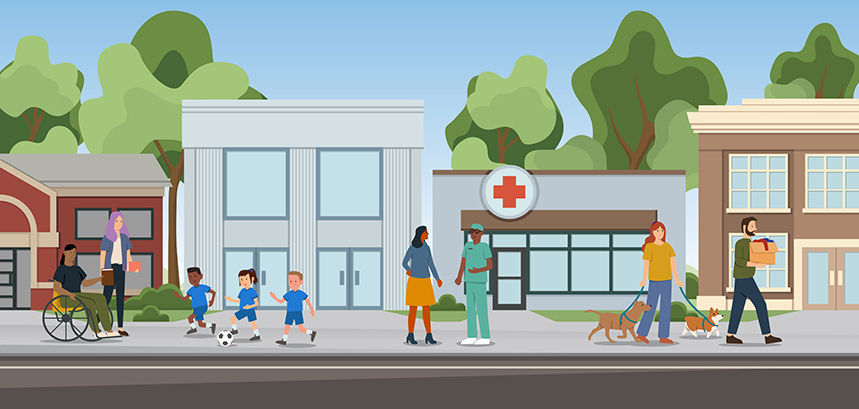
Calling all nonprofits! See below for information on federal opportunities to support energy efficiency and clean energy improvements. Get help building healthier community spaces and saving money, so that your nonprofit can focus resources on mission-driven work.
This month, the Renew America’s Nonprofits Program is pleased to highlight the start to our newest webinar series on Funding Strategies for Nonprofits. The first webinar explored making the case for energy investments.
|
|
Featured Events
ICYMI: August 28, 2024 – Funding Strategies for Nonprofits: Making the Case for Energy Investments
The Department of Energy’s (DOE) Office of State and Community Energy Program (SCEP) and the Renew America’s Nonprofits started a new webinar series focused on diverse funding strategies for energy investments in nonprofits.
If you missed yesterday’s webinar on “Making the Case for Energy Investments”, see here for the slides and recording.
Stay tuned for more webinars in the Funding Strategies for Nonprofits series!
-
In September, DOE will feature nonprofits to discuss one potential addition to your capital stack for energy improvements: utility rebates and incentives.
-
In October, we will dive deeper into financial stacking and discuss community development financing institutions (CDFIs), and other lenders.
More information and links to register will be shared as the events get closer.
|
|
Funding Opportunities for Nonprofits
Partner with your State and Local Government to Support Manufacturing and Recyling – September 16, 2024
As part of President Biden’s Investing in America agenda, the U.S. DOE’s Office of Manufacturing and Energy Supply Chains (MESC) has up to $63 million for states and local governments to expand battery recycling and modernize American manufacturing by making cutting edge technologies like advanced sensors and modeling more accessible to small- and medium-sized manufacturers (SMMs). Nonprofits can be valuable partners to advance manufacturing and recycling goals in their region.
$63M in grant funding available for two distinct project types:
-
Battery Recycling ($41M): For state and local governments to create new or enhance existing battery collection, recycling, and reprocessing programs, with a focus on awareness, education, and community benefits.
-
Smart Manufacturing ($22M): For states to establish or expand programs to assist small- and medium-sized manufacturers in accessing smart manufacturing technologies and practices.
-
Eligibility: Nonprofits and institutions of higher education are included in the list of eligible subrecipients. Subrecipients can receive grant funding through the prime – for this funding opportunity, the prime must be a state or local government.
-
Deadline: Monday, September 16, 2024, by 5:00pm ET. Learn more and apply here.
Good Jobs in Clean Energy Prize – January 31, 2025
The U.S.DOE announced a new prize that will award over $3.3 million in prize money to new or newly formed place-based coalitions focused on creating good jobs in clean energy.
This is a three-phase prize:
- Up to 15 Phase One awardees will receive $50,000 for demonstrating robust partnerships focused on a specific clean energy employment opportunity and are eligible to participate in Phase Two of the prize.
-
In Phase Two, up to 10 teams will each win $100,000 for developing and implementing their Coalition Action Plans that demonstrate how the coalition will advance job quality and job access in the clean energy opportunities within their community.
-
In Phase Three, the top three performing coalitions will receive $200,000 to $300,000 for the strength of their impact in implementing their Action Plans, and up to seven runner-up coalitions will receive $125,000.
-
Eligibility: Applications should be from new and newly focused placed-based coalitions. Each coalition must include a representation from a community-based organization.
-
Coalitions must also have at a minimum, one representative from a labor organization, clean energy employer, public agency, and education and workforce provider.
-
Deadline: DOE is currently accepting submissions for Phase One of the prize until January 31, 2025. For more information and to apply, visit the prize website.
Weatherization to Low-Income Households
DOE has announced applications are open for the $36 million Enhancement & Innovation (E&I) competitive grant program from the Weatherization Assistance Program (WAP). The grant aims to expedite the nation’s shift to clean energy through demonstration projects. These projects will not only support low-income homes by making them safer and more comfortable but are also an opportunity to explore new weatherization techniques and technologies and showcase best practices that could be adopted across the country. DOE plans to issue multiple awards, each with a maximum amount of $2 million.
-
Eligibility: Existing WAP grantees, subgrantees, and other nonprofit organizations. Applications will be accepted in three categories: Multifamily, Single Family & Manufactured Housing, or Workforce Development.
-
Deadline: Apply by September 27, 2024.
Upcoming Prize Explores the “Moo”tual Benefits of Cattle Agrivoltaics
-
Eligibility: Farmers, ranchers, solar developers, landowners, product designers, extension agents, and researchers can start following the prize and begin forming teams ahead of the formal launch, expected in September.
-
Deadline: Apply by October 18, 2024.
Search All Federal Funding Opportunities
Learn about what types of funding are available from the federal government. To view all open funding opportunity announcements, access:
|
|
Tools and Resources
Foundations of Community Solar Development
The U.S. Department of Energy’s National Community Solar Partnership is thrilled to announce that the new Foundations of Community Solar Development course is now live! Over eight modules, this free, self-paced course prepares community-based organizations, small or new solar developers, and others to develop, finance, and build credit-ready community solar projects that deliver benefits to low-income and disadvantaged communities. Built in partnership with University of New Hampshire Center for Impact Finance, this is the perfect opportunity to sharpen your solar knowledge with a widely accessible, self-paced model.
Interested participants can enroll and begin the course at any time, and complete as few or as many modules as desired. Learn more here.
EPA Tool Assists Environmental Justice Partners
Explore all EJ Clearinghouse categories here.
New DOE Tool Helps with Selection and Installation of Heat Pump Water Heaters
The Heat Pump Water Heater (HPWH) Installation Tool is a “one-stop shop” for potential HPWH purchasers and installers to get guidance quickly and easily for selecting and installing units in existing residential buildings. In addition to customized recommendations, the tool delivers general information about HPWHs, how they operate, their benefits for both homeowners and installers, and available tax incentives through the Inflation Reduction Act. This tool can support multi-family housing providers or nonprofits working with residential customers with the process of installing heat pumps.
Schools Can Now Sign up for Free Assistance in Applying for EPA's Community Change Grants
School districts interested in pursuing $10 - $20 million grants from the EPA Community Change Grant program for environmental health and sustainable building improvements in disadvantaged communities now have access to dedicated support from Better Buildings Alliance member U.S. Green Building Council to help with their grant applications.
Equitable Solar Communities of Practice Program Hosts Virtual Summer Convenings
The Equitable Solar Communities of Practice program is hosting virtual community convenings this summer. These events will bring together industry experts, community members, and stakeholders to discuss challenges and opportunities in scaling equitable solar energy. Each Community of Practice is led by an expert organization that will share their insights and gather participant feedback.
Check out the session topics and register for each session here.
ICYMI: Webinar on the Inflation Reduction Act’s Domestic Content Bonus Provisions
DOE and the Department of the Treasury hosted a webinar on the Inflation Reduction Act's domestic content guidance. The session covered the latest guidance, new safe harbor provisions, and collaborative efforts between the agencies. Expert speakers discussed the domestic content bonus, upcoming resources, and how to access and monetize the provision through Treasury's processes.
|
|
Events
📅 Sept 4 | 2 – 3:30 p.m. ET
📅 Sept 11 | 2 – 3 p.m. ET
📅 Nov. 21 | 1 – 2:30 p.m. ET
|
|
Renew America's Nonprofits
The Renew America’s Nonprofits program was created to reduce carbon emissions, improve health and safety, and lower utilities costs at buildings owned and operated by 501(c)(3) nonprofits. This first-of-its-kind investment in the nonprofit sector aims to help nonprofits make high-impact energy efficiency improvements that will create cleaner, healthier community spaces, while generating sustainable savings so that critical funds can be redirected toward mission-driven work. It also aims to stimulate widespread energy improvements in the nonprofit sector, promoting the formation of partnerships between stakeholders to create a pipeline of energy and cost-saving projects that will continue beyond the life of the grant.
|
|
State and Local Solution Center
The State and Local Solution Center is an online technical assistance portal that provides technical assistance resources to enable strategic investments in energy efficiency and renewable energy technologies through the use of innovative practices across the United States by a wide range of stakeholders, in partnership with state and local organizations and community-based nonprofits.
The State and Local Solution Center is managed by DOE's Office of State and Community Energy Programs (SCEP). SCEP supports DOE's mission to accelerate the research, development, demonstration, and deployment of technologies and solutions to equitably transition America to net-zero greenhouse gas emissions economy-wide by no later than 2050, and ensure the clean energy economy benefits all Americans, creating good paying jobs for the American people—especially workers and communities impacted by the energy transition and those historically underserved by the energy system and overburdened by pollution.
|
|
|
|
|