|
|
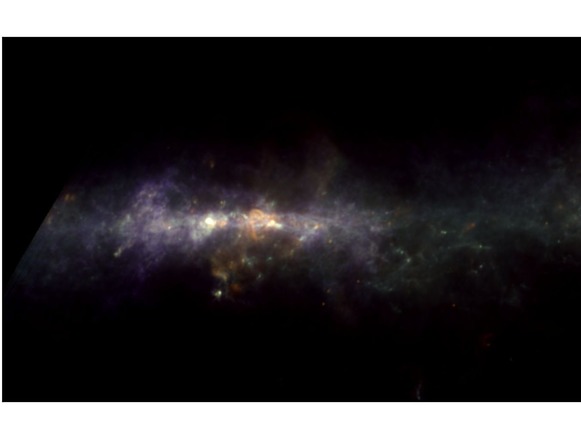
The remains of a dead star glow white despite using up its nuclear fuel. A second star revolves around that white dwarf. Each star of the binary moves in tandem with the other. The dwarf’s gravity wrenches gas off its companion that creates a swirling disk. This cosmic tug-of-war in the Milky Way’s Galactic Plane created a brief, strong flare of energy. That energy then traveled light years across the galaxy to Earth.
Among Antarctica’s endless ice fields, the South Pole Telescope – supported by the Department of Energy (DOE) – captured this brief cosmic outburst. Then, within the span of two years, it captured a similar one.
Learn more about how these flares are helping astrophysicists better understand the capabilities of this telescope and what insights it may provide in the future.
|
|
Asteroids: The NSF-DOE Vera C. Rubin Observatory has delivered the first publication based on its observations. It reported the fastest-ever spinning asteroid with a diameter of more than a half-kilometer. This information provides insights into the asteroid’s composition and its evolution over time. It is part of a group of 1,900 asteroids that had never been seen before the Rubin observations. |
|
Dark energy: The Dark Energy Survey has announced results that combine six years of data in one analysis. It provides new insights into dark energy, the name for the phenomena that is causing the universe to expand ever more quickly. The analysis combines four different methods of studying dark energy, a major goal of the Dark Energy Survey. Unlike previous experiments, this is the first time that scientists have been able to use the same data to approach dark energy from four different perspectives. The results narrow down the possible explanations of dark energy.
|
|
3D X-ray vision: Using X-ray tomography, researchers can look inside objects in 3D without needing to damage them. After the tools capture images, software reconstructs the 3D structure. To capture details on nanoscale levels, researchers use tools like the Hard X-Ray Nanoprobe beamline at the National Synchrotron Light Source-II, a DOE Office of Science User Facility. However, it is sometimes impossible for these tools to take images from all angles. To solve this problem, researchers at DOE’s Brookhaven National Laboratory developed a new method that uses artificial intelligence (AI) to improve these reconstructed images. |
AI in agriculture: Improving our understanding of the microbe communities around plants could help improve soil health, crop yields, and restoration efforts. AI could play an important role in this research. But training AI models requires large amounts of data. This data currently doesn’t exist for interactions between plants and microbes. Researchers at DOE’s Lawrence Berkeley National Laboratory used a type of plastic growth chamber to see if they could vastly expand these data sets. They found these chambers could allow scientists to accurately reproduce plant-microbe experiments in different locations. |
|
Diamond electronics: Electronic devices based on diamonds could handle large currents and voltages without overheating as well as withstand extreme conditions. They could be used in the power grid, industrial power management, and applications in space. However, they aren’t widely used because it is very difficult to carry out a required step for producing semiconductors for microelectronics. Researchers at the Center for Nanoscale Materials (a DOE Office of Science User Facility) found that by stacking a certain 2D material on diamond that they could create the same conditions as this step without actually doing it. Devices that use this approach could stay more stable and reliable under conditions that traditional electronics can’t. |
Quantum materials: Magnetic compounds with lattices in a honeycomb shape could be useful materials for quantum computers. Scientists at DOE’s Oak Ridge National Laboratory created a magnetic honeycomb of the material potassium cobalt arsenate. They then studied the material to understand its characteristics. The team found that its structure causes specific magnetic effects. Scientists could potentially control these interactions to create quantum spin liquids. Quantum spin liquids are very promising building blocks for next-generation quantum technologies. |
|
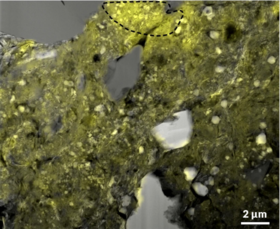
Recipe for life: Bennu is an asteroid that passes near Earth every six years. The OSIRIS-Rex probe run by NASA took samples from it to better understand the early solar system and how life arose on Earth. Multiple research teams used unique tools at DOE User Facilities to analyze the samples. While one team identified minerals that formed from salty water on Bennu’s home world, another found materials that are the building blocks of DNA and RNA on Earth. The findings support the idea that asteroids may have brought water and chemical building blocks for life to Earth. |
|
|
BBC: New elements
This podcast episode highlights how researchers at DOE’s Berkeley Lab are searching for Element 120 on the Periodic Table.
|
|
Combining Robotics and AI to Accelerate Fusion Research
|
|
|
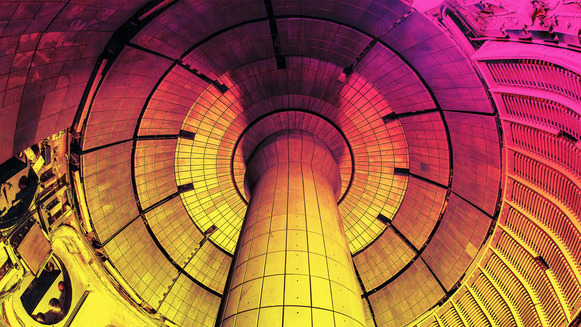
Normally, it takes months for scientists to run a high-fidelity computer simulation for fusion. It takes a similar amount of time to develop an AI system that could design an ideal fusion system. However, DOE’s Princeton Plasma Physics Laboratory has introduced a new computing platform that combines high performance computing and AI to speed up both processes.
Called Simulation, Technology, and Experiment Leveraging Learning-Accelerated Research enabled by AI (STELLAR-AI), the platform will connect computers directly to research tools. The system will combine the CPUs and GPUs of conventional computing systems with quantum processing units that use the principles of quantum physics. PPPL is collaborating with a team of other National Laboratories and research institutions as well as computing, fusion, and engineering companies. This project is part of the Genesis Mission to use AI to speed up research and discovery.
|
|
Argonne and the ATLAS Experiment
|
|
|
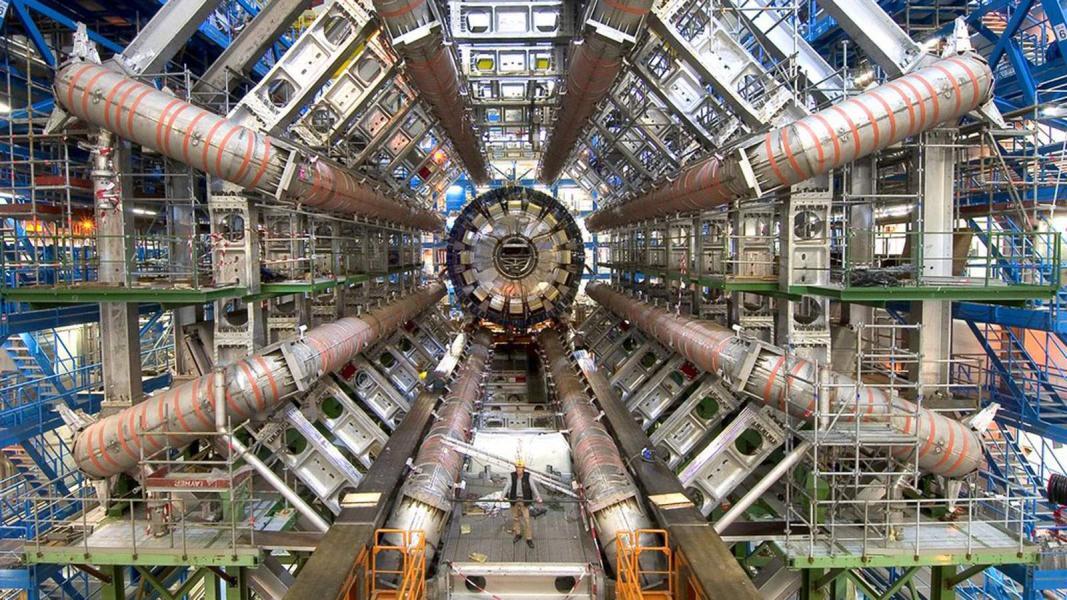
Far underground the border of Switzerland and France, the ATLAS particle detector at CERN has provided scientists with insights into particle physics for more than 30 years. Over those decades, researchers at DOE’s Argonne National Laboratory have played key roles in designing and running the ATLAS experiment.
Among their contributions, Argonne scientists and engineers have built, tested, and updated components; developed technologies to manage its data; and analyzed that data themselves. In particular, they were fundamental to creating ATLAS’s hadronic calorimeter. This is a layer of the detector that detects hadrons, a group of particles that includes protons and neutrons. These advances were essential to findings at ATLAS, including the discovery of the Higgs boson. The Higgs was the last undiscovered fundamental particle predicted by the Standard Model of Particle Physics.
|
|
|
Research News Update provides a review of recent Office of Science Communications and Public Affairs stories and features. This is only a sample of our recent work promoting research done at universities, national labs, and user facilities throughout the country.
|
|
|
|
Please see the archive on Energy.gov for past issues.
No. 149: 2 February 2026
|
|
|
|