|
|
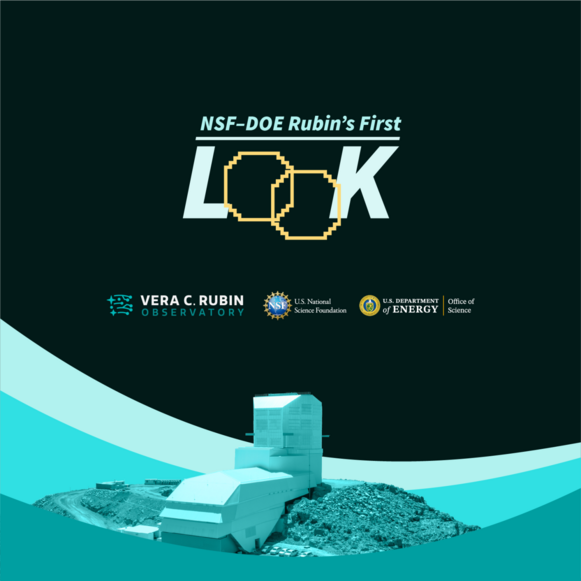
On June 23, the NSF-DOE Vera C. Rubin Observatory will be celebrating the public’s First Look at its incredible images. The partners will unveil a set of large, ultra-high-definition images and videos that showcase Rubin’s extraordinary capabilities. Jointly funded by the U.S. National Science Foundation and the U.S. Department of Energy’s Office of Science, the Rubin Observatory marks a new era in astronomy and astrophysics. Tune in to the online livestream at 11 AM to be part of this event.
When Rubin begins the Legacy Survey of Space and Time later this year, it will sweep the entire visible southern sky every three to four nights. Using the world’s largest digital camera, the observatory will produce the most detailed time-lapse view of the cosmos ever. This unique movie will bring the cosmos to life. It will yield a treasure trove of discoveries: asteroids and comets, pulsating stars, and supernova explosions. Rubin’s data will help us better understand the universe and chronicle its evolution. With it, we can delve into the mysteries of dark energy and dark matter and explore answers to questions we have yet to imagine. For more information about the Rubin Observatory, First Look, and in-person watch parties near you, see the Rubin Observatory website.
|
|
Muon g-2: Scientists on the Muon g-2 experiment, hosted by DOE’s Fermi National Accelerator Laboratory, have released their final measurement of the muon magnetic anomaly. The final result agrees with the measurements in 2021 and 2023, but with much higher precision. The anomalous magnetic moment (also known as g-2) of the muon is important because it provides a sensitive test of the Standard Model of Particle Physics. This measurement provides a benchmark for possible extensions of the Standard Model. |
Neutron stars: A team of researchers at the Massachusetts Institute of Technology (MIT) has found new information about the processes inside neutron stars. Neutron stars form after a massive star collapses and are the densest observable objects in space. The team used the Frontier exascale computer at the Oak Ridge Leadership Computing Facility (a DOE Office of Science user facility) to model a massive number of particles in these stars. The research will also help scientists improve how they model the building blocks of protons and neutrons. |
|
Preventing mitochondrial damage: Mitochondria in our cells turns the food we eat into usable energy. But stress can harm their quality control process. When this happens, the mitochondria go rogue and can cause a number of diseases, including Parkinson’s and diabetes. Researchers at DOE’s SLAC National Accelerator Laboratory and Stanford University have found a way to potentially protect mitochondria from stress that occurs due to exposure to a specific molecule. In experiments with cells, the researchers restored mitochondria by adding a small molecule to them. The team used the Stanford Synchrotron Radiation Lightsource, a DOE Office of Science user facility. |
Nanomagnetic structures: Devices that generate randomness are important for many applications in computing. Researchers at DOE’s Argonne National Laboratory have developed a new approach to understanding controlled randomness in tiny magnetic structures. By harnessing this type of randomness in magnetic materials, researchers could develop more energy-efficient computing systems. This advance could support work on encryption technologies and neural networks that adapt like brains do. This work used the Center for Nanoscale Materials, a DOE Office of Science user facility. |
|
Simulating electrons: A team with scientists from DOE’s Oak Ridge National Laboratory and North Carolina State University developed a simulation that can predict how up to 24,000 electrons move in materials in real time. The simulation provides insights into how materials respond at the quantum level, which is important for technologies like emerging information systems. The team used the Frontier exascale computer at the Oak Ridge Leadership Computing Facility, a DOE Office of Science user facility. |
Quantum computing algorithms: Researchers at DOE’s Pacific Northwest National Laboratory have published a new algorithm to prepare data for quantum systems. It cuts a key aspect of the work to prepare data for quantum systems by 85 percent. The recent work shows that this approach is effective on problems that are 50 times bigger than problems existing tools can currently handle. |
|
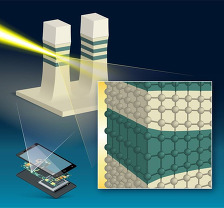
Understanding defects in microelectronics: As electronics get smaller and faster, researchers are developing devices that use ultra-thin layered nanosheets. But it’s very hard to study defects in these devices without destroying their structure. Researchers at IBM collaborated with scientists at the National Synchrotron Light Source II (a DOE Office of Science user facility at Brookhaven National Laboratory) to develop a way to use the X-ray to “see” into the structures without damaging them. The research revealed two different mechanisms that lead to defects in nanosheets. |
|
DOE Announces New Supercomputer Powered by Dell and NVIDIA to Speed Scientific Discovery
|
|
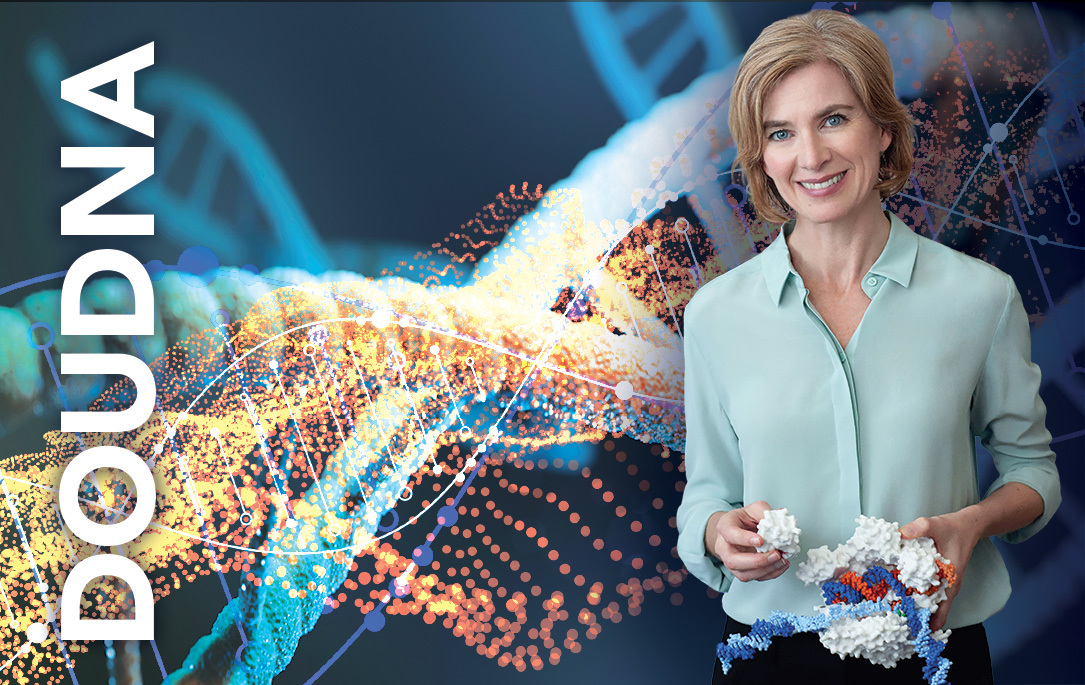
Energy Secretary Chris Wright recently announced a new contract with Dell Technologies to develop NERSC-10, the next supercomputer at the National Energy Research Scientific Computing Center (NERSC), a DOE Office of Science user facility at Berkeley Lab. The system’s name will honor Jennifer Doudna, the Berkeley Lab-based biochemist who was awarded the 2020 Nobel Prize for Chemistry. The computer itself will support large-scale high-performance computing workloads like those used in molecular dynamics, high-energy physics, and AI training and inference. Powered by NVIDIA’s next-generation Vera Rubin platform, the system will provide more than 10 times the performance of NERSC’s current flagship computer. The new system is due in 2026. |
|
The Big Questions: Lois Curfman McInnes on Software for High-Performance Computers
|
|
|
Scientists recognized by the Department of Energy (DOE) Office of Science Distinguished Scientist Fellow Award are pursuing answers to science’s biggest questions. Lois Curfman McInnes is a senior computational scientist and Argonne distinguished fellow in the Mathematics and Computer Science Division of DOE’s Argonne National Laboratory.
Anyone in the computer world would recognize a photo of the late Steve Jobs in his distinctive black turtleneck. In contrast, they’ve probably never heard of astrophysicist Sir Arthur Stanley Eddington. But these thinkers both had important ideas that sum up much of my philosophy about computational science.
Computing is revolutionizing how scientists learn, experiment, and theorize. Computing has become a prevalent means of discovery and innovation in essentially all areas of science, engineering, technology, and society. High-performance computing systems at the Department of Energy’s (DOE) national laboratories enable scientists to address huge questions in chemistry, materials, physics, biology, national security, and more. To make this research possible, I lead teams that develop scientific software ecosystems.
Learn more about how Lois Curfman McInnes develops and manages the complexity of foundational scientific software ecosystems.
|
|
|
Research News Update provides a review of recent Office of Science Communications and Public Affairs stories.
|
|
|
|
Please see the archive on Energy.gov for past issues.
No. 140: 18 June 2025
|
|
|
|