|
Monitoring small molecules: If we had better technology to sense small molecules, doctors could better calculate drug dosages and patients could monitor their own health conditions. While there is some ability to sense molecules, we need sensors that can detect a broader array of them. Using artificial intelligence and resources at the Advanced Photon Source (a DOE Office of Science user facility), Nobel Prize winner David Baker and his team at the University of Washington created a new way to sense small molecules. The team developed a method for making proteins that can effectively bind and signal for a wide range of small molecules. This research builds on Baker’s Nobel Prize-winning work, much of which was made possible by DOE facilities. |
New heavy metal molecule: A team led by scientists from DOE’s Berkeley Lab has discovered “berkelocene.” This molecule is the first time that scientists have evidence for a bond between the elements berkelium and carbon. Organometallic molecules (a metal atom with a carbon-based framework around it) are extremely rare for the area of the Periodic Table of Elements where berkelium sits. This discovery provides new information about how berkelium and related elements called actinides act compared to other elements. Berkelium was originally discovered at Berkeley Lab in 1949. |
|
Ethylene production: Polyethylene is an extremely common form of plastic. To produce it, manufacturers start with ethylene gas and then use a catalyst that removes the chemical acetylene from it. But even tiny amounts of acetylene can negatively affect catalysts used later in the process. A team led by researchers from the University of Minnesota used the Stanford Synchrotron Light Source (a DOE Office of Science user facility) to find a new way to remove acetylene. This new method could lead to a simpler, cheaper, more energy efficient process for producing polyethylene. |
Fusion fuel: To make fusion possible on Earth, fusion devices use superheated plasma. Some of the plasma’s atoms strike the device walls and get stuck. As more fuel is trapped, the device becomes less efficient. Researchers from DOE’s Princeton Plasma Physics Laboratory led a study on how much one of the common fuels for fusion could get stuck in materials used in tokamak fusion devices. They found that more carbon in the walls results in more fuel getting trapped. That finding suggests the walls should be made of tungsten instead of the material that is currently used – graphite, which is made of carbon. The study used DIII-D, a DOE Office of Science user facility. |
|
Atomic physics of hydrogen: Hydrogen is the simplest and most abundant element in the universe. It’s made of an electron orbiting a proton, both of which have a property called spin. The overall energy level of hydrogen depends on whether the spin orientation of the proton and electron match or not. Researchers are able to measure this difference experimentally much better than they can explain it using theory. Researchers on two different experiments at DOE’s Jefferson Lab teamed up to combine their data about proton spin to improve this understanding. |
Catalysts: Ethylene oxide is a major component in the industrial production of many materials. Manufacturers produce ethylene oxide by reacting oxygen with the chemical ethylene. Adding chlorine to the process increases its efficiency, but chlorine can corrode metal equipment. Researchers from DOE's Brookhaven National Laboratory and several universities used the Stanford Synchrotron Light Source (a DOE Office of Science user facility) to find that the metal nickel can provide similar benefits as chlorine with fewer downsides. This finding could improve the process’s efficiency, saving companies money and eliminating a toxic material from the process. |
|
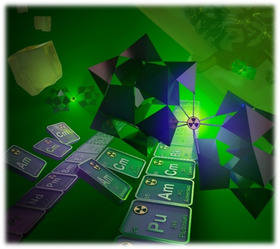
Chemistry of heavy elements: The elements that follow plutonium on the Periodic Table of Elements are both radioactive and rare. Because they are so hard to study, scientists know little about their properties. Researchers at DOE’s Lawrence Livermore National Laboratory developed a method to make these elements in a more streamlined way. This new method is both safer and cheaper than previous ones, while still allowing scientists to determine these elements’ properties. So far, they have used it to produce the elements americium and curium. |
|
|
StarTalk with Neil deGrasse Tyson: The future of fusion energy with Fatima Ebrahimi
The podcast episode interviews Fatima Ebrahimi, a physicist at DOE’s Princeton Plasma Physics Lab, on the ways fusion could be used for both energy production and space travel.
|
|
Networking for the Future
|
|
|
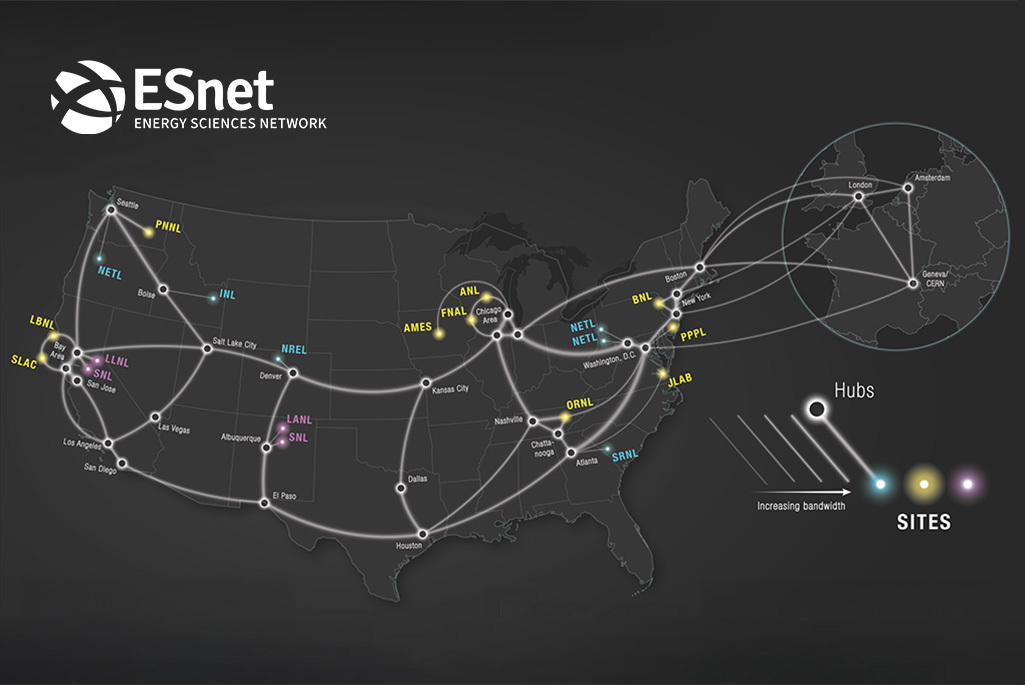
The Energy Sciences Network (ESnet) connects thousands of researchers. It serves all 17 DOE national laboratories and 28 DOE Office of Science user facilities across the country. (ESnet itself is an Office of Science user facility.) ESnet’s network enables collaborators to move gigantic data sets vast distances incredibly quickly. This data movement and other services accelerate scientific discovery.
Currently, ESnet is building infrastructure and gathering large data sets to support increasing demand for artificial intelligence in the sciences. They are also providing the expertise to bring quantum networking into production.
|
|
NSF-DOE Vera C. Rubin Observatory Installs LSST Camera on Telescope
|
|
|
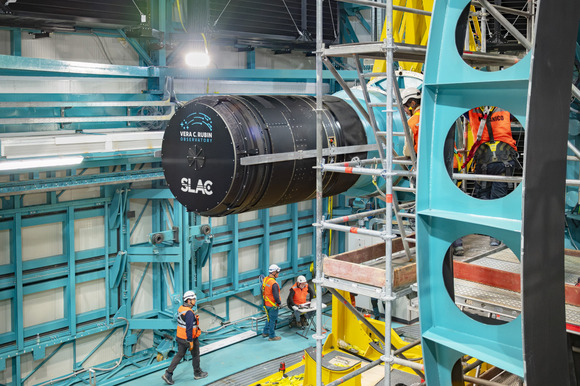
The NSF–DOE Vera C. Rubin Observatory, funded by the U.S. National Science Foundation (NSF) and the DOE Office of Science, has achieved a major milestone with the installation of the LSST Camera on the telescope. With the final optical component in place, Rubin enters the last phase of testing before capturing long-awaited and highly anticipated First Look images, followed by the start of the Legacy Survey of Space and Time (LSST).
In early March, the Rubin Observatory team on Cerro Pachón in Chile lifted the car-sized LSST Camera into position on the Simonyi Survey Telescope. This milestone is a significant step forward in the decades-long story of the LSST Camera's design, construction, and transport to Chile.
|
|
|
Research News Update provides a review of recent Office of Science Communications and Public Affairs stories and features. Please see the archive on Energy.gov for past issues.
|
|
|
|
|