|
AI for fusion: A team led by scientists from DOE’s Princeton Plasma Physics Laboratory has found that new artificial intelligence (AI) models for plasma heating can do more than was previously thought possible. Scientists need accurate models of plasma heating to develop better fusion devices. These new models can increase the prediction speed 10 million times over numerical code while preserving accuracy. They can also correctly predict plasma heating in cases where the original numerical code has failed. The work also included researchers from DOE’s Lawrence Berkeley National Laboratory and used computers at the National Energy Research Scientific Computing Center, a DOE Office of Science user facility. |
Energy-efficient devices: Researchers at DOE’s Argonne National Laboratory, DOE’s Berkeley Lab, Rice University, and the Pennsylvania State University have gained new insights into ferroelectric devices. Ferroelectric materials could enable microelectronics that are more energy efficient than today’s devices. The team found that a ferroelectric device responded to pulses of light in a way that is similar to how neural networks in the brain respond to stimulus. This ability could allow scientists to create artificial neural networks that use far less energy than today’s electronics. The work used the Center for Nanoscale Materials and the Advanced Photon Source, both DOE Office of Science user facilities. |
|
Quantum sensing: Researchers from DOE’s Oak Ridge National Laboratory have taken a major step forward in using quantum mechanics to enhance sensing devices. These sensing devices could make more accurate measurements that wouldn’t otherwise be accessible. The method allowed scientists to probe four sensors at the same time. It also resulted in a 22 to 24 percent increase in sensitivity over the classical configuration of sensors. This advancement could be useful in a wide range of areas, including characterizing materials, detecting dark matter, and enhancing medical devices. |
Skyrmions: Magnetic skyrmions are extremely tiny spinning circles of magnetism in materials. They could enable much more efficient microelectronic devices, especially for storing large amounts of data. Scientists at DOE’s Berkeley Lab led a project to make 3D X-ray images of skyrmions. These images would allow scientists to measure the spins inside the objects. Being able to better analyze and understand skyrmions will help scientists use them in devices in the future, including quantum computers. |
|
Perovskites: Spin is one attribute of atoms. Scientists are learning to control spin so that they can create new materials called spintronics. Spintronic materials could be used in technologies like advanced memory devices and quantum sensors. Researchers at DOE’s Argonne National Laboratory and Northern Illinois University found that they could use light to detect the spin state in a class of materials called perovskites. In the future, this ability could be useful for developing qubits for quantum computing. The work used the Center for Nanoscale Materials. |
Quantum computing: Researchers from 14 institutions worked together through the Co-design Center for Quantum Advantage (C2QA) to develop the ARQUIN framework. The framework is a pipeline to simulate large-scale distributed quantum computers as different layers. It could help scientists scale up quantum computers, one of the biggest challenges in the field. C2QA is a DOE National Quantum Information Science Research Center. |
|
The Office of Science posted seven new highlights between 10/28/24 and 11/12/24.
|
|
Subatomic particles: All visible matter in the universe is made up of subatomic particles called quarks and leptons. (Leptons include electrons and neutrinos.) Devices that produce conditions similar to those immediately after the Big Bang can create particles that have different types of quarks. The Belle II experiment made a world-leading measurement of the lifetime of one such particle. This discovery demonstrates the experiment’s ability to make such precise measurements. It shows how this experiment can test predictions of particles and interactions that the Standard Model of Particle Physics currently doesn’t describe. |
|
Improving Batteries with AI
|
|
|
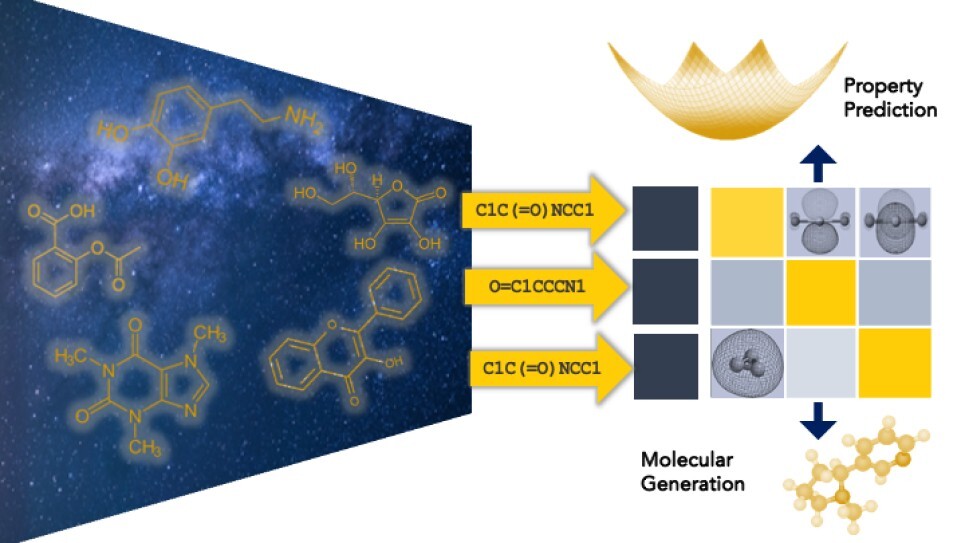
To develop better batteries, scientists want to improve their electrolytes. Electrolytes are the section of the battery that allows ions to move back and forth as the battery charges and discharges.
With the goal of improving electrolytes, researchers from the University of Michigan are training a large language model, a type of artificial intelligence. They are developing the model to help researchers find recipes for electrolytes. There are billions of possibilities, but only about 10,000 compounds for batteries have been analyzed in a laboratory. By using computers at the Argonne Leadership Computing Facility (a DOE Office of Science user facility), researchers could potentially identify many more promising compounds. In the future, scientists could also apply this method to other chemistry problems, from medicines to materials. The project is supported by DOE’s Innovative and Novel Computational Impact on Theory and Experiment (INCITE) program.
|
|
SciPEP Releases Report Summarizing Five Years of Work
|
|
|
The Science Public Engagement Partnership (SciPEP) is a collaboration between the DOE’s Office of Science and the Kavli Foundation. It has three main areas of focus: 1) ensuring scientists are supported to be effective communicators, 2) empowering communication and engagement professionals to play an important role in supporting science and scientists’ engagement, and 3) understanding how, why, and when audiences outside of the scientific community seek, find, and make use of information about basic research.
SciPEP recently released a report that synthesizes five years’ worth of themes, takeaways, tips, and new questions to explore going forward. It is designed for basic scientists, science communicators, communications trainers, social science researchers, and more. There is also a digital magazine that accompanies the report.
|
|
|
Research News Update provides a review of recent Office of Science Communications and Public Affairs stories and features. This is only a sample of our recent work promoting research done at universities, national labs, and user facilities throughout the country.
|
|
|
|
Please see the archive on Energy.gov for past issues.
No. 130: 14 November 2024
|
|
|
|