|
|
As a kid, you may have tried to dig a hole in your backyard to reach China. Obviously, that didn’t happen.
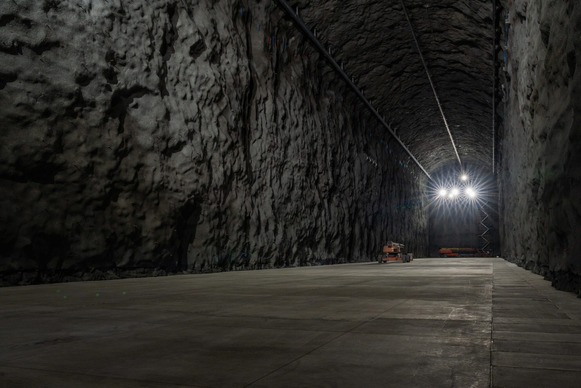
But digging out a lot of ground can be quite productive. Instead of reaching another country, the scientists, engineers, and construction workers on the LBNF-DUNE project dug up rock to enable groundbreaking science.
More specifically, they excavated 800,000 tons of rock from the Sanford Underground Research Facility in Lead, South Dakota. This excavation is a major step forward in a multi-year process to build the biggest, most advanced, and most comprehensive project to study neutrinos yet. The caverns they excavated will hold a massive particle detector and accompanying equipment.
Learn how the Department of Energy (DOE) Office of Science is supporting the Deep Underground Neutrino Experiment at the Long-Baseline Neutrino Facility (LBNF-DUNE) and how it may be able to help answer some of physics’ biggest questions.
|
|
Colorado River: The Colorado River is an essential source of water for residential and agricultural use, but climate change is threatening its viability. A team led by Penn State scientists has developed a new computational tool that helps decision-makers explore possible futures for the river. The various “storylines” of what those futures may look like under high warming or low warming can inform city, community, and water use planning. Unlike similar tools, this tool provides more in-depth, complex scenarios in a way that is accessible to non-scientists. |
W boson: In 2022, physicists at DOE’s Fermilab made an unexpected measurement of the W boson that raised questions about physics beyond the Standard Model. Recently, a new, more precise measurement of this subatomic particle found that the mass is consistent with the model’s predictions. This reaffirmed the strength of the Standard Model. Scientists carried out the new measurement at the Large Hadron Collider at CERN. The team included researchers from Fermilab and several other Office of Science-supported institutions. |
|
Superconducting magnets: Researchers from DOE’s Lawrence Berkeley National Laboratory and the Facility for Rare Isotope Beams (FRIB, a DOE Office of Science user facility) have developed a new superconducting magnet. FRIB uses beams of ions to produce its rare, short-lived isotopes. To produce the beams, an ion source injects high-current, high-charge ions into the accelerator beamline. These magnets could greatly improve the performance of the ion source. The magnet is based on niobium-tin technology, which can carry higher current density at higher magnetic fields than previous technologies. |
Qubits: For quantum computers to become more common, manufacturers need to be able to mass produce qubits. However, current qubits are very difficult to manufacture. Researchers at DOE’s Brookhaven National Laboratory and the Co-design Center for Quantum Advantage have shown that a type of qubit that is more amenable to mass production compares favorably to commonly used qubits today. This type of qubit relies on a component that could be fabricated using standard methods at semiconductor manufacturing facilities. The scientists used the Center for Functional Nanomaterials (a DOE Office of Science user facility) in their research. |
|
Writing with atoms: A team at DOE’s Oak Ridge National Laboratory created a new microscopy tool that allows them to place atoms exactly where they are needed in a material. Being able to work on the atomic level will allow scientists to change materials’ properties, such as quantum entanglement. This level of control is important for improving technologies such as quantum computing, microelectronics, and catalysis. The researchers used the Center for Nanophase Materials Sciences, a DOE Office of Science user facility. |
Silk and graphene: Silk has a number of useful properties, like elasticity, durability, and strength. However, because silk’s proteins are very disordered, there are limits on how well scientists can manipulate them. Researchers at DOE’s Pacific Northwest National Laboratory created a uniform, two-dimensional layer of silk protein fragments on graphene. (Graphene is a 2D carbon-based material.) This discovery could enable silk-based electronics, including implantable health sensors or components for computers that mimic how brains work. |
|
The Office of Science posted five new highlights between 9/30/24 and 10/14/24.
|
|
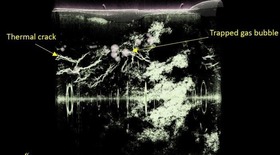
3D Printing Steel: Additive manufacturing – also called 3D printing – is useful for reducing waste and producing complex objects. However, it is difficult to use 3D printing for steel and other alloys. The printing process changes the structural arrangement of atoms in the steel, reducing its toughness. Researchers at the University of Wisconsin-Madison used the Advanced Photon Source (a DOE Office of Science user facility) to closely observe the internal changes to steel during that process. They used the X-ray light source to rapidly take images as well as characterize tiny structural changes. The observations allowed the researchers to develop a way to 3D print a special type of strong and corrosion-resistant stainless steel. |
|
Jefferson Lab, ESnet Achieve Coast-to-Coast Feed of Real-Time Physics Data
|
|
|
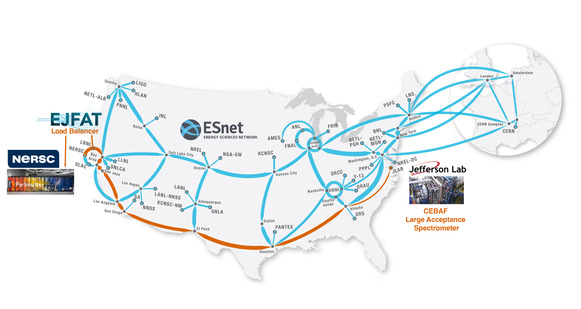
For the first time, scientists streamed 100 gigabits-per-second of raw data across the entire country. Researchers from DOE’s Thomas Jefferson National Accelerator Facility (Jefferson Lab) in Virginia streamed data 3,000 miles through the Energy Sciences Network (ESnet) to the Perlmutter supercomputer at the National Energy Research Scientific Computing Center (NERSC) in California. (Both ESnet and NERSC are DOE Office of Science user facilities.) In response, Perlmutter processed the data stream and sent the results back to Jefferson Lab in real time. There was no buffering, storage bottlenecks, or data loss.
Being able to stream such a large amount of scientific data across the country in real time is a major accomplishment. In the future, this capability will allow facilities like X-ray light sources and particle accelerators to stream data to supercomputers that can then analyze it and send it back.
|
|
Legos Inspire Current and Future Scientists
|
|
|
Many scientists and engineers fondly remember playing with Lego blocks as a child. But in some cases, these building blocks are helping current scientists visualize facilities in a fun and accessible way.
At DOE’s Oak Ridge National Laboratory, the Spallation Neutron Source is a huge, pulsed accelerator that enables researchers to gain insights into a variety of materials. So how can middle school students wrap their heads around such a complex piece of machinery? With LEGOs! The Neutron Sciences directorate at the lab is running an educational program where students will use the building bricks to construct a much smaller version of the accelerator. Researchers will be working with students from schools across East Tennessee and introduce them to career opportunities at the lab.
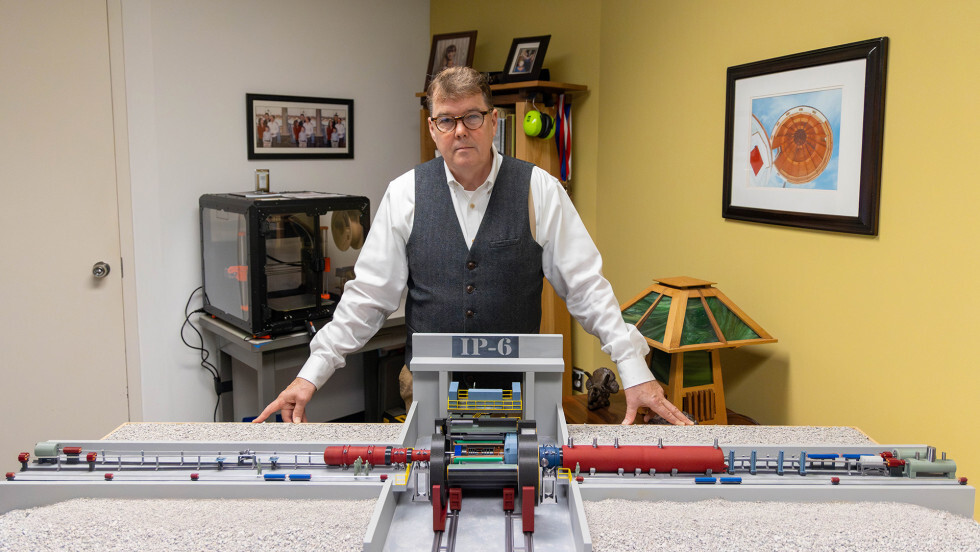
Another facility is being replicated with LEGO-like concepts, even though the real one isn’t built yet. At DOE’s Jefferson Lab, Walt Akers needed to create a 3D-printed model of part of the Electron-Ion Collider. The Electron-Ion Collider is a particle accelerator being built at DOE’s Brookhaven Lab with support from Jefferson Lab. The EIC team wanted a model that could help non-scientists attending open houses at both labs envision the future facility as well as support scientists’ own visualization. But because the facility is still under construction, Akers realized that parts of it may change over time. To accommodate for that challenge, he drew inspiration from LEGO. Instead of a single solid model, his team created a model with parts that could be swapped out as needed.
Scientists draw insights from many places. Sometimes, playful creativity is the key to discovery!
|
|
|
Research News Update provides a review of recent Office of Science Communications and Public Affairs stories and features. This is only a sample of our recent work promoting research done at universities, national labs, and user facilities throughout the country.
|
|
|
|
Please see the archive on Energy.gov for past issues.
No. 128: 15 October 2024
|
|
|
|
|