|
 16 September 2024
|
|
|
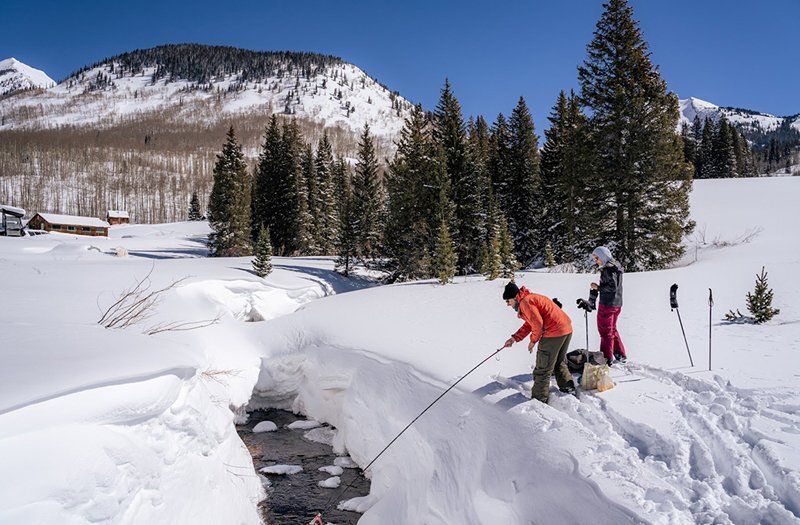
From thirsty agricultural crops to whitewater rafters contemplating a low river, a lack of water is the most obvious in the summertime. Its impact is particularly clear when many people rely on the same source of water. What happens in the Colorado River’s East River Watershed affects 40 million people from seven U.S. states as well as Mexico. Around the world, similar mountainous areas provide the water that helps feed one to two billion people. In fact, scientists call these regions “the world’s water towers.”
But problems with these watersheds don’t start in the summer or even the spring. In fact, they begin in the winter, when snow isn’t building up in the Rocky Mountains and similar areas as it once did. The snow that falls – or doesn’t fall – in the mountains has huge effects on what’s available for the rest of the year. Future climate change may cause less and less snow to fall in these areas and reliably convert to water downstream.
Learn more about how researchers supported by the Department of Energy’s (DOE) Office of Science are working to understand the role of snow drought, how to measure it in the future, and how to use such data to inform decision-making.
|
|
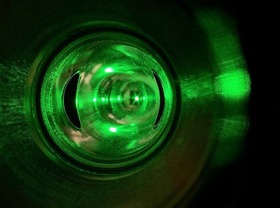
Dark matter: The world’s most sensitive dark matter detector – used in the LUX-ZEPLIN experiment – has new results. The detector has probed for weakly interacting massive particles in areas no other experiments have probed before. The result is five times better than the best previously published result. It narrows down the potential masses at which scientists could find dark matter. The experiment is led by DOE’s Lawrence Berkeley National Laboratory and has a number of university collaborators, including the University of Rochester. |
Nanocellulose: Cellulose is a natural fiber found in plant walls; nanocellulose is a form of it that is up to eight times stronger than steel. It could be used as a composite for 3D printing structures like houses and vehicles. A team led by scientists from DOE’s Oak Ridge National Laboratory demonstrated a new method to process it that uses 21 percent less energy than current methods. They used Frontier (an exascale supercomputer at the Oak Ridge Leadership Computing Facility) and the Center for Nanophase Materials Science, both DOE Office of Science user facilities. |
|
Photoelectric effect: The photoelectric effect occurs when an atom or molecule absorbs a photon of light and releases an electron. With a new method, researchers from DOE’s SLAC National Accelerator Laboratory have gained new information about what causes the delay when a molecule absorbs a photon, then emits an electron. This method also provides a new way to study interactions between electrons, which is important for many technologies, including solar cells. The study used the Linac Coherent Light Source (LCLS), a DOE Office of Science user facility. |
Neutrinos: The Sanford Underground Research Facility in Lead, South Dakota recently celebrated the completion of the excavation work for the Long-Baseline Neutrino Facility/Deep Underground Neutrino Experiment (LBNF/DUNE). Engineering, construction, and excavation teams have worked far below the surface since 2021 to prepare the space needed for the experiment. Once the experiment is fully constructed, scientists will use it to study the behavior of neutrinos. It will help scientists answer some of the biggest questions in science, including why there is more matter than antimatter. |
|
Calcium-48: Because of its strong binding and simple structure, calcium-48 is an important isotope for scientific research. Nuclear physicists at DOE’s Oak Ridge National Laboratory used the supercomputer Frontier to calculate the magnetic properties of calcium-48’s atomic nucleus. This finding will provide new insights into magnetism in nuclei. |
RNA: Researchers at DOE’s SLAC National Accelerator Laboratory have uncovered new information about how RNA polymerase II (Pol II) works. Pol II is the protein responsible for transcribing DNA into RNA. The research shows how the protein adds nucleotides to the RNA chain, which could have potential applications in drug development. The team used the LCLS user facility. |
|
The Office of Science posted six new highlights between 9/3/24 and 9/15/24.
|
|
Electron spin: Spin is an intrinsic property of electrons. Knowing how electrons spin in the same direction at a given time (polarization) is important for scientists who are working to understand the nature of matter. It’s especially important for understanding the structure of nuclei in heavy atoms. Nuclear physicists at DOE’s Thomas Jefferson National Accelerator Facility have measured the polarization of an electron beam more precisely than ever before. This accomplishment will enable studies in the future that further test the Standard Model of Particle Physics. |
|
Planning for the Impacts of Floods and Clouds on Power
|
|
|
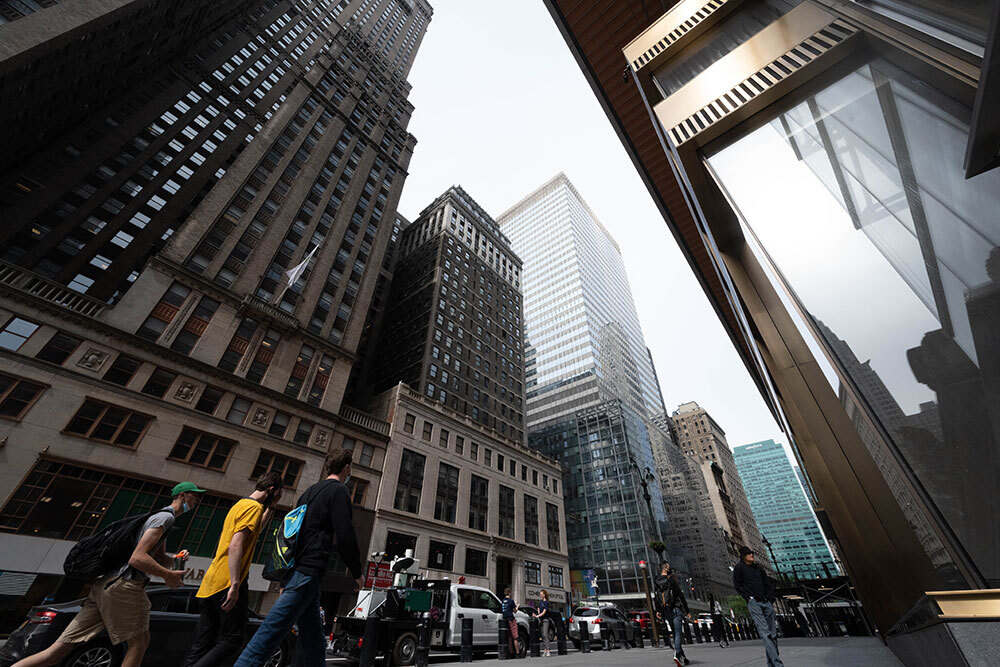
DOE’s Brookhaven National Laboratory recently co-hosted the Climate READi Northeast Regional Workshop with the Electric Power Research Institute. The workshop focused on challenges with maintaining a stable electrical grid in the face of future climate change. It aimed to bring together scientists and people who manage the power systems to discuss practical, science-based solutions. Researchers from Brookhaven shared findings on how clouds and aerosols affect climate and the power system. This research may be able to help utilities better predict severe weather and understand how to recover from it.
The workshop was the final one of four that the Electric Power Research Institute conducted with national laboratories. DOE’s Argonne National Laboratory, Pacific Northwest National Laboratory, and Oak Ridge National Laboratory co-hosted previous workshops.
|
|
|
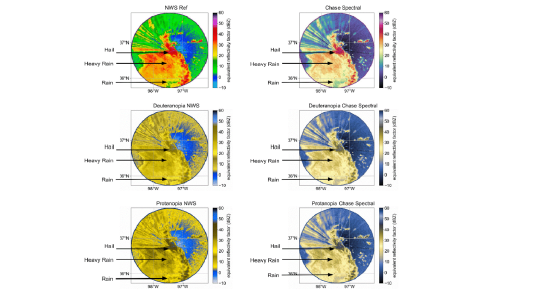
Visualizations are often an important part of scientific research, especially for people who work heavily with weather radar maps. These maps rely on color coding to indicate characteristics of clouds and precipitation. As a result, they are not accessible to people with Color Vision Deficiency, otherwise known as color-blindness.
To address this problem, researchers from DOE’s Argonne National Laboratory have been developing colormaps that are more accessible to people with Color Vision Deficiency. After finding better color representation, they collaborated with people in the community to ensure the maps were more interpretable than the ones currently used. To spread the word, the team has published a paper and presented at major conferences. This work was supported by the Atmospheric Radiation Measurement (ARM) user facility, a DOE Office of Science user facility.
|
|
|
Research News Update provides a review of recent Office of Science Communications and Public Affairs stories and features. This is only a sample of our recent work promoting research done at universities, national labs, and user facilities throughout the country.
|
|
|
|
Please see the archive on Energy.gov for past issues.
No. 126: 16 September 2024
|
|
|
|