|
 03 June 2024
|
|
|
The Early Career Research Program provides financial support that is foundational to early career investigators, enabling them to define and direct independent research in areas important to Department of Energy (DOE) missions. The Early Career Award Winner series provides awardees with an opportunity to explain the results of their research in their own words.
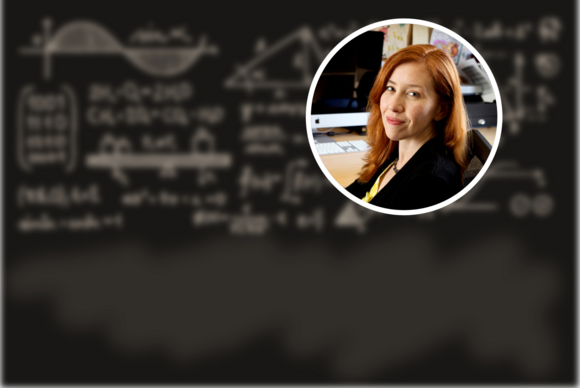
Meteoroids and space debris travel at incredibly fast speeds. This speed gives them a large amount of energy. When they hit spacecraft, this debris can form a plasma that is extremely dense. The way this plasma expands can result in electrical damage to spacecraft, even if the impacting object is too small to punch a hole through the spacecraft.
Learn more about the research supported by Elschot’s Early Career award from the DOE Office of Science and how it helps us understand how to better protect spacecraft.
|
|
Quantum CPU: Researchers at DOE’s Jefferson Lab have developed a new quantum computing “core.” It traps ions and injects them into a beamline shaped like a figure eight. The ions can then act like qubits for quantum computers. It has the potential to maintain coherence much longer and handle far more qubits than comparable systems. The technology evolved from research that went into designing the Electron-Ion Collider upcoming user facility as well as the search for dark matter and dark energy. |
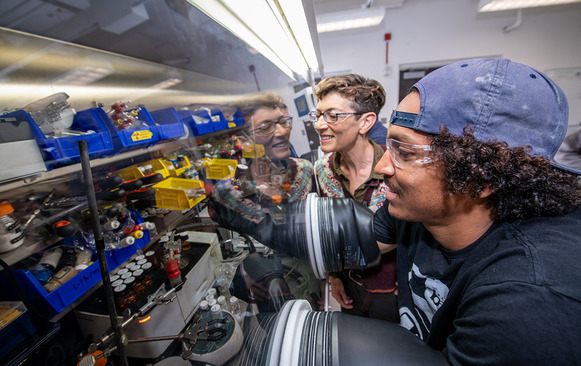
Vaccine component: Adjuvants are important to vaccines’ effectiveness. They’re a molecule or compound that primes the immune system to have a strong enough response to infection. One of the strongest adjuvants is made from the Chilean soap bark plant and is hard to produce. Researchers at the University of California, Berkeley and DOE’s Lawrence Berkeley National Laboratory found a way to produce the chemical’s active ingredient in yeast. It’s both cheaper and more environmentally friendly, which could lower the cost of vaccines. |
|
Telecommunications: Researchers at DOE’s Brookhaven National Laboratory and the University of Maryland developed a new device that can process information using a small amount of light. The devices that we use to send information via telephone signals rely on both light and electricity. The prototype for this alternative used one hundred times less energy than current technology. It could also enable faster telecommunications. The team used the Center for Functional Nanomaterials, a DOE Office of Science user facility. |
|
Water disinfection: Most water treatment methods use chlorine. But chlorine persists in water and too much exposure can be harmful. Scalable electrochemical ozone production technology could be safer and just as effective. Unfortunately, it is too expensive and energy-intensive to use broadly. To improve this technology, researchers at the University of Pittsburgh, Drexel University, and DOE's Brookhaven National Laboratory investigated how catalysts work in the process. The team used the Center for Functional Nanomaterials, a DOE Office of Science user facility.
|
|
|
|
Quantum spin nematic: High-temperature superconductors function far below room temperature but could provide us clues on how to develop more practical superconducting materials. Quantum spin nematic is a state of matter associated with high temperature superconductors. A team of scientists, including ones from DOE’s Argonne National Laboratory, has observed this state of matter for the first time. They used the Advanced Photon Source, a DOE Office of Science user facility. |
Nanoparticles: Researchers at Northwestern University and the University of Michigan have created a new way to assemble polyhedral nanoparticles. The team used DNA as both a blueprint for the structures as well as a tool to assemble them. This new technique expands our ability to create and design metamaterials. These materials could be used in ultra-high speed optical computing systems. |
|
The Office of Science posted five new highlights between 5/20/24 and 6/2/24.
|
|
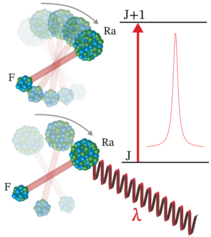
Short-lived radioactive molecules: Scientists predict that certain molecules including radium may be more sensitive than others to phenomena that are not explained by the Standard Model of Particle Physics. These areas of physics could answer major questions like “Why is there more matter than antimatter?” Radium monofluoride is one of these molecules. Physicists from the Massachusetts Institute of Technology and their collaborators made precision measurements of radium monofluoride for the first time. Being able to cool and trap these molecules is an essential step towards using them to study these new areas of physics. |
|
|
New Scientist: X-ray laser fires most powerful pulse ever recorded
The Linac Coherent Light Source-II (LCLS-II) at DOE’s SLAC National Accelerator Laboratory put out a pulse that lasted less than a billionth of a billionth of a second and had a terawatt of power.
|
|
|
BBC: Atlantic to get ‘extraordinary’ hurricane season
The North Atlantic could get more than double the usual number of hurricanes this year. Michael Wehner from DOE’s Berkeley Lab discussed how climate change is making the highest intensity storms more likely.
|
|
Improving the Energy Efficiency of Ammonia Production
|
|
Ammonia is widely used in fertilizers and cleaning supplies. But making ammonia requires very high temperatures and pressures. As a result, manufacturing it uses tremendous amounts of energy. Researchers from DOE’s Berkeley Lab have developed a new method to produce ammonia at room temperature and pressure. They created a catalyst that can facilitate the needed reactions in a far more energy-efficient way. Some of the research used the Advanced Light Source, a DOE Office of Science user facility. The new technology could be particularly useful in areas that have limited access to fertilizers and other ammonia-based products. |
|
The LSST Camera Arrives at the Rubin Observatory
|
|
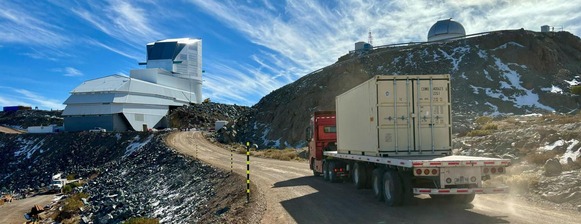
The LSST Camera is the largest digital camera for astronomy ever built. After it was completed at DOE’s SLAC National Accelerator Laboratory in April, it was shipped to Chile. At the end of May, it finally reached its destination – the NSF-DOE Vera C. Rubin Observatory on Cerro Pachón. The Rubin Observatory will start running the Legacy Survey of Space and Time (LSST) in late 2025. Over the course of 10 years, the LSST Camera will take detailed images of the sky in the southern hemisphere. These images will build the most comprehensive timelapse view of our universe that we’ve ever seen. The research will help us explore dark matter and dark energy as well as many astrophysical objects. |
|
|
Research News Update provides a review of recent Office of Science Communications and Public Affairs stories and features. This is only a sample of our recent work promoting research done at universities, national labs, and user facilities throughout the country.
|
|
|
|
Please see the archive on Energy.gov for past issues.
No. 120: 3 June 2024
|
|
|
|