|
 20 May 2024
|
|
|
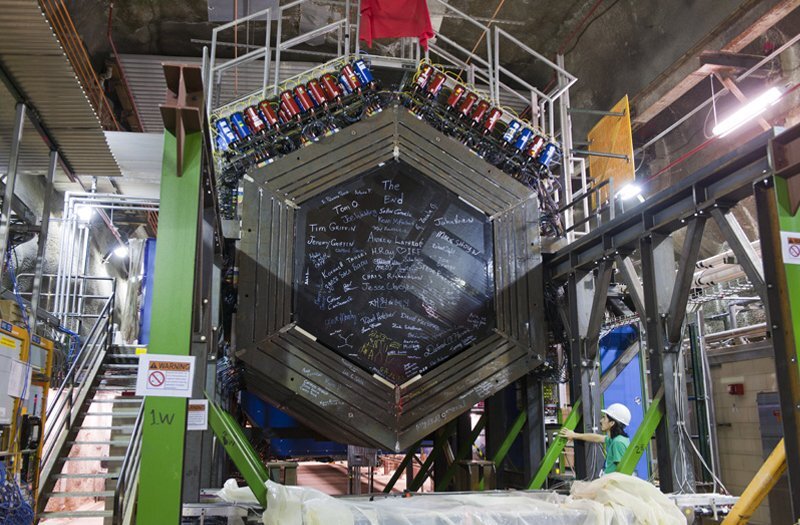
Depictions of the Roman goddess of wisdom Minerva show her in flowing robes, wearing a noble war helmet and holding an owl. In contrast, the MINERvA experiment features a huge particle detector with the names of collaborating scientists scrawled on the front of it. While quite different in appearance, this neutrino experiment provides deep wisdom to scientists just like its namesake represented. Among its many insights, scientists have used MINERvA to better understand the size and structure of protons, one of the building blocks of atoms.
Learn more about MINERvA and how scientists at the Department of Energy’s (DOE) Fermilab used it to delve into protons.
|
|
Microcapacitors: Shifting energy storage onto microchips would help make electronic devices smaller and more energy efficient. But current on-chip storage can’t store and deliver large amounts of energy in a small space. Researchers at DOE’s Lawrence Berkeley National Laboratory and University of California, Berkeley developed microcapacitors that broke records for energy and power densities. The chips use materials and fabrication techniques that are already widespread in chip manufacturing. |
Yeast: A team led by researchers at the University of Wisconsin-Madison, Vanderbilt University, and Great Lakes Bioenergy Research Center mapped the genetic blueprints, diets, and environments of more than 1,000 species of yeast. Contrary to previous assumptions, they found that certain yeasts’ ability to eat different types of foods did not hinder them. Instead of specialists being better at their focus area, generalists were just as good. This finding will both inform evolutionary biology and can help scientists identify yeasts to use in biofuels production. |
|
Hurricanes: A study led by scientists at DOE’s Pacific Northwest National Laboratory found nearshore hurricanes around the world have been intensifying at a quickening pace. Projections also suggest that if current warming trends continue due to climate change, this intensification will continue climbing. This rapid intensification can make hurricanes more destructive and make it harder to evacuate people in their paths. |
Quantum entanglement: Qubits are the heart of quantum computers. Entanglement is a form of relationship between two or more quantum objects and essential for quantum technology. However, it is very difficult to make and study specific entangled states in systems with many qubits. Researchers at MIT have demonstrated a technique to create entanglement among superconducting qubits with a specific type of behavior. |
|
X-ray data: X-ray microscopes are getting so powerful that they are generating more data than computers can process efficiently. To process data on the fly, scientists at the Advanced Photon Source user facility at DOE’s Argonne National Laboratory developed a method that incorporates machine learning into an X-ray microscopy technique. It cuts down on the time needed to sample material and increases the rate of data processing. |
Photons: Single photon emitters are a type of structure that only release one photon (a quantum of light) at a time. They’re important for quantum technology. However, many materials that have single photon emitters are expensive and difficult to integrate into complex devices. One of these materials is hexagonal boron nitride. Researchers from CUNY Graduate Center and their partners used the National Synchrotron Light Source-II user facility to better understand the properties of hexagonal boron nitride. |
|
The Office of Science posted six new highlights between 5/6/24 and 5/19/24.
|
|
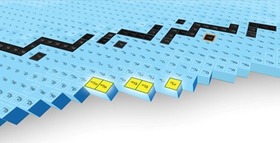
Rare isotopes: Researchers conducting the first search for new isotopes at the Facility for Rare Isotope Beams – a DOE Office of Science user facility – discovered five never-before-seen heavy element isotopes. They were thulium-182 and 183, ytterbium-186 and 187, and lutetium-190. The challenge was to distinguish these nuclei from the hundreds of known nuclei that were produced at the same time. Heavy nuclei are notoriously difficult to separate and identify. These nuclei are important for understanding the cosmic production of more than half of the elements heavier than iron. |
|
|
Gizmodo: New fusion record achieved in tungsten-encased reactor
The tungsten (W) Environment in Steady-state Tokamak (WEST) fusion experiment in France has set a new record for how long it could sustain plasma. Researchers at DOE’s Princeton Plasma Physics Laboratory contributed to the research and measured the plasma inside the device.
|
|
Supercomputers Support Developing Carbon-Negative Building Materials
|
|
|
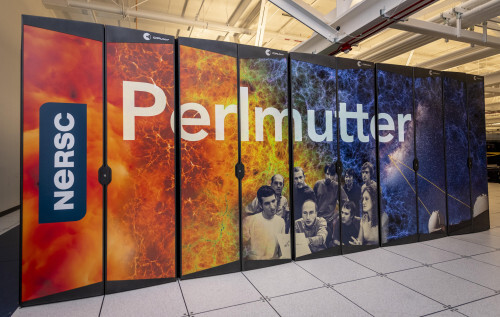
To minimize climate change, researchers are investigating ways to capture and store carbon dioxide. One potential method is storing it in reusable materials that could be used in construction. However, current methods of storing carbon dioxide allow the carbon to leak into the atmosphere over time. To be a long-term solution, we need methods that would permanently store the carbon.
Researchers at DOE’s Brookhaven National Laboratory and Columbia University used the National Energy Research Scientific Computing Center (NERSC) DOE Office of Science user facility to study one such method. They are investigating how to incorporate carbon dioxide into carbon nanofibers. These nanofibers could be integrated into construction materials and stored there for the lifetime of a building. Combining computer models and experimentation, the researchers found a possible way to get around current limitations of carbon storage. Their proposed process may provide a way to use renewable energy to turn carbon dioxide into valuable products and produce renewable hydrogen at the same time.
|
|
DOE’s Exascale Computers Top the List of Most Powerful Computers in the World
|
|
|
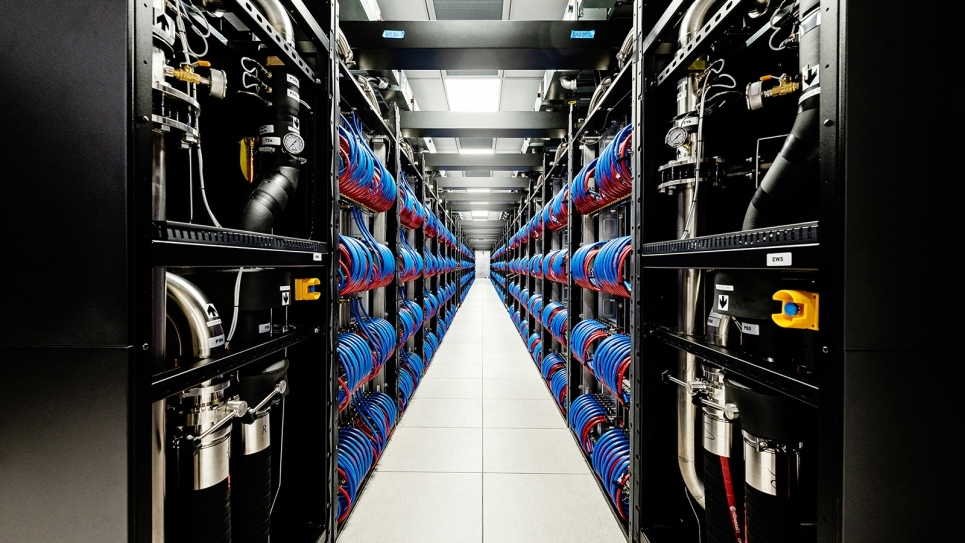
DOE’s Aurora supercomputer at the Argonne Leadership Computing Facility user facility has officially broken the exascale barrier. The computer achieved 1.012 exaflops. It joined the Frontier supercomputer at the Oak Ridge Leadership Computing Facility (OLCF) as the only two official exascale systems in the world.
The two computers recently topped the Top500 high-performance computing list. With scientists and engineers steadily improving its performance since its debut in 2022, Frontier held onto its number one spot. Aurora joined the list in second place. In addition to Frontier and Aurora, the Summit supercomputer at OLCF is still in the top 10, ranking at number nine. The Top500’s benchmark has long been the world’s measuring stick for large-scale supercomputing performance.
|
|
|
Research News Update provides a review of recent Office of Science Communications and Public Affairs stories and features. This is only a sample of our recent work promoting research done at universities, national labs, and user facilities throughout the country.
|
|
|
|
Please see the archive on Energy.gov for past issues.
No. 119: 20 May 2024
|
|
|
|