|
 6 May 2024
|
|
|
Thunderstorms in the American Midwest. Tiny particles in the cloud cover of the Amazon rainforest. Heat waves in Baltimore. What do these very different places have in common? They’re all areas where the Department of Energy (DOE) Office of Science Biological and Environmental Research program is supporting climate research. You can also find information about all of them on the National Virtual Climate Laboratory.
Learn more about the resources available through the National Virtual Climate Laboratory.
|
|
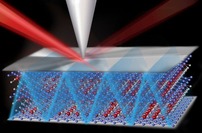
Quantum materials: A team led by researchers from DOE’s SLAC National Accelerator Laboratory and Stanford University has developed a method that uses the structure of light to change the properties and behavior of quantum materials. These properties govern how electrons behave, which determines how electricity and data flow. This advancement enables further progress in next generation quantum electronics, quantum computing, and information technology. |
Hydrides: Materials science theories predict that when hydrogen is under immense pressure, it will become a metal and then a superconducting material called a hydride. Scientists would like to be able to study these materials, but creating and measuring them has been impractical. Researchers at Harvard University have developed a way to incorporate quantum sensors into devices used for putting materials under high pressure. It enables scientists to obtain read-outs of materials’ properties, including hydrides. |
|
Tough alloy: A metal alloy made of niobium, tantalum, titanium, and hafnium has shown incredible strength and toughness. It keeps its shape and resists cracking at both high and low temperatures. A team led by researchers from DOE’s Lawrence Berkeley National Laboratory and University of California, Berkeley discovered the alloy’s properties and figured out how these properties arise from interactions in its atomic structure. |
Wigner crystals: Wigner crystals are a bizarre form of matter made entirely of electrons, not full atoms. In these crystals, electrons act like a single wave rather than individual particles. Ninety years ago, physicists theorized that these crystals existed. However, scientists didn’t have experimental proof until recently. Princeton University physicists recently visualized a Wigner crystal for the first time. |
|
Controlling plasma: Researchers at DOE’s Princeton Plasma Physics Laboratory demonstrated how to use two older, existing methods together to better control plasma in fusion experiments. Together, the methods allow scientists control over the development of magnetic “islands” in plasma. While the islands often disrupt the plasma, they can stabilize it under certain circumstances. |
Painkiller production: Paracetamol is the active ingredient in painkillers such as Tylenol. Since it was invented, it has been made from derivatives of coal tar or petroleum. University of Wisconsin-Madison researchers developed a process to make it from poplar trees in 2019. Now, working with the Great Lakes Bioenergy Research Center, they have greatly improved that process. This process can provide a greener path to production and a major revenue stream to make biofuels more cost-competitive. |
|
The Office of Science posted six new highlights between 4/22/24 and 5/5/24.
|
|
Light in metals: Metals usually reflect visible light. This is unlike transparent glass and plastic, which conduct light. Scientists at Columbia University discovered a quantum metal that behaves differently. Because of the strange behaviors of the electrons in this metal, light can move through it. The material may be extremely useful for ultra-small optical devices or very powerful microscopes. |
|
|
Telemundo: Nuestro planeta: Voces del cambio climático (Our planet: Voices of climate change)
Lead researchers on the Tropical Responses to Altered Climate Experiment (TRACE) explain what this field experiment in Puerto Rico is revealing about the interactions between climate change, hurricanes, and forest disturbance.
|
|
Adapting Particle Accelerators for Industrial Work
|
|
|
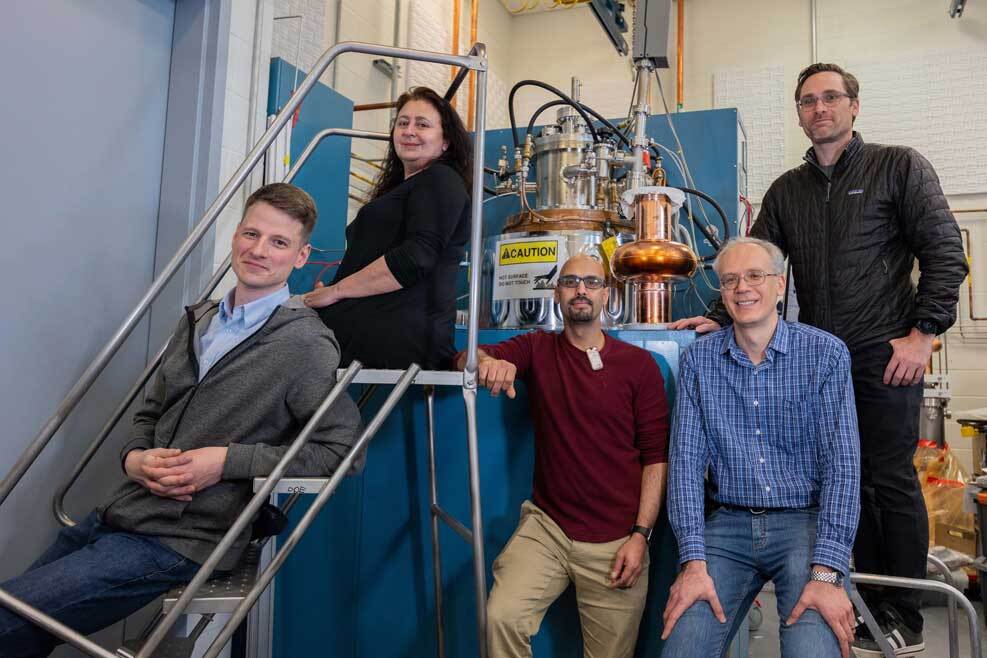
Particle accelerators that use superconducting radiofrequency (SRF) technology are powerful tools for understanding the building blocks of matter. Scientists at DOE’s Thomas Jefferson National Accelerator Facility (Jefferson Lab) and other national labs use them to help us better understand the fundamental particles and forces of our world.
However, these particle accelerators could also be useful in more down-to-earth applications. Jefferson Lab researchers are working with scientists from DOE’s Fermilab, General Atomics, Florida International University, and other partners to adapt the technology for water treatment plants. In particular, this technology could be useful for removing the group of chemicals called PFAS from drinking water. PFAS are known as “forever chemicals” because they don’t break down and traditional treatment methods can’t remove them. The team is investigating ways to make SRF particle accelerators smaller, lighter, and less complex so that they could one day be used in water treatment plants and other industrial settings.
|
|
Solar Eclipse Provides Unique Scientific Opportunity
|
|
|
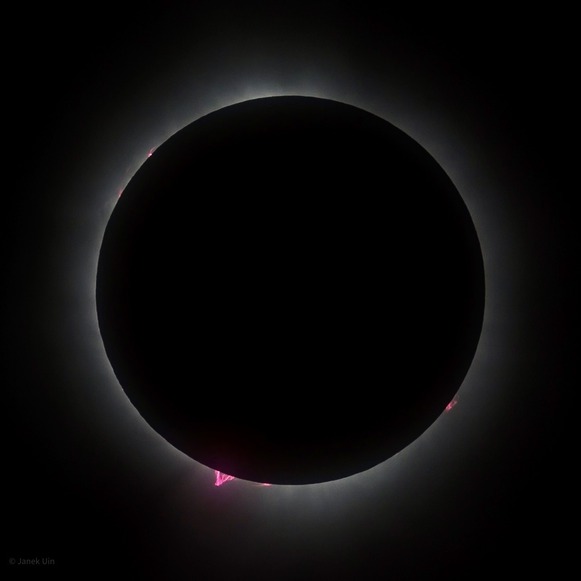
The solar eclipse on April 8 took the world by storm, inspiring eclipse hunters to travel across the country. In addition to people being excited by science, the eclipse also provided our user facility users a unique opportunity to leverage their expertise.
The Atmospheric Radiation Measurement (ARM) user facility’s Southern Great Plains Observatory in Lamont, Oklahoma had 91 percent eclipse coverage. The user facility continued to take data during that time, which provides an interesting contrast to its normal, non-eclipse data. In addition, scientists can also compare the eclipse data to data from the 2017 eclipse, where the site had 89 percent coverage. The data from both are available in the ARM Data Center.
The Energy Sciences Network (ESnet) user facility is dedicated to sending and receiving scientific messages and data for research. But researchers also share their enthusiasm for science with each other! Via the user facility’s Slack channel, scientists shared their many photos and experiences of the eclipse, including several that were in the path of totality.
|
|
|
Research News Update provides a review of recent Office of Science Communications and Public Affairs stories and features. This is only a sample of our recent work promoting research done at universities, national labs, and user facilities throughout the country.
|
|
|
|
Please see the archive on Energy.gov for past issues.
No. 118: 6 May 2024
|
|
|
|