|
 26 February 2024
|
|
|
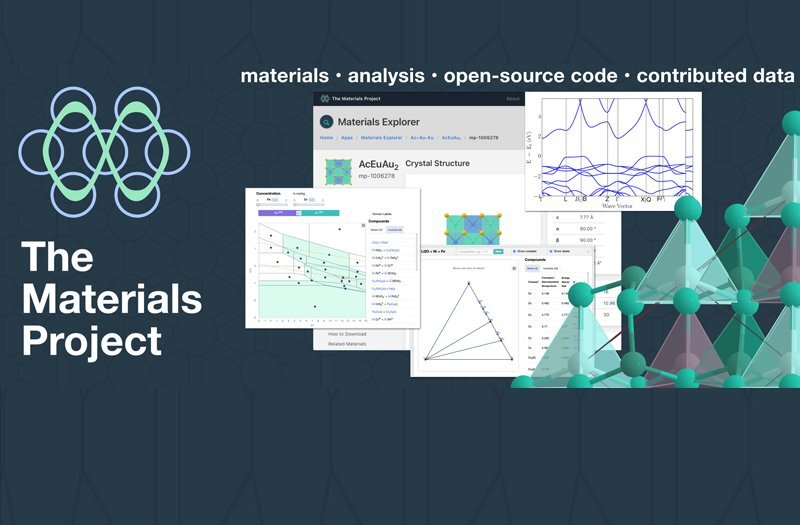
The stone age didn’t end because people ran out of stones. Instead, people found better materials that met their needs. Throughout history, the discovery of new materials has led to breakthrough technological advancements. They have ranged from the discovery of bronze to create better tools and weapons to the discovery of semiconductors used in microelectronics. Historically, scientists and inventors have found new and better materials through a mix of intuition and trial-and-error. It can often take decades to find a useful, new material. The Materials Project aims to accelerate this process.
Learn more about how The Materials Project enables and accelerates materials research.
|
|
Ants and fungus: Being able to break down lignin – a major part of plants’ cell walls – could help scientists access more material for bio-based products while reducing waste. A microbial community made of fungus, leafcutter ants, and bacteria can naturally break down lignin. Researchers at DOE’s Pacific Northwest National Laboratory developed a new imaging method that allows scientists to analyze these communities down to the molecular level. They found important metabolites and enzymes that are essential to the degradation process. |
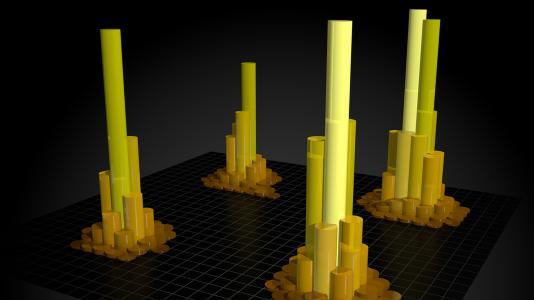
Alloys: Alloys are materials made by combining two or more metallic elements. They are essential as building materials. But most alloys can’t be both tough and flexible. Certain alloys called medium- and high-entropy alloys can be both, but scientists need to understand them better to take full advantage of their benefits. A team led by UCLA researchers used the Molecular Foundry (a DOE Office of Science user facility) to create a 3D map of the atomic coordinates of these alloys. In the process, they found a new approach to increasing alloys’ toughness and flexibility. |
|
Destroying PFAS: The chemicals called PFAS are both ubiquitous and do not break down via natural processes – hence, their moniker as “forever chemicals.” As a result, they accumulate in the environment, animals, and human bodies. Researchers at DOE’s Fermi National Accelerator Laboratory in collaboration with 3M discovered that electron beams can destroy the two most common types of PFAS that are found in water. |
Quantum processors: Harvard University researchers have developed the first programmable, logical quantum processor. It can encode up to 48 logical qubits and carry out far more logical gate operations than previous processors. It’s the first time that large-scale algorithms have been demonstrated on an error-corrected quantum computer and is a big step forward for the technology. |
|
The Office of Science posted four new highlights between 2/14/24 and 2/26/24.
|
|
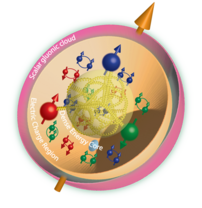
Proton mass: How mass is distributed inside protons has been a long-standing question in physics. Most of the proton’s mass comes from the quarks and their interactions. Some comes from the gluons as well. A team led by researchers from DOE’s Argonne National Laboratory used the Continuous Electron Beam Accelerator Facility (a DOE Office of Science user facility) to make new measurements. They found that the primary source of the mass generated by gluons is in the central region of the proton. |
|
|
Grist: How air pollution delayed a surge in extreme rain
While the pollution that causes smog contributes to health problems, it also reflects back sunlight and reduces climate change. Researchers at DOE’s Lawrence Berkeley National Laboratory explored how this dynamic has affected severe rainfall.
|
|
Combining User Facility Resources to Maximize Their Impact
|
|
|
As DOE’s user facilities improve in power and precision, they are creating more data that scientists need to process and analyze. For example, the upgrade to the Advanced Photon Source user facility will produce about 20 to 40 times more data than the current version of the light source. Altogether, the DOE Office of Science's light sources will be producing about 1 billion gigabytes of data a year in the coming decade.
To handle this data, DOE’s Argonne National Laboratory and other national labs are finding new ways to integrate experimental facilities and computer technology. Argonne’s Nexus effort is coordinating all of the lab’s work on developing an integrated research infrastructure. This type of integration will allow scientists to adjust instrumentation quickly and analyze data in near real-time.
|
|
Meaningful Partnerships to Diversify Science
|
|
Bringing together researchers with different knowledge and skill sets empowers teams to face complex scientific challenges. Samson Hagos at DOE’s Pacific Northwest National Laboratory has been a leader in creating diverse teams. As he contemplated a lack of conferences at the beginning of the COVID-19 pandemic, he decided that there needed to be new ways for scientists to network. In particular, he wanted to bridge the gap between DOE’s national labs and minority serving institutions (MSIs) and historically black colleges and universities (HBCUs). In response, he reached out to colleagues and launched a network to bring together climate researchers from a wide range of communities. Now the PNNL-HBCU/MSI Climate Research Network has more than 30 participating institutions. It has helped facilitate the development of two Climate Resilience Centers and three Reaching a New Energy Sciences Workforce projects. |
|
|
Research News Update provides a review of recent Office of Science Communications and Public Affairs stories and features. This is only a sample of our recent work promoting research done at universities, national labs, and user facilities throughout the country.
|
|
|
|
Please see the archive on Energy.gov for past issues.
No. 113: 26 February 2024
|
|
|
|