|
 6 November 2023
|
|
|
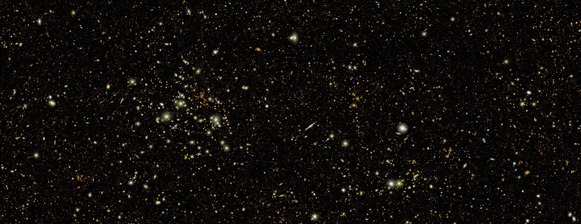
More than a billion – that’s how many galaxies NASA’s Nancy Grace Roman Space Telescope will collect data on after it launches. To help astrophysicists interpret that data, scientists – including those at the Department of Energy’s (DOE) SLAC National Accelerator Laboratory – are creating a computer simulation of it. The simulation will have 33 million galaxies, representing only one percent of the size of the real data set. However, it will be essential for comparing the observations to those from other telescopes.
Learn more about how these simulations will help scientists better understand how our universe evolved.
|
|
Protein families: Scientists at the DOE’s Joint Genome Institute user facility at Lawrence Berkeley National Laboratory led a team that more than doubled the number of known protein families. They took a new approach to better understanding microbial communities in nature – which are notoriously difficult to study – by looking at protein function within them. Overall, they analyzed 1.3 billion proteins. |
|
Defects: Researchers – including those at DOE’s SLAC National Accelerator Laboratory – found that tiny linear defects can spread through materials faster than sound waves do. These linear defects give metals their strength and workability. However, they can also make materials fail catastrophically. This discovery helps scientists understand how these defects can cause damage to materials in extreme conditions, from earthquakes to aircraft. |
Black holes: New simulations on Summit at the Oak Ridge Leadership Computing Facility user facility are showing that black holes “eat” gas around them much faster than scientists had previously thought. Previous estimates described certain processes taking hundreds of years, whereas these simulations suggest they happen in a few months. The research was conducted by a team that included scientists at Northwestern University. |
|
High energy density materials: High energy density materials are very important for renewable energy, medicine, and more. For example, scientists use X-ray lasers to study liquid droplets to advance research on hemoglobin in blood and water splitting for renewable energy. University of Hawaiʻi researchers developed a new software framework to better model these materials, including how they interact with X-rays. |
|
The Office of Science posted four new highlights between 10/25/23 and 11/6/23.
|
|
Biohybrids: Technology that combines microbes and semiconductors can produce biological products that can convert light to electricity. The bacteria can then collect this electricity and use energy to make bioplastics and biofuels. Scientists would like to better understand and improve this conversion process. Researchers at Cornell University developed a new way to take images of these biohybrids at the levels of single cells or molecules. It clarified the processes one type of bacterium goes through. Scientists can also use it to study other systems that combine biological and inorganic materials. |
|
Reimagining Kidney Dialysis
|
|
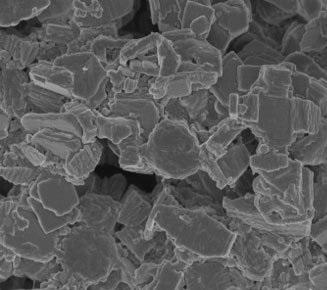
Chronic kidney disease affects about 9 percent of the world’s population. Kidney dialysis is a major treatment option for filtering waste from blood. However, the process often allows important proteins to escape and can be very stressful on patients’ bodies. A team that includes researchers from Vanderbilt University Medical Center, University of California, San Francisco, and DOE’s Lawrence Livermore National Laboratory developed a new type of filter for kidney dialysis machines. It can clean the blood more efficiently and potentially could lead to at-home dialysis kits. The technology is made of carbon nanotubes and polymers that scientists can control more effectively than existing filters. They used DOE’s Molecular Foundry Office of Science user facility in the research. |
|
New Fusion Experiment Off to a Flying Start
|
|
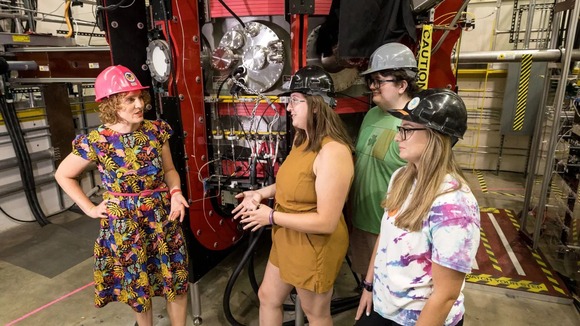
After years of work that involved assembling thousands of components, construction of the new Pegasus-III fusion experiment at the University of Wisconsin-Madison is finished. Supported by the DOE’s Office of Fusion Energy Sciences, the new experiment provides a dedicated platform in the U.S. to study innovative techniques for starting a plasma. Plasma is the ultra-hot ionized gas that releases energy in a fusion reactor. This work will advance plasma science and our understanding of fusion energy. It should help reduce the cost and complexity of future fusion energy systems. By harnessing the process that powers our sun, these fusion energy systems could potentially provide an abundant source of clean energy. |
|
|
Research News Update provides a review of recent Office of Science Communications and Public Affairs stories and features. This is only a sample of our recent work promoting research done at universities, national labs, and user facilities throughout the country.
|
|
|
|
Please see the archive on Energy.gov for past issues.
No. 114: 6 November 2023
|
|
|
|