|
 24 October 2023
|
|
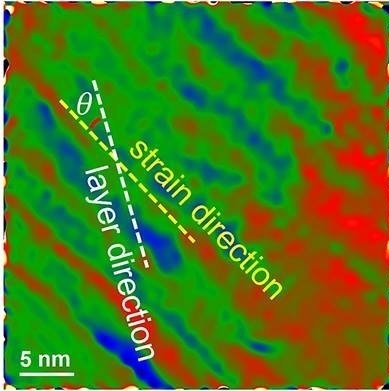
Solid-state batteries: Solid state-batteries could be stronger and safer than ones that currently use liquid electrolytes. But the materials they are made out of swell and shrink. Scientists don’t yet fully understand how mechanical forces influence battery efficiency and longevity. A team led by scientists at DOE’s Oak Ridge National Laboratory developed a framework for designing solid-state batteries that accounts for mechanical stress and strain. |
Quantum dots: Scientists with the University of Chicago have demonstrated a way to create infared light using a specific type of quantum dot. These dots are called colloidal quantum dots, which emit different colors of light depending on how big you make them. The dots are already efficient, but previously could only make light in visible wavelengths. This new process could be very useful for improving sensors. |
|
Indian ocean cyclones: Researchers from Florida Tech and DOE’s Pacific Northwest National Laboratory, along with their partners, examined the number of cyclones in the North Indian Ocean. They found that there was a 43 percent decline in cyclones from 1981 to 2010 compared to decades before. The decline is mainly because of long-term cycles in the sea surface temperatures of the north Pacific Ocean. However, this cyclical pattern is reversing and could lead to another upswing, especially when combined with climate change. |
|
Direct air capture: Direct air capture technologies could help remove billions of tons of carbon dioxide from the atmosphere annually. Researchers at DOE’s Oak Ridge National Laboratory have found a new way to release carbon dioxide from a solvent used in direct air capture. It uses light instead of heat. The approach paves the way towards technologies that could remove carbon dioxide from the atmosphere in an economically viable way. |
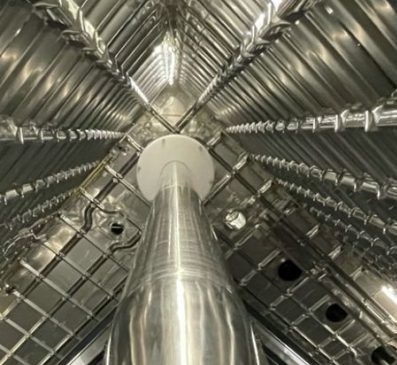
Project 8: Accurately measuring neutrinos’ mass could fill in substantial gaps in particle physics, particularly figuring out what mass actually is. Researchers from Yale University, DOE’s Pacific Northwest National Laboratory and their partners are running a new experiment called Project 8. The team just proved the viability of a new method to measure neutrino mass. The team has already built a highly precise detector and aims to build one that is 10 to 20 times more precise. |
|
The Office of Science posted four new highlights between 10/11/23 and 10/24/23.
|
|
Sodium batteries: Sodium-ion batteries could be a less expensive alternative to lithium-ion with a more reliable supply chain. But these batteries’ performance declines rapidly with repeated charges and discharges. Researchers at DOE’s Argonne National Laboratory, University of Wisconsin-Milwaukee, and Stanford University used the Advanced Photon Source and the Center for Nanoscale Materials Office of Science user facilities to find a cause for the decline in performance. They found it was mainly defects that arise during the manufacturing process of the cathode material. This will discovery will help scientists develop better cathodes that could lead to more affordable electric vehicles with longer driving ranges and shorter charging times. |
|
Predicting Neighborhood Flooding Risk
|
|
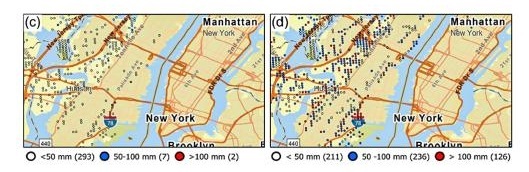
Climate change is already having major effects on the global water cycle, from rainstorms to snowfall. Researchers at DOE’s Argonne National Laboratory have developed a new dataset that estimates increased inland flood risk from climate change during the mid-21st century. While the first published analysis looked specifically at a study of the Northeastern United States, scientists can implement the dataset in any region around the world. The team used the Argonne Leadership Computing Facility, an Office of Science user facility. The high-performance computing system allowed them to develop a detailed, high-resolution simulation of the country. It breaks the country into sections so small that researchers could estimate how flooding would affect individual neighborhoods. The scientists are going to update and apply the modeling method to research based at the Community Research on Climate & Urban Science (CROCUS) urban integrated field laboratory in Chicago. |
|
Enabling Researchers of all Ages
|
|
Many science-oriented high school students may be interested in going into quantum computing, but most won’t have the opportunity to get hands-on with research for several years. But Avi Vadali’s interest drove him to find opportunities to do so. After attending the Saturday Morning Physics program at DOE’s Fermi National Accelerator Laboratory, he contacted Fermilab scientist Gabriel Perdue. The summer before Vadali’s senior year, he worked on a project to write a program that can predict if a quantum computer can reliably solve certain problems. He’s now a co-author on a journal article about machine learning and quantum computing based on that research. |
|
|
Research News Update provides a review of recent Office of Science Communications and Public Affairs stories and features. This is only a sample of our recent work promoting research done at universities, national labs, and user facilities throughout the country.
|
|
|
|
Please see the archive on Energy.gov for past issues.
No. 113: 24 October 2023
|
|
|
|