|
 26 September 2023
|
|
|
There was an error in the previous newsletter about the institution where the work on the feature article was completed. This version has the correct institution.
|
|
Upcycling: A team led by Virginia Tech researchers has developed a new method for upcycling plastics into high-value chemicals. Manufacturers use such chemicals, called surfactants, to make soap, detergent, and other products. It is a relatively simple process and doesn’t use any unique catalysts. The method can be used to process the two types of plastics most often used by consumers and doesn’t require separating them from each other. |
|
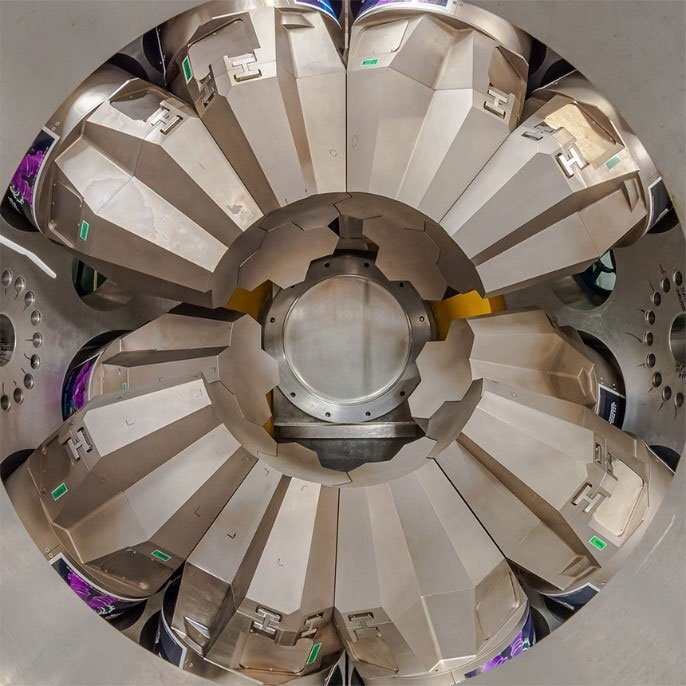
Rare isotopes: Oxygen-28 has 20 neutrons and 8 protons bound together in its nucleus. Isotopes that have many neutrons like oxygen-28 are usually unstable. However, this particular number of neutrons and protons usually has stronger binding energy than other configurations. Researchers at DOE’s Oak Ridge National Laboratory were part of a team that investigated oxygen-28’s stability for the first time. The team used the Oak Ridge Leadership Computing Facility, a DOE Office of Science user facility, to run simulations. |
Trapping light: A team led by researchers from the City College of New York found that trapping light inside magnetic materials may greatly enhance the magnets’ properties. They studied a layered magnet that hosts strongly bound excitons (a type of quasiparticle). They found that the material can trap light by itself. These magnets could potentially be useful in magnetic lasers and memory devices. |
|
The Office of Science posted six new highlights between 9/12/23 and 9/24/23.
|
|
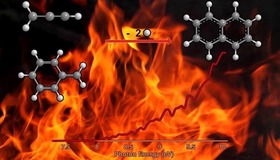
Hydrocarbons: Polycyclic aromatic hydrocarbons (PAHs) are a type of molecule that appears in an array of wildly different situations. On Earth, they form from the burning of coal, oil, and other substances. Their particles become soot that is harmful for human health. Elsewhere in the universe, they exist around stars, interstellar clouds, and planets. Scientists from the University of Hawai’i at Manoa and their partners studied how the simplest representative of PAHs form from reactions in the gas phase of matter. This result expands our fundamental knowledge of chemistry. The research used the Advanced Light Source, a DOE Office of Science user facility. |
|
|
Axios: Top 5 reasons Idalia stands apart from other storms
Incredibly warm ocean temperatures transformed Hurricane Idalia into a massive storm extremely quickly. Karthik Balaguru from DOE’s Pacific Northwest National Laboratory discusses other factors that also accelerated its growth.
|
|
LCLS-II Reaches First Light
|
|
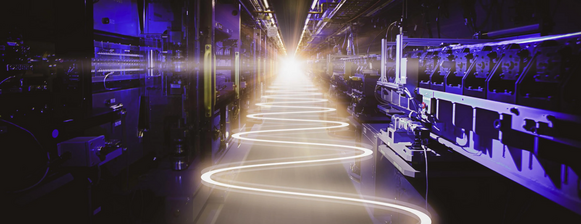
The Department of Energy’s SLAC National Accelerator Laboratory has fired up the world’s most powerful X-ray laser: the Linac Coherent Light Source-II (LCLS-II). This powerful tool will produce up to a million X-ray flashes per second, 8,000 times more than its predecessor. This upgrade will open up new areas for research, from quantum materials to clean energy technologies to medicine. Find out more about how this technology will take X-ray science to the next level in a press release from SLAC. |
|
Hands-On Research Expands Opportunities for Students
|
|
|
Gaining practical, hands-on experience with research at a national laboratory or institution supported by the DOE’s Office of Science can make a huge difference in a young person’s career.
The Office of Science has two long-standing internship programs for undergraduate students: the Community College Internship and the Science Undergraduate Laboratory Internship programs. They provide students with a chance to perform research at one of 17 DOE national laboratories or facilities.
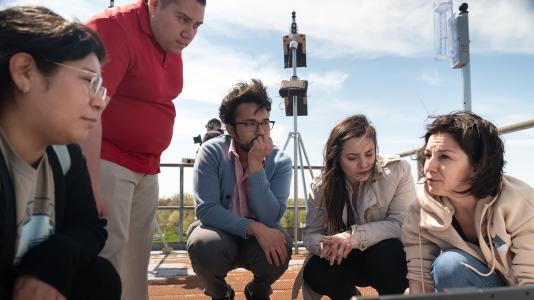
The Office of Science and its laboratories are also supporting new programs to expand opportunities for students who are from groups that are traditionally underrepresented in science, technology, engineering, and math. At DOE’s Pacific Northwest National Laboratory, the Energy and Environment Diversity Internship Program focuses on sustainable energy and environmental sciences. DOE’s Argonne National Laboratory has a new program called Bridge into Internships that partners with high schools on the South Side of Chicago to support students in underserved communities. The lab is also collaborating with minority serving institutions through the Community Research on Climate & Urban Science (CROCUS) urban integrated field laboratory. At DOE’s Brookhaven National Laboratory, researchers are working to broaden and diversify the nuclear and particle physics research communities. They are running traineeships that expose students to hands-on research projects and provide them with mentoring from researchers at the lab.
Today’s high school and undergraduate students will be the researchers of the future. We’re finding new ways to get them the experience they need to get there.
|
|
|
DOE Office of Science Research News Update provides a review of recent Office of Science Communications and Public Affairs stories and features. This is only a sample of our recent work promoting research done at universities, national labs, and user facilities throughout the country.
|
|
|
|
Please see the archive on Energy.gov for past issues.
No. 111: 26 September 2023
|
|
|
|