|
 26 June 2023
|
|
X-raying atoms: A team of scientists from DOE’s Argonne National Laboratory and several universities characterized the elemental type and chemical properties of a single atom by using X-ray beams. Being able to use X-rays to study one atom at a time will support research in a number of areas, from quantum information technology to medical research. |
|
Galactic data: The Dark Energy Spectroscopic Instrument team released their first set of data to the public. The data were taken during the experiment’s “survey validation” phase. The set includes information on nearly two million objects, including distant galaxies as well as stars in the Milky Way. DOE’s Lawrence Berkeley National Laboratory manages the experiment and DOE’s SLAC National Accelerator Laboratory plays a significant role. |
Splitting a phonon: The laws of quantum physics say that quantum particles cannot be split. But researchers from the University of Chicago and DOE’s Argonne National Laboratory recently “split” a phonon. Phonons are a type of quantum particles; tiny packets of them make up sound waves. The team is demonstrating phonons' quantum properties, which helps lay the groundwork for a new type of quantum computer. |
|
Photosynthesis: Photosynthetic organisms can convert the energy in light into the chemical energy for life. Researchers at DOE’s Lawrence Berkeley National Laboratory and UC Berkeley recently discovered that this organic chemical reaction is sensitive to the smallest quantity of light possible. While scientists had assumed that a single photon was enough to initiate the reaction, no one had ever demonstrated it before. |
Nanocrystals: Organic dyes and fluorescent proteins are used in bioimaging and optical memory. But if they are hit with light, they will start blinking randomly and go dark. Columbia University scientists found that certain nanoparticles created by the Molecular Foundry DOE Office of Science user facility were much more stable. They discovered a way to turn the nanoparticles off and on more than 1,000 times without degradation. |
|
The Office of Science posted five new highlights between 6/13/23 and 6/26/23.
|
|
Microbial research standards: Our planet may be home to one trillion species of microbes. Communities of these microorganisms (microbiomes) are incredibly important to the health of everything from individual people to ecosystems. To study these communities, scientists need to collect, process, and share data in a standardized way. Researchers at the National Microbiome Data Collaborative are working to develop community-supported microbiome data standards. The collaborative launched an ambassador program to encourage awareness and adoption of data and metadata standards. The program trained 12 early-career researchers, who went on to make 23 presentations to more than 800 researchers. |
|
|
CNN: Without climate change, these extreme weather events would not have happened
Attribution science is increasingly able to link extreme weather events with climate change. This article discusses how researchers from Stony Brook University and DOE’s Lawrence Berkeley National Laboratory found that Hurricane Ian was at least 10 percent wetter than it would have been otherwise due to climate change.
|
|
|
|
Quanta Magazine: Sparse networks come to the aid of big physics
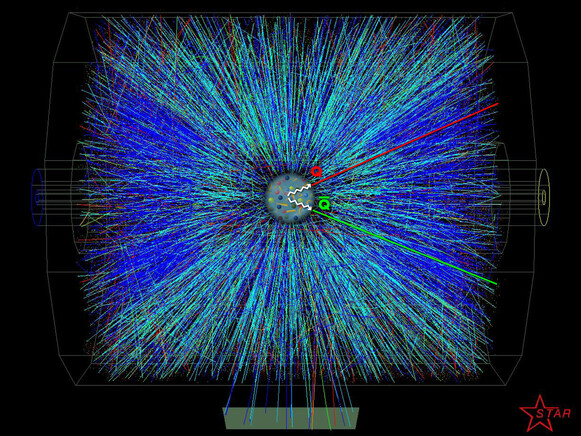
Particle physics experiments capture huge amounts of data, but only a small portion is useful. Scientists at DOE’s SLAC National Accelerator Laboratory and Fermilab discuss how physicists are using machine learning to sort through the data.
|
|
Scientists use Argonne Supercomputer to Detail HIV Protein Mechanism Crucial for Drug Development
|
|
|
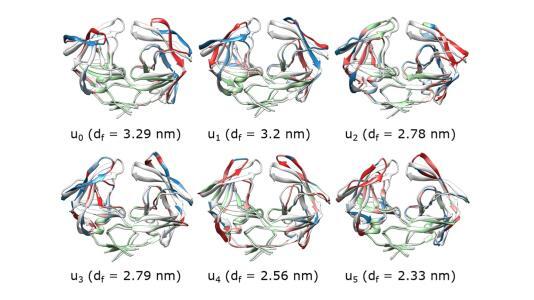
Proteins are important to all diseases. But for some diseases, like HIV, changes in the structure of a protein have a major impact on how the virus infects cells.
Researchers at the University of Illinois Chicago found the essential factors that control a certain structural change of a key viral protein in HIV. They used the Theta supercomputer at the Argonne Leadership Computing Facility DOE Office of Science user facility. The structural change is called a flap opening. It occurs when the virus is binding to another molecule, like an antiviral drug. Understanding this change is critical to developing better medications to treat HIV.
|
|
Fusion Investments Push Energy Development Forward
|
|
|
DOE’s Office of Science has been a long-standing supporter of fusion research with the eventual goal of making it a sustainable energy source. Most recently, the White House summit on a decadal vision for commercial fusion energy set the goal to have a pilot-scale demonstration of fusion within a decade.
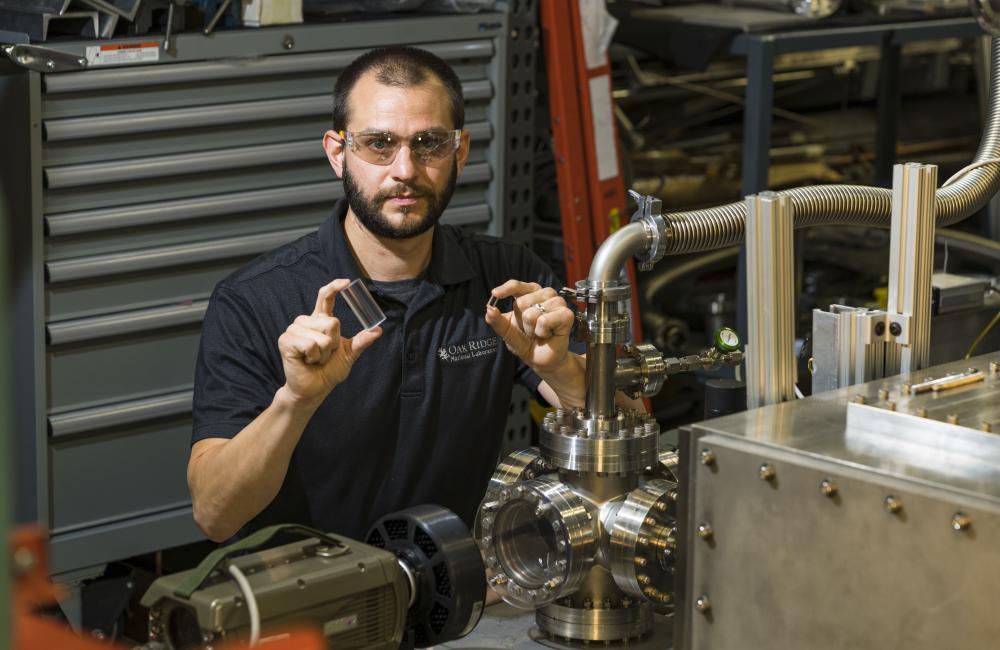
DOE continued to build on that strong foundation through a recent investment of $46 million to eight companies advancing designs and research and development for fusion power plants. The projects are expanding on decades of investments, including partnerships with national laboratories. DOE’s Oak Ridge National Laboratory is involved with and providing important expertise to six of the eight projects. In addition, one of the awardees, Princeton Stellarators, is a spin-off from DOE’s Princeton Plasma Physics Laboratory. PPPL is also partnering with several other companies who received awards.
|
|
|
CommUnique provides a review of recent Office of Science Communications and Public Affairs stories and features. This is only a sample of our recent work promoting research done at universities, national labs, and user facilities throughout the country.
|
|
|
|
|