|
 12 June 2023
|
|
|
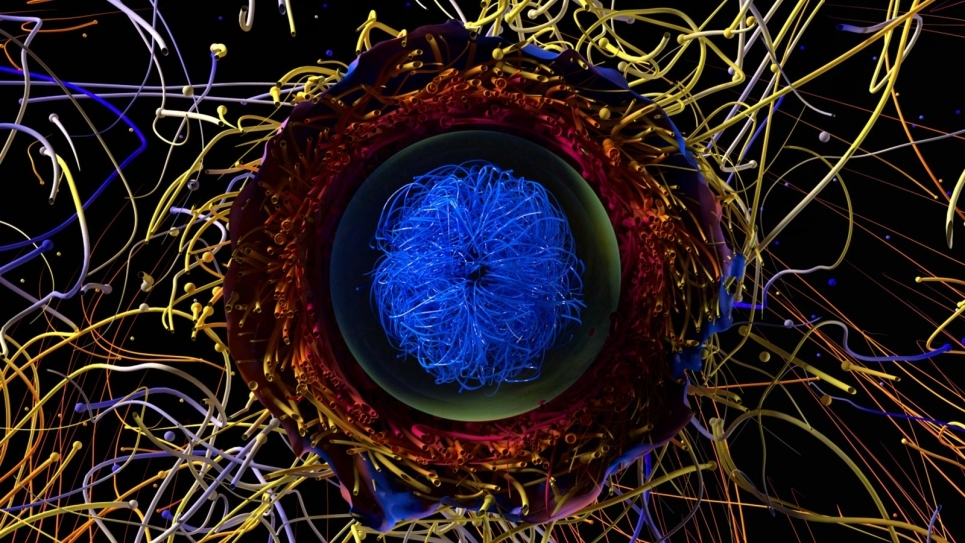
Supernovae – massive exploding stars – are some of the most spectacular phenomena in the universe. They’re also spectacularly complex. To understand what causes them, researchers at Princeton University are simulating these explosions on supercomputers at the Department of Energy’s (DOE) Argonne Leadership Computing Facility user facility. This research also gives us insight into how these explosions created many of the elements in our universe.
Read about how DOE’s supercomputers have helped scientists better understand how supernovae behave in nature.
|
|
Methane structure: To design devices that can convert energy more efficiently, scientists need to understand how molecules move and vibrate as they undergo chemical reactions caused by light. Researchers at DOE’s Lawrence Berkeley National Laboratory visualized how chemical bonds in a methane molecule change after it absorbs light, loses an electron, and relaxes. This information could help scientists develop new methods to control chemical reactions. |
Water purification: Northwestern University engineers have developed a sponge that can remove metals like lead and cobalt from water and make it drinkable. They tested the sponge on a highly contaminated sample. With one use, the sponge filtered lead to below detectable levels. They were also able to recover the metals and reuse the sponge. The sponge shows promise for future use as an inexpensive, easy-to-use tool for home water filters or environmental remediation. |
|
Hydrogen production: A team including scientists from DOE’s Argonne National Laboratory, Sandia National Laboratories, and Lawrence Berkeley National Laboratory has developed a low-cost catalyst for a process that produces clean hydrogen from water. Using cheaper materials, it splits water into hydrogen and oxygen at near room temperature with higher efficiency than other catalysts. The team used the Advanced Photon Source and Center for Nanoscale Materials Office of Science user facilities. |
Economic vulnerability: A tool developed by researchers at the Massachusetts Institute of Technology (MIT) pinpoints counties in the U.S. that are the most vulnerable to economic losses in a transition away from fossil fuels. It combines county-level data on employment in fossil fuel industries with data on populations below the poverty level. Many of the high-risk counties are in the south-central U.S. The tool can help decision-makers know where to target green job retraining programs. |
|
Neutron stars: Led by a scientist from DOE’s Oak Ridge National Laboratory, a team has produced a specific nuclear reaction in the lab that normally occurs on the surface of a neutron star as it gobbles mass from a companion star. This achievement expands what we know about the processes inside stars that produce a variety of nuclear isotopes. |
Oilcane microbes: Oilcane is a form of engineered sugarcane that makes 30 to 400 times more energy-dense triacylglycerol (a form of lipid) than normal sugarcane. It’s a promising crop for biofuels. Scientists at the Center for Advanced Bioenergy and Bioproducts Innovation have identified the types of microbes that associate with engineered oilcane. Leveraging these interactions could help us further increase oil yields. |
|
The Office of Science posted six new highlights between 5/30/23 and 6/12/23.
|
|
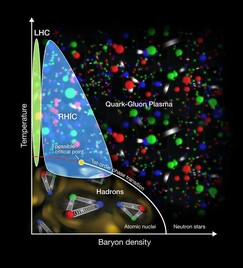
Quark-gluon plasma: The quark-gluon plasma is an exotic state of matter that existed at the very beginning of the universe, just after the Big Bang. Physicists recreate this state of matter by colliding together nuclei in facilities like the Relativistic Heavy Ion Collider user facility at DOE’s Brookhaven National Laboratory. In the most recent experiments, scientists have been systematically varying the amount of energy involved in the collision. By doing this, they’ve found that the quark-gluon plasma exists in collisions at energies from 200 billion electron volts (GeV) down at least to 19.6 GeV. However, its production appears to be “turned off” at the lowest collision energy, 3 GeV. This finding will help scientists map out the phases of nuclear matter and the conditions under which the quark-gluon plasma exists. |
|
|
Popular Science: Physicists take first-ever X-rays of single atoms
By combining the Advanced Photon Source user facility and a scanning tunneling microscope, physicists at DOE’s Argonne National Laboratory X-rayed an individual atom for the first time.
|
|
Early Frontier users seize exascale advantage, grapple with grand scientific challenges
|
|
|
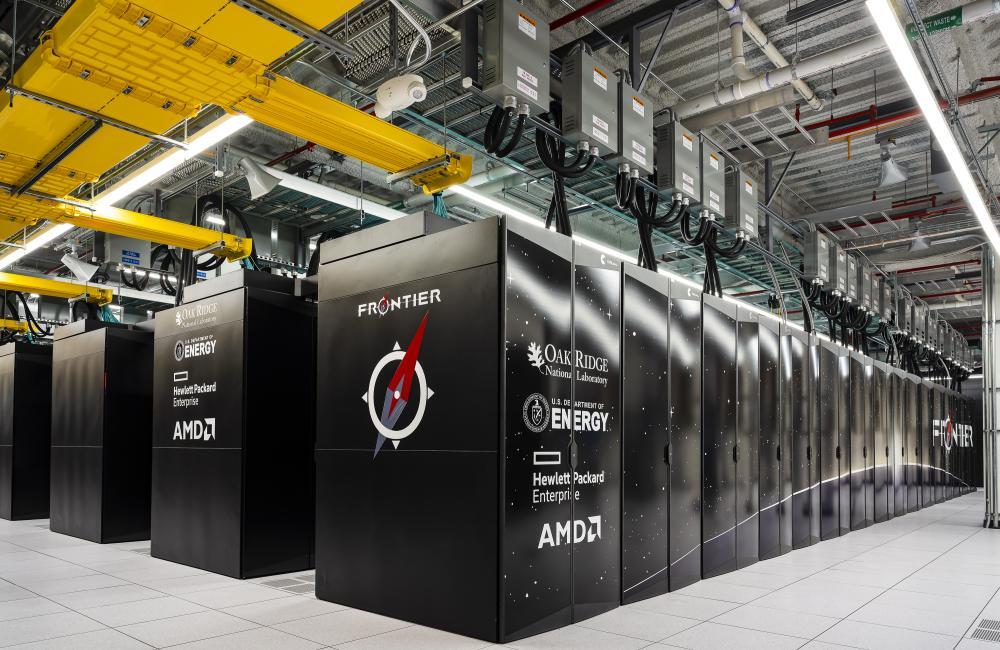
With the world’s first exascale supercomputing system now open to full user operations, research teams are harnessing Frontier’s power and speed. The HPE Cray EX system at DOE’s Oak Ridge Leadership Computing Facility user facility debuted in May 2022 as the fastest computer on the planet. It was also the first machine to break the exascale barrier at 1.1 exaflops, or 1.1 quintillion calculations per second. Frontier remains in the number one spot on the May 2023 TOP500 rankings, with an increase of .092 exaflops over the last TOP500 ranking.
Researchers are using Frontier for a number of different projects, including ones tackling challenges in nuclear reactor design, fundamental materials science, cancer treatments, and fusion plasma. Read more in Oak Ridge National Laboratory’s feature article on Frontier.
|
|
Year of Open Data: The evolution of ARM data
|
|
|
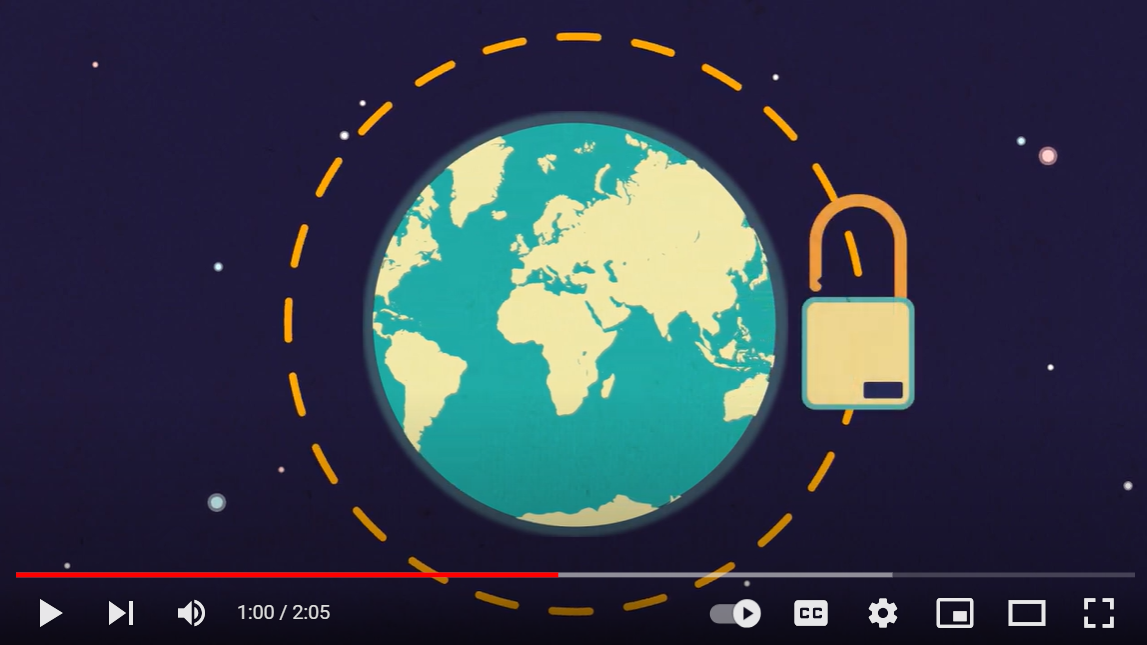
2023 is the Year of Open Science. As part of this celebration, we’re highlighting different data resources supported by the DOE’s Office of Science. 2023 is also our Atmospheric Radiation Measurement (ARM) user facility’s 30th anniversary.
The ARM Data Center, based at DOE’s Oak Ridge National Laboratory, hosts over 4 petabytes of data. That’s the equivalent of 1 million DVDs. This archive holds atmospheric measurements that cover all seven continents and five oceans. In remote and urban regions, more than 460 ARM instruments collect data on clouds, precipitation, solar and infrared energy, particles in the air, and other environmental elements.
Learn about how this data collection, analysis, storage, and distribution has changed over time in a feature article and video by ARM.
|
|
|
CommUnique provides a review of recent Office of Science Communications and Public Affairs stories and features. This is only a sample of our recent work promoting research done at universities, national labs, and user facilities throughout the country.
|
|
|
|
|