|
 15 May 2023
|
|
|
The Early Career Research Program provides financial support that is foundational to early career investigators, enabling them to define and direct independent research in areas important to Department of Energy (DOE) missions. The Early Career Award Winner series provides awardees with an opportunity to explain the results of their research in their own words.
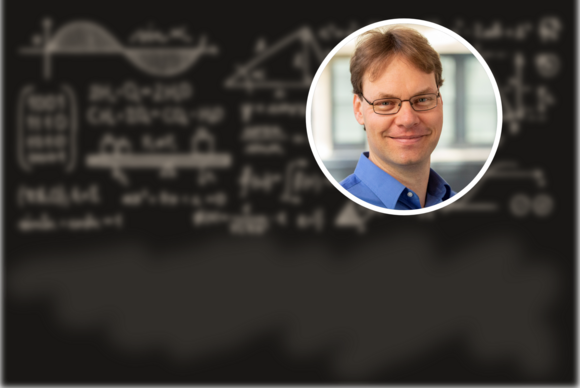
Extensive evidence suggests that a staggering 85 percent of the matter in our universe is dark matter. However, its identity remains unknown. Even its most basic properties – such as how much it weighs and how it interacts with known matter – remain unknown.
As a theoretical particle physicist, I conceive of new ideas for what constitutes dark matter. I also develop new experimental concepts for how to detect dark matter particles and any unknown forces that allow dark matter to interact with ordinary matter. My theoretical research impacts how other scientists do research at the cosmic, intensity, and energy frontiers.
Read about how Rouven Essig used his Early Career Award to develop new ways to search for dark matter.
|
|
Pectin: In plant cells, pectin connects together lignin, cellulose, and hemicellulose, which are the main building blocks of stems and trunks. Researchers, from DOE’s National Renewable Energy Laboratory and Lawrence Berkeley National Laboratory as well as the University of Georgia, have discovered the biological mechanism involved in making a specific component of pectin. It could help improve biofuel and bioproduct production. |
Transparent atoms: Researchers at Caltech have discovered a new phenomenon called “collectively induced transparency.” It causes groups of atoms to abruptly stop reflecting light at specific frequencies. Scientists held atoms inside a tiny box for light and shot a laser at them. The phenomenon happens because of interactions in the cavity between groups of atoms and light. |
|
Excitons: When a semiconductor absorbs light, it creates a quasiparticle called an exciton. Excitons could be useful for quantum computing and more sustainable electronics, but they are very short-lived. Scientists from DOE’s Lawrence Berkeley National Laboratory contributed to a study where they observed long-lived excitons. |
Quantum composites: A team from the University of California, Riverside has created a new material called quantum composites. Compared to other materials that demonstrate quantum phenomena, these materials work at a wider range of temperatures and have a greater ability to store electricity. They have the potential to be useful in electrical, optical, and computer technologies. |
|
Photosynthesis: Despite the importance of photosynthesis, scientists don’t fully understand how Photosystem II (a protein complex) harvests energy from sunlight and uses it to split water. This process produces the oxygen we breathe. Researchers from DOE’s SLAC National Accelerator Laboratory and Lawrence Berkeley National Laboratory, together with university collaborators, captured in atomic detail what happens just before the process releases breathable oxygen. |
Upcycling plastics: Recycling a mix of plastics is difficult, which leads to them often ending up in the landfill. Chemists at Colorado State University and Columbia University came up with a new chemical strategy to solve this problem. It delivers specialized small molecules into the plastic stream. These molecules transform the mix into a new set of polymers that can be turned into new higher-value materials. |
|
The Office of Science posted five new highlights between 5/2/23 and 5/15/23.
|
|
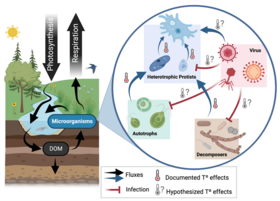
Viruses in a warming world: Most microbes are infected by viruses, but scientists know relatively little about how these infections influence how microbes react to climate change. Researchers at Duke University, the University of Tennessee Knoxville, the Netherlands Institute of Ecology, and DOE’s Oak Ridge National Laboratory examined different ways that warming temperatures could affect viruses, microbes, and their ecosystems. Taking these effects into account could help us improve our simulations of global systems. |
|
|
New Scientist: Decades-old mystery about photosynthesis finally solved
Researchers at DOE’s Lawrence Berkeley National Laboratory and SLAC National Accelerator Laboratory have captured molecular movies of the oxygen-forming part of the photosynthesis process that scientists hadn’t previously seen.
|
|
Data from Advanced Photon Source provides foundation for first U.S. approved RSV vaccine
|
|
|
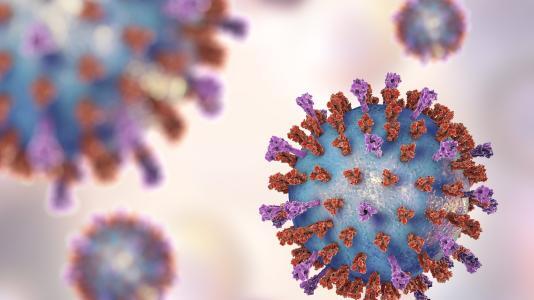
You may have heard of RSV (respiratory syncytial virus) hitting people particularly hard in the last year. It’s a highly contagious disease that affects millions of people each year, resulting in an estimated 160,000 deaths. In the United States, severe RSV causes 6,000 to 10,000 deaths among people 65 years of age or older. In May, the U.S. Food and Drug Administration approved Arexvy, the first RSV vaccine to be approved in the United States. It’s a crucial step toward improving preventative care for this deadly disease.
Arexvy’s origins date back more than a decade, based partly on data collected at the Advanced Photon Source, a DOE Office of Science user facility at Argonne National Laboratory. The vaccine is based on scientists’ understanding of the F protein. This protein sticks out from the surface of the virus and makes first contact with human cells, infecting them. Scientists conducted some of the work testing variants of the protein at the Advanced Photon Source.
Learn more about the use of the Advanced Photon Source to further the science behind the RSV protein in this feature from Argonne.
|
|
Video: Building the Majorana Demonstrator at SURF
|
|
|
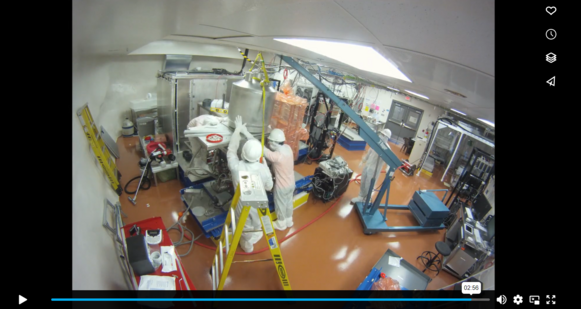
One of the most perplexing questions in physics is “why is there something rather than nothing?” The Majorana Demonstrator worked to tackle this question by looking for a rare, never-before-seen type of particle decay. Located nearly a mile underground at the Sanford Underground Research Facility, in Lead, South Dakota, the experiment collected data from 2015 through 2021. It was managed by DOE’s Oak Ridge National Laboratory for our Office of Nuclear Physics with support from the National Science Foundation. It published its final results in February.
The experiment was searching for proof of neutrinoless double-beta decay. This particular form of decay would show that the neutrino is its own antiparticle – the antimatter twin of itself. The Demonstrator didn’t detect the decay. However, it did show that this type of experiment was possible and set the stage for a larger version that is more likely to detect the decay. Check out this excellent time-lapse video of the Demonstrator’s original assembly process.
|
|
|
CommUnique provides a review of recent Office of Science Communications and Public Affairs stories and features. This is only a sample of our recent work promoting research done at universities, national labs, and user facilities throughout the country.
|
|
|
|
|
|