|
 1 May 2023
|
|
Catalysts: Catalysts are materials that accelerate chemical reactions without undergoing changes themselves. They are critical for many manufacturing processes. Chemical engineers at the University of Wisconsin-Madison have developed a new model of how these catalytic reactions work. It will help us develop more efficient catalysts. |
|
Strange matter: Nuclear physicists have made the first-ever observations of a process called semi-inclusive deep inelastic scattering producing lambda particles. Lambda particles are also called “strange matter.” The results come from a reanalysis of data taken originally in 2004 in an experiment at DOE’s Jefferson Lab. This data hints that the building blocks of protons (quarks and gluons) can march through the atomic nucleus in pairs. |
|
Producing hydrogen: Researchers at the DOE SLAC National Accelerator Laboratory, Stanford University, University of Oregon, and Manchester Metropolitan University have found a more effective way to make hydrogen from seawater. They funneled the water through a double-membrane system and electricity. Their design generated hydrogen gas without producing large amounts of harmful byproducts. These results could advance efforts to produce low-carbon fuels. |
Neutrinos: An international team of scientists that includes researchers at the University of Pennsylvania has detected antineutrinos using pure water. The detection happened in the Sudbury Neutrino Observation (SNO+) experiment. This finding could improve the ability to monitor nuclear reactors to know if they are switching from generating power to producing material for nuclear weapons. It will also help inform future neutrino experiments. |
|
The Office of Science posted six new highlights between 4/18/23 and 5/1/23.
|
|
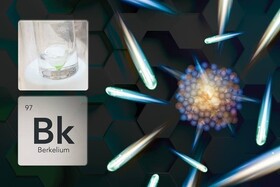
Extracting berkelium: To improve nuclear fuel recycling and waste management, researchers need to be able to extract individual heavy metal elements called actinides. Scientists at DOE’s Oak Ridge National Laboratory developed a new way to extract the element berkelium. This technique is much faster, easier, cleaner, and able to yield purer product than previous techniques. Researchers could potentially apply this technique towards producing heavy actinides as well. |
|
|
NPR: Fire and ice
This multimedia feature covers the relationship between how climate change is affecting melting Arctic ice and more intense wildfires in the American West. It draws from research at DOE’s Pacific Northwest National Laboratory.
|
|
Seven Ways Berkeley Lab Researchers Improve Health for All
|
|
|
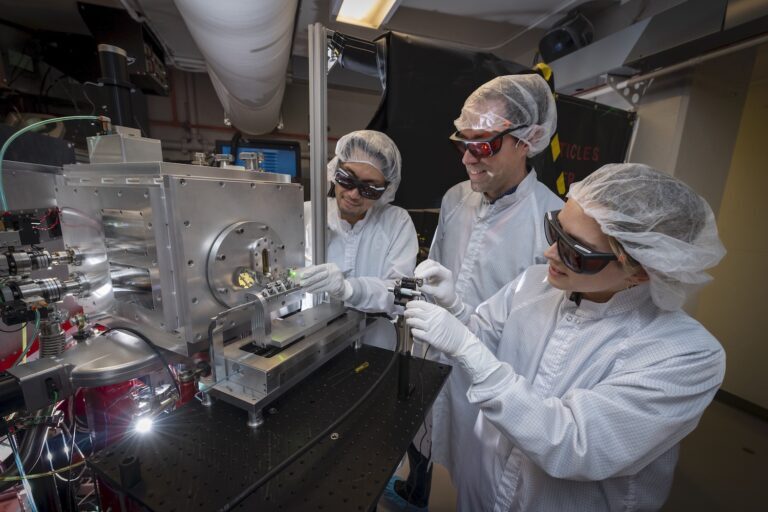
Basic science underlies many technological developments – including in health. Scientists at DOE’s Lawrence Berkeley National Laboratory are working on many different ways to improve health for everyone. These efforts include studying viruses that infect bacteria to develop new antibiotics, using machine learning to understand long COVID, and using laser-generated proton beams to treat cancer. Many of these efforts use DOE Office of Science user facilities, such as the Advanced Light Source.
|
|
|
Department of Energy Launches Energy Savings Hub
|
|
DOE has launched the Energy Savings Hub, a site that makes it easier than ever to take control of your energy costs, make your home safer and more comfortable, and help save the planet. The site helps consumers search for financial incentives and make more efficient choices. |
|
|
CommUnique provides a review of recent Office of Science Communications and Public Affairs stories and features. This is only a sample of our recent work promoting research done at universities, national labs, and user facilities throughout the country.
|
|
|
|
|