|
 3 April 2023
|
|
|
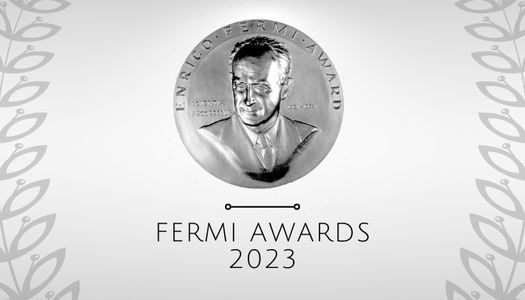
Last week, the Biden-Harris Administration announced Darleane C. Hoffman and Gabor A. Somorjai as recipients of the Enrico Fermi Presidential Award, one of the oldest and most prestigious science and technology honors bestowed by the U.S. government. Both of them have a long career of research at the Department of Energy’s (DOE) Lawrence Berkeley National Laboratory that supports the DOE’s mission.
“It is an honor to be able to recognize the outstanding achievements of Dr. Hoffman and Dr. Somorjai. Their commitment to pushing the boundaries of science is not only inspiring but will help us respond to the big challenges we anticipate in the future. We need leaders of this kind to provide the scientific foundation for the next generation,” said Energy Secretary Jennifer Granholm.
Learn about the Fermi Awards as well as Hoffman’s and Somorjai’s research.
|
|
Disrupting COVID-19 infections: A team of scientists led by DOE’s Oak Ridge National Laboratory designed a molecule that disrupts the infection mechanism of the SARS-CoV-2 coronavirus. It could be used to develop new treatments for COVID-19 and other viral diseases. The molecule targets an enzyme in the virus that helps the virus multiply and disrupt the host body’s immune response. |
Solid-state batteries: A team from Florida State University and DOE’s Berkeley Lab has developed a new strategy to build solid-state batteries. With this strategy, batteries would be less dependent on specific chemical elements, particularly pricey metals with supply chain issues. In the research, they used the Spallation Neutron Source, a DOE Office of Science user facility at Oak Ridge National Laboratory. |
|
Upsilon melting: Scientists using the Relativistic Heavy Ion Collider (RHIC) have published their first data showing how three distinct variations of particles called upsilons sequentially “melt” in quark-gluon plasma. RHIC is a DOE Office of Science user facility at Brookhaven Lab that produces the quark-gluon plasma, a form of matter that existed just after the Big Bang. The findings will help scientists learn about the properties of the quark-gluon plasma, including its temperature. |
Growing switchgrass: Switchgrass could be a promising biofuel to replace gasoline and other petroleum products. A study by researchers at the Great Lakes Bioenergy Research Center found switchgrass grown on abandoned farm fields and other marginal lands in Michigan could cut annual greenhouse gas emissions equivalent to taking nearly 260,000 passenger cars off the road. However, fuel made from switchgrass grown on the wrong type of soils can actually release more greenhouse gasses than gasoline. |
|
Stainless steel: For applications like industrial machinery and aircraft, manufacturers rely on a type of stainless steel known as 17-4 PH. It has remarkably strong and corrosion-resistant properties. With the help of the Advanced Photon Source (a DOE user facility at Argonne National Laboratory), researchers at Argonne, the National Institute of Standards and Technology, and University of Wisconsin-Madison found a way to consistently make 17-4 PH steel using 3D printing methods. |
Dynamic disorder: Some of the materials that perform the best in sustainable energy applications have a process called “dynamic disorder.” Dynamic disorder is when clusters of atoms fluctuate in groups within a much larger structure. Researchers at Columbia Engineering, Université de Bourgogne, DOE’s Argonne National Laboratory, and DOE’s Oak Ridge National Laboratory report that they have developed a new kind of "camera" that can see this process. The camera uses neutrons from the Spallation Neutron Source. |
|
The Office of Science posted four new highlights between 3/21/23 and 4/3/23.
|
|
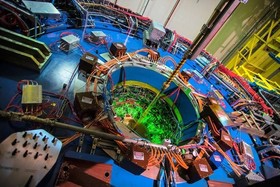
Seeing inside nuclei: Nuclear physicists have found a new way to see details inside atomic nuclei. The research uses the Relativistic Heavy Ion Collider, which accelerates and collides nuclei. When the nuclei collide, they break into quarks and the gluons that hold quarks together. For this new technique, scientists track the interactions between particles of light and gluons. The method relies on using a newly discovered type of interaction between two dissimilar quantum particles. Tracking how these particles emerge from interactions allows scientists to map out how gluons are arranged in nuclei. |
|
|
Scientific American: How big is a proton? Neutrinos weigh in
This feature on scientists’ efforts to narrow down the size of the proton’s radius discusses experiments at both DOE’s Thomas Jefferson National Accelerator Facility and Fermi National Accelerator Laboratory.
|
|
Enhancing the Recyclability of Waste Plastic
|
|
|
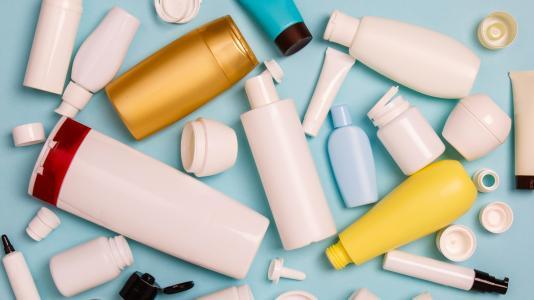
The plastic called high-density polyethylene (HDPE) is ubiquitous. It’s used in many single-use applications such as packaging and containers. Many HDPE products are made from fossil fuels and have a massive carbon footprint. In addition, most waste HDPE is incinerated or dumped in landfills. When it is recycled, the quality of the material degrades.
Scientists at the DOE’s Institute for Cooperative Upcycling of Plastics (iCOUP) have developed a new method for recycling HDPE. iCOUP scientists from DOE’s Argonne National Laboratory and Cornell University transformed waste HDPE plastic into a new material that can be recycled repeatedly without loss of quality.
DOE’s Office of Science is supporting a number of efforts to improve recycling and transformation of plastics. Check out the episode on Reimagining Plastics from DOE’s Berkeley Lab’s A Day in the Half-Life podcast and this overview from DOE's Argonne National Lab.
|
|
Request for Information: Future Quantum Workforce
|
|
|
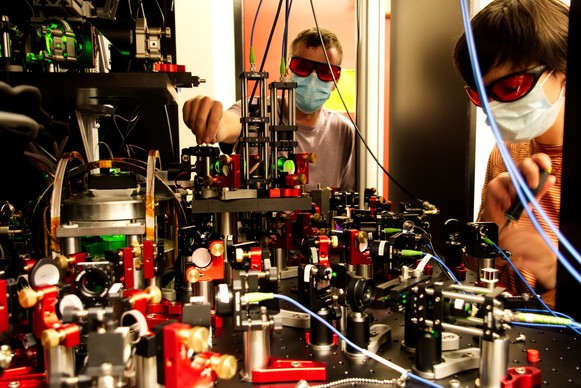
What do students need to know for future careers in quantum information science (QIS)? As a new, technology-oriented field, quantum information science requires a well-trained workforce. We at the DOE’s Office of Science are inviting input from higher education institutions on approaches needed to prepare students for careers related to QIS. In particular, we welcome input on opportunities where DOE's network of national laboratories could assist in training the future scientific and technological QIS workforce.
Higher education institutions, including public and private universities, Historically Black Colleges and Universities (HBCUs), Minority Serving Institutions (MSIs), community colleges, and emerging research institutions are especially encouraged to provide input.
The request for information will be open until April 20, 2023.
|
|
|
CommUnique provides a review of recent Office of Science Communications and Public Affairs stories and features. This is only a sample of our recent work promoting research done at universities, national labs, and user facilities throughout the country.
|
|
|
|
|