|
 6 March 2023
|
|
Carbon dioxide into fuel: Researchers at DOE’s Lawrence Berkeley National Laboratory have made real-time movies of copper nanoparticles as they evolve to convert carbon dioxide and water into renewable fuels and chemicals. This sets the stage for scientists being able to use these catalysts to produce renewable solar fuels through artificial photosynthesis. To make these movies, they developed a new method that combines the use of tools at the Molecular Foundry and Advanced Light Source, both Office of Science user facilities. |
Sphagnum moss: Peat bogs store twice as much carbon as the world’s trees. Sphagnum moss is an essential part of those ecosystems. A team including researchers at Duke University, HudsonAlpha Institute for Biotechnology, and the DOE’s Oak Ridge National Laboratory identified sex chromosomes in Sphagnum moss species. They found that the sex of peat bog mosses influences how they store carbon. This information could help scientists reduce the likelihood of peat bogs switching to becoming a source of carbon. |
|
Quantum material: Researchers at DOE's SLAC National Accelerator Laboratory, Stanford University, and partners have created a new type of quantum material. The material’s atomic scaffolding has been warped into a herringbone pattern. The research used the Center for Nanophase Materials Sciences, an Office of Science user facility. |
Arctic sea ice: A team including scientists from Penn State and DOE’s Pacific Northwest National Laboratory found powerful storms called atmospheric rivers are increasingly reaching the Arctic in winter. As a result, they are slowing sea ice recovery and account for a third of sea ice decline in the winter. |
|
Plastics recycling: Researchers from the Institute for Cooperative Upcycling of Plastic (iCOUP) have developed a new type of catalyst that breaks down polyolefin plastics into new, useful products. More than half of the plastics we produce are based on polyolefins, but they are some of the most difficult plastics to recycle. iCOUP is a DOE Office of Science Energy Frontier Research Center. |
Bright clouds: The teeming life in the Southern Ocean near Antarctica contributes to brightening the clouds that form there, according to a study led by scientists from the University of Utah. The clouds are bright because of their high density of water droplets. This density comes about due to a chain of atmospheric processes that connects back to the Southern Ocean’s phytoplankton productivity. |
|
The Office of Science posted five new highlights between 2/22/23 and 3/6/23.
|
|
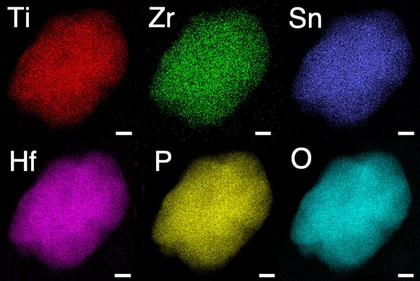
Nuclear force models: There are billions of possible structures for an atom that has 208 protons and neutrons. But researchers can use powerful statistical tools, machine learning, and simulations to filter the possibilities down to just a few dozen models. This process allows them to make quantitative predictions about the structure of atomic nuclei and their interactions. Scientists at DOE’s Oak Ridge National Laboratory used this approach to study the nucleus of lead-208. The result is smaller and more precise than results scientists obtained from a recent experiment. It will help us understand how protons and neutrons interact as well as how neutron stars work. |
|
|
Scientific American: Tiny bubbles of primordial soup re-create early universe
The Relativistic Heavy Ion Collider – a DOE Office of Science user facility at Brookhaven Lab – produces the quark-gluon plasma. This spring, it’s launching a new detector and restarting an upgraded one.
|
|
Office of Science User Facilities Make Battery Discoveries Possible
|
|
|
Solid-state batteries could have up to four times the energy density as current lithium-ion batteries and have a far lower risk of overheating. These batteries use a solid electrolyte (where lithium ions move with an electric charge) instead of a liquid one. But right now, they are too expensive and have challenges with being able to power a car for hundreds of miles on a single charge. The Office of Science’s user facilities are helping scientists tackle these challenges.
One reason these batteries are expensive is because they rely on specific chemical elements that can be difficult to source. Researchers at DOE’s Berkeley Lab and Florida State University used the supercomputers at the National Energy Research Scientific Computing Center to perform theoretical calculations to narrow down candidates for a design made of multiple metals. They then used scanning transmission electron microscopes at the Molecular Foundry to confirm that the electrolyte had the required structure. Based on this work, they released a blueprint for these multi-metal solid-state batteries that has been published in the journal Science.
Other researchers are investigating using solid-state electrolytes in lithium-air batteries instead of lithium-ion. Researchers at DOE’s Argonne National Laboratory and the Illinois Institute of Technology have developed a new lithium-air battery that is simpler than previous designs. They also used transmission electron microscopy to examine the battery. They carried out this work at the Center for Nanoscale Materials, a DOE Office of Science user facility. This work was also recently published in Science.
|
|
Putting Particle Accelerators to the Test
|
|
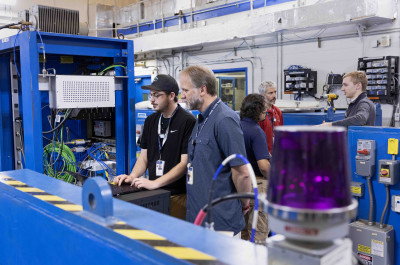
The Vertical Test Area at DOE’s Thomas Jefferson National Accelerator Facility is one of the biggest, busiest, and most versatile testbeds of its kind. It was originally designed to build Jefferson Lab’s main particle accelerator. In 2022, it conducted a mind-boggling 470 different superconducting radiofrequency accelerator cavity tests. Find out why this accomplishment is important and how its early career operations engineer, Justin Kent, contributed to its success. |
|
|
CommUnique provides a review of recent Office of Science Communications and Public Affairs stories and features. This is only a sample of our recent work promoting research done at universities, national labs, and user facilities throughout the country.
|
|
|
|
|