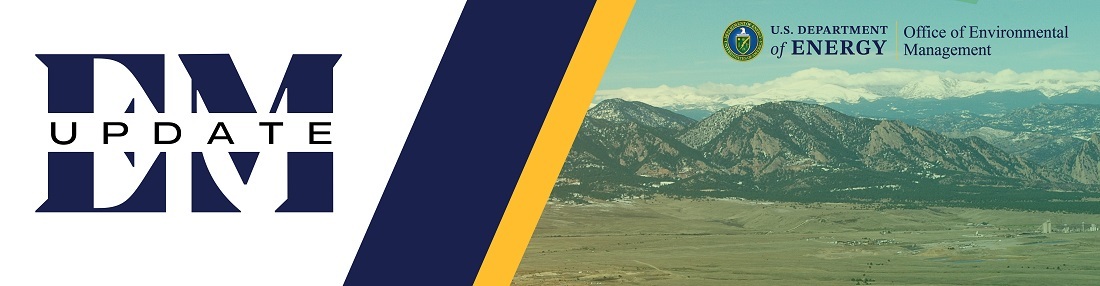
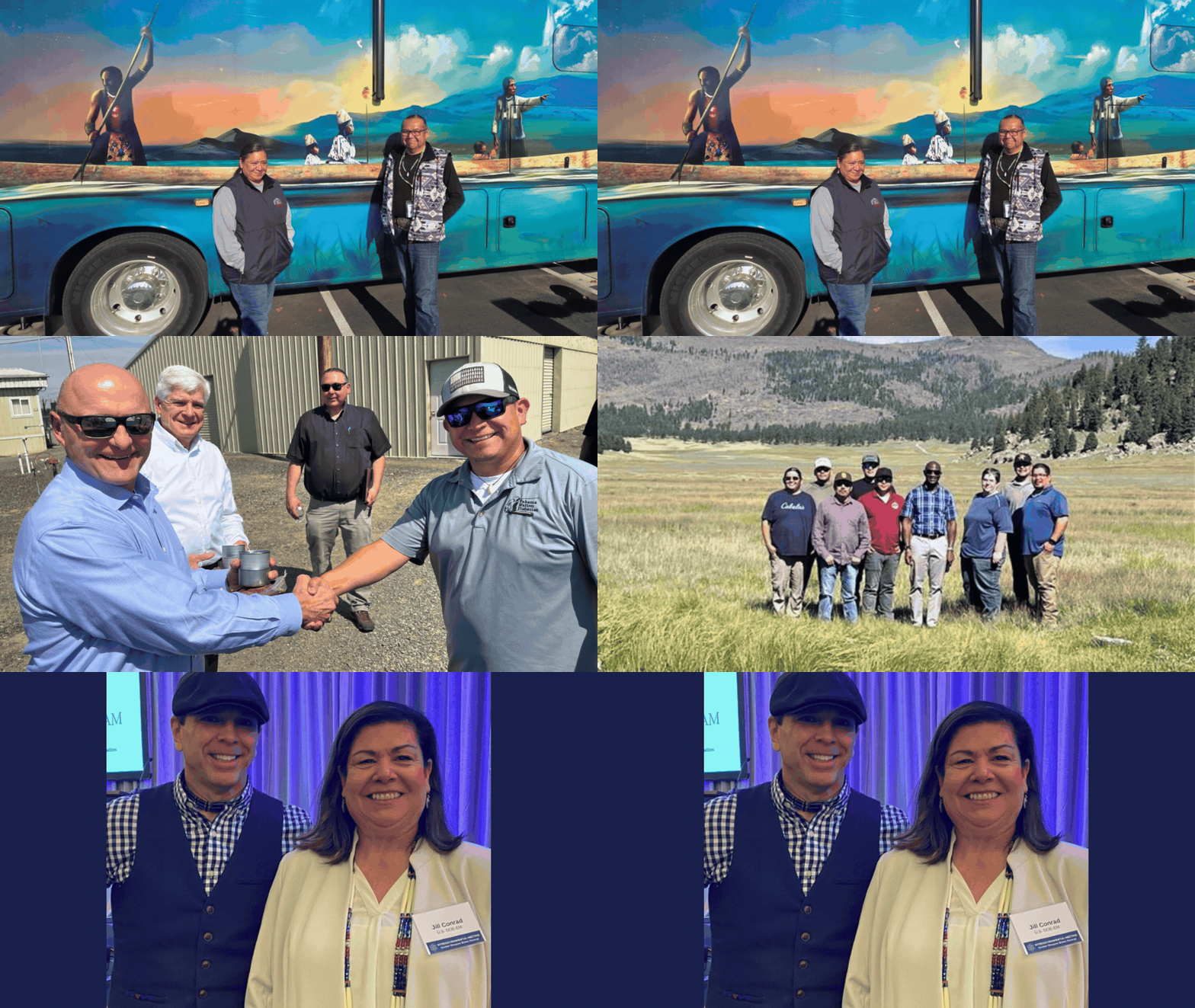
 In this photo series, the traveling Wanapum Heritage Discovery Unit opens its doors to Hanford Field Office employees during Native American Heritage Month; Office of Environmental Management (EM) Chief Operating Officer David Brunnert shakes hands with Yakama Nation Fisheries Manager Dave Blodgett; Stanley Pyram, acting manager for EM Los Alamos Field Office, takes part in a tour with Pueblo of Jemez leadership and the pueblo's Natural Resources Department staff, with Redondo Peak in the background; and EM Tribal Affairs Program Manager Jill Conrad is shown with Mike Sobotta, a member of the Nez Perce Tribe and EM’s State & Tribal Government Working Group.
In honor of Native American Heritage Month, the Office of Environmental Management (EM) is highlighting its enduring partnerships with tribal nations across the U.S. Department of Energy (DOE) complex.
Tribal leaders oversee sovereign governments, and view themselves as protectors of cultural and natural resources across their lands for future generations. Several EM cleanup sites are located close or adjacent to sovereign tribal nations and impact Indian lands and resources. Improving the protection of tribal sacred sites — and access to those sites by tribes — through enhanced interdepartmental coordination, collaboration and action is an EM priority.
Consistent with DOE's American Indian and Alaska Native Tribal Government Policy, EM maintains cooperative agreements with tribal nations to enhance their involvement in cleanup decisions while protecting relevant tribal rights and resources. Tribes are involved in pertinent cleanup decisions and site activities through cooperative agreements, agreements-in-principle and memoranda-of-understanding.
Many EM sites have cooperative agreements or engage with tribes and pueblos, including:
EM’s State & Tribal Government Working Group is the oldest working group advising DOE — since 1989. It meets regularly and in person twice yearly, enabling robust discussion among tribal nations and EM headquarters and field office leadership on issues and priorities.
A DOE order and policy specify requirements for consultation and interactions with federally recognized Indian tribes and Alaska Native Claims Settlement Act corporations. DOE must invite the tribes and corporations to consult early and throughout the planning process whenever a departmental action has tribal implications.
EM field office officials meet regularly with tribal staff to keep them informed on topics such as cultural and natural resources management, records of decision and land management activities.
Recently, Hanford Field Office Manager Ray Geimer took part in a day devoted to tribal perspectives and stories at the Wanapum Heritage Center in Washington state. EM leaders met with Yakama Nation leaders at the Hanford Field Office.
EM Chief Operating Officer David Brunnert toured a sturgeon hatchery this year while visiting the Yakama Nation in Toppenish, Washington, to talk with tribal council leaders and learn more about their energy initiatives.
“This visit was very impactful,” Brunnert said. “I learned so much about their culture and why certain resources such as the sturgeon are so important to their lifestyle.”
Earlier this year, the Pueblo of Jemez in New Mexico hosted Stanley Pyram, acting manager for the Environmental Management Los Alamos Field Office, for a tour with pueblo leadership and Natural Resources Department staff.
EM Tribal Affairs Program Manager Jill Conrad believes collaboration, coordination and consultation with tribes and pueblos around EM sites is critical to success.
“As EM advances cleanup of its remaining sites and converts former Cold War weapons production facilities into centers for nuclear energy, advanced computing infrastructure and advanced manufacturing, tribal partners offer a unique historical perspective that can support the best outcome for our future workforce and future generations,” she said.
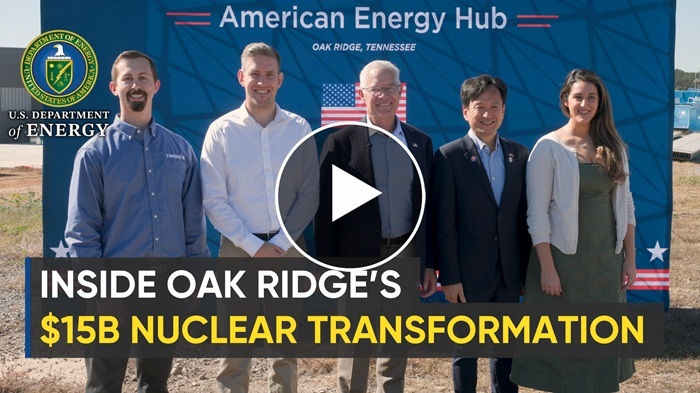 Watch this new EnergyCast spotlighting Oak Ridge, home to one of the U.S. Department of Energy's American Energy Hubs.
OAK RIDGE, Tenn. — As more than $15 billion in nuclear energy investments reshape Oak Ridge, Assistant Secretary for Environmental Management Tim Walsh recently met with leaders from across the nuclear industry to discuss ongoing projects transforming this former U.S. Department of Energy uranium enrichment site into an American Energy Hub for innovation, affordable energy production and economic growth. Watch this EnergyCast and read related EM Update coverage.
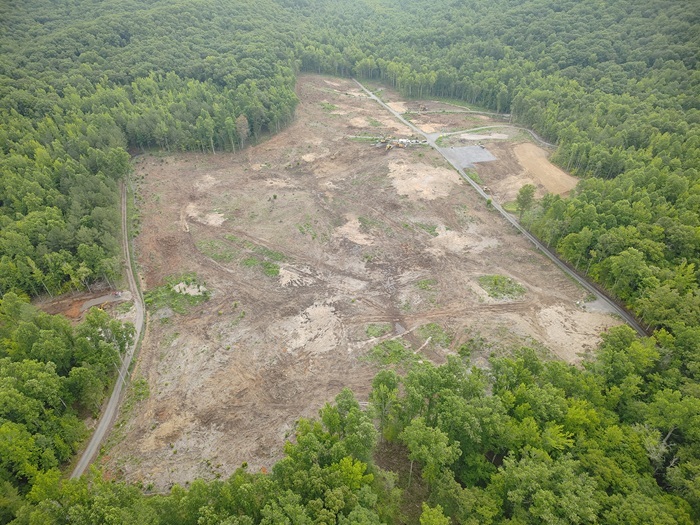 An aerial view shows White Wing Scrap Yard after crews cleared 39 acres of land to prepare for upcoming remediation.
OAK RIDGE, Tenn. — Oak Ridge Office of Environmental Management (OREM) crews are set to remediate soil across a portion of a 100-acre footprint for a Cold War scrapyard, representing another critical step toward reducing environmental risk and returning valuable land to productive use.
The White Wing Scrap Yard served as a disposal area for contaminated equipment and debris generated during legacy operations across the Oak Ridge Reservation.
OREM cleanup contractor United Cleanup Oak Ridge (UCOR) cleared 39 acres of trees and packaged over 500 bags of legacy soil after excavating more than 3 acres of land in the footprint’s north boundary. Crews navigated a strict environmental window to avoid any impacts to wildlife nesting seasons while supporting future remedial activities and site use.
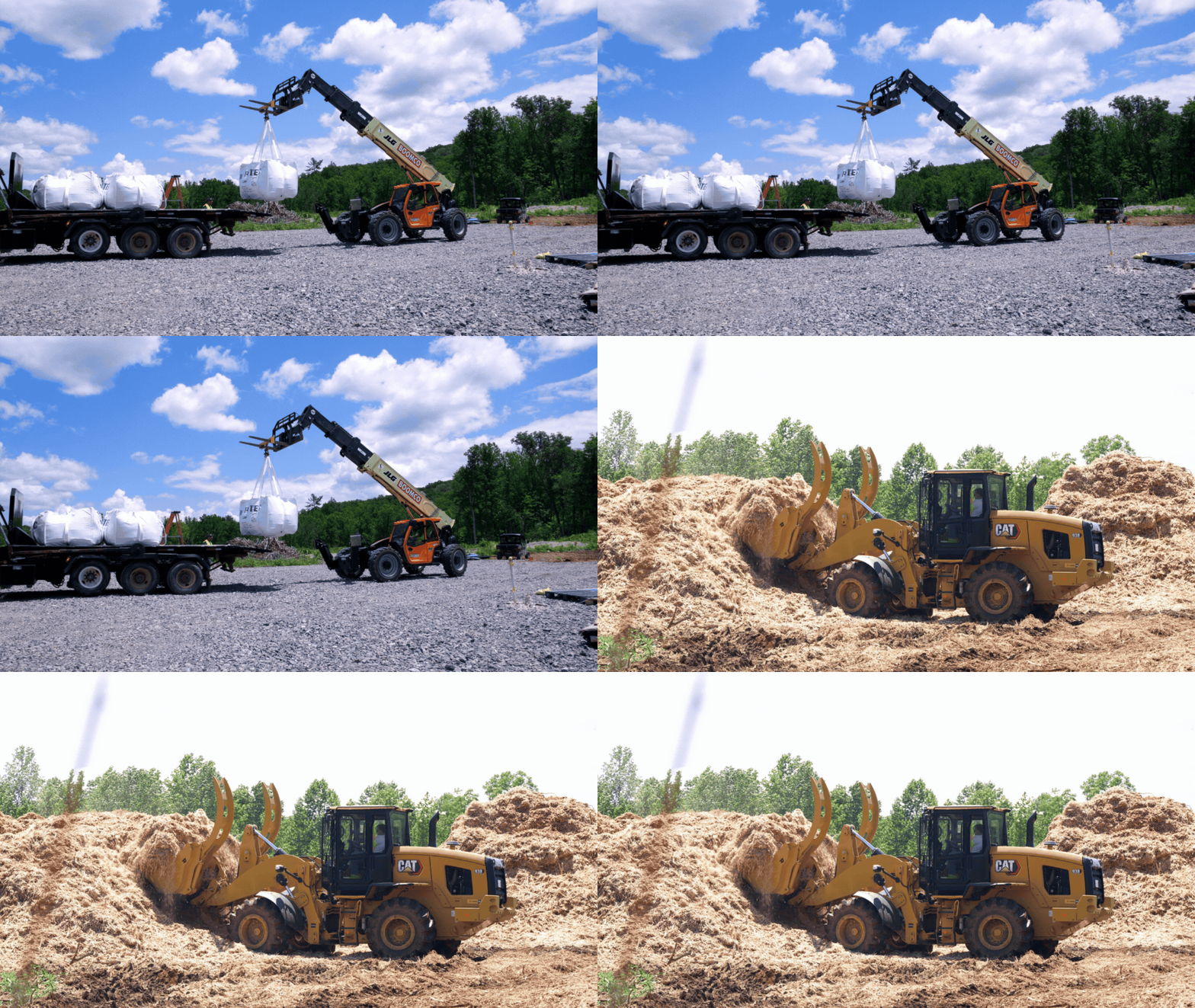 In the first frame, an operator loads one of the last of over 500 bags of legacy contaminated soil for disposal from the White Wing Scrap Yard. In the second frame, crews process massive amounts of timber, clearing land there so characterization and excavation can begin.
“Deforestation marked the first-time self-performance of large-scale tree removal at a legacy disposal area thanks to our specialized approach,” UCOR Senior Vice President of End State Delivery Clint Wolfley said. “The program implemented to achieve this gives crews a standard, safe way to remove vegetation and manage land at this and other sites on the Oak Ridge Reservation.”
Workers are set to remove debris, legacy material and soil across 16 acres of land. They will excavate more than 60 locations to various depths up to 10 feet, supplying data to determine disposal paths before they remove debris.
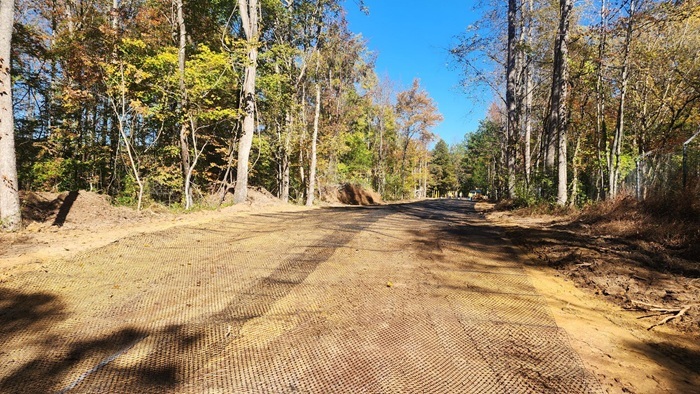 A view of construction of a new road to create a safe traffic loop and support disposal of material from the White Wing Scrap Yard.
Prior to soil removal, crews will improve existing roads, repair culverts, install a new road and complete other upgrades. Together with traffic controls and ongoing maintenance, these improvements will create a traffic loop that keeps waste shipments off public roads and supports safe onsite disposal throughout the project’s duration.
“Every milestone at White Wing moves us closer to transforming a once-contaminated property into land that can support future economic opportunity,” OREM Federal Project Manager Alex Laughlin said. “This project demonstrates how reducing environmental risk today creates lasting value for Oak Ridge’s tomorrow.”
-Contributor: Ryan Getsi
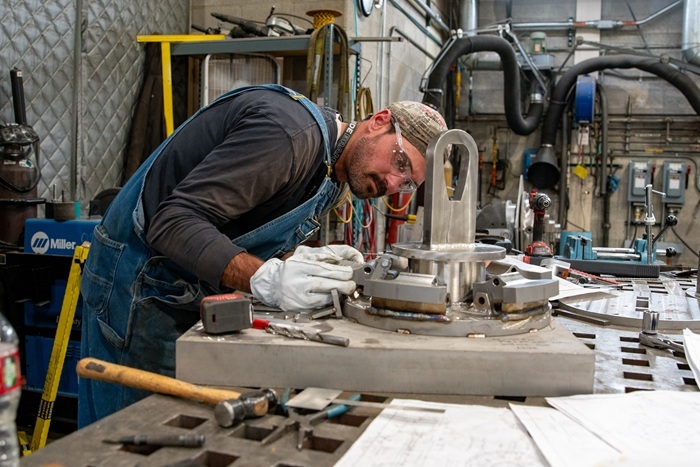 A fabricator finishes work on a tool for handling canisters loaded with used nuclear fuel during the Idaho Cleanup Project’s Road Ready Demonstration Project.
IDAHO FALLS, Idaho — As Idaho Cleanup Project crews prepare used nuclear fuel for eventual shipment out of state, they are designing and building a first-of-a-kind canister handling tool considered key to success in this important project.
In the Road Ready Demonstration Project, the crews will transfer the fuel from storage at the Idaho National Laboratory Site’s Irradiated Fuel Storage Facility into U.S. Department of Energy canisters. The handling tool is essential to safely move the canisters loaded with the fuel into additional protective assemblies, making them “road ready.” The assemblies will be staged onsite until they can be shipped out of state.
The handling tool is designed to connect with the canisters at several points and provide an engagement point for the facility crane to safely lift and move the canisters, which weigh as much as 6,000 pounds each. Crews also performed stress tests on the handling tool to prove it can handle the weight of loaded canisters.
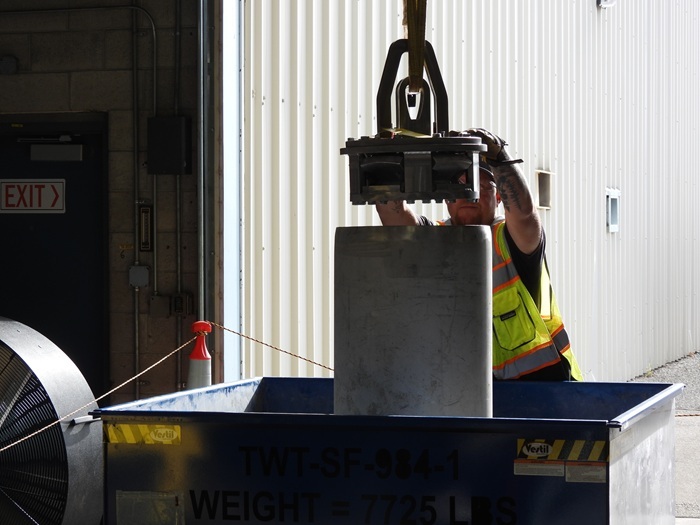 Crews perform a load test to ensure the handling tool meets weight-bearing requirements.
Kerry Oltmanns, used nuclear fuel projects senior manager for contractor Idaho Environmental Coalition, credits the combined efforts of staff engineers and trade workers for the successful completion of the tool design and fabrication.
“We benefit immensely from talented engineers and skilled workers on staff who can collaborate in real time,” Oltmanns said. “Though a small part of this project, completing the handling tool fabrication is essential to ensuring we fulfill the U.S. Department of Energy’s mission and do it safely.”
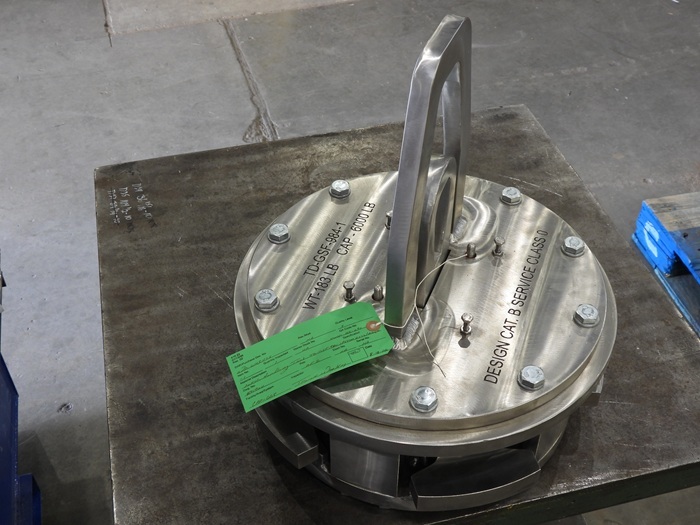 A view of the finished product: the tool Idaho Cleanup Project team members created for handling containers loaded with used nuclear fuel for eventual shipment out of Idaho.
Road Ready Demonstration Project crews are working to meet obligations in the 1995 Idaho Settlement Agreement to eventually ship used nuclear fuel out of Idaho for permanent disposal. The fuel packages will be stored at a concrete storage pad onsite until a disposal path for the fuel is available.
In related work, crews recovered more than 200 feet of rail within the Irradiated Fuel Storage Facility, which dates back to the Cold War. The rail will play an important role in moving fuel packages weighing as much as 120 tons, in tandem with a low-profile transport car, from the legacy facility’s storage area to the staging pad to be constructed nearby.
-Contributor: Carter Harrison
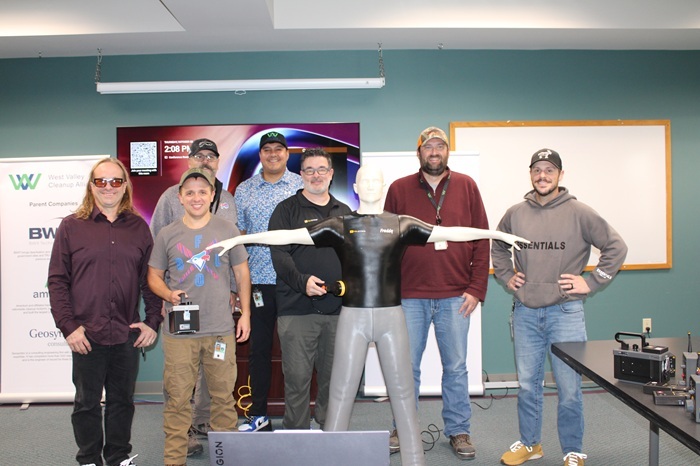 West Valley Demonstration Project team members stand with mannequin Freddy, an innovative tool to enhance the site’s Radiation Protection Training Program. Front row: Duane Gills, Trevor Groundwater, Jason O’Connell, Kevin Boyle and Mike Carlin; back row, Kevin Murray and J.P. O’Connell.
WEST VALLEY, N.Y. — At the center of the West Valley Demonstration Project’s recent radiological worker training makeover is Freddy, a life-size mannequin that can be programmed for exposure to a variety of contamination levels through his body.
He’s part of West Valley’s upgraded program to prepare employees for current and future cleanup while strengthening safety and regulatory compliance. The training builds the knowledge and hands-on skills needed to perform radiological work safely and consistently. It also helps protect employees, supports other onsite workers and reduces risk to the public and the environment.
“We revised our entire program from top to bottom to provide a better learning experience for workers,” said Duane Gills, radiological controls qualifications manager. “In addition, we needed to include more hands-on training for our radiation control technicians to further increase comprehension and practice out in the field.”
New, state-of-the-science equipment draws from technology to realistically mimic radiation. Instructors place simulated radioactive sources in multiple locations and program specific radiation levels, creating real-world scenarios that require the technicians to assess conditions and determine the proper course of action.
“DOE-EM is committed to ensuring the West Valley Demonstration Project workforce has the training, tools and realistic practice needed to perform radiological work safely, consistently and in full compliance,” said Jennifer Dundas, assistant director of West Valley’s Office of Technical Services. “By investing in upgraded, source-free, hands-on training, we’re strengthening readiness for field conditions while reducing risk to workers, the public and the environment as cleanup work continues.”
Allowing employees to make high-consequence decisions in a controlled setting improves preparedness for field conditions, increases workforce efficiency and helps reduce the potential for radiation exposure. The result is a better-trained workforce ready to perform cleanup work safely, compliantly and effectively — benefiting the site, surrounding community and environment.
“Our radiation control technicians are critical to the work we do,” said Jason Casper, president and program manager for U.S. Department of Energy Office of Environmental Management cleanup contractor West Valley Cleanup Alliance. “That’s why we’ve strengthened our training program by dedicating more time, new equipment and expanded resources — grounded in real-life scenarios and problem-solving — so our team has the knowledge and confidence to perform every task safely.”
-Contributor: Joseph Pillittere
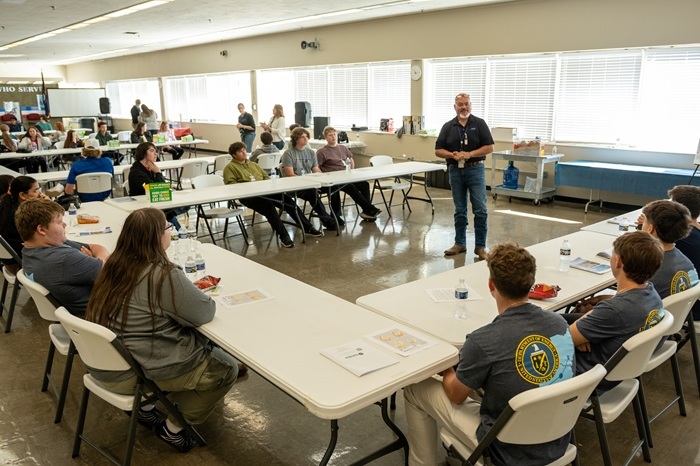 Science Specialist Todd Mills, standing, with contractor Four Rivers Nuclear Partnership, speaks to students from McCracken County High School during a tour of the Paducah Site as part of the Student Annual Site Environmental Report program. Mills demonstrated an aquifer groundwater model by using 5-gallon jugs of water and a dye kit.
LEXINGTON, Ky. — The U.S. Department of Energy’s (DOE) Portsmouth Paducah Project Office (PPPO) kicked off an undertaking that calls on students to summarize complex scientific findings from the cleanup in plain language for the public, marking a milestone year for regional STEM engagement and university collaboration.
The long-running workforce development initiative empowers local high school students to analyze extensive technical data from the Annual Site Environmental Report (ASER) for the Portsmouth and Paducah sites during the 2026 school year. Working directly with subject matter experts, students translate findings on air quality, groundwater sampling, soil remediation and radiological monitoring into accessible, publicly available summary booklets and multimedia presentations.
“The Student ASER program provides our regional youth with an extraordinary, hands-on window into the critical cleanup work taking place right in their backyards,” PPPO General Engineer Mitchell Guthrie said. “It is just one of several educational outreach programs to boost science, technology, engineering and math education and prepare a pipeline of talent to fill the jobs of tomorrow.”
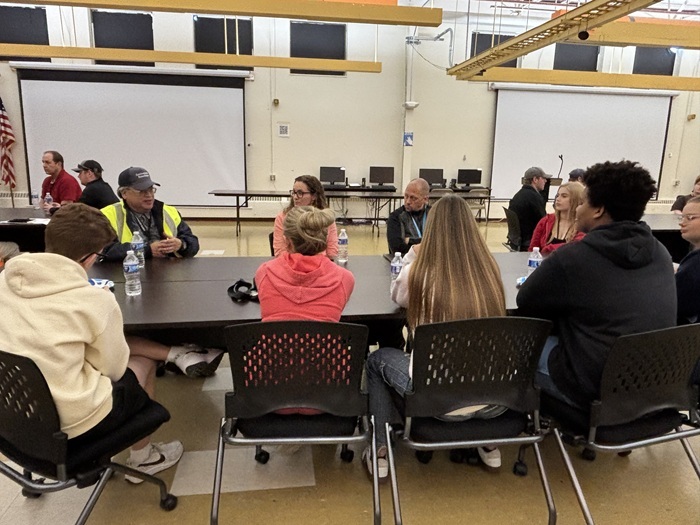 Environmental Remediation Director Jyh-Dong Chiou, second from left, with contractor Southern Ohio Cleanup Company, talks with student participants of the Portsmouth Student Annual Site Environmental Report program. Students visited the Portsmouth Site for a tour and to meet with employees to discuss the many career opportunities at the site.
This year’s kickoff highlights continuing collaboration between Ohio University’s Voinovich School of Leadership and Public Service and Murray State University in Kentucky, bridging academic expertise and real-world environmental cleanup across state lines.
“By reviewing real data, collaborating with university researchers and sharing their insights with the public, these students are not only demystifying complex environmental science, they are actively building the foundation to become the future engineers, scientists and leaders of our cleanup mission,” PPPO Strategic Planner Greg Simonton said.
The Paducah Site begins the new academic year with the highest turnout in the program’s history, with more than 40 high school students participating. Building on more than 15 years of success under the PORTSfuture program, the Portsmouth Site initiative is expanding its footprint to include Jackson High School in Jackson County, Ohio, for the first time.
Throughout the school year, student cohorts will participate in facility tours, data workshops and mentorship sessions with environmental specialists, culminating in spring poster symposiums and release of the 2026 Student ASER publications.
Videos and reports from the 2025 school year are available on the PORTSFuture website for the Portsmouth Site and Murray State University website for the Paducah Site.
-Contributors: Zachary Boyarski, Melissa Green
|