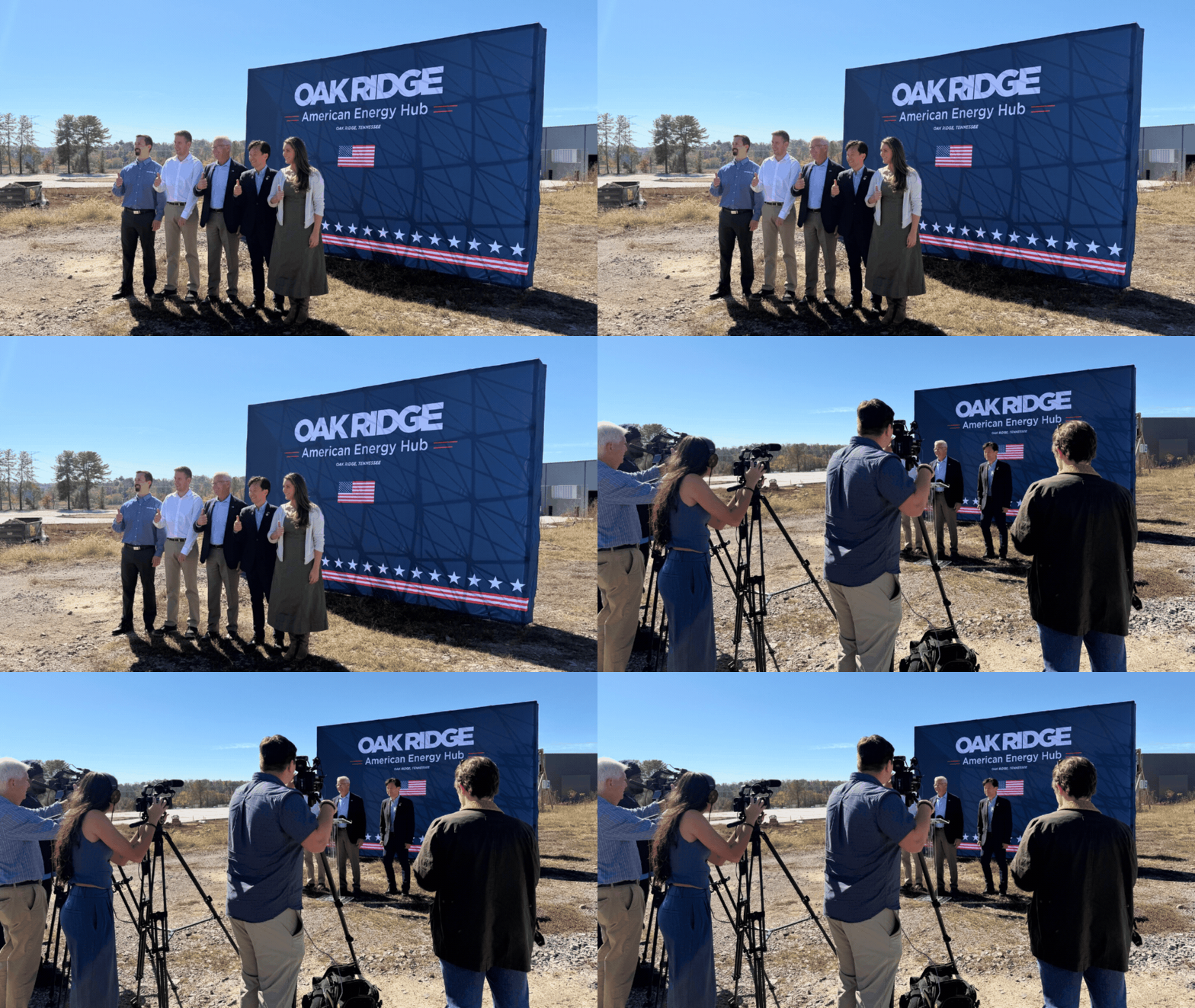
 Assistant Secretary for Environmental Management Tim Walsh joins representatives from nuclear companies building facilities in Oak Ridge for media availability during his visit. From left: Brandon Blamer, vice president of engineering, TRISO-X; Matt Wilson, vice president of capital projects, Radiant; Walsh; Jean-Luc Palayer, CEO and president, Orano USA; and Nikki Sizemore, director of government affairs, Kairos Power. Walsh said the U.S. Department of Energy is accelerating the nation’s nuclear renaissance, which is being unleashed across Tennessee.
OAK RIDGE, Tenn. — Assistant Secretary for Environmental Management (EM) Tim Walsh and other EM leaders received a firsthand look at new nuclear developments in Oak Ridge as part of a recent visit to Tennessee.
“The U.S. Department of Energy is accelerating President Trump's nuclear renaissance, and it's being unleashed right here in Tennessee,” Walsh said.
Much of the new development is due to land being made available at the East Tennessee Technology Park. Cleanup crews demolished more than 500 structures there that supported the nation’s defense and energy needs during the Manhattan Project and Cold War.
“We’re seeing the full nuclear fuel life cycle taking shape in Tennessee,” Walsh said. “There is strong support for new nuclear in the local community and at the state level, which is why we’re seeing so much progress.”
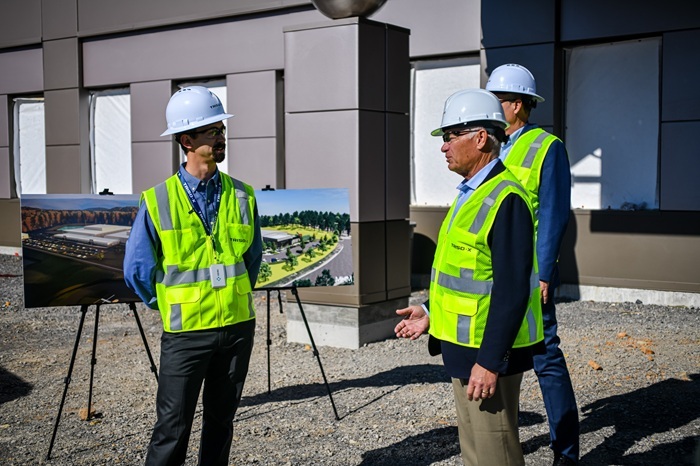 Assistant Secretary for Environmental Management Tim Walsh, center, tours the TRISO-X facility in Oak Ridge, one of six nuclear sites he visited during his trip to Tennessee. TRISO-X will make the billiard-ball-size tristructural-isotropic uranium pellets for X-energy's advanced nuclear reactors.
As environmental cleanup at the former enrichment site concluded in recent years, more than 2,500 acres of land have been transferred to the community for economic reuse. The site is now an American Energy Hub, serving as an engine for innovation, affordable energy production and economic growth. Oak Ridge joins the Paducah, Kentucky, and Portsmouth, Ohio, sites as American Energy Hubs.
Walsh toured TRISO-X, which is building North American’s first commercial-scale advanced nuclear fuel facility. He saw Kairos Power, where the company is building the Hermes reactor series, and stopped at Radiant to see where nuclear generators, or microreactors, will be built. Walsh also observed initial tree-clearing activities for Orano USA’s Project IKE plans to construct a uranium enrichment facility.
“Because we are cleaning up with a purpose, these new industries have a place to be,” he said. “It’s paving the way for thousands of permanent jobs for the local community.”
Walsh also visited Centrus, a uranium enrichment centrifuge manufacturing facility, and the Tennessee Valley Authority’s Clinch River Nuclear Site, which recently received a construction permit from the U.S. Nuclear Regulatory Commission for Clinch River Unit 1, a small modular reactor.
Before departing the state, Walsh delivered the keynote address at the Energy Technology and Environmental Business Association’s Business Opportunities & Technical Conference in Knoxville, Tennessee. He encouraged attendees to embrace super intelligence and emerging technologies, expressing confidence in continuing the nuclear renaissance to power the next digital era.
“It's just fantastic to see a former site that once helped us win World War II, led to the end of the Cold War, and then maintains our peace and security throughout the world with Y-12 and Oak Ridge National Lab right here doing the amazing things they do for our weapons production and national security,” Walsh said. “We're bringing that former site back to life for the American people and for the prosperity and security of Tennessee.”
-Contributor: Sarah Marko
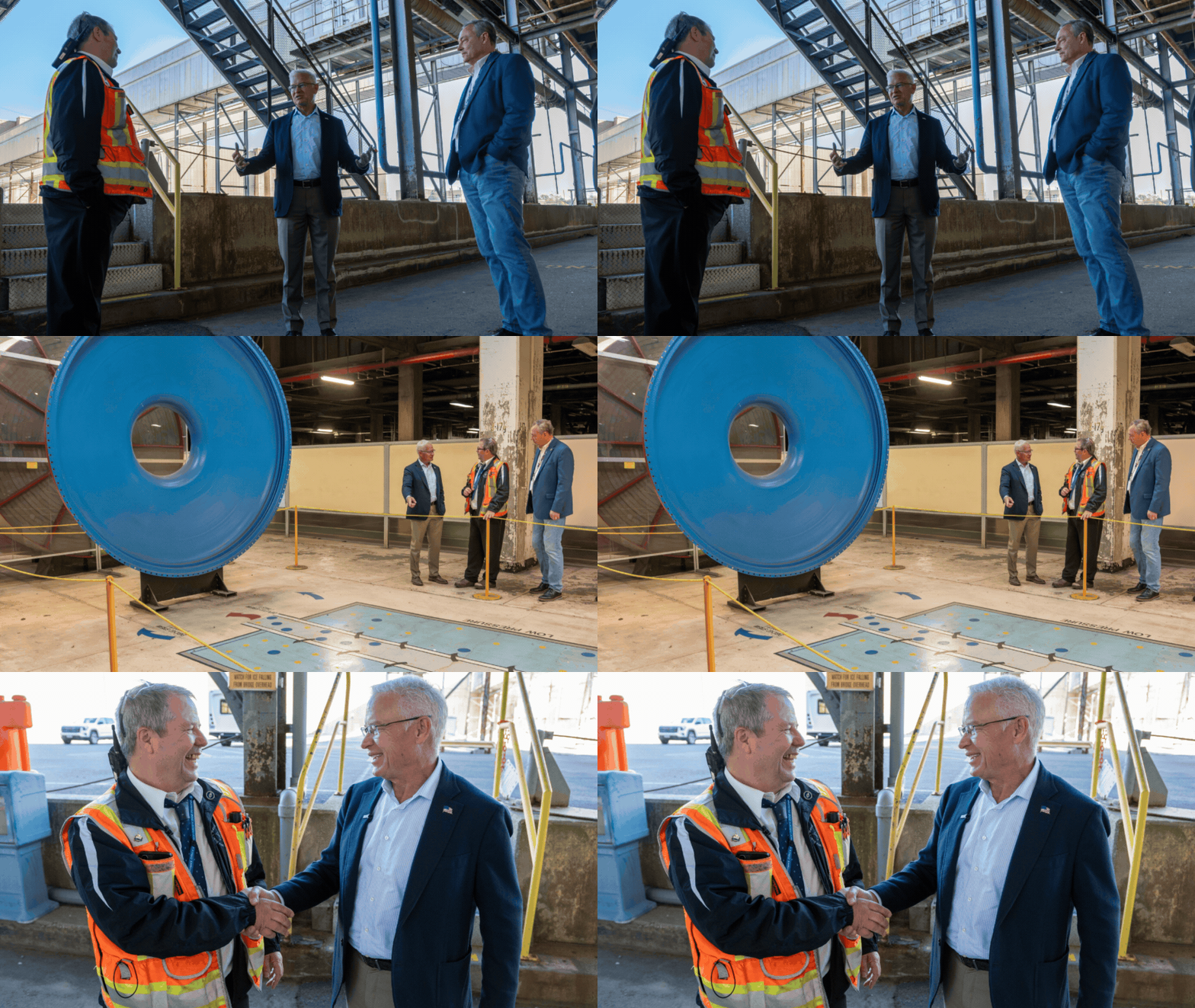 Paducah Site Safety System Oversight Brad Pont discusses the gaseous diffusion process with Assistant Secretary for Environmental Management (EM) Tim Walsh and EM Principal Deputy Assistant Secretary Joel Bradburne at the Paducah C-333 Process Building. Walsh and EM leadership recently visited the site to spotlight the Paducah American Energy Hub.
PADUCAH, Ky. — Assistant Secretary for Environmental Management (EM) Tim Walsh and other EM leaders concluded a multisite tour highlighting recent accomplishments across the U.S. Department of Energy complex with a stop at the Paducah Site.
The visit showcased a $100 billion planned investment to establish the Paducah American Energy Hub, emphasizing its potential to drive regional job growth, economic development and affordable energy generation.
Paducah joins other EM sites in hosting American Energy Hubs, including Portsmouth, Ohio, and Oak Ridge, Tennessee, with $650 billion in private investments announced in total so far. New reactors, enrichment facilities and the nation's first privately funded commercial nuclear fuel recycling facility are being constructed on land EM spent years making safe.
“Where there’s energy, there’s prosperity. We are all in on driving down the cost of electricity for American consumers while revitalizing historic communities like Paducah,” Walsh said. “Projects like the American Energy Hub are turning what were once liabilities into productive assets that bring long-term jobs, economic growth and affordable energy right back to western Kentucky.”
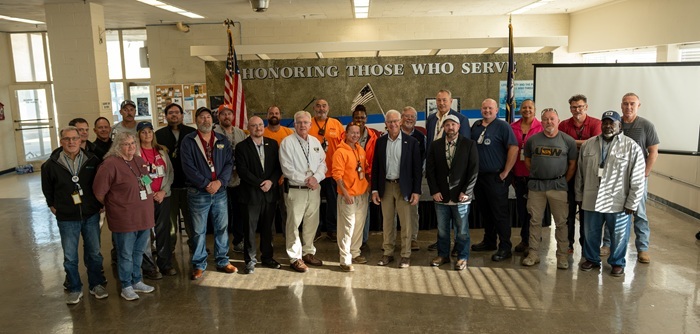 Assistant Secretary for Environmental Management (EM) Tim Walsh, center, and other EM leaders gather with members of the United Steelworkers Local 550 during a trip to the Paducah Site, which highlighted recent reindustrialization successes.
During the visit, the EM leaders engaged with private-sector partners supporting the new energy hub, including representatives from General Matter, which plans to build a new domestic uranium enrichment facility to produce reactor fuel, and Brookfield and NextEra, which announced plans earlier this summer to develop a high-performance computing innovation campus powered by new affordable energy infrastructure.
The future tenants provided updates on development timelines to the EM leaders.
“Paducah was the last place in the United States to enrich uranium, and it is the values, community and skilled workforce here that brought us back,” General Matter Founder and CEO Scott Nolan said. “With site preparation underway and construction beginning next year, our goal is to bring domestic enrichment back at scale — taking America from less than 1 percent of global enrichment back to self-sufficiency by 2029.”
While at Paducah, the EM team met with members of the United Steelworkers workforce and viewed a portion of the C-333 Process Building. Earlier this year, workers segmented 497 converters inside the building as part of ongoing preparations for demolition.
“Touring the C-333 Process Building is a reminder of what American workers accomplished here with slide rules and grit in the 1950s,” Walsh said. “Today, our United Steelworkers workforce is carrying that proud legacy forward — clearing the way so their children and grandchildren have high-tech, good-paying energy jobs right here at home.”
-Contributor: Zachary Boyarski
 Watch this new EnergyCast showcasing an American Energy Hub coming to the U.S. Department of Energy's Portsmouth Site in Ohio.
PIKETON, Ohio — Excitement grows in southern Ohio as residents prepare for the nation’s largest energy generation project and super intelligence center bolstered by $37 billion in investments at the new American Energy Hub at the U.S. Department of Energy’s Portsmouth Site. In this latest EnergyCast, Assistant Secretary for Environmental Management Tim Walsh meets with Portsmouth Site workers who are demolishing Cold War-era nuclear facilities at the site to make way for a new economic future that’s creating career opportunities for future generations.
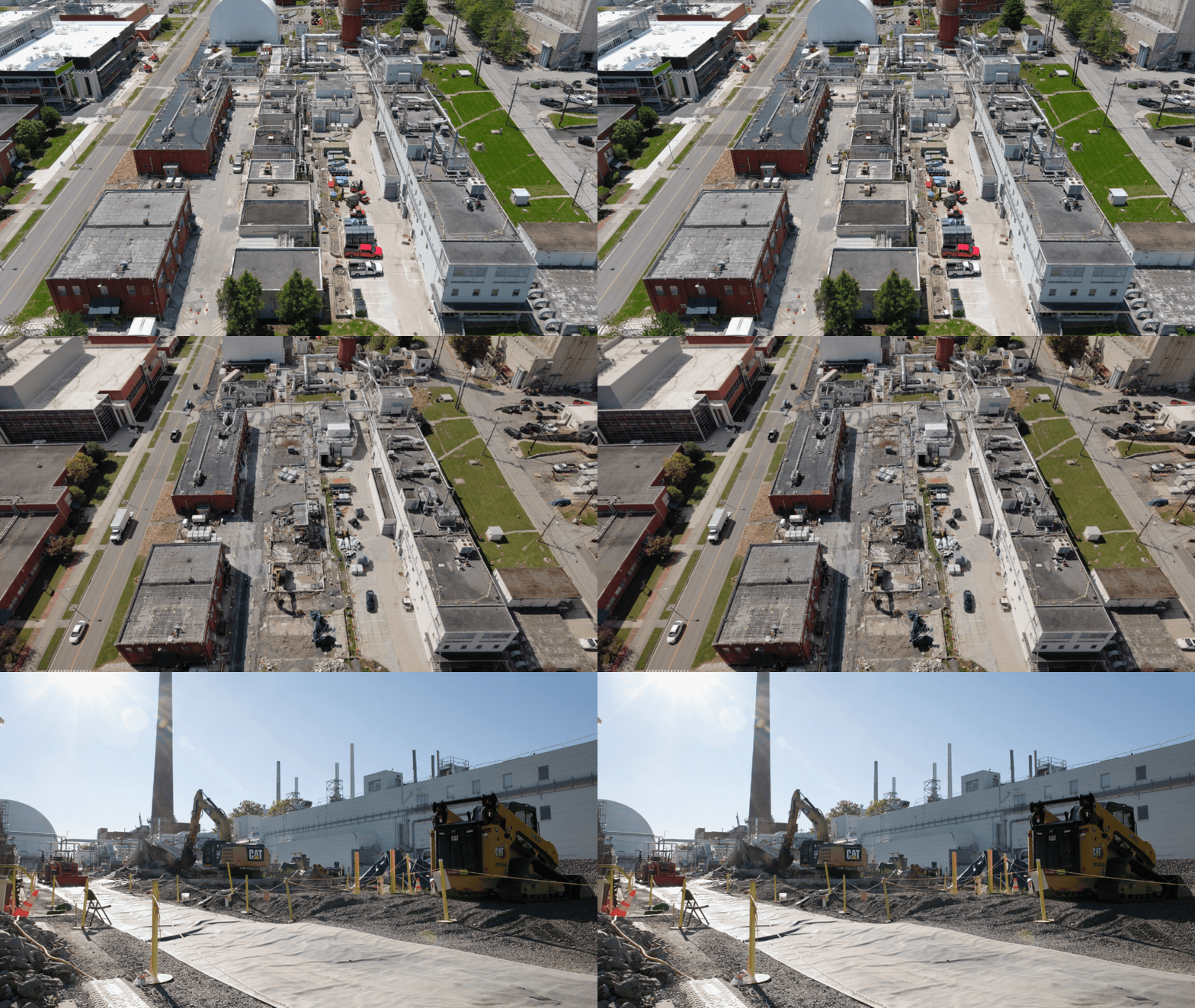 Before-and-after views of the Isotope Row demolition that removed 10 buildings.
OAK RIDGE, Tenn. — Cleanup crews have finished demolishing a tight cluster of 10 historic, highly contaminated buildings at Oak Ridge National Laboratory, concluding a six-year project to eliminate legacy hazards and help transform the heart of the laboratory’s central campus, creating new opportunities for future research missions.
The U.S. Department of Energy’s (DOE) Oak Ridge Office of Environmental Management (OREM) and prime cleanup contractor United Cleanup Oak Ridge (UCOR) took down the former radioisotope production facilities, known collectively as Isotope Row, in only two months.
“Completing Isotope Row reflects the technical expertise, collaboration and commitment to safety required to address some of ORNL’s most challenging legacy hazards,” Federal Project Director Michael Griswold said. “This accomplishment reduces risks today while opening new opportunities for the laboratory’s tomorrow.”
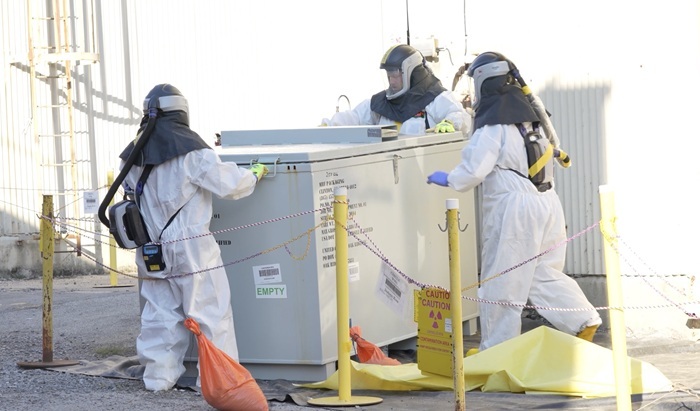 Crews remove a glovebox from Isotope Row during deactivation, preparing the series of 10 buildings to be safely demolished.
Multidisciplined personnel safely removed nearly 3 million pounds of waste; four 2,000-pound tanks that held an inert gas for legacy operations; ventilation systems; and equipment that protected personnel from hazards, including six hot cells and contaminated gloveboxes.
They also tore down over 12,000 square feet of buildings. Workers disposed of most demolition debris onsite, avoiding transportation costs and reflecting strong stewardship of taxpayer dollars.
“This accomplishment belongs to the people across our organization who spent six years planning, problem-solving and safely executing incredibly challenging work,” UCOR Senior Vice President of End State Delivery Clint Wolfley said. “Their ingenuity and determination have transformed one of ORNL’s most complex footprints into an opportunity for its future.”
The magnitude of the accomplishment comes into sharp focus when considering what these facilities once housed and what was left behind.
Constructed between the late 1940s and early 1960s, Isotope Row supported radioisotope production and research for medical, industrial, scientific and national defense applications. When operations ended in the early 1990s, the buildings remained, along with highly contaminated hot cells, gloveboxes, radioactive isotopes, mercury, asbestos and hazardous process systems that required decades of planning and specialized cleanup approaches.
UCOR began deactivating Isotope Row in 2020, first isolating utilities and removing combustible materials, hazardous waste and asbestos before tackling heavily contaminated process equipment and ventilation systems.
One of the greatest challenges was removing overhead process off-gas and central ventilation piping. Portions of the ventilation system were built using an asbestos-containing concrete mixture that became highly contaminated during decades of operations. Removing these systems 10 to 15 feet above the floor required extensive planning, specialized controls and careful packaging to protect workers and safely prevent the spread of contamination.
Partnerships were equally critical to the project’s success. OREM, UCOR, ORNL prime contractor UT-Battelle and DOE’s Office of Science worked together to support the facilities’ transition to cold-and-dark status, which involves isolating and shutting off all facility utilities and removing asbestos from aging infrastructure. Working closely with UT-Battelle, crews strategically scheduled teardowns during afternoon hours to minimize disruptions to ongoing research operations.
“After decades standing at the heart of ORNL, Isotope Row is gone and ORNL’s skyline is forever changed,” said Wolfley.
-Contributor: Ryan Getsi
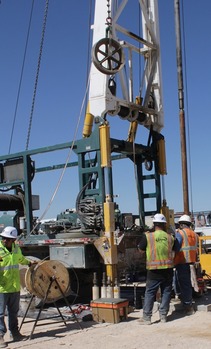
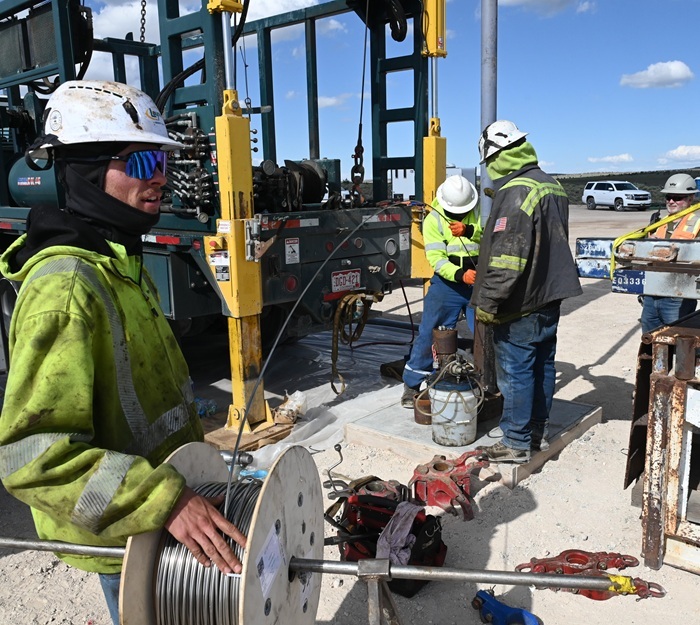 Environmental Management Nevada Program crews set up a pump and adjust pressure release for well development and testing at a groundwater monitoring well on Pahute Mesa at the Nevada National Security Site in May.
LAS VEGAS — The U.S. Department of Energy’s Environmental Management (EM) Nevada Program has completed well development and testing at three groundwater monitoring well locations drilled last year on Pahute Mesa at the Nevada National Security Site (NNSS).
Completing this work provides valuable data needed to inform and calibrate the Pahute Mesa groundwater models. The models support regulatory closure of the Pahute Mesa groundwater contamination area in accordance with the Federal Facility Agreement and Consent Order.
Once approved, closure involves implementing a long-term monitoring program to ensure the public and site workers remain protected from exposure to groundwater contaminated by underground nuclear testing on the NNSS.
 |
|
Environmental Management Nevada Program crews install a pump for well development and testing at a groundwater monitoring well on Pahute Mesa at the Nevada National Security Site in June. |
Pahute Mesa is in the remote northwest portion of the NNSS and is the location of 85 historical underground nuclear detonations in complex geologic units. From 1965 to 1992, 82 of these tests were conducted at depths ranging from 226 to 1,450 meters below ground surface with most detonations within 100 meters of the water table, or deeper, indicating potential interaction with the groundwater system. Understanding these unique subsurface conditions is critical to ensuring communities downgradient remain protected from contaminated groundwater.
By performing well development after a well is constructed, any residual drilling additives are pumped out so future water quality samples are representative of what is in the aquifer. This process is then followed by well testing to measure aquifer properties.
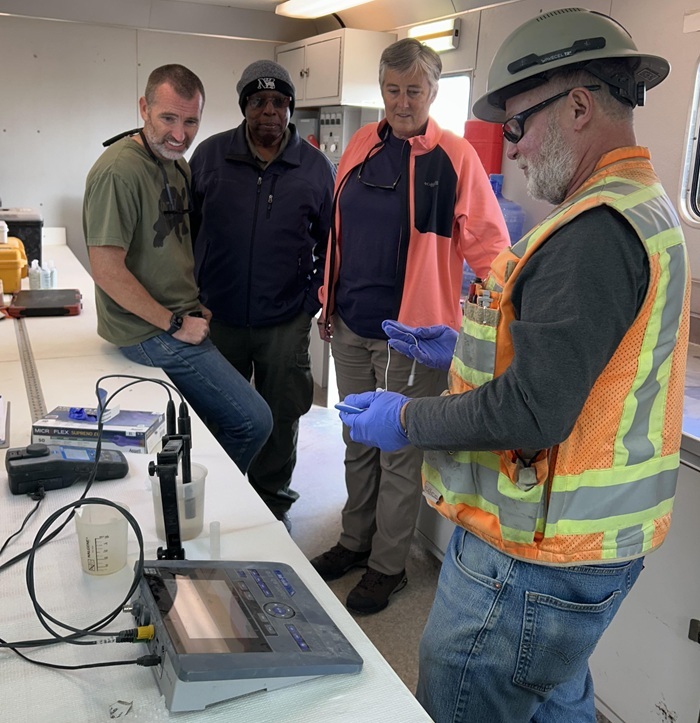 Nevada Site Specific Advisory Board members observe field screening of water samples collected during an October visit to the new Pahute Mesa wells. The board is charged with providing the Environmental Management Nevada Program a recommendation on the long-term monitoring network that will be implemented once the Pahute Mesa groundwater area is approved for closure.
Data collected during well development and testing are undergoing analysis and validation for incorporation into groundwater flow and contaminant transport models that already include decades of data collection.
These groundwater models, developed with a 1,000-year timeline, indicate that radionuclides from underground nuclear testing will not exceed Safe Drinking Water Act safety standards in publicly accessible groundwater.
The collection of additional data to evaluate model forecasts is vital to ensuring the models can be used for regulatory decisions and support approval for the closure of the Pahute Mesa groundwater area. The process of model evaluation will continue through mid-2028 and the EM Nevada Program plans to submit the model evaluation report for regulatory approval in the summer of 2028.
Pahute Mesa is the final NNSS Underground Test Area groundwater area to be closed. The EM Nevada Program previously achieved closure and implemented long-term monitoring of the Frenchman Flat, Yucca Flat, and Rainier Mesa and Shoshone Mountain groundwater areas. For these closed areas, groundwater is sampled, water levels are measured and results are documented as prescribed by Federal Facility Agreement and Consent Order closure requirements.
-Contributors: Dona Murphy, Barbara Ulmer
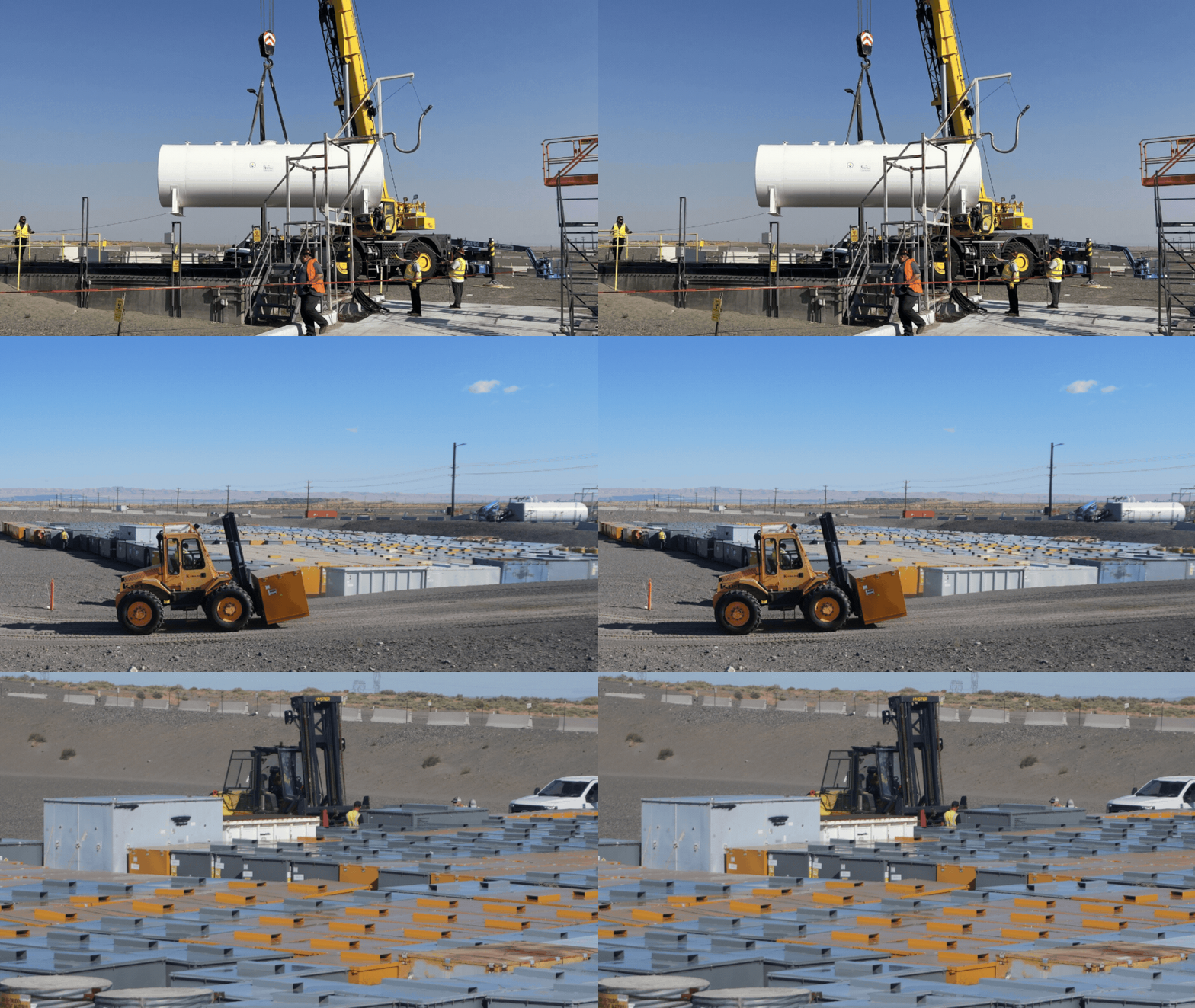 Workers with U.S. Department of Energy Office of Environmental Management contractor Central Plateau Cleanup Company recently installed two new 10,000-gallon leachate collection tanks to support ongoing waste disposal operations at two mixed-waste trenches on the Hanford Site.
RICHLAND, Wash. — Crews with U.S. Department of Energy (DOE) contractor Central Plateau Cleanup Company (CPCCo) recently replaced two 10,000-gallon leachate collection tanks at two mixed-waste trenches on the Hanford Site, completing a key infrastructure upgrade that will support safe, reliable waste disposal operations for years to come.
Located in the center of the 580-square-mile Hanford Site, the disposal site plays an important role in the cleanup mission, providing 43,000 cubic meters of capacity for the safe disposal of chemically and radiologically hazardous waste.
Leachate is liquid generated when rainwater and snowmelt drain through the lined disposal areas and are collected by the facility's drainage system. The new tanks modernize the leachate management system, helping protect the environment while supporting continued operations. The collected liquid is transferred to Hanford's Effluent Treatment Facility for processing.
“This upgrade reflects Hanford's continued commitment to safe, compliant operations across the site,” said Scott Green, acting assistant manager for river and plateau at the DOE Office of Environmental Management Hanford Field Office. “Investing in critical infrastructure like this helps protect workers, the public and the environment while advancing the cleanup mission.”
Each disposal trench is approximately 250 feet long, 100 feet wide and 30 feet deep. Constructed in 1994, the trenches began receiving waste in 1999. The waste is safely contained in engineered boxes and includes items such as tools, clothing and failed equipment. The tanks that were replaced had been in service since the facility began operations.
“Installing the new tanks supports the long-term reliability of the mixed waste trenches,” said CPCCo Operations Manager Sasa Kosjerina. “This upgrade strengthens a critical system that supports safe operations today and helps ensure the facility can continue managing leachate effectively well into the future.”
IDAHO FALLS, Idaho — The Idaho Cleanup Project (ICP) continued strong progress in transuranic waste cleanup this year, exceeding certification and shipping goals that support disposal at the Waste Isolation Pilot Plant (WIPP) and uphold commitments to the state of Idaho.
This momentum aligns with the Idaho Settlement Agreement, which requires 55% of transuranic waste shipments to WIPP come from Idaho on a running three-year average. U.S. Department of Energy (DOE) reporting shows more than half of all shipments to the underground repository arrived from the Idaho National Laboratory (INL) Site over WIPP’s 27-year operating history. Between 2024 and 2026, about 64% of WIPP shipments originated from Idaho.
To date, WIPP has received about 15,000 total shipments since operations began. ICP contributed the greatest volume among DOE Office of Environmental Management sites, including 7,485 contact-handled and 364 remote-handled transuranic waste shipments. Read about the difference between contact-and remote-handled waste here.
This year marked the first time ICP combined contact- and remote-handled transuranic waste shipments to WIPP, reflecting continued expansion of shipping capability across the Idaho National Laboratory Site.
 |
|
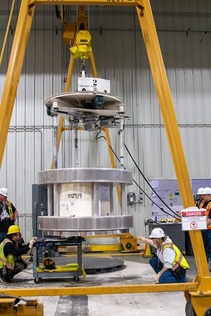
Workers at the Idaho Cleanup Project’s Advanced Mixed Waste Treatment Project build a transuranic waste payload using a heavy-duty, lead-lined steel container designed to safely package, store and transport the waste. |
In the fiscal year that ended Sept. 30, ICP met or exceeded certification milestones for contact- and remote-handled transuranic waste. Key to ICP’s consistent performance is its ability to certify the waste independently. Waste at ICP’s Advanced Mixed Waste Treatment Project (AMWTP) is characterized, treated, repackaged, certified and shipped under ICP contractor Idaho Environmental Coalition’s (IEC) qualified program. ICP’s mature certification capability supports higher and steadier shipment rates. Click here for more information on WIPP’s Central Characterization Project.
IEC Waste Management Senior Project Director Kelly Wooley highlighted the teamwork behind this success.
“The close coordination between the Waste Certification and AMWTP teams is central to sustaining Idaho’s strong shipping performance. None of this progress would be possible without the workers in the field, whose safe execution of daily tasks enables us to consistently process, certify and ship thousands of containers each year,” Wooley said. “Their skill and commitment underpin the momentum Idaho continues to demonstrate in meeting cleanup and shipment goals.”
Inventories at the INL Site include over 17,000 contact-handled transuranic waste containers stored at the AMWTP and roughly 1,000 remote-handled transuranic waste containers at the Idaho Nuclear Technology and Engineering Center. Crews have identified more than 13,000 containers as certifiable for future shipments, supporting sustained progress.
Much of this momentum is underpinned by improvements to WIPP’s waste handling infrastructure. Recent upgrades in ventilation, equipment reliability and safe waste movement help maintain stable facility operations and ensure that waste characterization, inspection and certification continue without interruption.
The ICP team’s work this year reflects DOE’s commitment to steady, safe and accountable progress in environmental cleanup. Continued success in certifying and shipping transuranic waste reduces long-term risk and keeps cleanup moving forward across the site.
-Contributor: Ryan Christensen
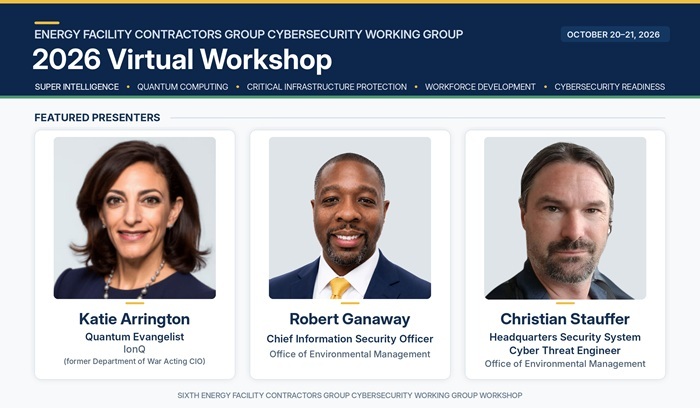 Presenters at the sixth Energy Facility Contractors Group Cybersecurity Working Group Virtual Workshop.
Sixth virtual event attracts 252 participants, highlighting workforce readiness and federal-contractor collaboration
The Energy Facility Contractors Group (EFCOG) Cybersecurity Working Group recently brought together U.S. Department of Energy (DOE) federal and contractor cybersecurity professionals for its sixth virtual workshop, drawing 252 online participants across two days.
The workshop provided a forum for cybersecurity practitioners, technical experts and industry leaders to exchange knowledge, share best practices and examine emerging technologies and evolving cyber threats affecting DOE's diverse missions.
The group is chaired by Bridgitte Mase, chief executive officer of DeMase Technical Services LLC, with Jeanne Beard, chief information officer and director of the DOE Office of Environmental Management's (EM) Office of Information Systems, serving as the group's federal sponsor.
Beard opened the two-day event, which featured experts representing DOE, national laboratories, federal agencies, academia and private industry. Presentations addressed super intelligence (SI) governance and security, emerging cyber threats, quantum computing, critical infrastructure protection and cybersecurity workforce development.
EM Chief Information Security Officer Robert Ganaway discussed SI governance and security, while EM Headquarters Security System Cyber Threat Engineer Christian Stauffer examined how SI agents can support cyber threat intelligence and security sensor triage. Katie Arrington of IonQ, who previously held senior cybersecurity leadership roles at the U.S. Department of War, addressed post-quantum cryptography and emerging quantum computing challenges.
As EM harnesses the power of SI to accelerate environmental cleanup, restore legacy sites and revitalize the communities that have supported DOE's missions for generations, the workshop highlighted the importance of understanding emerging technologies, anticipating evolving cyber threats and strengthening cybersecurity protections. Discussions also addressed the potential impact of quantum computing on existing encryption methods and the importance of preparing for post-quantum cryptography to safeguard sensitive information and mission-critical systems.
"Super intelligence, quantum computing and increasingly sophisticated cyber threats are introducing new challenges to an already demanding cybersecurity mission. Our success depends on experienced professionals whose specialized knowledge and understanding of DOE/EM operations cannot be easily replaced,” Beard said. “As we embrace new technologies, we must be equally committed to supporting our cybersecurity workforce, providing opportunities for professional growth and ensuring that critical expertise remains available to protect our missions into the future."
Mase noted that the strength of the workshop lies in its ability to connect cybersecurity professionals from across the DOE complex and create an environment where organizations can openly share successes, challenges and emerging practices.
“After six workshops, the continued growth and engagement demonstrate that collaboration remains one of our most effective tools for strengthening cybersecurity across the enterprise," Mase said.
The workshop also generated interest in follow-up technical discussions among DOE leadership, site personnel and presenters to further explore quantum-readiness and SI-assisted cyber threat intelligence.
“Through continued information exchange, sharing best practices and collaboration, the EFCOG Cybersecurity Working Group helps strengthen the cybersecurity capabilities essential to protecting DOE operations, advancing EM's mission and supporting the Department's broader missions,” Beard said.
-Contributor: Bill Bodine
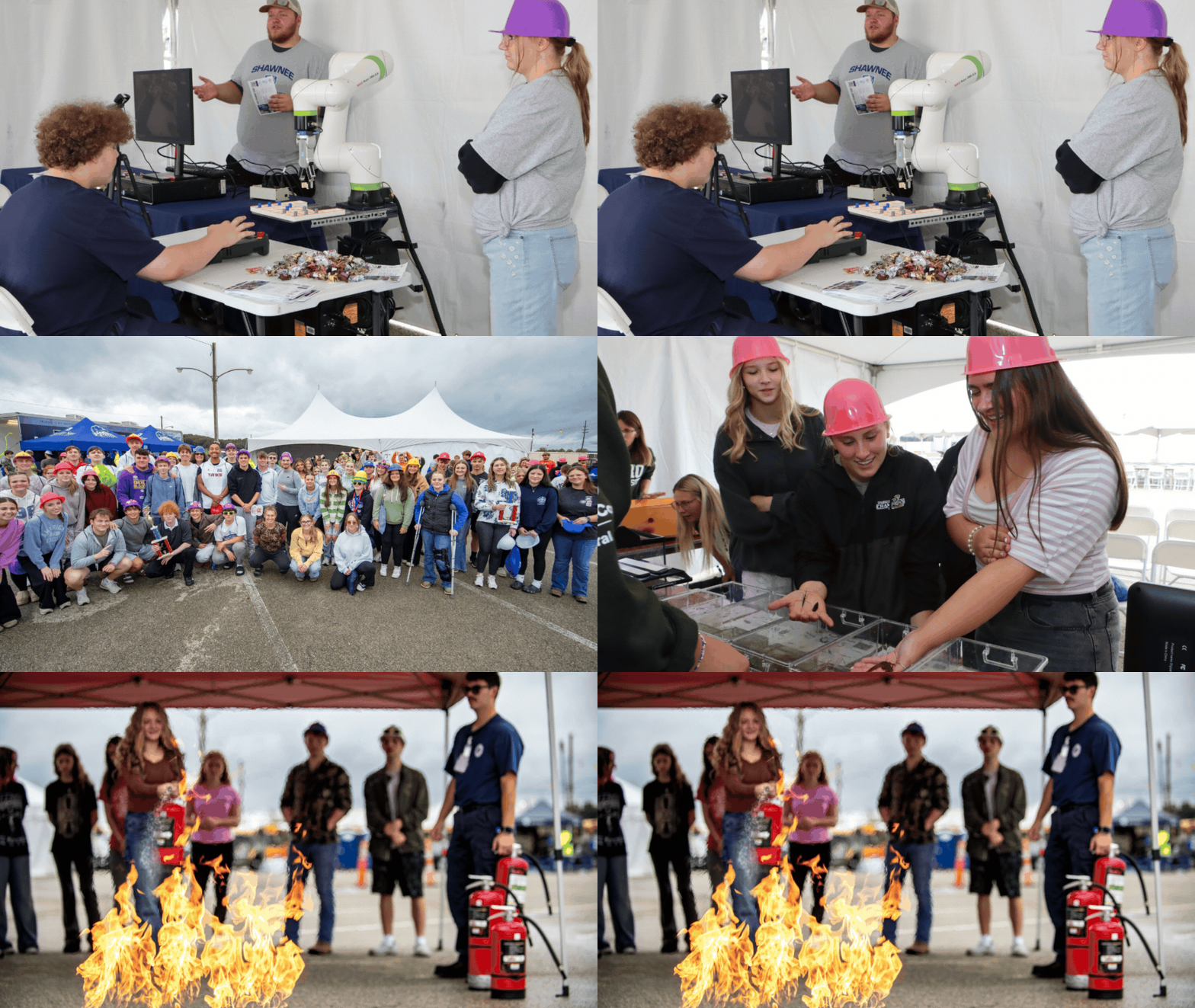
PIKETON, Ohio — More than 1,500 students from 34 schools in five counties descended upon the former Portsmouth Gaseous Diffusion Plant to take part in the 15th annual U.S. Department of Energy’s Science Alliance — a record participation for the event.
Each year, high school students take part in one of the biggest hands-on science events in southern Ohio to learn more about science, technology, engineering and math (STEM) careers and potential future opportunities.
“It is always inspiring to see the students come here and enjoy themselves and interact with all the presenters, whether it’s during a hands-on demonstration or learning about a career or educational path after high school,” Acting Portsmouth Site Lead and Federal Project Director Christy Brown said. “The students seem to really appreciate the opportunities that go beyond the classroom.”
During the event, students learned about fire safety by using a fire simulator, dove into the past of the Portsmouth Site by viewing historic items, answered site trivia for a chance to win the coveted “Smack Down Science” trophy, controlled a robotic arm with the help of Shawnee State University representatives, met native aquatic creatures with Ohio University staff members, and much more.
-Contributor: Shawn Jordan
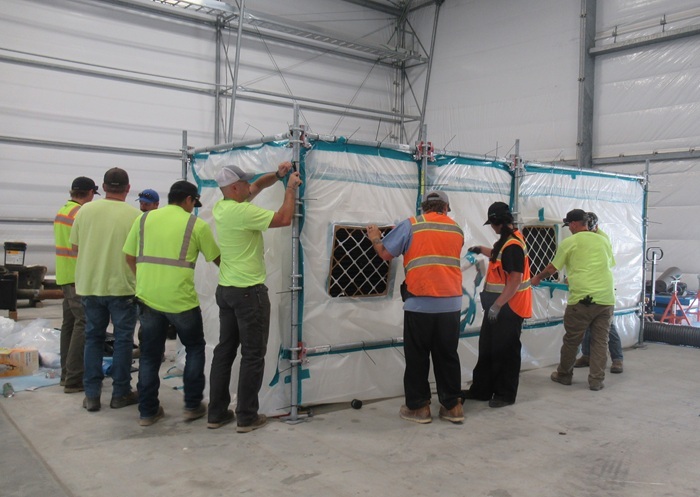 Crews at the Naval Reactors Facility use a mock-up to practice assembling an asbestos containment structure to prepare for deactivation and demolition project work.
IDAHO FALLS, Idaho — The Idaho Cleanup Project (ICP) team is improving safety and efficiency by practicing with a mock-up to refine monitoring, removal and management of asbestos and other hazardous materials in the deactivation and demolition (D&D) of two defueled land-based naval nuclear propulsion prototypes at the Naval Reactors Facility (NRF).
The mock-up is proving effective as crews safely perform tasks tailored to specific conditions at the D&D project areas for the Aircraft Carrier 1st Generation Westinghouse and Submarine 5th Generation General Electric prototypes.
The unique training is the latest chapter in a successful partnership between the U.S. Department of Energy’s Office of Environment Management and Office of Naval Reactors that has already seen a significant reduction in the NRF's legacy footprint: Crews completed last year's demolition of the Submarine 1st Generation Westinghouse naval reactor prototype plant three months ahead of schedule and $16 million under budget. The prototypes supported development of the world's first nuclear-powered submarine.
“Safety is our highest priority, and these initiatives only reaffirm that commitment,” said Shawna Burtenshaw, D&D Project Operations director for ICP contractor Idaho Environmental Coalition. “I am grateful for our project’s operations and safety managers who are helping our crews gain valuable practical experience with the mock-up and continually improving our approach to the mission.”
Crews use the mock-up to practice setting up a containment structure and installing glove bags, which wrap around pipes and other components to safely remove asbestos-containing insulation. They also work on techniques to remove and contain asbestos, and dispose of the glove bags.
Safety and operations managers took the lead to create the mock-up to provide a hands-on experience for employees, monitor progress and improve processes.
Asbestos and other hazardous materials were commonly used in building construction materials between 1930 and 1970. Their removal is an important step in the D&D projects, ensuring workforce safety and environmental protection and enabling future mission opportunities at NRF.
-Contributor: Carter Harrison
|