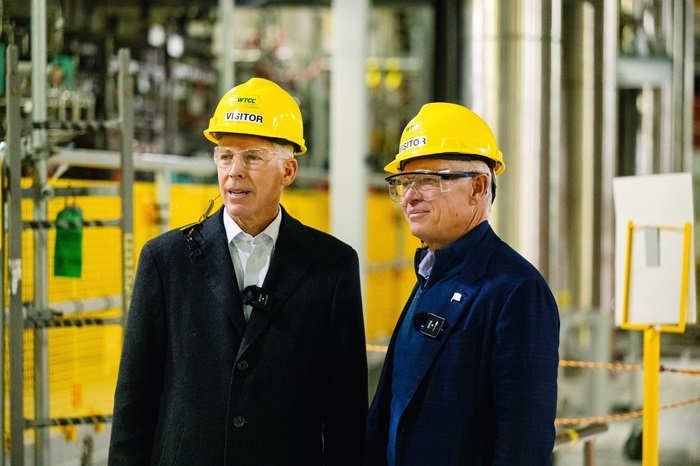
 Energy Secretary Chris Wright, left, tours the Waste Treatment Plant at the Hanford Site with Assistant Secretary for Environmental Management Tim Walsh in December 2025.
First Senate-confirmed EM leader in more than six years drives record results, launches bold vision for nuclear renaissance
WASHINGTON, D.C. — One year after Assistant Secretary for Environmental Management Tim Walsh was sworn in as the first Senate-confirmed leader for the U.S. Department of Energy's Office of Environmental Management (EM) in more than six years, the cleanup team has achieved a string of historic cleanup milestones, record private investment and a bold new strategic vision highlighting a program being transformed.
Walsh was confirmed by the Senate on Oct. 7, 2025, and sworn in later that month. He entered the role with a military background, engineering and construction career experience and a direct charge from Energy Secretary Chris Wright: clean up faster, work smarter and position EM sites to drive American energy dominance.
"We aren't just managing the past; we are powering the future," Walsh said at the Waste Management Symposia in March. He outlined a bold strategic framework to complete cleanup across all 15 EM sites, reduce costs and convert former Cold War weapons production facilities into centers for nuclear energy, advanced computing infrastructure and advanced manufacturing.
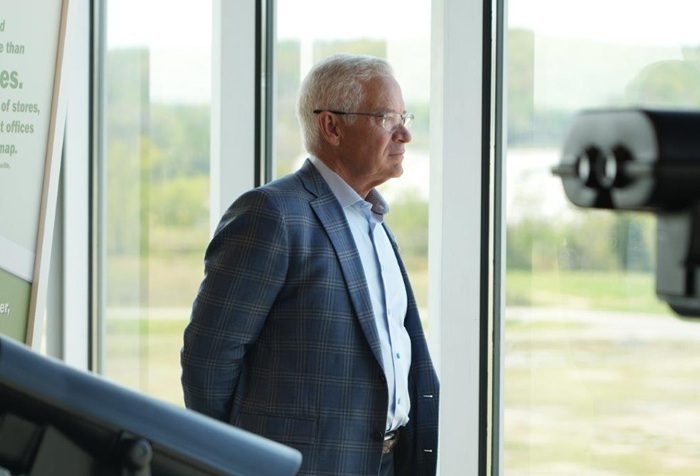 Assistant Secretary for Environmental Management Tim Walsh stands stories above the K-25 building’s 44-acre footprint from the observation deck in the K-25 Interpretive Center at Oak Ridge in April this year. The building was the largest in the world when it was constructed, and it was one of five former uranium enrichment buildings demolished at the site.
The results of the past year have been significant. At the Moab Site in Utah, EM removed the final ton of radioactive uranium tailings this year, completing the transfer of a cumulative 17 million tons safely away from the Colorado River. At the Hanford Site in Washington state, EM solidified tank waste in glass for the first time, meeting a key legal milestone at the nation's largest nuclear cleanup project.
In Idaho, crews completed 40 transfers of used nuclear fuel bundles to modern storage vaults months ahead of schedule. In New Mexico, the Waste Isolation Pilot Plant finished commissioning a new large-scale ventilation system one year early and $10 million under budget.
The economic impact of EM's work is also accelerating, with $650 billion in private investment announced at American Energy Hubs across the Portsmouth, Ohio; Paducah, Kentucky; and Oak Ridge, Tennessee, sites. New reactors, enrichment facilities and the nation's first privately funded commercial nuclear fuel recycling facility are being constructed on land EM spent years making safe.
At Oak Ridge, land remediated by EM has attracted more than two dozen businesses, with more than $10 billion in capital investment announced. Former EM land will provide much needed capabilities across the nuclear fuel cycle including: enrichment, fuel fabrication, reactor designs, power generation and fuel recycling.
Through a partnership with Brookfield and NextEra Energy, the Paducah Site is being transformed to power the future in one of the largest investments in Kentucky history. The companies announced a $100 billion privately funded high-performance computing campus and energy project that will create jobs and repurpose land at the former enrichment site into a hub for innovation and affordable energy generation.
The American Energy Hub at the Portsmouth Site has changed the trajectory of the region. Earlier this year, SoftBank and SB Energy announced a $33 billion investment that will bring 10 gigawatts of new power generation, the world’s most powerful computing campus and new utility infrastructure to Ohio.
Walsh has harnessed this momentum. This year, EM and the Office of Nuclear Energy issued requests for applications seeking private-sector partners to build and operate used nuclear fuel recycling facilities at the Idaho National Laboratory Site. The requests drew strong commercial interest. Closing the nuclear fuel cycle reduces long-term waste and drives down the cost of nuclear energy for American consumers.
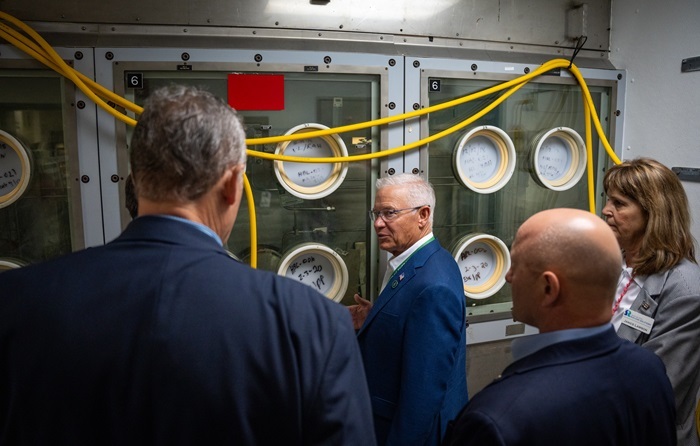 Assistant Secretary of Environmental Management Tim Walsh, second from left, views gloveboxes in HB-Line during his visit to Savannah River Site earlier this year. The U.S. Department of Energy Office of Environmental Management (EM) has announced the decision to restart operations there to strengthen the domestic nuclear industrial base and deliver fuel the country needs to power advanced reactors. Also pictured, from left, are EM Principal Deputy Assistant Secretary Joel Bradburne; EM Chief Operating Officer David Brunnert; and Savannah River Nuclear Solutions Environmental Management Operations Senior Vice President Janice Lawson.
At Paducah, EM partnered with the U.S. Environmental Protection Agency and state of Kentucky on a streamlined approach that reduced regulatory decision points by 90%. EM is also leasing Paducah Site land for a new private-sector domestic uranium enrichment facility.
Safety has remained a foundation throughout. The Savannah River Site liquid waste construction workforce has surpassed 40 million safe work hours since 1998. Paducah crews exceeded 4 million safe work hours without a lost-workday accident, earning the National Safety Council's Million Work Hours Award.
"The work happening at EM sites today is a commitment to the communities and the nation these sites have served for decades," Walsh said. "We are cleaning up the past, powering the future and making energy more affordable for every American."
Additional information about EM's accomplishments and strategic vision is available here.
-Contributor: Kyle Hendrix
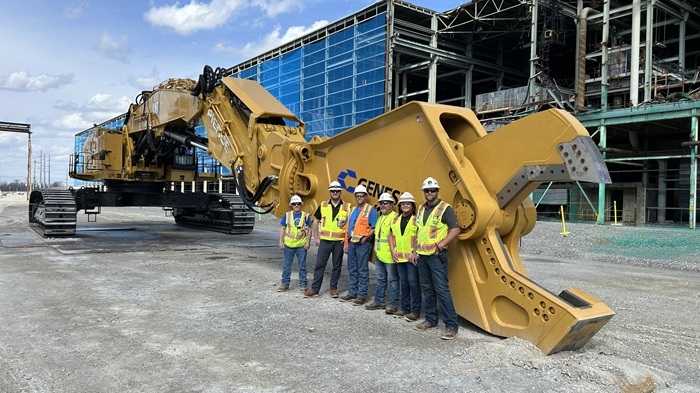 Operators show the scale of giant shears made for an excavator to help take down the X-333 Process Building. From left, Southern Ohio Cleanup Company (SOCCo) Excavator Operator Troy Woodward, Genesis Trainer Loren LaGesse, SOCCo excavator operators Craig Barker and Donald Proffitt, Construction Supervisor Jessica Hurd and Construction Manager Wade Howard.
PIKETON, Ohio — Operators at the U.S. Department of Energy’s Portsmouth Site are uniquely prepared to take on the formidable demands of the legacy X-333 Process Building demolition — including new cutting-edge machines with powerful shear attachments that few in the world have handled.
Four team members are trained to use the new fleet additions after a full day of classroom work and several days in the field running each machine through its motions, adjusting controls and learning maintenance routines necessary to keep the custom assemblies functioning at peak performance.
“Honestly, the hardest thing to grasp was how many moving parts are inside those large shears and just how powerful they are,” Southern Ohio Cleanup Company (SOCCo) Excavator Operator Craig Barker said. “We’ve never run anything like this before.”
SOCCo is the deactivation and demolition contractor at the DOE Office of Environmental Management’s Portsmouth Site.
Demolition of the 33-acre X-333 — the largest former uranium enrichment facility in the heart of the site — represents a landmark step in future redevelopment. Its teardown follows the successful demolition of the X-326 uranium process building in 2022.
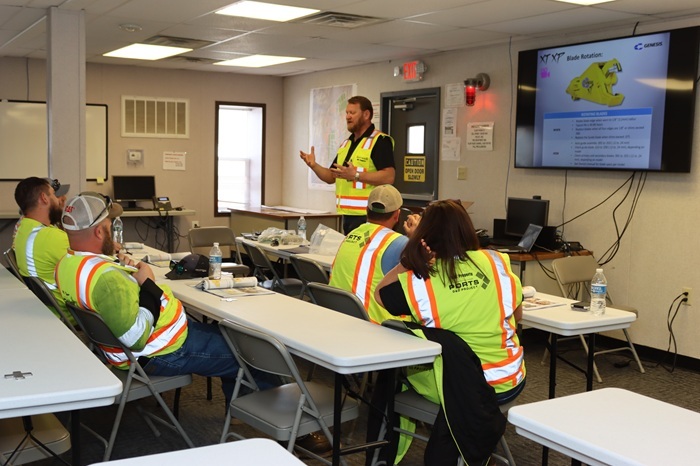 Genesis Technical Trainer Loren LaGesse discusses the importance of proper blade maintenance, rotation routines and wear checks to ensure operator safety and optimal performance to Portsmouth Site team members in training.
The new demolition equipment includes a variety of excavators, shear attachments and material handlers to lift heavy components, clear debris, slice through structural steel, and sort, load, and remove waste materials from the job site. The equipment will join the “Empress,” an oversized excavator designed to handle the massive framework of X-333.
“With the size and complexity of the X-333 Process Building, the team knew we would need equipment that was powerful enough to safely take the building down,” Federal Project Director Christy Brown said. “The X-333 held much larger process gas equipment than the X-326, so we’ve had to make the necessary adjustments to our fleet.”
Some of the excavators are equipped with the largest shears of their kind, capable of cutting through steel beams with unprecedented force, and other excavators wield enough power to pulverize concrete and strip concrete columns. In addition, mechanical attachments with claw-like tines and smaller shears allow operators to precisely sort and manage debris.
“The fleet was designed to be one of a kind,” SOCCo X-333 Construction Manager Wade Howard said. “The specialized training was needed so the operators could be prepared for how the attachments worked with the excavators.”
With safety as a top priority, the operators are trained to identify abnormal characteristics and are prepared to shut down and inspect the machines and equipment to ensure they always operate safely.
Additional operators are being trained for the new fleet of tools. Demolition of X-333 began in April 2025 and is expected to be completed in 2031. The team will look for opportunities to accelerate the project.
-Contributor: Michelle Teeters
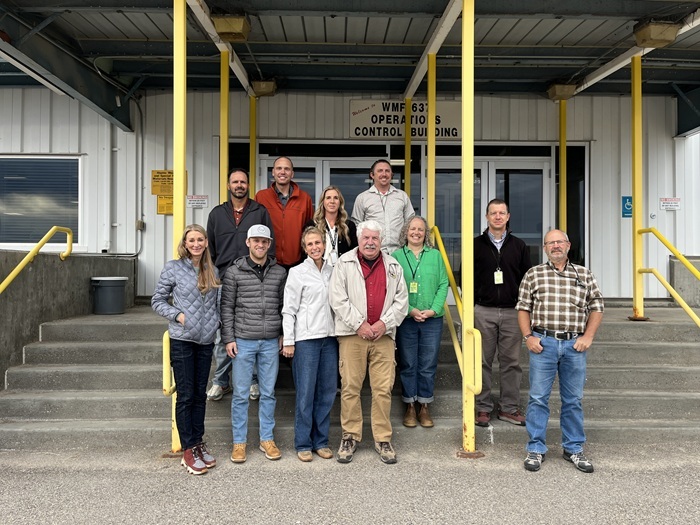 Members of the Idaho Citizens Advisory Board gather outside the operations building at the Radioactive Waste Management Complex during a tour of major cleanup areas at the Idaho National Laboratory Site.
IDAHO FALLS, Idaho — Members of the Idaho Cleanup Project (ICP) Citizens Advisory Board recently participated in a tour of major cleanup areas at the Idaho National Laboratory (INL) Site.
The tour focused on efforts by ICP contractor Idaho Environmental Coalition (IEC) to ship targeted legacy waste, including transuranic waste, from a Cold War-era landfill at the Radioactive Waste Management Complex to the Waste Isolation Pilot Plant (WIPP).
Board members learned how project crews are commencing work to construct an earthen cap over the 97-acre landfill, known as the Subsurface Disposal Area. These successes are not only protective of the underlying Snake River Plain Aquifer but also meet commitments to the state of Idaho.
The group also visited the Idaho Nuclear Technology and Engineering Center (INTEC), where ICP crews safely manage used nuclear fuel and high-level waste generated from historic fuel recycling efforts. Project managers discussed recent accomplishments at the Integrated Waste Treatment Unit, the facility designed to process liquid sodium-bearing waste stored in underground tanks at INTEC.
ICP and IEC crews are preparing to support the receipt and shipment of used nuclear fuel at INTEC, demonstrating their ability to safely manage fuel into the future. They are also taking steps to ultimately retrieve used nuclear fuel from storage and prepare it for its eventual shipment out of Idaho in accordance with an agreement with the state.
The board is one of eight local chapters that make up the U.S. Department of Energy (DOE) Office of Environmental Management Site-Specific Advisory Board, which was formed in 1994. The Idaho chapter consists of 10 members appointed to serve in an advisory capacity to DOE and ICP. The board meets twice yearly in a public forum, and the recent tour was part of this meeting schedule.
-Contributor: Carter Harrison
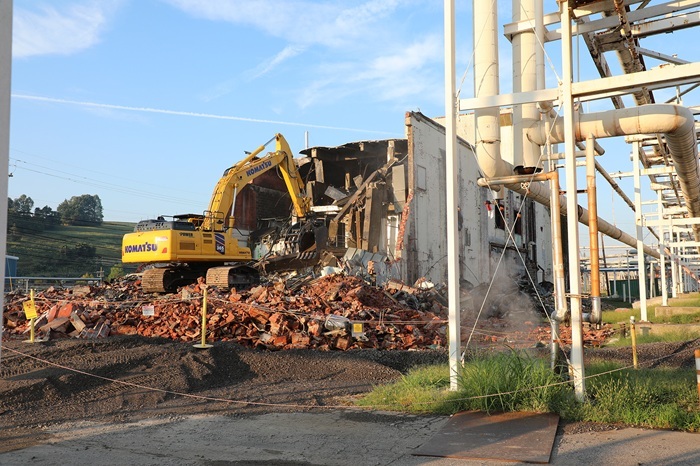 The Old Steam Plant undergoes demolition. The 13,454-square-foot facility was built in 1943. Over its more than 80-year lifespan, the facility supported uranium operations, fuels testing, maintenance and storage.
OAK RIDGE, Tenn. — The Oak Ridge Office of Environmental Management (OREM) and cleanup contractor United Cleanup Oak Ridge (UCOR) achieved major cleanup milestones in the fiscal year that ended Sept. 30 while maintaining a strong safety record.
Crews logged more than 1.3 million safe hours in the fiscal year as they addressed some of the nation’s most complex environmental cleanup challenges across the Oak Ridge Reservation.
Their disciplined approach to safety enabled teams to manage over 50 million pounds of waste generated during the deactivation and demolition of legacy Manhattan Project and Cold War-era infrastructure at the Y-12 National Security Complex, Oak Ridge National Laboratory (ORNL) and East Tennessee Technology Park (ETTP).
“The progress across Oak Ridge demonstrates what is possible when safety and mission execution reinforce one another,” OREM Deputy Manager Teresa Robbins said. “From removing legacy facilities and managing millions of pounds of waste to preparing land for its next use, these accomplishments are reducing risk while enabling enduring missions at Y-12 and ORNL.”
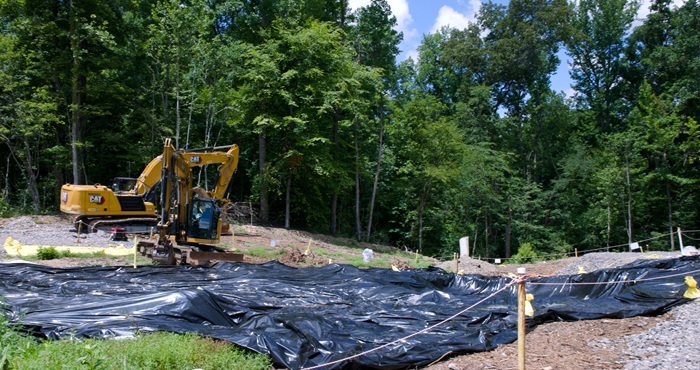 Crews at the White Wing Scrap Yard safely complete deforestation activities, clearing over 39 acres of trees, processing 17 acres of timber and packaging close to 400 bags of legacy soil to support future remedial activities and commercial redevelopment there.
Safety and cleanup highlights:
-
Y-12: Crews tallied more than 300,000 safe hours and removed over 43 million pounds of waste. Major accomplishments included the demolition of the Alpha-2 facility — the site's largest teardown to date — and the Old Steam Plant. New cutting and isolation technologies used at Alpha-4 and Beta-4 reduced risk, saving more than $20 million.
-
ORNL: Teams completed 375,581 safe hours managing complex radiological environments in ORNL’s central campus. Demolition advanced on 10 facilities on Isotope Row, and remote systems significantly reduced worker radiation exposure across six aging facilities.
-
Essential Operations: UCOR’s Nuclear Operations team supported ORNL’s critical waste systems, compiling 410,000 safe hours. These systems discharged over 27 billion cubic meters of gaseous waste and treated more than 73 million gallons of liquid waste, ensuring important site operations continued.
-
Land restoration: Crews at ETTP, the former Oak Ridge Gaseous Diffusion Plant, shifted to work that comes after cleanup. They recorded more than 91,810 safe hours and generated more than 5 million pounds of waste. Work included drainage restoration, outfall management, excess equipment removal and preservation of historic Manhattan Project artifacts. At the White Wing Scrap Yard, a 100-acre former disposal site for contaminated Cold War equipment and debris, workers cleared over 39 acres of land through the specialized Vegetation Management Program supporting future remediation and redevelopment.
-
Managing waste: Waste Operations crews recorded more than 117,000 safe hours while managing over 50 million pounds of deactivation and demolition waste across the reservation for disposal. They also managed over 11 million gallons of wastewater from landfills. The Transuranic Waste Processing Center safely characterized, prepared and processed more than 97% of contact- and remote-handled debris waste.
“We’re accelerating cleanup, taking on increasingly complex work and generating tremendous progress across the reservation, but we’re doing it with our people at the center,” said UCOR Executive Vice President and Deputy Program Director Sean Dunagan. “That performance reflects a workforce that looks out for one another, identifies better ways to execute the work and understands that safety is what enables us to keep moving the mission forward.”
-Contributor: Ryan Getsi
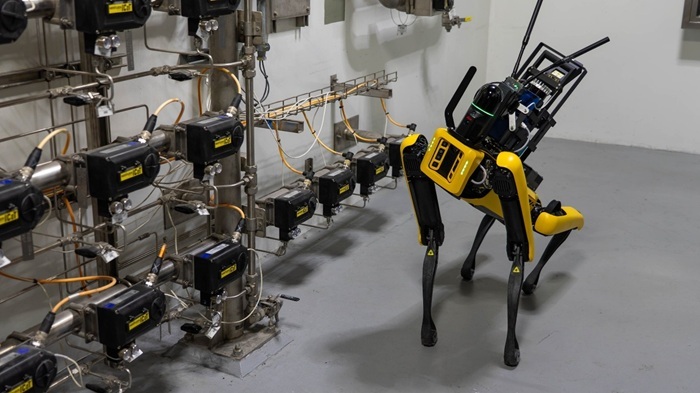 A robot dog scans a hallway at the Salt Waste Processing Facility at Savannah River Site. The four-legged robotic platform can collect radiation measurements in areas difficult to access, generate 3D models of rooms and perform other critical tasks to support the liquid waste mission.
AIKEN, S.C. — The U.S. Department of Energy’s (DOE) Office of Environmental Management (EM) and its liquid waste contractor at the Savannah River Site (SRS) have deployed a robot dog at the Salt Waste Processing Facility (SWPF) to support high-hazard operations while reducing personnel radiation exposure.
The robot dog can identify radiation boundaries in real time, collect consistent radiation measurements in areas difficult to access and generate 3D models of rooms. The resulting data supports job planning, informs radiation shielding placement, helps radiation protection personnel identify unusual or changing radiation readings and detects other changing conditions that engineering teams can address before they become more serious.
Remote inspections provide radiological, process and equipment data, enabling teams to identify and resolve problems more rapidly and with reduced risk. Identifying issues earlier than human detection improves risk reduction for employees.
The robots can perform autonomous inspections along predefined routes and carry equipment, such as ultrasonic-imaging systems. An optional robotic arm can perform selected tasks remotely, making the technology suitable for operations in which personnel safety is a concern or mobile data collection is required.
SRMC President and Program Manager Thomas Burns Jr. sees the robot dog as an investment in the future of the liquid waste mission.
“These robotics are a great piece of technology that can help us execute with excellence in the mission-critical work being done at SWPF,” Burns said. “Deploying technology into high-hazard areas allows us to perform more testing and data collection while keeping our people safe by avoiding unnecessary contact with high-radiation areas.”
SRMC continues to test and evaluate the robotic dog, and plans to deploy it soon in low-risk radiological areas that personnel can readily access to verify measurements or respond to problems. Testing will advance from the least-hazardous to most-hazardous areas.
-Contributor: TJ Lundeen
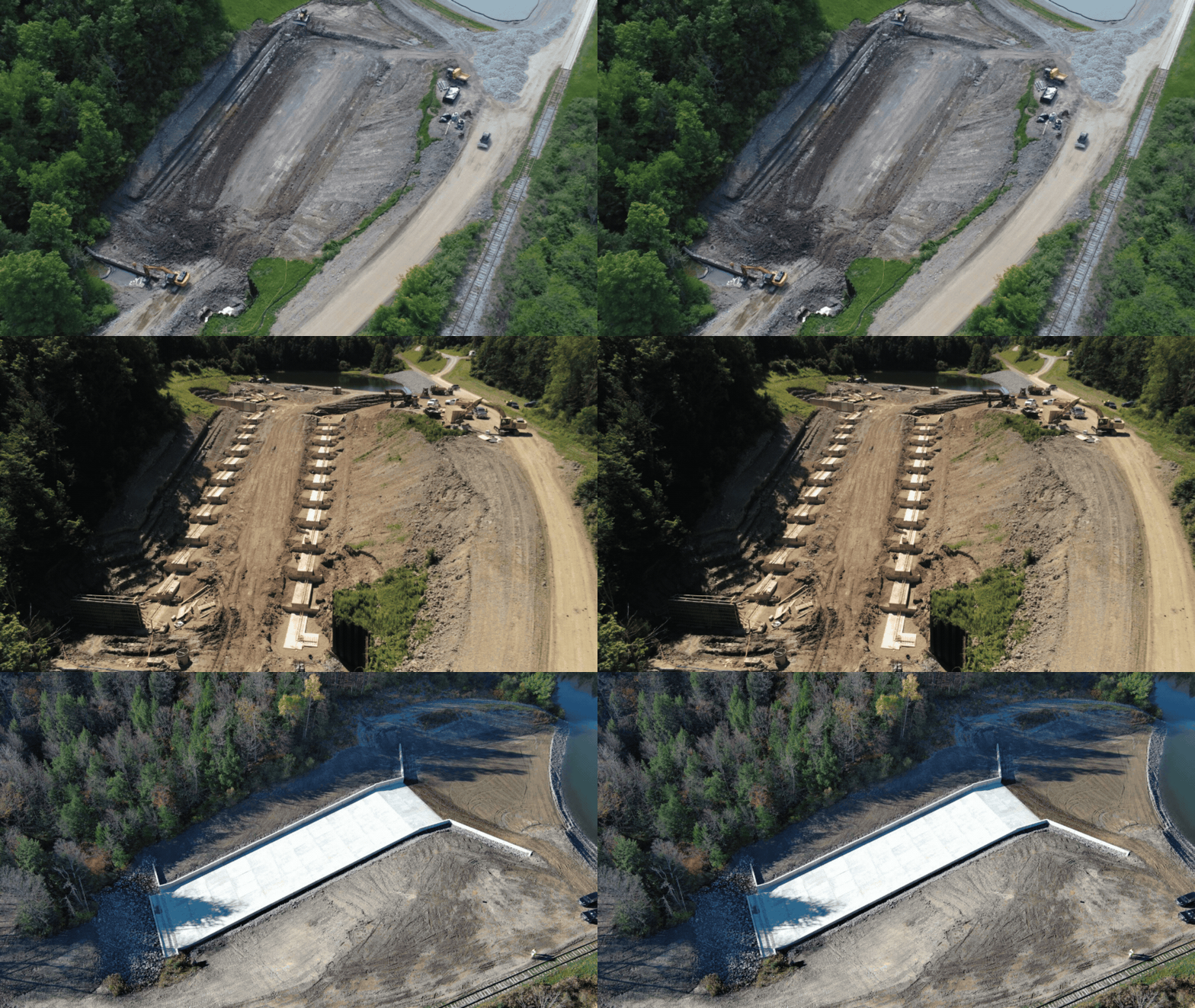 This sequence of photos shows the progression of the spillway construction. A dam safely directs stormwater away from the West Valley Demonstration Project, a critical environmental remediation site. In addition, this project helps protect the site’s lake-and-dam system, nearby waterways and surrounding community.
WEST VALLEY, N.Y. — A newly reconstructed spillway at the West Valley Demonstration Project (WVDP) in western New York is doing work most people will never see: safely directing stormwater away from a critical environmental remediation site.
A collaboration among the U.S. Department of Energy Office of Environmental Management (EM), U.S. Army Corps of Engineers Buffalo District and other partners replaced a deteriorating turf-based auxiliary spillway with a reinforced-concrete structure designed to withstand high-velocity storm flows.
The project supports ongoing legacy remediation at West Valley, home to the only commercial used nuclear fuel reprocessing facility to ever operate in the United States, while helping protect the site’s lake-and-dam system, nearby waterways and surrounding community.
“While the demand for large volumes of water for used fuel reprocessing operations has ceased, the lake-and-dam system remains vital for site management and continued operation,” said Anthony Lechanski, EM federal project director. “The lakes, and specifically the spillway improvement project, now primarily serve to manage water, ensuring proper conveyance to prevent flooding.”
The spillway is part of a larger lakes-and-dams system constructed in 1963 to provide water for the former reprocessing facility. The reservoirs historically supplied clean water for cooling systems, industrial needs and potable water.
The original spillway was lined with turf-reinforced geotextile matting. A later repair used similar material, but neither withstood the water velocities generated during significant storms nor prevented soil erosion. This created concerns about safe maintenance access and sediment reaching a protected trout stream at the foot of the spillway that ultimately connects to Lake Erie.
An evaluation of the system confirmed that water velocity would exceed what turf or earthen construction could withstand. After comparing alternatives and costs, the team selected the most durable solution — concrete.
The new 246-foot-long spillway between 6-foot-high side walls required excavation of 11,270 cubic yards of material and placement of 1,956 cubic yards of concrete.
“This project also offers a model for delivering technically demanding infrastructure projects with multiple stakeholders,” said Lechanski. “Our success was predicated on the following steps: start with rigorous engineering, identify risks early, establish clear roles and maintain open communication from design through construction.”
The spillway continues to support West Valley operations, particularly water management and industrial needs associated with remediation. While the site’s water needs have evolved from legacy operations to cleanup, the auxiliary spillway system remains essential during storms.
-Contributor: Joseph Pillittere
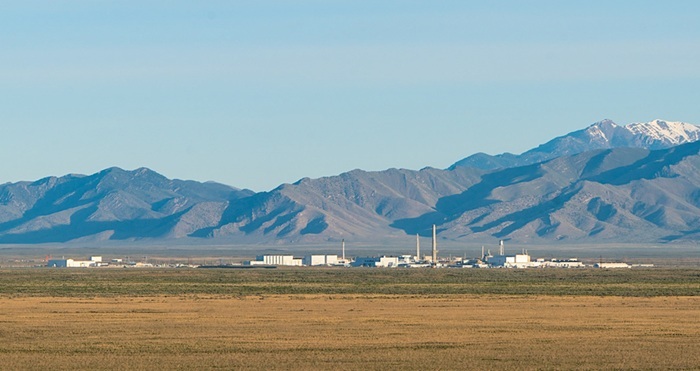 The Idaho Nuclear Technology and Engineering Center, one of several facilities managed by Idaho Cleanup Project contractor Idaho Environmental Coalition.
IDAHO FALLS, Idaho — The Idaho Cleanup Project (ICP) is implementing an established, cost-effective process to evaluate potential per- and polyfluoroalkyl substances (PFAS) sites at the Idaho National Laboratory (INL).
PFAS are widely used, long-lasting chemicals that break down slowly over time. The U.S. Department of Energy aims to protect human health and the environment and is committed to assessing and addressing the presence of PFAS at its sites.
In 2024, new U.S. Environmental Protection Agency (EPA) regulations designated certain PFAS constituents as Comprehensive Environmental Response, Compensation, and Liability Act (CERCLA) hazardous substances.
In response, ICP team members completed preliminary assessments for potential PFAS release sites at the INL. They evaluated for potential past releases and identified locations for further evaluation.
As PFAS were not regulated as a CERCLA hazardous substance when the INL Site Federal Facility Agreement and Consent Order was signed in 1991, they were not addressed as contaminants of concern in 25 subsequent INL Site records of decision. As a result, there was no clearly defined regulatory path to manage PFAS.
In 2008, officials established a streamlined process to address new potential and existing release sites under CERCLA called the New Site Identification (NSI) process. The ICP, EPA and Idaho Department of Environmental Quality (DEQ) agreed that the NSI process is the most effective way to evaluate and integrate PFAS into the INL Site CERCLA program.
“The NSI process provides several benefits,” said Chris Vilord, Environmental Programs senior manager for ICP cleanup contractor Idaho Environmental Coalition. “It is a cost-effective, transparent and phased decision-making process that already included public participation and the endorsement of regulatory agencies.”
The NSI process allows ICP to prioritize sites with a higher likelihood of impacts due to PFAS. The EPA and DEQ review and sign the evaluation results, and team members determine future actions.
In their evaluations, crews use available documentation or the results of past investigations and remedial actions. If additional sampling or investigation is needed, they work with EPA and DEQ to develop a field sampling plan. The crews document sampling results, subsequent risk assessments and additional remedial actions decided from the results.
"Use of this existing process will expedite the evaluation of PFAS on the INL site and reinforce our commitment to protect people and the environment,” said Vilord.
IEC recently submitted the first batch of evaluation results to EPA and DEQ for review.
-Contributor: Carter Harrison
|