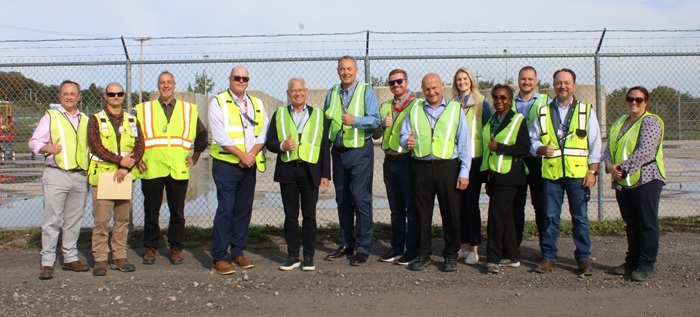
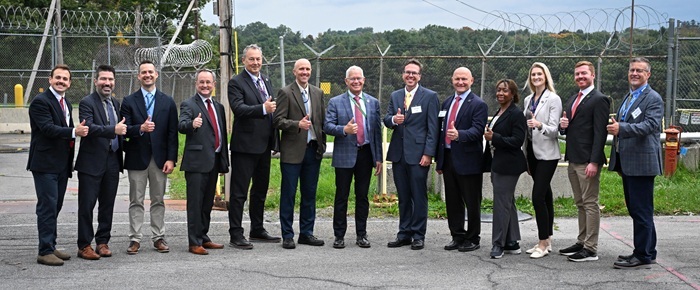
 West Valley Demonstration Project tour participants pose in front of 56 high-level waste casks on the site’s temporary storage pad. From left: U.S. Department of Energy Office of Environmental Management (EM) Deputy Chief of Staff John Howard; West Valley Facility Representative Cory Lauber; West Valley Director Bryan Bower; West Valley Office of Project Management Assistant Director Stephen Bousquet; EM Assistant Secretary Tim Walsh; EM Principal Deputy Assistant Secretary Joel Bradburne; EM Director of Communications and Stakeholder Engagement Justin Doil; EM Chief Operating Officer David Brunnert; EM Chief of Staff Alicia Stetin; EM Consolidated Business Center Acting Director Melody Bell; Washington, D.C., Chief of Staff William Smith, U.S. Rep. Nick Langworthy's office; West Valley Cleanup Alliance President and Program Manager Jason Casper; and West Valley Office of Technical Services Assistant Director Jennifer Dundas.
Assistant Secretary for Environmental Management (EM) Tim Walsh toured three sites in New York recently where the U.S. Department of Energy (DOE) conducts legacy cleanup to review progress and meet with team members and community stakeholders.
“Our cleanup work in New York is focused on responsibly addressing legacy conditions and steadily reducing long-term risk for the community and future generations,” Walsh said of the West Valley Demonstration Project and the EM Consolidated Business Center New York's (EMCBC-NY) Office of Naval Reactors (NR) cleanup sites at Kesselring and Knolls Atomic Power Laboratory (KAPL). “Here at West Valley, my team is delivering results by improving efficiency through innovation, prioritization and disciplined cost and schedule management — without compromising safety or effectiveness.”
EM West Valley Director Bryan Bower welcomed Walsh.
“As the only commercial used nuclear fuel reprocessing plant to have operated in the United States, seeing the work firsthand is important to understanding the progress being made at the site and how it supports EM’s mission and overall cleanup strategy,” Bower said.
Walsh’s visit comes on the heels of the 2025 demolition of the Main Plant Process Building — the largest, most complex teardown of a radioactively contaminated facility in West Valley’s history — and ongoing demolition of the Fuel Receiving and Storage Facility.
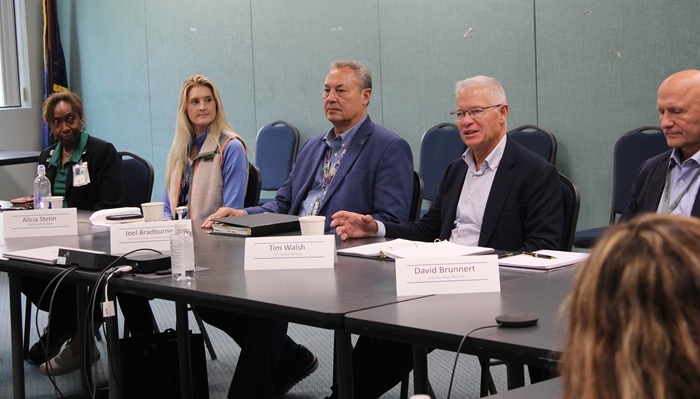 Assistant Secretary for Environmental Management (EM) Tim Walsh, second from right, and other EM leaders take part in a listening session with members of the West Valley Citizen Task Force.
Walsh toured West Valley with subject matter experts to discuss recent accomplishments and planned work. He also met with representatives from the New York State Energy Research and Development Authority (NYSERDA). EM and contractor West Valley Cleanup Alliance conduct cleanup in cooperation with NYSERDA.
EM is committed to the federal-state partnership with the state of New York. NYSERDA owns the West Valley site and has contributed more than $300 million toward the cleanup under the West Valley Demonstration Project Act of 1980. It’s the only state in the U.S. that shares the cost of high-level waste cleanup.
Walsh also participated in a listening session with members of the West Valley Citizen Task Force, a group of western New York residents who provide recommendations on completion of the cleanup and the site’s closure or long-term management. He thanked them for continued engagement and emphasized the importance of their role in the project’s ongoing success.
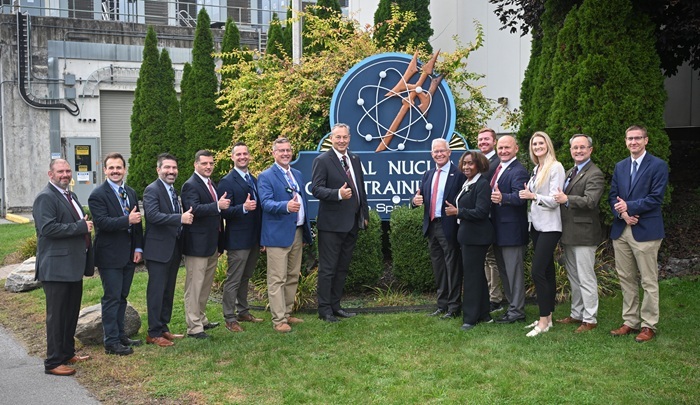 Members of the U.S. Department of Energy Office of Environmental Management (EM) leadership team visit Kesselring. From left: Naval Reactors (NR) Representative Nathan Victor; NR D&D Deputy Director Robert "Zeke" Kollman; NR D&D Director Kevin Collins; NR Representative Shayne Schumacher, Kesselring; EM Consolidated Business Center New York (EMCBC-NY) Deputy Director and Federal Project Director Erik Pakosz; EMCBC-NY Director and Federal Project Director Martin Krentz; EM Principal Deputy Assistant Secretary Joel Bradburne; EM Assistant Secretary Tim Walsh; EMCBC Acting Director Melody Bell; EM Director of Communications and Stakeholder Engagement Justin Doil; EM Chief Operating Officer David Brunnert; EM Chief of Staff Alicia Stetin; EM Deputy Chief of Staff John Howard; and NR Reactor Materials Division Director Jason Harman.
Further east, in upstate New York, Walsh met with the EM team and NR leadership to review cleanup progress at Kesselring and KAPL.
“Our work here is truly pivotal,” EMCBC-NY Site Manager Martin Krentz said. “Here in New York, there's a deep nuclear legacy, and the unique partnership between EM and Naval Reactors at Kesselring and KAPL is revitalizing space for future national security mission needs.”
EM's mission is inseparable from national security. Across the DOE complex, EM provides essential cleanup, decommissioning and demolition support to national laboratories and defense facilities that underpin national defense.
 Members of the U.S. Department of Energy Office of Environmental Management (EM) leadership team visit Knolls Atomic Power Laboratory (KAPL). From left: Naval Reactors (NR) D&D Deputy Director Robert "Zeke" Kollman; NR D&D Director Kevin Collins; EM Consolidated Business Center New York (EMCBC-NY) Deputy Director and Federal Project Director Erik Pakosz; EM Deputy Chief of Staff John Howard; EM Principal Deputy Assistant Secretary Joel Bradburne; KAPL Site Manager Gregory Holden; EM Assistant Secretary Tim Walsh; Naval Nuclear Laboratory Site Director Josh Heider, KAPL; EM Chief Operating Officer David Brunnert; EMCBC Acting Director Melody Bell; EM Chief of Staff Alicia Stetin; EM Director of Communications and Stakeholder Engagement Justin Doil; and EMCBC-NY Director and Federal Project Director Martin Krentz.
-Contributors: Karen Edson, Joseph Pillittere
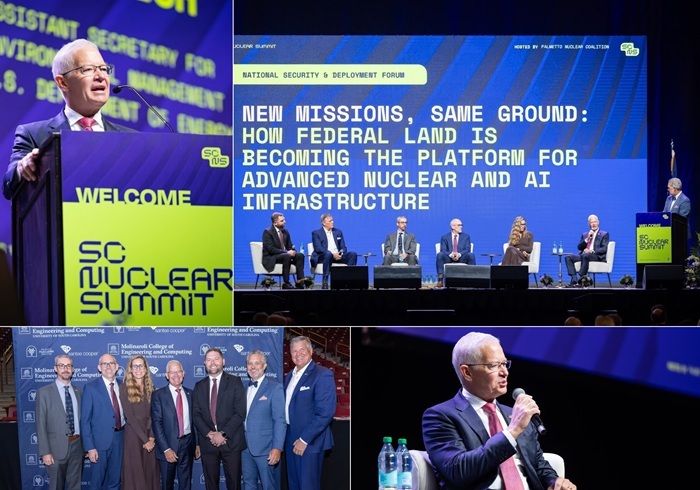 Photos courtesy of the Palmetto Nuclear Coalition
EM leader joined federal, state and industry leaders at South Carolina Nuclear Summit to discuss new nuclear and super intelligence missions on DOE land
COLUMBIA, S.C. — Assistant Secretary for Environmental Management (EM) Tim Walsh recently joined more than 600 leaders at the third annual South Carolina Nuclear Summit to discuss how U.S. Department of Energy (DOE) land is becoming a springboard for America's nuclear renaissance.
Walsh delivered remarks following Gov. Henry McMaster, then joined a panel focused on how federal land is becoming the platform for advanced nuclear and super intelligence infrastructure.
Walsh said EM's 15 remaining legacy sites helped the nation win World War II and the Cold War and are being revitalized to help America lead the world in energy production, advanced manufacturing and super intelligence (SI).
"The faster we can get things cleaned up, the faster we can turn that land over to more productive use," said Walsh.
Moderated by Robbie Bennett, president and CEO of the SRS Community Reuse Organization, the panel included leaders from the companies Amentum, DC BLOX, Antares Nuclear, Oklo Inc. and Newcleo.
The Savannah River Site (SRS), about an hour from the summit venue, offers a model for the transition to advanced nuclear and SI. Walsh highlighted H Canyon, the nation's only production-scale chemical separations facility, which EM is using to turn used nuclear fuel once slated for disposal into high-assay low-enriched uranium. He also pointed to the decision to restart HB-Line, which EM expects to accelerate its plutonium disposition mission by 10 to 13 years and save taxpayers up to $350 million.
Walsh also called for rebuilding the workforce needed to construct nuclear plants at scale and praised South Carolina, including the University of South Carolina, for taking a leadership role.
Associate Deputy Secretary of Energy Alex Fitzsimmons and Julie Kozeracki of DOE's Office of Energy Dominance Financing also spoke at the summit.
"There is no better place in my mind to bring it all together than right here in South Carolina to ensure our nuclear renaissance actually happens," Walsh said. "My motto is GSD — get stuff done — and we're going to get started here in South Carolina."
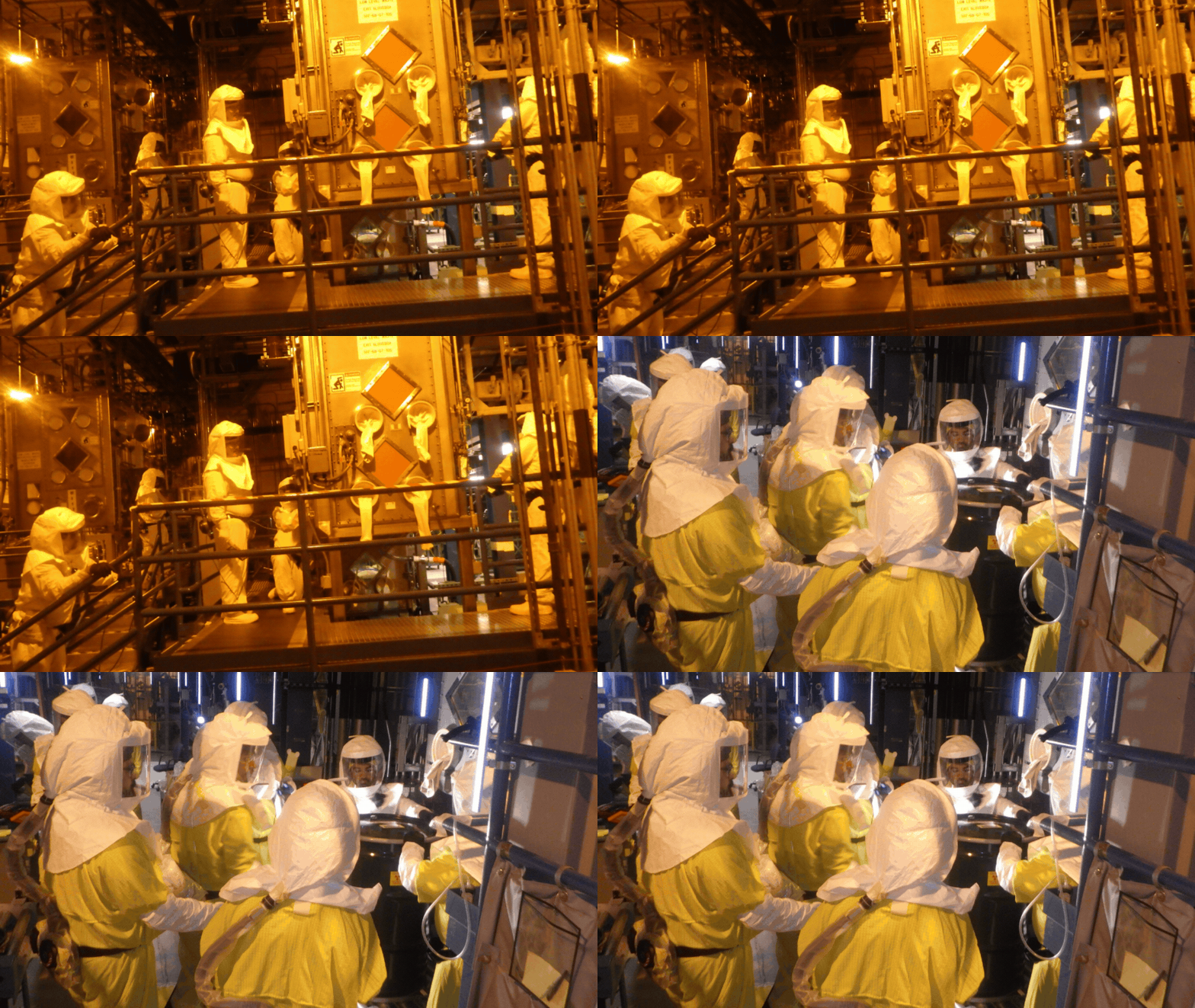 Crews at the Hanford Site recently completed a significant risk-reduction project by safely isolating and stabilizing contaminated gloveboxes at the Waste Receiving and Processing facility. The effort will save millions of dollars annually by reducing surveillance and maintenance costs.
RICHLAND, Wash. — Crews led by U.S. Department of Energy (DOE) contractor Central Plateau Cleanup Company (CPCCo) have safely isolated and stabilized contaminated gloveboxes at the Waste Receiving and Processing facility (WRAP), a key risk-reduction project on the Hanford Site.
The work is expected to save about $8 million annually by reducing surveillance and maintenance activities.
The accomplishment was the result of close coordination between CPCCo and fellow contractors Hanford Mission Integration Solutions (HMIS) and Hanford Tank Waste Operations & Closure (H2C). CPCCo crews carried out the field activities, while H2C and HMIS provided specialized personnel and resources that helped the team keep work moving safely and efficiently.
“This project shows what can be achieved when our One Hanford teams work together toward a common cleanup goal,” said Scott Green, acting assistant manager for river and plateau at the DOE Office of Environmental Management Hanford Field Office. “By reducing risk and lowering long-term costs, this integrated team is helping position the site for continued progress across the cleanup mission.”
WRAP processed low-level and transuranic waste from Hanford’s burial grounds for safe disposal for more than a decade, and has not been operating for several years. During operations, the facility’s 12 stainless-steel, lead-lined gloveboxes allowed workers to perform processing activities without exposing them to chemical and radiological hazards. The gloveboxes vary in size, with some as big as a camping trailer.
Stabilizing the legacy gloveboxes and associated equipment marks an important step in preparing the facility for its next phase of deactivation while ensuring hazards are safely addressed.
Beyond the immediate risk reduction, the stabilization project also frees up resources that can now be focused on other cleanup work.
“This project reflects Hanford’s broader commitment to innovation, efficiency and partnership in moving the cleanup mission forward,” said Jeffrey Wilhelm, a CPCCo project manager. “Working side by side with H2C and HMIS brought experience, flexibility and a strong safety focus to every phase of the job.”
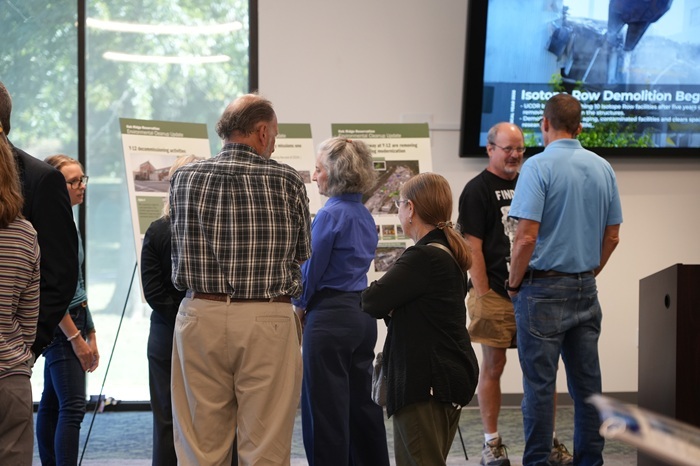 More than 60 people attended the open house at the Oak Ridge Conference Center.
OAK RIDGE, Tenn. — The Oak Ridge Office of Environmental Management (OREM) recently hosted a community open house to showcase cleanup progress and outline priorities for 2027.
More than 60 people attended the event featuring poster stations staffed by experts from OREM and cleanup contractor United Cleanup Oak Ridge who explained how current cleanup reduces environmental risks, supports national security and scientific missions, expands land reuse opportunities and even converts legacy materials into cancer treatment isotopes.
“The progress highlighted during this event shows how each cleanup project builds on the next,” said Morgan Carden, Y-12 National Security Complex portfolio federal project director. “We’re removing risks today while positioning Oak Ridge for what comes next — new national security capabilities, scientific discovery and economic development.”
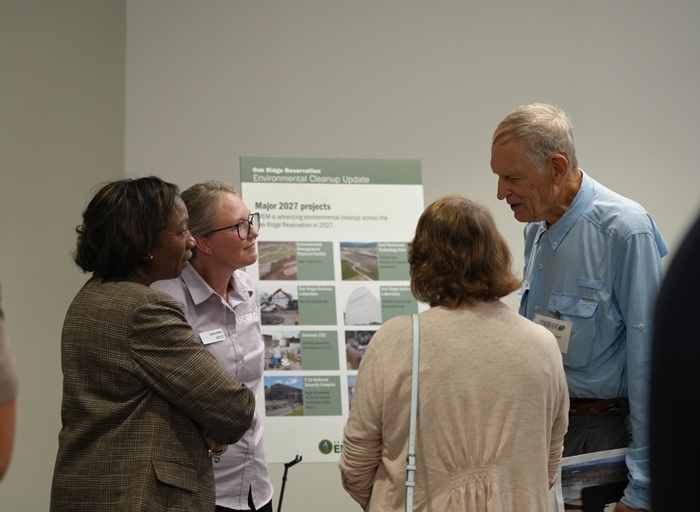 Community members get an update about different cleanup projects on the Oak Ridge Reservation.
The team showed how OREM strategically removes aging Manhattan Project and Cold War infrastructure at Y-12 to clear space for modern national security missions. Workers have already cleared more than 20 acres of land for reuse, with nearly 600,000 square feet of facilities to be demolished by the end of 2026. Crews are deactivating an additional 875,670 square feet of buildings to ready them for demolition. Upcoming efforts include demolishing the 210,000-square-foot Beta-1 facility in 2027 following six years of preparation, as well as future takedowns of Alpha-4 and Beta-4.
OREM’s Oak Ridge National Laboratory (ORNL) station outlined progress on Isotope Row, a set of 10 former isotope production buildings built in the 1950s, all scheduled for demolition by the end of 2026. Additional work planned for next year includes demolishing the former Radioisotope Development Laboratory and completing preparations for removing the final hot cell in Building 3026. Crews are downsizing equipment, packaging legacy radiological materials and removing hazards across six ORNL facilities to reduce risks and prepare them for future demolition.
One station focused on uranium-233, OREM’s highest priority ORNL project. Three-fourths of Oak Ridge’s uranium-233 inventory has been removed as workers use a new processing glovebox that avoids significant costs and schedule delays. A newly installed onsite analytical laboratory also enables faster processing and supports production of isotopes used in cancer treatment research.
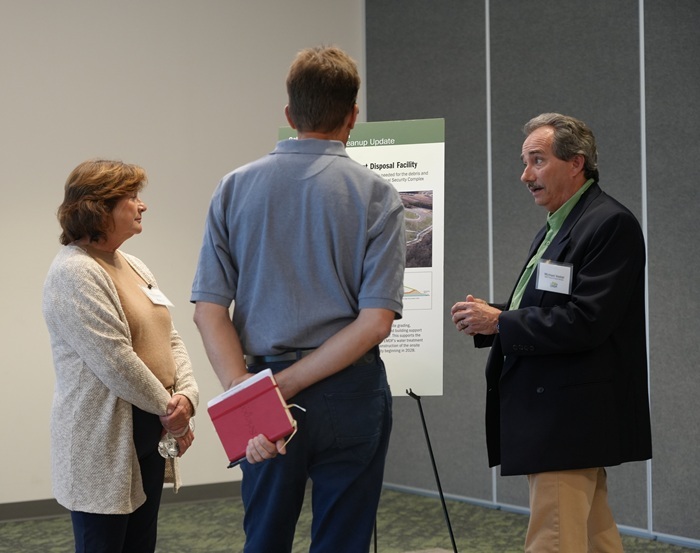 A federal project director shares progress on the Environmental Management Disposal Facility.
Attendees learned about ongoing transformation at the East Tennessee Technology Park, where OREM has transferred 2,555 acres for community and private sector use, with roughly 185 acres remaining in the transfer pipeline. To date, redevelopment has attracted about $10 billion in investment and created an estimated 2,500 jobs.
Experts also described operations at the Transuranic Waste Processing Center and progress on the Environmental Management Disposal Facility (EMDF). With a two-year groundwater study completed, crews are preparing for site grading, utility extensions and support facility construction in 2027, ahead of full EMDF construction beginning in 2028.
“Collectively, community members walked away knowing more about how the work underway now is setting the stage for another significant year of cleanup progress in 2027,” said UCOR Project Enterprise Manager Carrie Wolfe.
-Contributor: Ryan Getsi
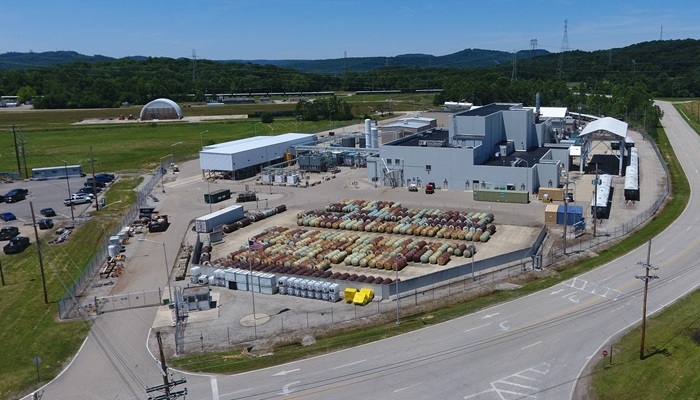 Depleted uranium hexafluoride cylinders are staged next to the conversion facility at the Portsmouth Site. The team recently reached a milestone of processing 4,500 cylinders.
PIKETON, Ohio — In the latest major cleanup achievement for the U.S. Department of Energy’s (DOE) Portsmouth Site, crews converted depleted uranium hexafluoride (DUF6) from 4,500 legacy cylinders into safer, more stable chemical forms, representing more than 20% of the site’s cylinder inventory and marking progress toward reducing material left from decades of uranium enrichment.
The Portsmouth team also exceeded its fiscal year 2026 production goal of converting DUF6 from 546 cylinders two months ahead of schedule, underscoring sustained advances in the DOE Office of Environmental Management (EM) cleanup mission. Meanwhile, opportunities to reuse the DUF6 material are on the horizon as EM supports the nation's nuclear renaissance.
“The Portsmouth conversion facility continues to do what it was built to do: decrease the DUF6 inventory,” DUF6 Program Manager Chris Richards said. “The team continues to steadily work through the legacy material.”
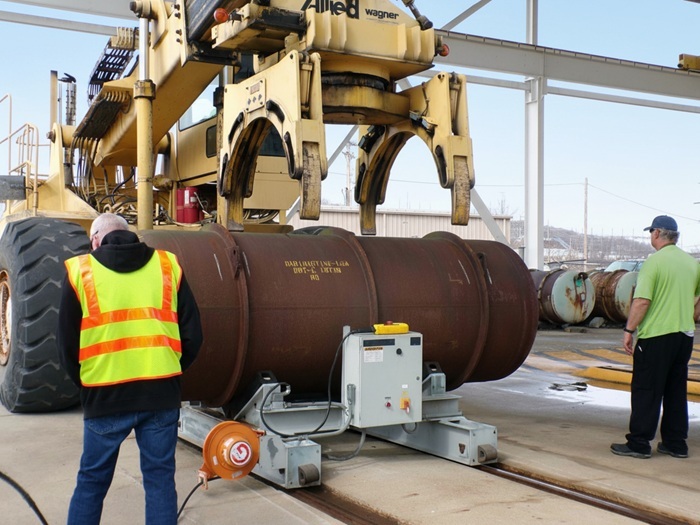 Cylinder Yard Facility Manager Cary Basye, left, and Cylinder Yard Operator Bill Bowen transport a cylinder to the cylinder yard cart in support of operations at the Portsmouth Site depleted uranium hexafluoride facility. This is one of 4,500 cylinders processed at the site.
The Portsmouth Paducah Project Office oversees DUF6 conversion facilities at the Portsmouth and Paducah sites, operated by contractor Mission Conversion Services Alliance (MCSA). The sites share lessons learned and develop improvements to strengthen equipment reliability, reduce downtime and increase processing efficiency.
MCSA Portsmouth Operations Manager Curtis Miller credited ongoing plant improvements with increasing reliability and uptime while making the facility easier to maintain and operate. The advancements helped the Portsmouth team achieve a record 60 days of continuous production across all three conversion lines.
“Feedback and lessons learned have resulted in safer, more efficient performance,” Miller said. “Working together is what made it all happen.”
Processing each cylinder requires approximately 10 hours of heating, followed by 18-20 hours in the conversion process. Reaching the 4,500-cylinder milestone reflects years of coordinated work by operations, maintenance and support personnel.
“That math works out to 135,000 hours to process all 4,500 cylinders,” MCSA Portsmouth Site Program Manager Tim Warren said. “That doesn’t include the personnel hours of transporting the cylinders from the cylinder yard, hooking up and unhooking cylinders, paperwork and more.”
The Portsmouth Site once stored more than 20,000 cylinders containing DUF6, a coproduct of decades of uranium enrichment for defense and commercial energy purposes.
The conversion process involves chemically transforming DUF6 into uranium oxide powder, which is significantly less reactive and safer to manage for reuse or disposal. The oxide is then packaged in robust containers and shipped to a licensed disposal facility.
“These recent accomplishments reflect the workforce’s dedication, professionalism and commitment to operational excellence,” DUF6 Plant Manager Pete Coutts said.
-Contributor: Katherine Mueller-White
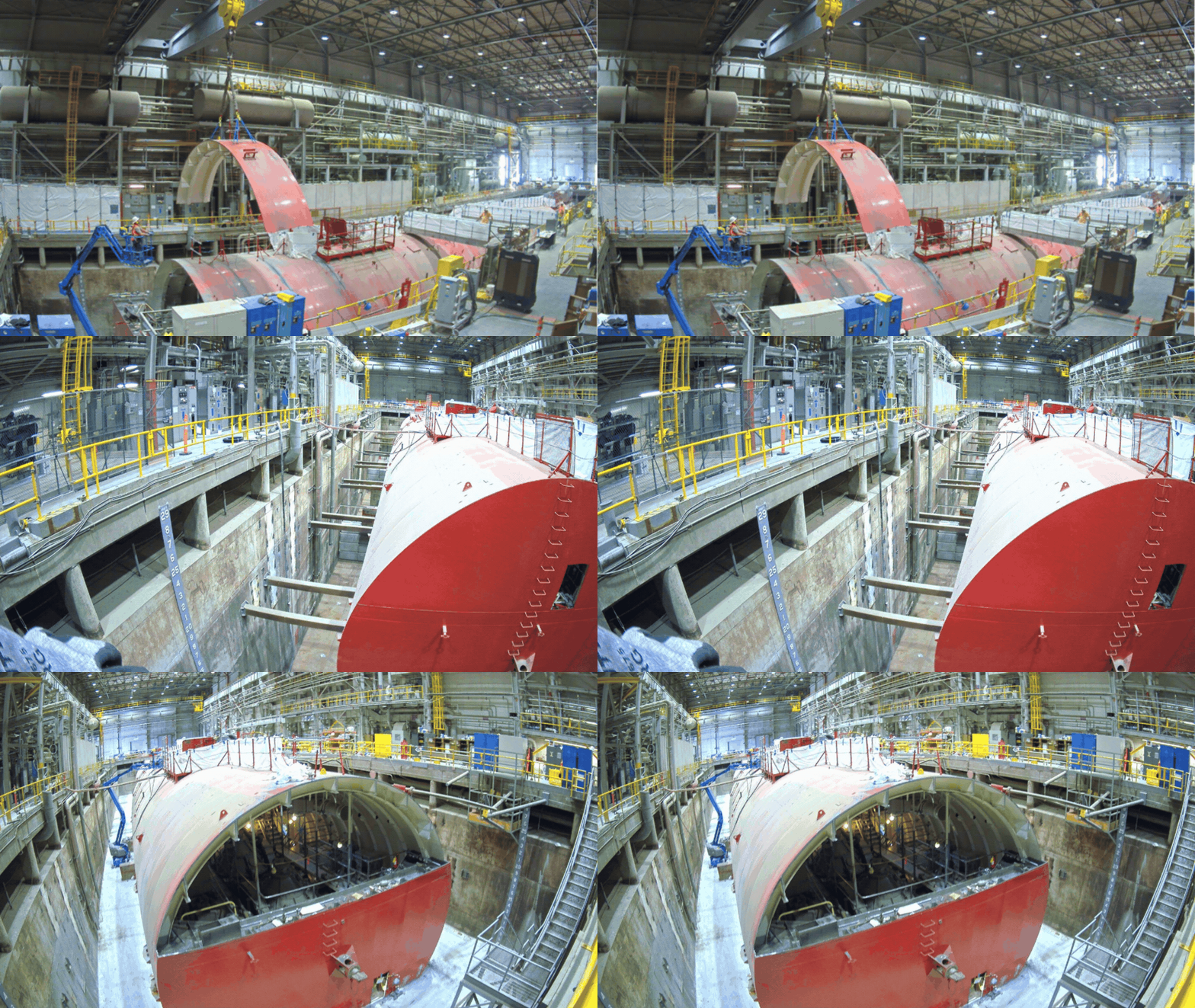
IDAHO FALLS, Idaho — Idaho Cleanup Project crews are demonstrating their expertise as they deactivate a defueled land-based naval nuclear propulsion prototype prior to demolishing it. Recent activities include initial grouting of the basin where the Submarine 5th Generation General Electric (S5G) prototype sits, dismantling its upper hull sections and removing other large components. Work will culminate in the removal of the reactor vessel, highlighting the successful partnership between the U.S. Department of Energy’s Office of Environment Management and Office of Naval Reactors. Crews will ultimately remove the prototype entirely and fill the basin with grout, leaving the building intact and ready for future use by the Naval Reactors Facility at the Idaho National Laboratory site.
-Contributor: Carter Harrison
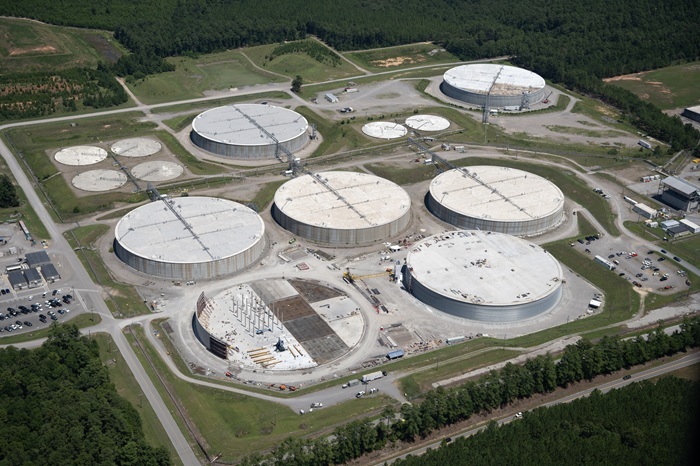 Saltstone Disposal Unit (SDU) 6, center, is surrounded by other massive disposal units at the Savannah River Site. SDU 6 was the first mega-size SDU to be built at the site, and it’s now filled with grout.
AIKEN, S.C. — The first mega-size disposal unit constructed and operated at the Savannah River Site (SRS) is now filled with grout.
Saltstone Disposal Unit 6 (SDU) is one of seven aboveground concrete units at SRS where the final stabilized form of Cold War legacy salt waste will be safely and permanently stored. The SDUs hold approximately 33 million gallons of grout treated at the Saltstone Production Facility (SPF). SRS began building the massive disposal units in 2014.
Filling SDU 6 with grout is another step forward in the U.S. Department of Energy’s (DOE) commitment to safely remediate legacy waste and reduce environmental risk, according to Chuck Comeau, DOE Savannah River Operations Office federal project director.
“This milestone is an important step in reducing the risk of waste at SRS,” said Comeau. “SDU 6 received the first transfer of grout two years before the Salt Waste Processing Facility (SWPF) began operations in 2020. Now that SWPF is treating waste at an unprecedented rate, the SDUs will be key to continued progress toward delivering on the cleanup mission and revitalizing the site for future missions.”
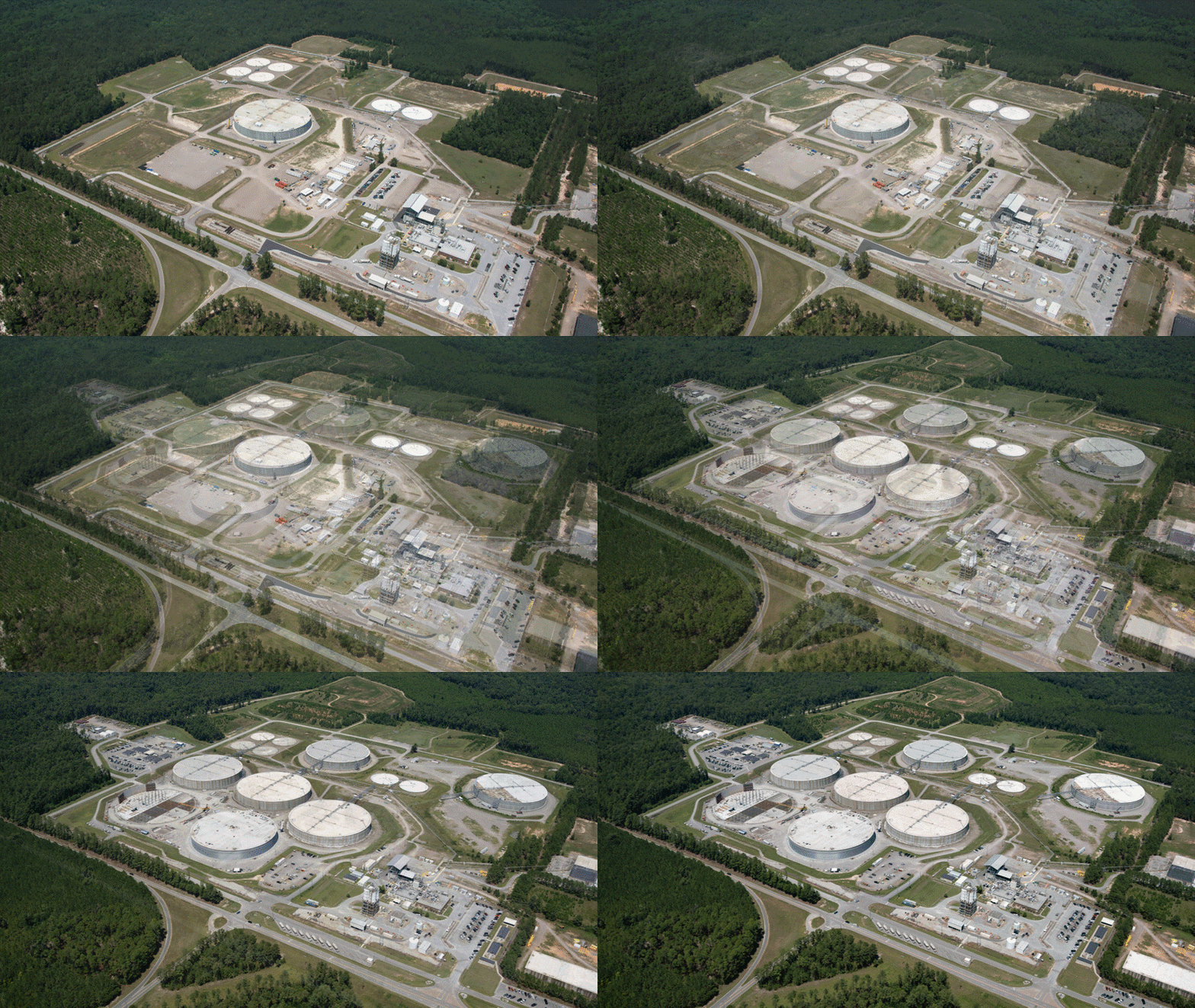 A visual of the change in the saltstone disposal unit landscape at Savannah River Site over the last decade.
The DOE Office of Environmental Management’s liquid waste contractor at SRS, Savannah River Mission Completion (SRMC), manages construction and operation of the SDUs.
In the saltstone process, decontaminated salt solution (DSS) from SWPF is mixed with dry materials at SPF to form grout, which is then pumped to the SDUs. Inside the SDUs, the grout hardens into a stable, solid form that safely contains the remaining low‑activity radionuclides.
The filling of SDU 6 comes on the heels of the first-ever continuous 24-hour processing run at SPF. The facility has typically supported 14-to-18-hour process runs, but with recent facility upgrades and increased DSS from SWPF, 24-hour capacity is now possible. Crews transferred just over 112,000 gallons of DSS to SDU 6 in 24 hours.
SRMC Senior Director and End Stream Delivery Facility Manager Matt McCoy said the SDU program has come a long way since SDU 6 began receiving grout in 2018.
“While we’ve been steadily adding grout to SDU 6 over the years, the landscape around it has continued to change,” McCoy said. “Four more units have been built, with two of them also now receiving grout. And the construction of the final two SDUs needed for the mission is underway now.”
Workers filled SDU 6 under closely controlled operating and safety procedures, including monitoring of grout height and use of engineered ventilation features built into the SDU 6 design. The liquid waste team will continue to monitor the filled unit, including long‑term surveillance aligned with regulatory guidelines.
Thirty-two million gallons of tank waste remains onsite, but during treatment, the waste is diluted and chemically processed, and the resulting DSS is combined with dry materials to form grout, so the total volume of material ultimately placed in SDUs will be significantly larger than the original tank waste volume.
-Contributor: Colleen Hart
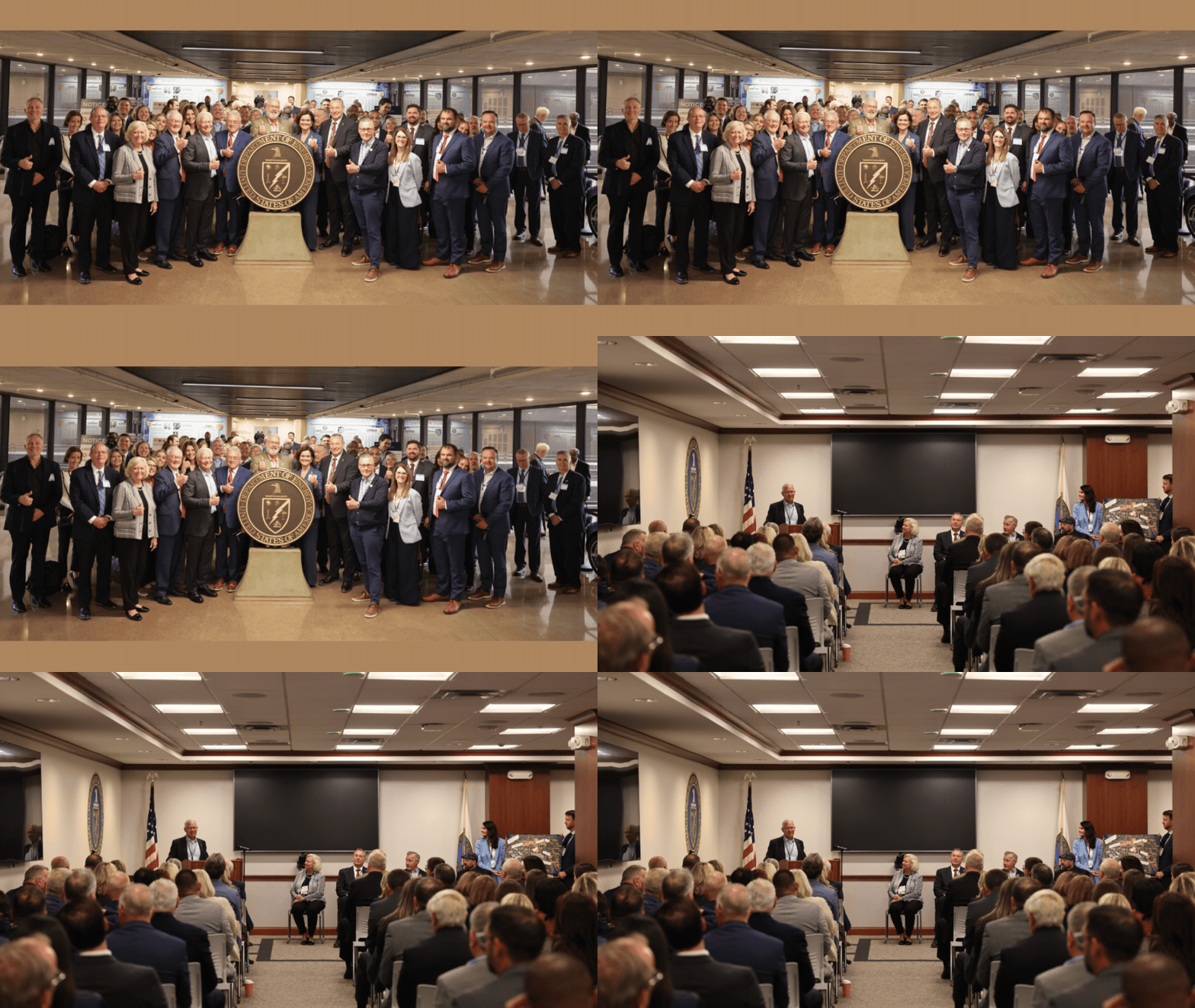 The Paducah delegation is pictured inside the U.S. Department of Energy headquarters in the first frame. The second frame shows Assistant Secretary for Environmental Management Tim Walsh speaking to the delegation.
WASHINGTON, D.C. — A delegation with record participation by more than 90 local leaders, elected officials and community stakeholders from Paducah, Kentucky, recently gathered at the U.S. Department of Energy (DOE) headquarters in Washington, D.C., during the annual Paducah Area Chamber of Commerce D.C. Fly-In to meet with DOE Office of Environmental Management (EM) leadership.
The delegation showcased its vision to continue transforming the Paducah Site into an economic engine, turning liabilities into assets. Key EM leadership — including Assistant Secretary for Environmental Management Tim Walsh, Principal Deputy Assistant Secretary Joel Bradburne and Portsmouth Paducah Project Office Acting Manager Erik Olds — highlighted how safe, steady environmental cleanup serves as the foundation for reindustrialization, including the Paducah American Energy Hub announced earlier this year. They noted that as legacy deactivation and decommissioning and land lease efforts continue, every acre of land remediated creates vital platforms for future industry, jobs and meaningful investment for the American people.
-Contributor: Dylan Nichols
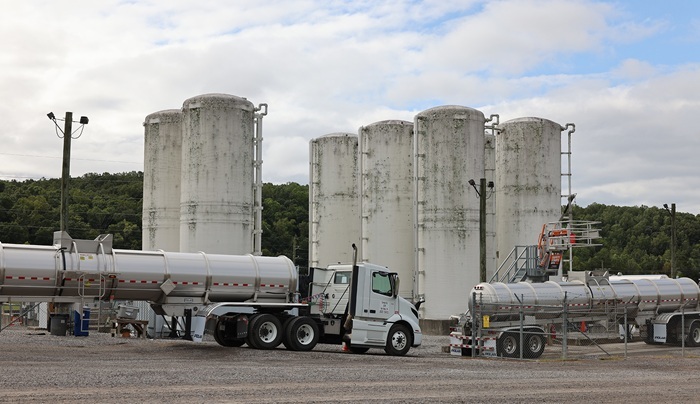 A view of the Environmental Management Waste Management Facility leachate tanks at Oak Ridge, where water is collected prior to shipping for treatment.
OAK RIDGE, Tenn. — Workers are helping drive innovation and improved safety in the U.S. Department of Energy’s nuclear cleanup mission as they monitor millions of gallons of landfill wastewater from smartphones following major infrastructure upgrades.
The Oak Ridge Office of Environmental Management (OREM) and contractor United Cleanup Oak Ridge (UCOR) completed repairs to water tanks and installed real-time remote monitoring systems at the Environmental Management Waste Management Facility (EMWMF).
After more than a year of planning, preparation and field work, the onsite landfill crew can now monitor all eight leachate tank levels, the leachate inflow rate and any high-level alarms in real time through the new system. This upgrade supports the existing leachate control system designed to notify crews of abnormal events such as power outages.
“The installation of the remote monitoring equipment helps to ensure EMWMF remains compliant with operational requirements and continues to safeguard the surrounding environment,” EMWMF Federal Project Director Michael Vestal said.
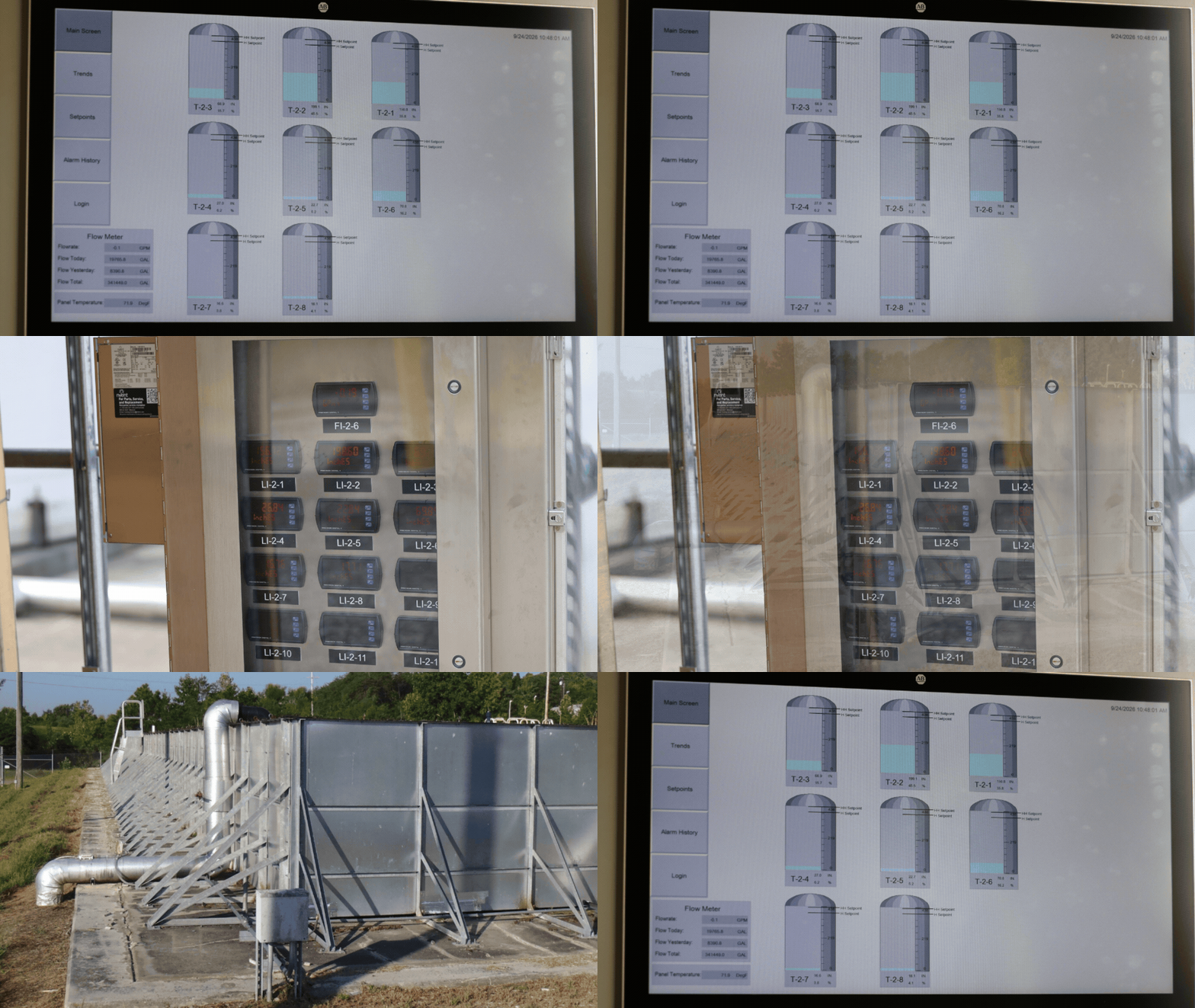 Innovation and improvements at the Environmental Management Waste Management Facility: new remote monitoring capabilities that allow workers to view tank levels and other important tank notifications on their phones; an updated control panel to support this technology; and contact water tanks after rust mitigation and repairs.
This remote oversight reduces the need to call in workers during off-shift periods, including holidays and weekends. Previously, crews reported onsite at EMWMF to verify tank levels, inflow rates and alarms. They can now receive and confirm these notifications from their phones anywhere and anytime. The digital data is protected by cybersecurity programs and only accessible by EMWMF superintendents and managers.
EMWMF, which accepts waste generated from Oak Ridge Reservation cleanup, also has four 240,000-gallon contact water tanks to support landfill wastewater management. Last year, two tanks were removed from service, completely rebuilt and returned to operations. The other two tanks remained functional but recently underwent repairs to mitigate rust on external components and ensure they remain compliant.
“These improvements to both our leachate and contact water management systems are especially beneficial during large rain events that can disrupt our routine operations,” UCOR Onsite Waste Disposition Manager Josh Pemberton said.
Contact water is created when water enters the landfill and encounters waste. When contact water flows through waste and interacts with certain materials, it becomes leachate. EMWMF manages up to 23 million gallons of contact water and up to 5.5 million gallons of leachate each year.
-Contributor: Ella Stewart
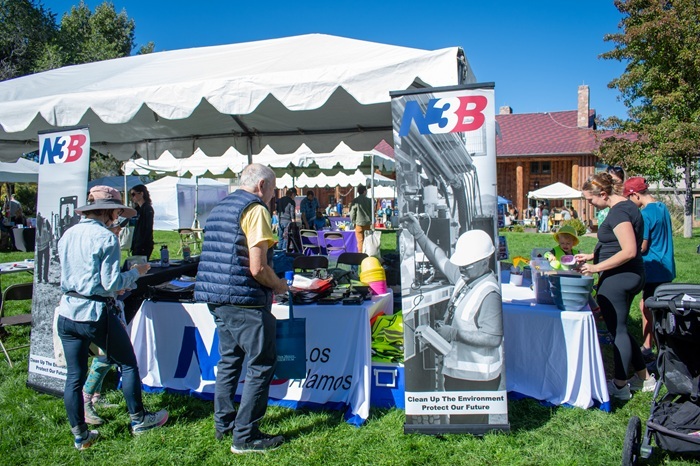 The Newport News Nuclear BWXT-Los Alamos LLC team welcomed families to its booth during the Los Alamos ScienceFest Discovery Day. The interactive setup introduced visitors to the real-world science, engineering principles and safety protocols that drive the Los Alamos National Laboratory legacy cleanup mission.
LOS ALAMOS, N.M. — Young, aspiring scientists dug into the science behind environmental cleanup at the recent Los Alamos ScienceFest Discovery Day, with hands-on activities conducted by the Environmental Management Los Alamos Field Office’s legacy cleanup contractor.
The event for children and their families capped the 19th annual ScienceFest featuring the theme “It’s All Elemental!” Newport News Nuclear BWXT-Los Alamos LLC (N3B) introduced families to the science and safety practices that support the U.S Department of Energy’s Los Alamos National Laboratory (LANL) legacy cleanup mission.
“Our goal this year was to take engineering principles and break them down into something tangible for kids,” said Brad Smith, N3B president and general manager. “When a child visualizes how we are retrieving legacy waste by digging up simulated material, they connect with some remediation techniques we use on active cleanup sites while encouraging their curiosity about careers in science and engineering.”
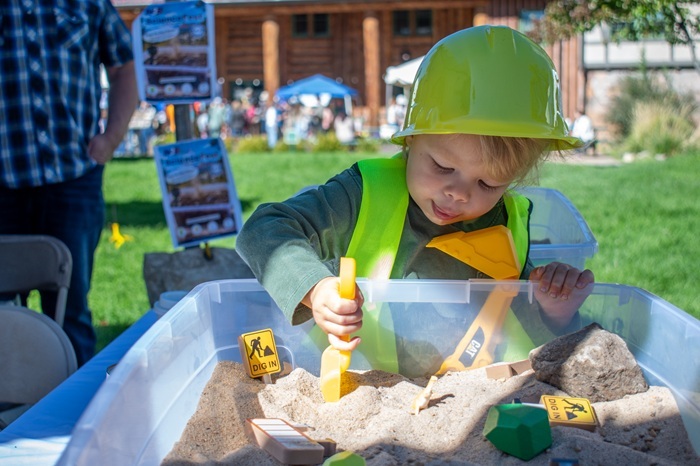 Stepping into the shoes of a field technician, a toddler practices the "Dig with Care" activity, wearing a toy hard hat and safety vest to carefully excavate simulated materials. The activity decomposed complex waste retrieval concepts into a tangible, educational experience.
At N3B’s “Dig with Care” activity, children donned safety glasses, vests and toy hard hats using excavation tools to uncover colored popsicle sticks representing legacy waste. Kids unearthed these targets alongside other surprises, including toy dinosaurs, hidden “artifacts” and costume jewels.
The activity offered a simplified introduction to waste retrieval, showing how deliberate excavation supports safe cleanup.
Beyond the dig, N3B demonstrated the engineering controls used during soil remediation. Using a setup of cocoa powder and a water spray bottle, team members showed children how moisture binds to fine particles. The demonstration illustrated how dust suppression traps loose materials, preventing contaminants from traveling through the air during active operations.
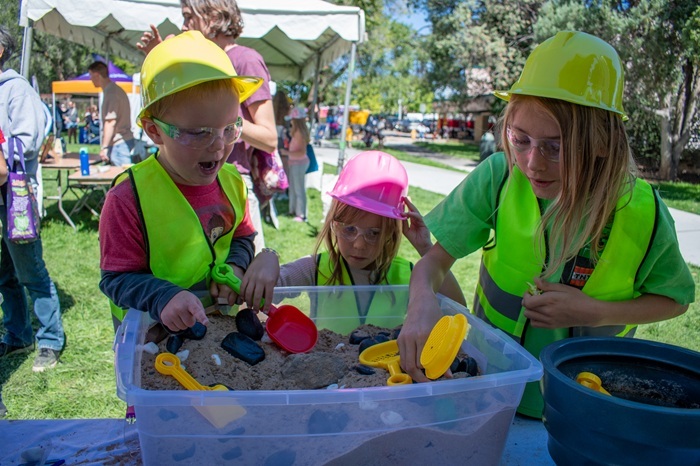 Future environmental scientists take the reins. Equipped with safety glasses, vests and hard hats, local children team up at the Newport News Nuclear BWXT-Los Alamos LLC (N3B) booth to locate buried material. Events like ScienceFest enables N3B to inspire tomorrow's science, technology, engineering, art and math innovators.
“The kids’ enthusiasm was clear,” said N3B Executive Officer Mark Lesinski. “They weren't just digging for simulated legacy waste, hidden dinosaurs and jewels, they were asking questions about how we locate buried material and protect people and the environment. Events like ScienceFest give us the opportunity to answer those questions, share our mission and help families understand the work taking place in their community.”
-Contributor: Donavan Mager
|