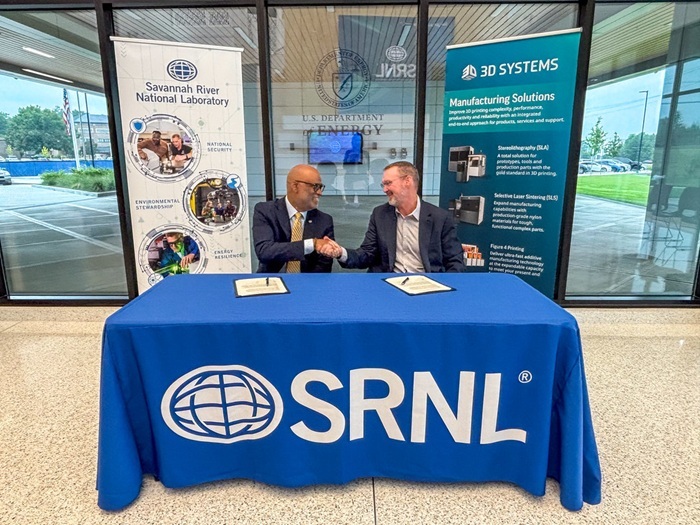
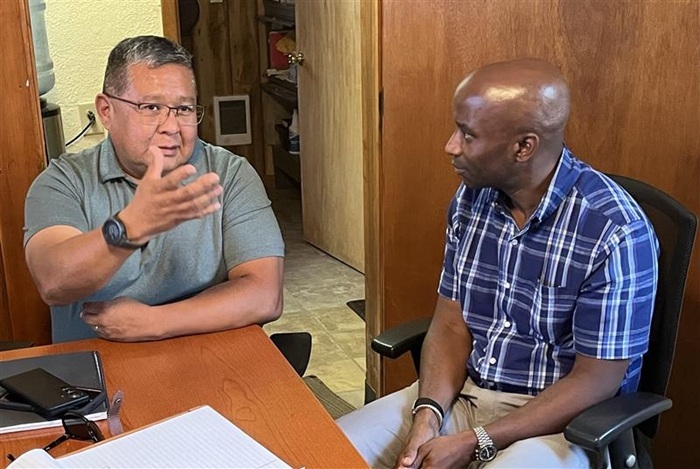
 Savannah River National Laboratory Director Johney Green, left, and 3D Systems Vice President of Product Marty Johnson sign a cooperative research and development agreement to accelerate innovation in additive manufacturing for advanced energy generation and national security applications.
AIKEN, S.C. — Savannah River National Laboratory (SRNL) recently announced a cooperative research and development agreement with the company 3D Systems to accelerate innovation in additive manufacturing for advanced energy generation and national security applications.
The partnership centers on leveraging the unique position of SRNL’s Advanced Manufacturing Collaborative (AMC) as South Carolina’s only national laboratory-operated site located on a public university campus. The AMC marked its first year this summer.
Through the agreement signed at the AMC Partnerships Day, SRNL and 3D Systems will jointly pursue advancements in materials development, equipment enhancements, process optimization enabled by artificial intelligence and machine learning, manufacturing systems, cybersecurity and workforce development training.
A primary emphasis of the collaboration is the application of additive manufacturing to critical energy challenges, especially nuclear energy and broader energy infrastructure. That process enables the fabrication of complex components from advanced alloys that are difficult to produce using conventional methods.
By combining 3D Systems’ commercial additive manufacturing platforms and materials expertise with SRNL’s extensive domain knowledge in nuclear materials, environmental stewardship, and energy resilience, the collaboration aims to help bridge laboratory innovation with industrial readiness. SRNL is the sole national laboratory sponsored by the U.S. Department of Energy’s Office of Environmental Management.
“This collaboration positions SRNL and 3D Systems to deliver groundbreaking additive manufacturing technologies, strengthen U.S. manufacturing competitiveness and drive forward the next era of additive manufacturing innovation,” said Roderick Jackson, associate laboratory director for science, energy and innovation at SRNL.
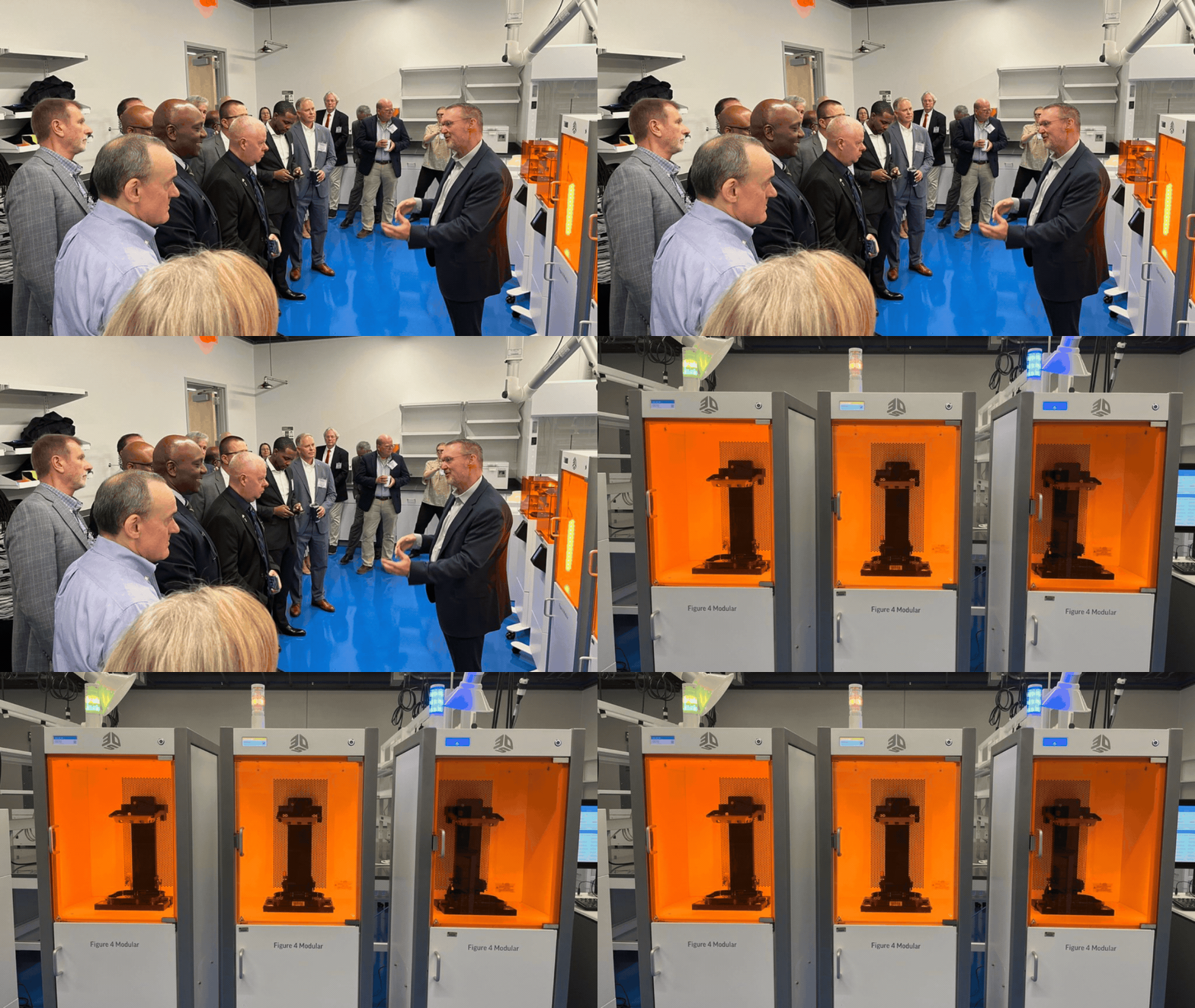 3D Systems Vice President of Product Marty Johnson demonstrates a 3D printing system during the recent Advanced Manufacturing Collaborative Partnerships Day at Savannah River National Laboratory.
Cutting-edge 3D Systems equipment has been installed at the AMC and is supported by facility upgrades and resident additive manufacturing subject-matter experts. This infrastructure will enable both world-class research and the demonstration of production-ready processes, positioning the partners to develop scalable manufacturing solutions with broader implications for high-value industrial markets including nuclear energy, aerospace and defense, and environmental technologies.
“This agreement underscores SRNL’s commitment to building world-class research capabilities, leveraging partnerships to enhance its competitive edge and solidify its presence as a leader in additive manufacturing technologies,” said G. Jeremy Leong, AMC director.
In addition to technology development, the partnership expands opportunities for training and developing the next generation of additive manufacturing scientists, engineers and technicians, strengthening the regional and national advanced manufacturing workforce.
“We look forward to partnering with SRNL at the Advanced Manufacturing Collaborative and deploying 3D Systems’ leading additive manufacturing technologies,” said Jeff Graves, president and CEO of 3D Systems. “This agreement demonstrates the impact and importance of high-quality 3D printing materials and technologies on key industrial markets, particularly energy and national security, and on developing the skilled workforce those markets require.”
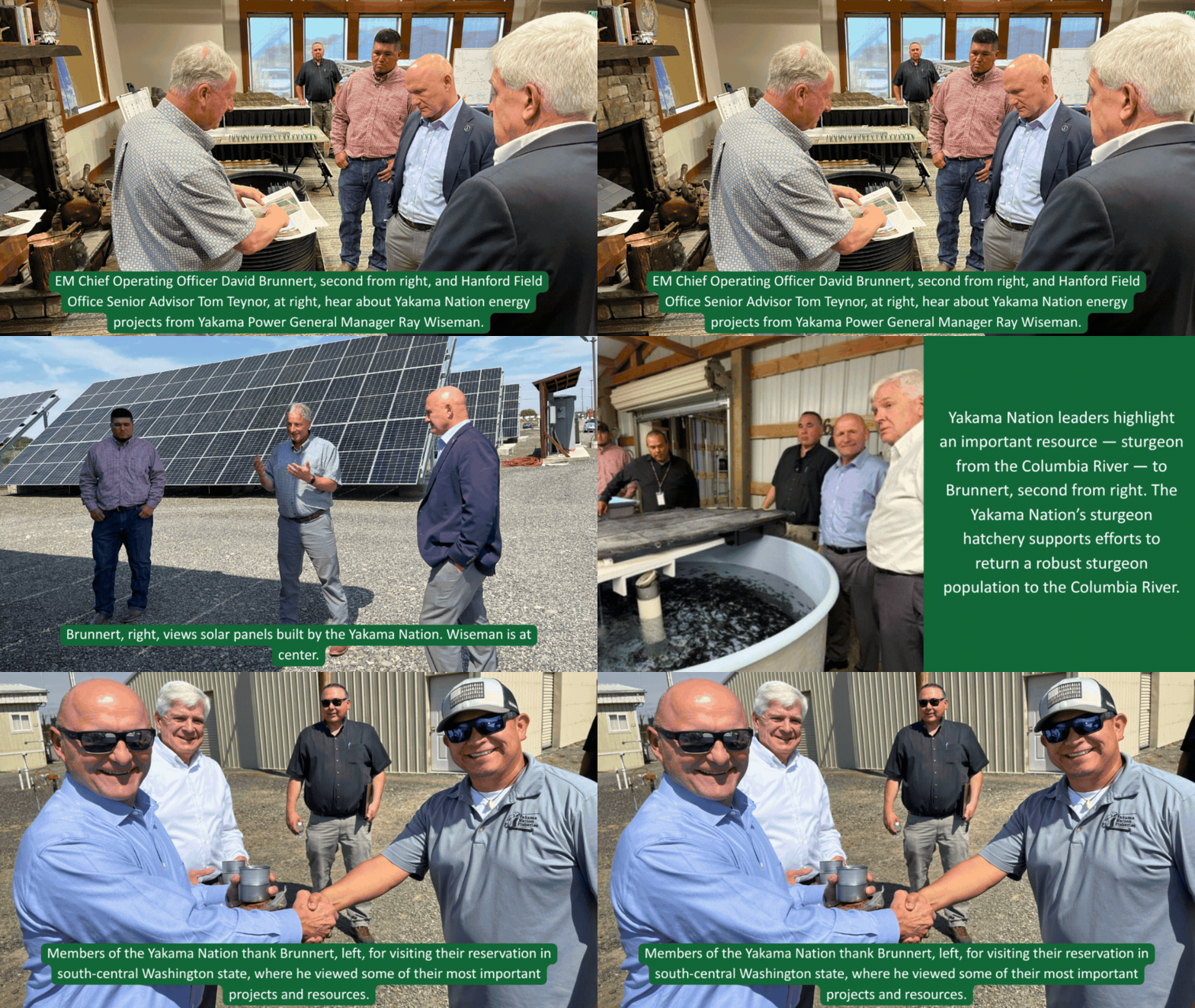
TOPPENISH, Wash. — A member of the U.S. Department of Energy’s Office of Environmental Management (EM) leadership team recently meet with Yakama Nation elected leaders and staff to share EM’s vision to accelerate nuclear cleanup and hear tribal perspectives. Yakama Power, a tribal utility that provides electricity on the reservation, briefed EM Chief Operating Officer David Brunnert on plans for an innovative solar project. Yakama Nation is set to install pipes underground to contain irrigation flow that waters agricultural lands and fill in the irrigation canals with soil excavated for the pipes. Crews will then build solar panels over the disturbed area. The project provides additional energy, resolves safety concerns related to the irrigation canals and improves water quality.
-Contributor: Jill Conrad
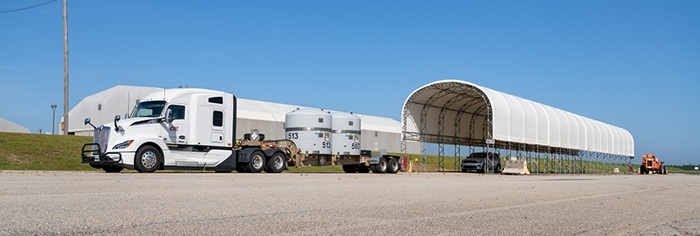 A Savannah River Site shipment heads to the Waste Isolation Pilot Plant as part of the site’s ongoing transuranic waste disposition mission.
AIKEN, S.C. — The U.S. Department of Energy’s (DOE) Office of Environmental Management (EM) successfully completed its first shipment of remote-handled transuranic radioactive waste for disposal from the Savannah River Site (SRS) using new shipping packages.
The recent achievement marks the site’s ongoing commitment to safe and efficient disposal of legacy transuranic waste at EM’s Waste Isolation Pilot Plant (WIPP) in New Mexico using the latest advancements in waste packaging and transportation.
WIPP manages two primary types of transuranic waste. Contact-handled waste has lower radiation levels, allowing workers to handle the containers using standard safety measures. Remote-handled waste has higher radiation levels that require specialized shielding and equipment for safe transport and disposal.
For the latest achievement, SRS crews loaded the remote-handled waste in heavy-duty steel containers lined with lead, slightly larger than 55-gallon drums. They placed the containers in a shipping cask that can accommodate waste packages with higher radiation levels.
“This achievement reflects the dedication and expertise of our team,” said Anthony Carraway, Solid Waste and Deactivation Facility manager with Savannah River Nuclear Solutions (SRNS), the managing and operating contractor at SRS. “Successfully resuming remote-handled shipments and deploying improved packaging like the shielded container assemblies demonstrates our focus on safety, innovation and continuous improvement to address the nation’s legacy waste challenges.”
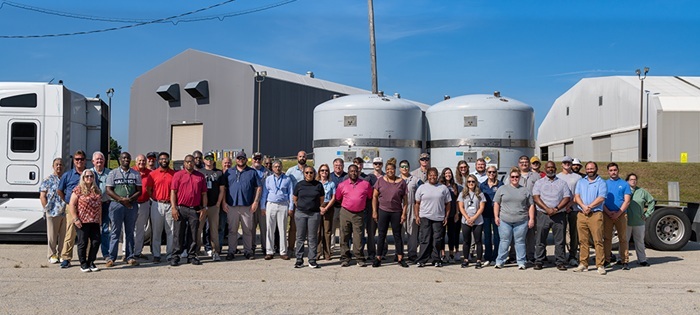 Savannah River Site and Waste Isolation Pilot Plant crew members stand in front of the remote-handled transuranic waste shipment truck, highlighting the teamwork that supports continued progress in waste disposition.
Successfully completing the remote-handled waste shipments required extensive collaboration between WIPP and SRS, intensive packaging modifications by the SRS team and a full year of meticulous planning to ensure employee safety and minimization of radiation exposure.
“Our journey with remote-handled transuranic waste shipments began in 2009, and every step since has reflected our commitment to the safe and efficient management of legacy transuranic waste,” said Kerri Crawford, SRNS Solid Waste Programs manager. “Completing the first remote-handled shipment from SRS in over a decade is a significant accomplishment for our team and the site. We greatly appreciate the partnership and support from WIPP throughout this process.”
SRS crews have loaded 19 more remote-handled transuranic waste drums into heavy-duty shielded containers for shipment. In total, approximately 150 remote-handled transuranic waste drums are being prepared for shipment.
Looking ahead, SRS will receive 50 additional heavy-duty shielded containers for the remote-handled waste in the near future.
As of last month, WIPP has received over 1,860 shipments of transuranic waste from SRS.
WIPP is the nation’s only deep geologic repository for permanent disposal of transuranic waste, safely isolating radioactive materials deep underground to protect people and the environment.
-Contributor: Aunarey Herbert
ARLINGTON, Va. — Under Secretary for Science Darío Gil and Assistant Secretary for Environmental Management (EM) Tim Walsh are among the U.S. Department of Energy (DOE) officials set to address the 12th Annual National Cleanup Workshop Sept. 14–16 at the Marriott Crystal Gateway in Arlington, Virginia.
This year’s workshop theme, “Powering and Securing the Future Through Restoration and Revitalization,” reflects the significant evolution underway in how EM approaches its mission — one that continues to prioritize safe environmental cleanup while leveraging more than 35 years of hard-won progress to build lasting economic opportunity for communities across the country.
Gil and Walsh are expected to deliver opening keynote addresses. While Gil will focus on how DOE’s Genesis Mission will accelerate science through artificial intelligence (AI), Walsh gives an inside look at the bold new direction EM has charted under the Trump administration. He has described that direction plainly: “We aren’t just managing the past; we are powering the future.”
In his remarks, Walsh will draw on a year of accomplishments across EM’s cleanup sites, from record-setting tank waste processing at the Savannah River Site in South Carolina to a landmark new strategy for the Hanford Site in Washington state that could save tens of billions of dollars and accelerate completion of the nation’s most complex radioactive tank waste challenge by decades. Walsh will also highlight EM’s growing role in closing the nuclear fuel cycle, turning assets once considered waste into materials to support America’s next-generation nuclear power, cancer treatment and energy technology.
The three-day workshop will feature several panel sessions bringing together DOE officials, contractors, regulators, state and local leaders and industry representatives. They will focus on new energy development on DOE sites, the backend of the nuclear fuel cycle, AI’s role in accelerating the cleanup mission, acquisition and contracting strategies, next-generation workforce development, national security and the future of advanced nuclear at former weapons production sites. U.S. Rep. Chuck Fleischmann, chair of the House Appropriations Energy and Water Development Subcommittee, will provide perspectives from Capitol Hill.
The workshop serves as a critical forum for EM officials to share progress with the communities that have hosted the nation’s nuclear missions for decades while engaging those communities in dialogue. This year’s program includes dedicated time for local elected officials, EM Site-Specific Advisory Board representatives and intergovernmental partners to talk with EM senior leadership, reinforcing the program’s commitment to transparency and partnership at every stage of the cleanup mission.
With the nuclear energy landscape shifting rapidly and EM’s cleanup mission producing results at every active site, this year’s workshop comes at a pivotal moment. Whether attendees are cleanup professionals, community advocates, energy industry leaders or policymakers, the event offers unmatched opportunity to hear from the people shaping the future of America’s nuclear cleanup and energy renaissance.
Registration and additional information, including the full conference agenda, are available here.
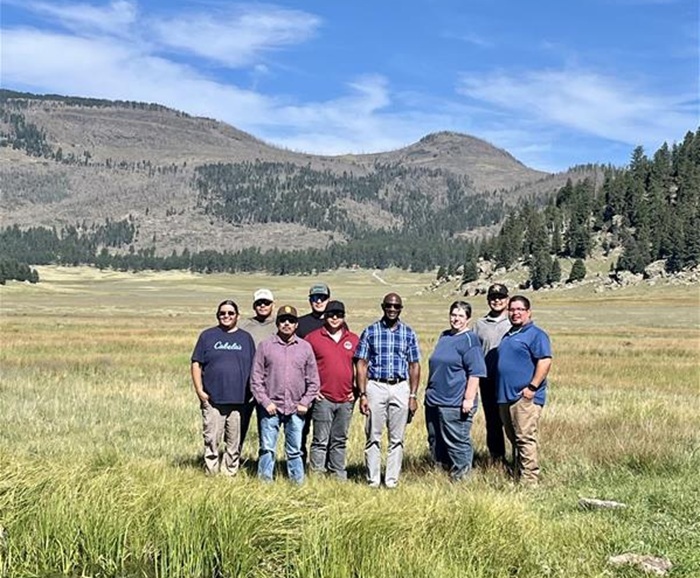 Stan Pyram, acting manager for the U.S. Department of Energy’s Office of Environmental Management Los Alamos Field Office, is pictured at center during a tour with Pueblo of Jemez leadership and the pueblo's Natural Resources Department staff. Redondo Peak, pictured in the background, is a site of continued traditional use and significance for the pueblo.
Visit focuses on shared interests in environmental stewardship
JEMEZ SPRINGS, N.M. — The Pueblo of Jemez recently hosted Stan Pyram, acting manager for the U.S. Department of Energy’s (DOE) Office of Environmental Management Los Alamos Field Office, for a tour with pueblo leadership and Natural Resources Department (NRD) staff. The pueblo is a federally recognized tribe located 30 miles west of Los Alamos National Laboratory (LANL). It’s one of 19 pueblos in New Mexico and consists of over 89,000 acres of land across three noncontiguous parcels with 3,400 tribal members.
“Building a strong and lasting relationship with the Pueblo of Jemez, and with the other Accord Pueblos, is a personal priority,” Pyram said. “I was grateful to learn some of the history from these beautiful sites from pueblo members. Along with the invaluable insights I gained, I deeply appreciated the warm hospitality, the shared meal and the open, thoughtful conversation.”
 |
|
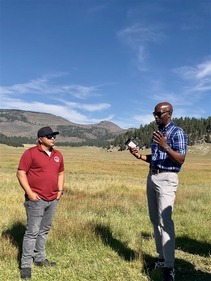
The tour began with a visit to the Valles Caldera Preserve, a volcanic caldera over 13 miles wide and home to the headwaters used by pueblo members. Aaron Cajero, Natural Resources manager for the pueblo's NRD, left, explains to Pyram how his program performs air monitoring and sampling at the Valles Caldera because of its proximity to LANL and the site’s traditional importance. Redondo Peak, pictured in the background, is a site of continued traditional use and significance for the pueblo. |
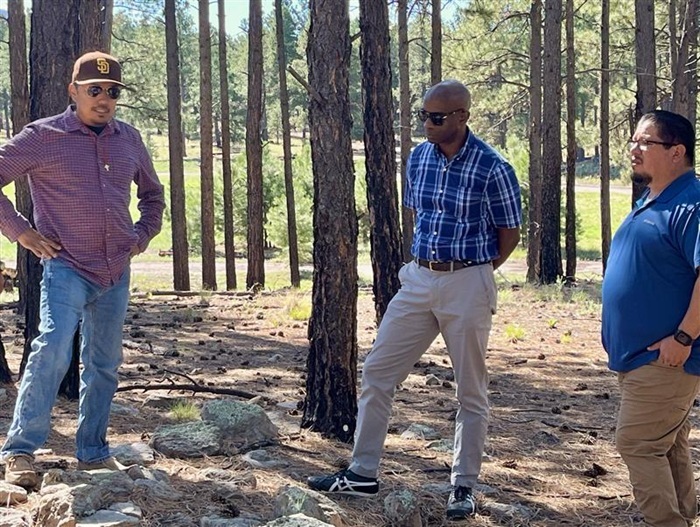 The tour included a visit to Banco Bonito, known to the pueblo as SÉE WÂAK’Į̂ TÛUKWÂ (“EAGLE DOWN PLACE”). The pueblo’s cultural resources specialist, Mark Magdalena, left, and Daryl Lucero, wildlife manager, right, tell Pyram that this archeological site inhabited by pueblo people from 1500 C.E. remains important to the pueblo, which co-stewards Banco Bonito with the National Park Service.
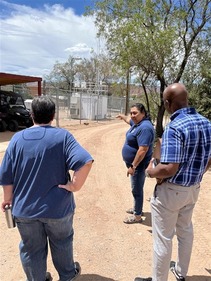
At the pueblo, NRD Director Clarice Madalena, center, leads a tour of the NRD offices, which houses the Los Alamos Pueblos Project (LAPP) sampling and monitoring program. Madalena also gave a presentation on the history of the LAPP program. The LAPP, comprised of four New Mexico pueblo governments — Santa Clara Pueblo, Pueblo de Cochiti, Pueblo of Jemez and Pueblo de San Ildefonso — has individual cooperative agreements with EM to develop and maintain environmental monitoring programs. |
|
 |
 During a discussion with Pyram, right, Jemez Gov. John Galvan expresses interest in maintaining the pueblo’s relationship with DOE, the value of transparency and the pueblo’s perspective on environmental stewardship. The group shared a traditional meal including Jemez enchiladas and beans.
-Contributor: Sarah Voorhees
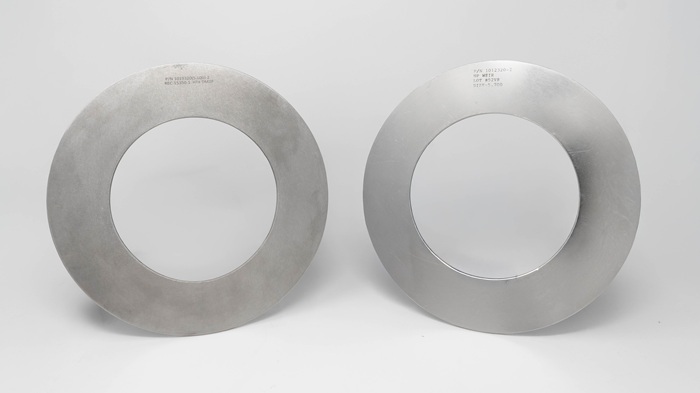 Tiny change, tremendous impact: A seemingly invisible difference in the size of the weirs used to control the liquids separation in the cesium-extraction process has enabled the Salt Waste Processing Facility to operate even higher than its nameplate rate. Pictured is the old weir design, right, next to the new weir — a difference of only one-tenth of an inch.
AIKEN, S.C. — With just a tiny mechanical adjustment, the Salt Waste Processing Facility (SWPF) has achieved record-breaking production at the Savannah River Site (SRS).
Harnessing the power of artificial intelligence (AI), engineers homed in on a part called a “weir” inside SWPF’s centrifugal contactors. The contactors are key components of the plant that mix and then separate the radioactive liquid waste from a special solvent that removes cesium, a highly radioactive material. The weir acts like a tiny internal dam that controls how the liquids separate and flow out of the contactor.
SWPF treats salt waste from the SRS waste tanks by removing cesium and other radionuclides. The facility is designed to process 21.6 gallons of salt waste per minute. Before adjusting the dimensions of the weirs, the facility could not sustain this rate without upsetting the system.
However, by increasing the inner diameter of this weir by just one-tenth of an inch, Savannah River Mission Completion (SRMC), the SRS liquid waste contractor, can better control the separation of the two liquids and the flow coming out of the contactors.
Now, not only can SWPF operate smoothly at its original throughput capacity of 21.6 gallons per minute, but it can operate at 23 gallons per minute — 106% of the original design.
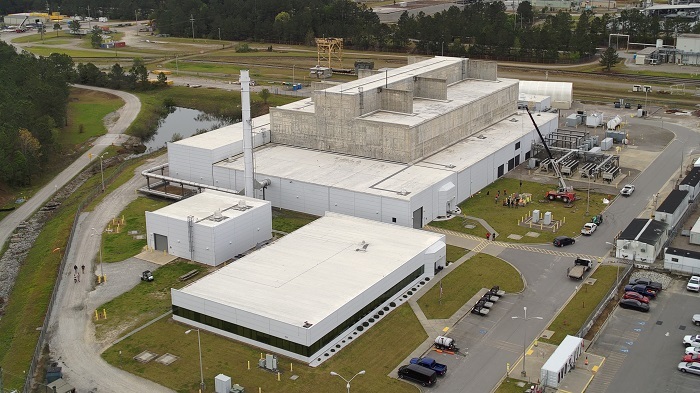 The Salt Waste Processing Facility at Savannah River Site.
Ryan Lentsch, senior director, SWPF and End Stream Delivery Facility Engineering, said this improvement has a direct impact on the mission to safely treat and reduce the volume of legacy radioactive waste at SRS.
“Prior to the weir adjustment, SWPF processed 17 million gallons of waste feed in almost six years of operation,” said Lentsch, who implemented this solution. “We’ve already processed more than 3 million gallons in only five months after the changeout, showing how a small mechanical change can make a big difference.”
SRMC President and Program Manager Thomas Burns Jr. said this outcome demonstrates the exponential success you get when you combine effort of engineers, advanced data analytics tools and AI.
“The amount of data and permutations we have involved in this throughput problem is almost infinite, and it is really like finding a needle in the haystack,” Burns said.
But with the help of AI, SRMC engineers found that needle in the form a weir. And now, SRMC is moving the needle when it comes to advancing the mission.
“This is something that would have taken five years to even discover, and it was put into place in the facility in mere months,” Burns said. “A seemingly miniscule change is helping us move millions of additional gallons of waste through the system safely and efficiently, which is bringing us closer to completing the liquid waste mission at SRS.”
-Contributor: Colleen Hart
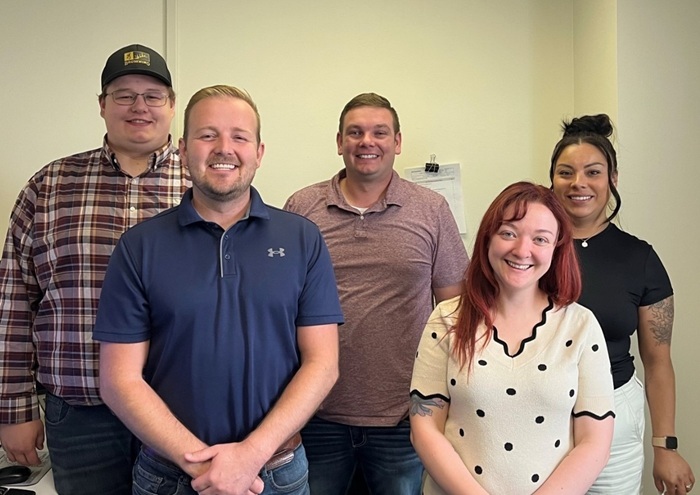 Carla Cooper, an Idaho Cleanup Project intern, is pictured with teammates at the Idaho Nuclear Technology and Engineering Center (INTEC) at the Idaho National Laboratory Site. From left: INTEC Project Controls Engineer (PCE) Larry Hubler, INTEC Project Controls Manager Cory Barrus, INTEC PCE Chad Caldwell, PCE Intern Carla Cooper and INTEC PCE Dina Alvarez.
IDAHO FALLS, Idaho – A partnership between Idaho Cleanup Project (ICP) contractor Idaho Environmental Coalition (IEC) and the College of Eastern Idaho (CEI) is creating pathways to in-demand careers in project management and project controls.
The collaboration, which launched project controls-centered courses at CEI in June, is designed to address a critical workforce gap that will allow the ICP team to continue delivering on commitments to the state of Idaho, ensure environmental protection and advance American energy interests.
The program is already making a profound impact. Carla Cooper is an IEC intern and a CEI student pursuing an associate degree in business with an emphasis on project controls.
“For me, the decision to focus on project controls was connected to both professional and personal goals, and a hands-on internship with IEC has been a challenging but rewarding experience as I seek to advance my career,” said Cooper.
Project controls professionals, also called project controls engineers, ultimately ensure large projects complete work on time, within budget and according to scope. In her internship, Cooper helped develop project and operations schedules to support work at the Idaho Nuclear Technology and Engineering Center, ensuring daily deliverables were achieved.
“I have learned firsthand how project operations and project controls intersect to support a larger mission,” Cooper said. “As an intern, I was able to build strong relationships with colleagues, apply what I’m learning in class to real world situations and ultimately understand the variety of career opportunities out there.”
The CEI courses couple technical background and hands-on experience with industry-standard software and tools.
“The new course path for our students is just one example of the valuable partnership that has developed between CEI and IEC,” said Lori Barber, CEI president. “Ultimately this partnership is helping the college meet its goal to connect classroom learning with real world experience that empowers our students to become skilled professionals who will make a meaningful impact in Idaho and beyond.”
IEC President and Program Manager Dan Coyne echoed similar sentiments.
“IEC recognizes the value of our local colleges and universities and the role they play in cultivating the next generation of skilled workforce required to move America’s energy future forward," he said. “We are grateful to CEI, and I look forward to seeing the fruits of this partnership.”
Cooper highlighted the value of industry and educational mentors.
“My colleagues at IEC and teachers at CEI have gone above and beyond to teach me everything they can, help me grow and feel invested in,” she said. “My internship and classroom experiences have ultimately helped me understand whether project management is truly the path I want to pursue.”
-Contributor: Carter Harrison
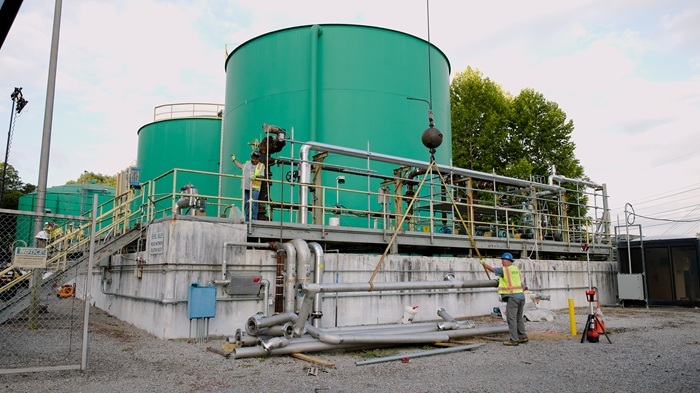 Crews lift stainless steel pipes to weld them into position at the Process Waste Facility at Oak Ridge National Laboratory. In total, teams installed 2,500 feet of piping in the 2.5-year project.
OAK RIDGE, Tenn. — The Oak Ridge Office of Environmental Management (OREM) finished a 2.5-year piping replacement project that is crucial to maintain ongoing missions and daily operations at Oak Ridge National Laboratory (ORNL).
This life-extension effort involved replacing all above-ground piping for the Liquid and Gaseous Waste Operations (LGWO) system’s Process Waste Facility. The upgrades significantly reduce the risk of outages that would pause operations at the site and the need for frequent maintenance and repairs on the aging infrastructure.
LGWO is comprised of more than 60 facilities and 27 miles of piping that process waste generated from cleanup operations, research and development laboratories and nuclear reactors. The system treats an average of 110 million gallons of waste every year.
“By modernizing this system, we are safeguarding vital daily operations and reducing the long-term maintenance demands associated with aging infrastructure,” said Michael Griswold, acting ORNL portfolio federal project director.
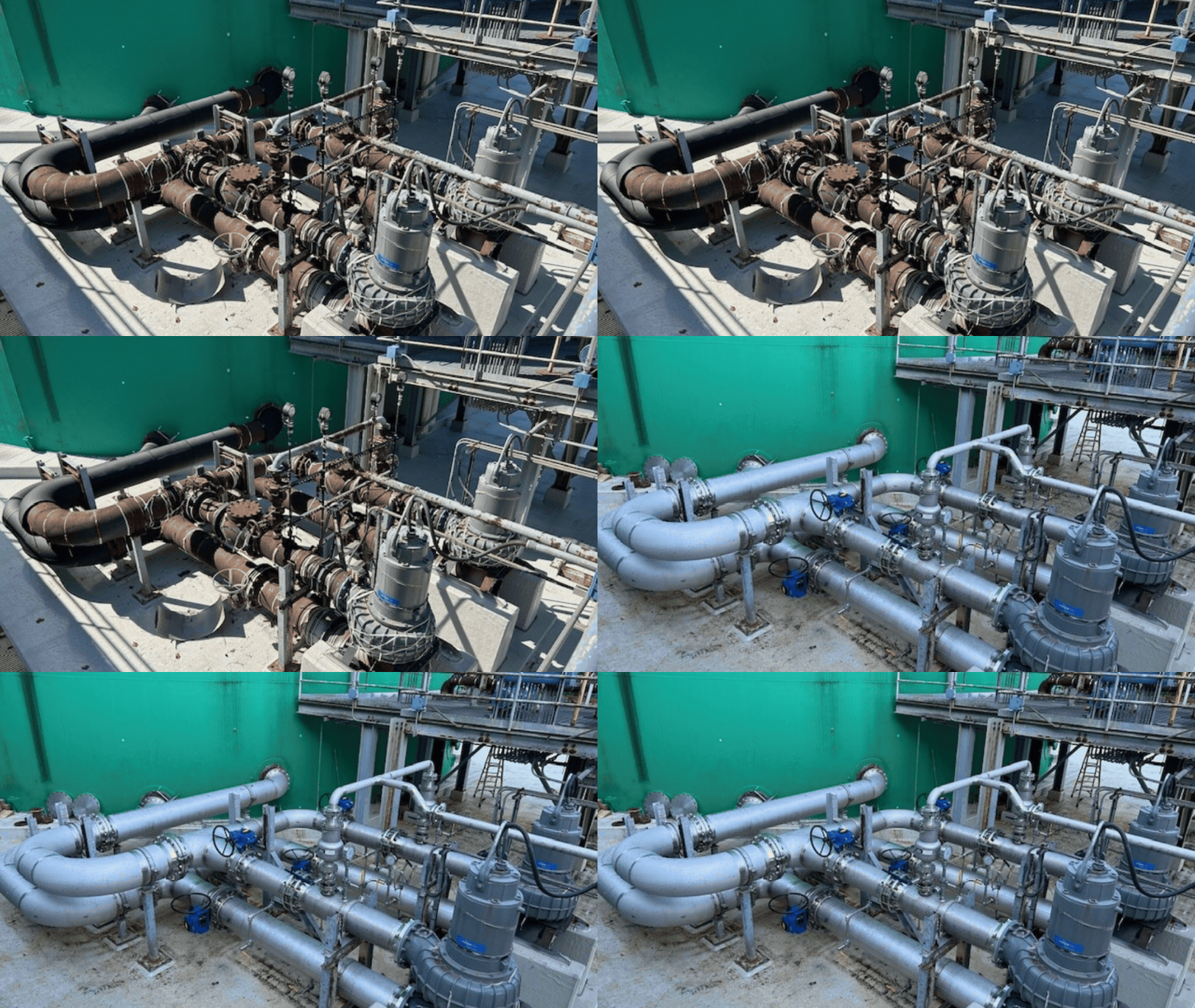 Crews replaced decades-old carbon steel piping with new stainless steel piping at the Process Waste Facility, part of the Liquid and Gaseous Waste Operations system at Oak Ridge National Laboratory.
Crews with OREM cleanup contractor United Cleanup Oak Ridge (UCOR) replaced 2,500 feet of carbon steel piping with stainless steel at the Process Waste Facility. Workers removed old insulation to measure, fabricate and weld lines of various sizes, and they updated more than 300 support components, such as valves and flanges, to stainless steel. Flanges are ring-like rims attached to pipe ends.
Along the way, teams installed heat trace systems, which prevent the pipes from freezing and impacting operations during winter months.
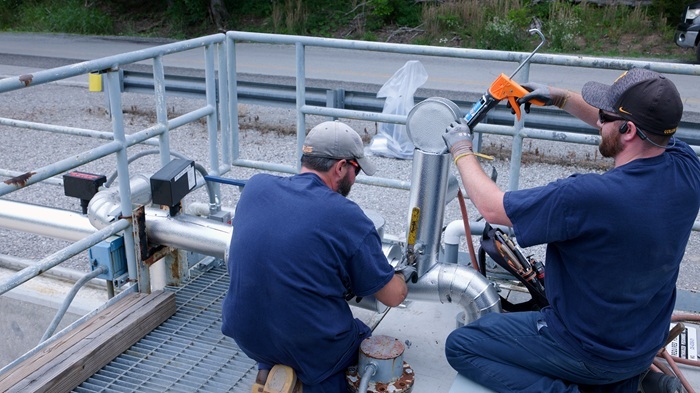 Workers insulate a portion of newly installed and upgraded piping at the Process Waste Facility, part of the Liquid and Gaseous Waste Operations system at Oak Ridge National Laboratory.
“Because of the careful planning and collaboration across this project, we had zero negative impacts to routine waste processing and faced no storage constraints during this multiyear task,” said James Wheeler, UCOR’s ORNL nuclear operations area project manager.
Replacing the above-ground piping and other supporting components ensures LGWO continues to safely collect, store and efficiently transfer wastewater for treatment without interruption to ongoing cleanup and research missions.
Up next, crews will begin similar piping upgrades at ORNL’s Melton Valley Process Waste Collection Tank Facility, also part of the LGWO system.
-Contributor: Ella Stewart
AIKEN, S.C. — High-frequency sound waves are helping clean components of the Salt Waste Processing Facility (SWPF) at Savannah River Site (SRS), delivering faster turnaround times, improved equipment performance and reduced worker exposure.
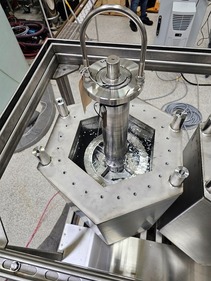
Savannah River Mission Completion (SRMC), the U.S. Department of Energy’s (DOE) Office of Environmental Management (EM) liquid waste contractor at SRS, applies an ultrasonic cleaning process that efficiently and thoroughly cleans the items using the sound waves in a liquid. The sound waves cause rapid formation and collapse of microscopic bubbles in the liquid, which create tiny shock waves that dislodge and remove contaminants from the surfaces of the submerged items.
At SWPF, a key facility in reducing high-level waste in underground tanks at SRS, the tech-savvy cleaning process removes scaling and material buildup from the rotors of disassembled contactors. The rotor is the rotating part inside the contactors, which are key components in the waste separation process at SWPF.
The contactors use centrifugal force to mix and separate process fluids, enabling SWPF to separate highly radioactive contaminants from salt solution. This is critical in reducing the volume of waste requiring treatment at the Defense Waste Processing Facility, where concentrated high-activity waste combines with sludge waste in the immobilization process.
After the contactors are cleaned in the ultrasonic bath at SWPF, they are reassembled and returned to service, reducing downtime and making the facility available sooner to resume processing waste.
“Increased plant availability is key to accelerating the cleanup mission,” said Tony Robinson, DOE-Savannah River’s acting assistant manager for waste disposition.
 |
|
Equipment undergoes an ultrasonic cleaning process that is enhancing employee safety and reducing potential radiation exposure at the Salt Waste Processing Facility at Savannah River Site. |
Using the ultrasonic process, SRMC has successfully cleaned and returned to service units that were once difficult to recover, according to Erick Dixon, SWPF’s maintenance engineering manager.
“We have also been able to accelerate the rebuild effort to the point that 20 contactors were turned around in a single month, improving on our rate of approximately eight per month,” Dixon said. “That achievement was a key enabler to maximizing runtime of the plant and supporting 100 percent throughput rates.”
This new way of cleaning supplements a legacy method that relied on extended acid soaks followed by labor-intensive manual cleaning with steam lances and pressure washers. The soak duration alone could range from four days to four weeks. The entire process works to reduce exposure risk and increase employee safety in the critical cleaning process.
SRMC Executive Vice President and Chief Engineer Cliff Conner called the cleaning process a commercial-level innovation that is advancing the liquid waste mission while increasing safety and equipment longevity.
“This is not new technology, but it’s a smart, targeted application of it,” Conner said. “By configuring the commercially available system around our equipment, we’re getting the best performance out of both the cleaning process and the contactors themselves.”
-Contributor: TJ Lundeen
|